Chronic Fatigue in Wall Street

Exhaustion that does not resolve with rest is not a motivation problem. It is a neurological state — measurable, mechanistic, and structurally distinct from ordinary tiredness.

Book a Strategy Call

There is a form of fatigue that sleep does not fix. It persists through weekends, through vacations, through every recovery strategy that should, logically, restore normal function. The person experiencing it is not lazy or burned out in the colloquial sense. Their brain has entered a specific neurobiological state characterized by at least four intersecting mechanisms that together produce a system simultaneously depleted and unable to recover.

The Problem: The Exhaustion-Recovery Paradox

Chronic fatigue that fails to resolve with rest represents a fundamental breakdown in the brain’s recovery architecture. Unlike acute tiredness — which responds predictably to sleep and downtime — chronic exhaustion involves self-sustaining biological loops that actively resist restoration.

The first mechanism is neuroinflammation. Microglia shift from their normal surveillance role into a sustained pro-inflammatory activation state. PET imaging studies have documented 45-199% elevated microglial activation markers — measured through TSPO — a protein expressed on activated microglia. These cells release immune signaling proteins that suppress neural efficiency, disrupt synaptic function, and generate the subjective experience of profound cognitive fog.

The second mechanism is HPA axis dysregulation. Under acute stress, the hypothalamic-pituitary-adrenal axis releases cortisol to mobilize energy and sharpen attention. Under prolonged, unrelenting stress, this system does not simply stay elevated — it inverts. The axis develops hypocortisolism — chronically blunted cortisol output — and the morning surge that normally primes daytime alertness and metabolic mobilization weakens or disappears. The individual wakes already depleted, without the hormonal signal the brain depends on to initiate functional wakefulness.

Translucent copper and blue wave forms visualizing sleep cycle phases against deep navy background

The third mechanism involves the brain’s waste clearance system. The glymphatic system performs critical metabolic waste clearance during deep slow-wave sleep. Norepinephrine — a stress and alertness chemical — levels, which are high during wakefulness, must drop substantially for the interstitial space to expand and allow cerebrospinal fluid to flush accumulated waste. In individuals with chronic stress and fragmented sleep, elevated nocturnal norepinephrine suppresses this clearance process, allowing neurotoxic metabolites to accumulate. The brain is literally unable to take out its own trash.

The fourth mechanism targets the motivation circuitry directly. The basal ganglia form the brain’s core motivation and effort-allocation system. Dopamine projections from the ventral tegmental area to the nucleus accumbens are disrupted by sustained neuroinflammation and HPA axis dysfunction. The result is not sadness or depression in the classical sense, but a specific motivational deficit: the brain’s cost-benefit calculation for effort shifts, making even routine cognitive tasks feel disproportionately demanding.

The Mechanism: Allostatic Overload

These four systems do not operate independently. They interact through a framework neuroscience calls allostatic load — the brain’s active stability process — which works effectively under normal conditions. Under chronic, unrelenting demand, the system enters allostatic overload: the stress-adaptation mechanisms themselves become sources of damage.

Allostatic overload produces measurable structural changes. The hippocampus atrophies under sustained cortisol exposure, weakening the very mechanism that should be downregulating the stress response. The prefrontal cortex — the brain’s executive control center — provides top-down regulation of emotional and motivational circuits but loses gray matter volume and functional connectivity. The amygdala, conversely, hypertrophies — becomes more reactive — growing more easily triggered and more resistant to prefrontal inhibition. The architecture of the brain shifts toward threat sensitivity and away from flexible, resilient processing.

The distinction between central fatigue — fatigue originating in the brain — and peripheral fatigue is critical. Peripheral fatigue resolves with physical rest because its cause is metabolic depletion in muscle tissue. Central fatigue does not resolve with rest because its cause is a neural state: the brain is generating the exhaustion signal as a protective response to internal conditions that rest alone does not address. The central governor model proposes that the brain regulates effort output to prevent homeostatic failure — a conservative protective threshold.

The Solution: Addressing the Neural Infrastructure of Recovery

Dr. Ceruto’s approach to chronic fatigue and exhaustion targets the specific neurobiological systems sustaining the exhaustion state rather than managing symptoms at the behavioral level.

The methodology identifies which of the four primary mechanisms is most prominent in each individual’s presentation, recognizing that most cases involve multiple interacting systems. Interventions are designed to interrupt the self-sustaining loops that prevent recovery.

For HPA axis dysregulation, protocols aim to restore the cortisol diurnal rhythm and cortisol awakening response. Training addresses the parasympathetic deficit that prevents the nervous system from shifting into recovery mode. For individuals whose sleep architecture is too fragmented for adequate glymphatic clearance, targeted sleep restoration becomes a precondition for all other recovery work.

The goal is not to push through fatigue but to dismantle the neurobiological conditions sustaining it. This approach restores the brain’s capacity to recover, repair, and generate the sustained energy that its current state is actively preventing.

Mahogany desk with crystal brain sculpture and MindLAB journal in warm lamp light surrounded by leather-bound volumes in institutional Wall Street study

Why Chronic Fatigue Matters in Wall Street

Wall Street’s professional environment produces a specific and accelerated pathway to allostatic overload — chronic fatigue not resolving with rest.

The financial industry’s work patterns deliver precisely the combination of sustained cognitive stress, compressed recovery time, and environmental deprivation that pushes the brain’s stress-adaptation systems past their recovery threshold. Industry survey data documents first-year analysts averaging 74 hours per week and under six hours of sleep per night, with nearly 12% exceeding 91 hours weekly. During deal sprints analysts at firms across Lower Manhattan report working until 4-5 AM for consecutive weeks, with physical and mental health self-ratings dropping to 2-3 out of 10.

The physiological toll is not abstract. A 10% rise in cardiac arrest cases among financial professionals under 30 has been documented over the past decade. This rise is directly attributable to the combined effects of chronic sleep deprivation, sustained cortisol elevation, and the autonomic dysregulation that chronic allostatic overload produces.

The stimulant cycle that pervades Wall Street culture deepens the neurobiological damage. Caffeine masks adenosine-mediated fatigue signals during the day while preventing the sleep pressure buildup needed for restorative nighttime sleep. Prescription stimulant use — widespread among analysts and associates — suppresses REM sleep, further degrading the overnight neural restoration that the fatigued brain desperately requires. Each day of stimulant-masked exhaustion adds to the allostatic load without providing actual recovery.

The sedentary, artificially lit nature of the work eliminates the physical activity and natural light exposure that would normally help calibrate the HPA axis and support parasympathetic recovery. Professionals spend 12-16 hours seated at multi-screen workstations, their nervous systems locked in sympathetic dominance. This occurs without the movement-based discharge and light-based circadian signaling that healthy stress recovery depends on.

The 2024 industry survey finding that respondents reported a 22% decline in mental health and 26% decline in physical health from before starting their current positions quantifies a population-level trajectory into allostatic overload. When 48% of financial workers report high stress levels and 29% of industry turnover is linked to burnout and mental health, the pattern is environmental rather than individual.

Dr. Ceruto works with individuals at various stages along this trajectory, designing neurobiologically targeted recovery protocols calibrated to the specific intersection of sustained cognitive demand, compressed recovery, and environmental deprivation. These protocols address what defines the Wall Street professional experience.

Dr. Sydney Ceruto, PhD — Founder, MindLAB Neuroscience

Dr. Sydney Ceruto, PhD — Founder & CEO, MindLAB Neuroscience

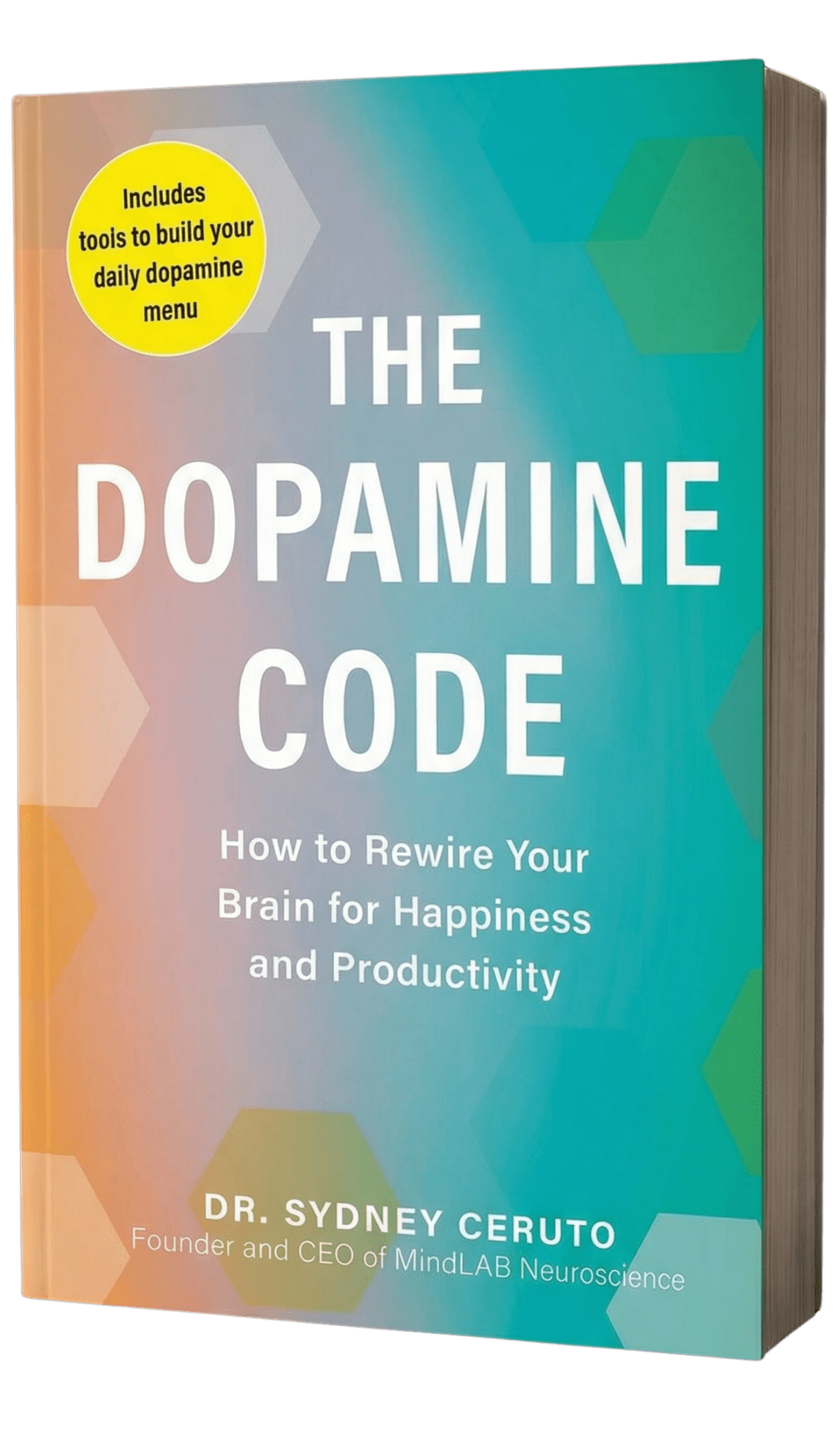
Dr. Ceruto holds a PhD in Behavioral & Cognitive Neuroscience from NYU and two Master’s degrees from Yale University. She lectures at the Wharton Executive Development Program at the University of Pennsylvania and has been an Executive Contributor to the Forbes Coaching Council since 2019. Dr. Ceruto is the author of The Dopamine Code (Simon & Schuster, June 2026). She founded MindLAB Neuroscience in 2000 and has spent over 26 years pioneering Real-Time Neuroplasticity™ — a methodology that permanently rewires the neural pathways driving behavior, decisions, and emotional responses.

References

Nakatomi, Y., Mizuno, K., Ishii, A., Wada, Y., Tanaka, M., Tazawa, S., … & Watanabe, Y. (2014). Neuroinflammation in patients with chronic fatigue syndrome/myalgic encephalomyelitis: An 11C-(R)-PK11195 PET study. Journal of Nuclear Medicine, 55(6), 945-950. https://doi.org/10.2967/jnumed.113.131045

McEwen, B. S. (1998). Protective and damaging effects of stress mediators. New England Journal of Medicine, 338(3), 171-179. https://doi.org/10.1056/NEJM199801153380307

McEwen, B. S. (2008). Central effects of stress hormones in health and disease: Understanding the protective and damaging effects of stress and stress mediators. European Journal of Pharmacology, 583(2-3), 174-185. https://doi.org/10.1016/j.ejphar.2007.11.071

Zhao, L., Tannenbaum, A., Bakker, E. N. T. P., & Benveniste, H. (2022). The physiology of glymphatic solute transport and waste clearance from the brain. Physiology, 37(6), 402-418. https://doi.org/10.1152/physiol.00015.2022

Success Stories

“Four hours a night for over two years — that was my ceiling. Supplements, sleep protocols, medication — nothing touched it because nothing addressed why my brain wouldn't shut down. Dr. Ceruto identified the cortisol loop that was keeping my nervous system locked in a hypervigilant state and dismantled it. I sleep now. Not because I learned tricks — because the pattern driving the insomnia no longer exists.”

Adrian M., Portfolio Manager Citadel New York, NY

“My kids had been sleeping through the night for three years, but my brain hadn't caught up. I was still waking every ninety minutes like clockwork — no amount of sleep hygiene or supplements touched it. Dr. Ceruto identified the hypervigilance loop that had hardwired itself during those early years and dismantled it at the source. My brain finally learned the threat was over. I sleep through the night now without effort.”

Catherine L., General Counsel Private Equity Greenwich, CT

“Endocrinologists, sleep clinics, functional medicine — every specialist cleared me, and no one could tell me why I was exhausted every single day. Dr. Ceruto identified that my HPA axis was locked in a low-grade stress activation I couldn't feel consciously. Once that pattern was disrupted at the neurological level, my energy came back in a way that felt completely foreign. I'd forgotten what it was like to not be tired.”

Danielle K., Chief Marketing Officer Luxury Retail Beverly Hills, CA

“My body had simply stopped knowing when to sleep. Crossing time zones weekly for over two years had broken something fundamental, and every protocol, supplement, and device I tried couldn't hold longer than a few days. Dr. Ceruto identified the disruption at the level of my suprachiasmatic nucleus and recalibrated the signaling pattern driving the dysfunction. Within weeks, my circadian rhythm locked back in. I sleep now. Consistently. Regardless of where I land.”

Jonathan K., VP of Global Operations Maersk

“Outperforming every metric for years and feeling absolutely nothing — no satisfaction, no drive, just a compulsive need to keep going. Executive retreats, meditation protocols, none of it made a difference. Dr. Ceruto identified the dopamine downregulation that was driving the entire pattern. My reward system had essentially gone offline from overstimulation. She didn't teach me to reframe success — she restored the neurochemistry that lets me actually experience it.”

Mikhail D., Senior Partner Corporate Law Washington, DC

“Everyone around me had decided I was just 'wired differently' — creative but unreliable, brilliant but scattered. Years of trying to build systems around the chaos never worked because nobody identified what was actually driving it. Dr. Ceruto mapped the default mode network pattern that was hijacking my focus and recalibrated it at the source. The ideas still come fast — but now my prefrontal cortex decides what to do with them, not the noise.”

Jonah T., Creative Director Global Advertising New York, NY

Frequently Asked Questions About Chronic Fatigue in Wall Street

What is neuroscience-based chronic fatigue support?

Neuroscience-based chronic fatigue support identifies the specific brain mechanisms sustaining exhaustion that does not resolve with rest — neuroinflammation, HPA dysregulation, and impaired clearance systems. It designs targeted interventions to interrupt these self-sustaining loops. It addresses the neural infrastructure of recovery, not the symptoms of depletion.

Why does chronic fatigue persist even with adequate rest?

Chronic fatigue originates in the brain, not the muscles. The brain generates the exhaustion signal as a protective response to internal conditions — neuroinflammation, disrupted cortisol rhythms, impaired glymphatic clearance — that physical rest alone does not resolve. The fatigue is a neural state, not an energy deficit, which is why sleep and downtime provide incomplete relief.

Who is this approach designed for?

Anyone experiencing persistent exhaustion that has not responded to conventional recovery strategies — rest, exercise, nutrition, or time off. The approach is particularly relevant for individuals whose sustained cognitive and emotional demands have produced a pattern of progressive depletion that deepens over months or years despite efforts to address it.

What does the initial process involve?

The process begins with a Strategy Call with Dr. Ceruto, conducted by phone, at a fee of $250. This conversation maps the specific neurobiological patterns sustaining the fatigue state and identifies which recovery systems require targeted intervention. Program structure and investment details are discussed during the Strategy Call.

What kind of timeline is realistic for improvement?

The timeline depends on the depth and duration of allostatic overload. Individuals in earlier stages may notice meaningful improvements in energy, cognitive clarity, and morning alertness within weeks of targeted protocol work. More entrenched patterns — chronic system dysregulation — require a longer, phased approach to systematically restore each compromised system.

Take the First Step Beyond Chronic Fatigue

The Strategy Call is a focused conversation with Dr. Ceruto that maps the specific neural mechanisms driving your concerns and determines the right path forward.

Book a Strategy Call
MindLAB Neuroscience consultation room
Locations

The Intelligence Brief

Neuroscience-backed analysis on how your brain drives what you feel, what you choose, and what you can’t seem to change — direct from Dr. Ceruto.