Circadian Biology & Cognitive Performance in Wall Street

Dr. Sydney Ceruto provides neuroscience-based education on circadian biology and its direct impact on cognitive performance, helping individuals understand and correct the clock misalignment silently degrading their brain function.

Book a Strategy Call

How Your Brain’s Internal Clock Controls Performance

The human brain does not operate at a single, stable level of performance across the day. It follows a precisely timed biological program governed by a molecular timekeeping system embedded in nearly every cell of the body. This is not a metaphor about routine or habit. The circadian system (relating to the body’s 24-hour biological clock) is a measurable, molecular architecture — and when misaligned, cognitive consequences are severe —.

The master clock resides in the suprachiasmatic nucleus — the brain’s hormonal control center —. It determines when the brain is equipped for peak executive function, when memory consolidation occurs, and when metabolic waste clearance activates.

Performance differences of 15 to 50 percent across attention, working memory — the brain’s short-term mental workspace —, and executive function separate peak from trough circadian states. Research protocols that decouple the internal clock from the external day — have demonstrated circadian misalignment independently impairs function — even when total sleep duration is held constant. The problem is not merely sleep loss. It is clock misalignment.
What Happens When Your Body Clock Gets Disrupted

Hippocampal function is directly regulated by circadian clock genes. The brain’s capacity for long-term potentiation — synaptic strengthening underlying learning — peaks during the active phase of the circadian cycle. It is abolished during the rest phase. Disruption of the Bmal1 clock gene in the hippocampus impairs object recognition and spatial memory. Chronic circadian disruption in animal models produces prefrontal cortex dendritic atrophy and reduced hippocampal LTP. It increases amygdala — the brain’s threat-detection center — reactivity — a neural profile that mirrors the cognitive and emotional changes observed in chronically misaligned human populations.

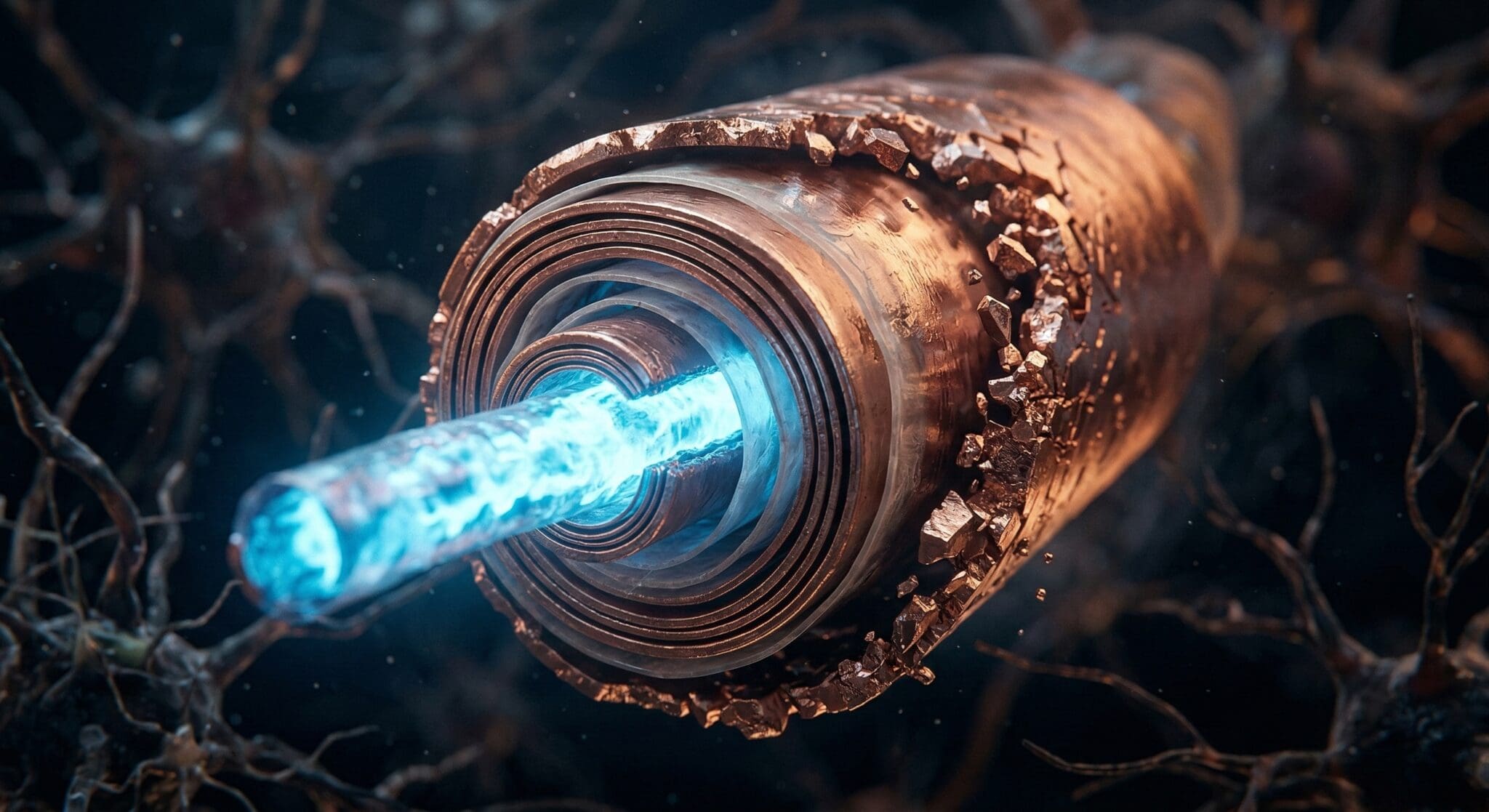
Macro cross-section of neural pathway with copper sheathing forming around blue signal core depicting active brain optimization

Morning Hormones Set Your Daily Performance

The cortisol awakening response is among the most important circadian signals for cognitive function. This response primes the prefrontal cortex for executive engagement, consolidates overnight memory processing, and calibrates emotional regulation — the ability to manage emotional responses — for the day ahead. When the awakening response is blunted or absent — a common consequence of chronic circadian disruption — executive function, working memory, and emotional stability are compromised from the moment the day begins.

Why Nighttime Light Damages Your Brain

Melatonin, the hormone signaling biological night, does far more than promote sleepiness. It is a potent antioxidant, anti-inflammatory molecule, and facilitator of glymphatic clearance — brain’s waste-removal system —. Chronic melatonin suppression through artificial light at night does not merely delay sleep onset. It impairs the brain’s nightly maintenance cycle, allowing neurotoxic metabolites to accumulate in ways that compound over months and years.

The Long-Term Cost of Poor Timing

Circadian disruption is now understood as both a symptom and a driver of neurodegeneration. Research has found that individuals with longer intrinsic cellular circadian periods show a 4.41-fold higher hazard of clinical cognitive decline, independent of other risk factors. Circadian rhythm fragmentation measurably precedes the onset of cognitive impairment, suggesting that clock dysfunction is not merely a consequence of brain aging but an active contributor to it.

Dr. Ceruto’s approach to circadian biology addresses the problem at the level of the biological clock itself. Cortisol curve flattening and amygdala hyperreactivity are not sleep problems. They are disturbances to the fundamental timing architecture that governs when the brain is equipped to perform.

The economic and professional consequences of circadian misalignment are not trivial. Analysis across five OECD nations estimates up to $680 billion in GDP loss annually from insufficient sleep and circadian disruption, with 1.2 million working days lost in the United States alone. At the individual level, circadian misalignment increases the risk of metabolic syndrome by more than 50 percent. It is independently associated with elevated cardiovascular disease risk — consequences that compound the cognitive impairment into broader health vulnerability.

Mahogany desk with crystal brain sculpture and MindLAB journal in warm lamp light surrounded by leather-bound volumes in institutional Wall Street study

How to Fix Your Internal Clock

Effective circadian optimization operates at the level of biological clock entrainment, amplitude, and phase precision. Light protocols calibrated to the suprachiasmatic nucleus’s sensitivity window anchor the circadian phase. Meal timing aligned with peripheral clock gene expression supports metabolic and cognitive rhythms. Temperature protocols reinforce the evening decline that facilitates melatonin onset. Exercise timing amplifies the cortisol awakening response and consolidates circadian amplitude. Each element addresses a specific node in the clock system, and together they restore the biological timing that the brain requires for sustained cognitive performance.

Why Circadian Biology & Cognitive Performance Matters in Wall Street

The Financial District creates a circadian disruption environment (relating to the body’s 24-hour biological clock) with almost no equivalent in the developed world. Professionals working at the major firms and hedge funds operate under conditions that systematically suppress the morning cortisol awakening response, impair melatonin onset. This prevents the restorative brain-cleaning that only occurs during deep, properly timed sleep.

The structural light environment of Lower Manhattan is the first offender. The canyon streets between the NYSE, Federal Reserve Bank, and the office towers on Broad, Exchange, and William Streets are among the most light-deprived daytime environments in any global financial center. Morning commuters arriving before 8:00 AM in winter receive no circadian-resetting sunlight signal before entering office buildings with fluorescent or LED lighting tuned for productivity rather than circadian health. Meanwhile, artificial light at night continuously suppresses melatonin production and delays circadian phase.

The culture itself creates late-phase circadian pressure. Analysts routinely work until 2:00 to 5:00 AM on live deal processes. Traders adapt to early market opens while socializing or working late. Internal surveys documented average sleep of five hours per night for first-year analysts, which is not only insufficient but chronically desynchronizes the circadian system. Research has found that circadian misalignment increases the risk of developing metabolic syndrome by more than 50 percent and is independently associated with elevated cardiovascular disease risk, cortisol rhythm disruption, and mood disorders.

The residential conversion trend in the Financial District adds a layered complication. Professionals living in former office towers on Water Street, Maiden Lane, and Fulton Street are surrounded by 24-hour ambient light, never achieving the environmental darkness that the brain requires to trigger robust melatonin secretion. For anyone navigating the extreme circadian demands of the Financial District, Dr. Ceruto’s circadian biology services at 99 Wall Street address a problem. No conventional provider in the neighborhood has the framework to identify or correct this issue.

Dr. Sydney Ceruto, PhD — Founder, MindLAB Neuroscience

Dr. Sydney Ceruto, PhD — Founder & CEO, MindLAB Neuroscience

Dr. Ceruto holds a PhD in Behavioral & Cognitive Neuroscience from NYU and two Master’s degrees from Yale University. She lectures at the Wharton Executive Development Program at the University of Pennsylvania and has been an Executive Contributor to the Forbes Coaching Council since 2019. Dr. Ceruto is the author of The Dopamine Code (Simon & Schuster, June 2026). She founded MindLAB Neuroscience in 2000 and has spent over 26 years pioneering Real-Time Neuroplasticity™ — a methodology that permanently rewires the neural pathways driving behavior, decisions, and emotional responses.

References

Chellappa, S. L., Morris, C. J., & Scheer, F. A. J. L. (2018). Daily circadian misalignment impairs human cognitive performance task-dependently. Scientific Reports, 8, 3041. https://doi.org/10.1038/s41598-018-20707-4

Logan, R. W., & McClung, C. A. (2019). Rhythms of life: Circadian disruption and brain disorders across the lifespan. Nature Reviews Neuroscience, 20(1), 49-65. https://doi.org/10.1038/s41583-018-0088-y

Musiek, E. S., & Holtzman, D. M. (2016). Mechanisms linking circadian clocks, sleep, and neurodegeneration. Science, 354(6315), 1004-1008. https://doi.org/10.1126/science.aah4968

Roh, H. W., et al. (2026). Cellular circadian period and its deviation associate with Alzheimer’s pathology and brain aging in cognitively impaired older adults. Proceedings of the National Academy of Sciences. https://doi.org/10.1073/pnas.2527236123

Success Stories

“After the concussion, my processing speed collapsed — I couldn't hold complex information the way I used to, and no one could explain why the fog wasn't lifting. Dr. Ceruto mapped the damaged pathways and built compensatory networks around them. My brain doesn't work the way it did before the injury. It works differently — and in some ways, more efficiently than it ever did.”

Owen P., Founder & CEO Sports Performance Scottsdale, AZ

“I'd optimized everything — diet, fitness, sleep — but my cognitive sharpness was quietly declining and no one could explain why. Dr. Ceruto identified the synaptic density patterns that were thinning and built a protocol to reverse the trajectory. This wasn't prevention in theory. My neuroplasticity reserve is measurably stronger now than it was three years ago. Nothing I'd tried before even addressed the right problem.”

Henrique L., Head of Strategic Planning Galp Lisbon, PT

“Nothing was wrong — and that's exactly why no one could help me. I wasn't struggling. I wanted to know what my brain was actually capable of if its resting-state architecture was optimized. Dr. Ceruto mapped my default mode network and restructured how it allocates resources between focused and diffuse processing. The cognitive clarity I operate with now isn't something I'd ever experienced before — and I had no idea it was available.”

Nathan S., Senior Investment Strategist Bridgewater Associates

“Slower processing, foggier recall, decisions that used to be instant taking longer than they should — I'd been accepting it all as inevitable decline for two years. Dr. Ceruto identified the prefrontal efficiency pattern that was degrading and restructured it at the neurological level. The sharpness didn't just come back. It came back faster and more precise than it was a decade ago. Nothing I'd tried before even addressed the right problem.”

Elliott W., General Partner Andreessen Horowitz

“Dr. Ceruto restructured how I show up in high-stakes conversations. The blind spots I couldn’t see for years became visible in our first sessions. I went from an overwhelmed Managing Director to a leader people actually want to follow. The change wasn’t cosmetic — it was architectural. The way I process high-pressure interactions is fundamentally different now.”

Matteo Roussis, Managing Director Director of Investment Banking, Morgan Stanley London, UK

“My kids had been sleeping through the night for three years, but my brain hadn't caught up. I was still waking every ninety minutes like clockwork — no amount of sleep hygiene or supplements touched it. Dr. Ceruto identified the hypervigilance loop that had hardwired itself during those early years and dismantled it at the source. My brain finally learned the threat was over. I sleep through the night now without effort.”

Catherine L., General Counsel Private Equity Greenwich, CT

Frequently Asked Questions About Circadian Biology & Cognitive Performance in Wall Street

What is circadian biology optimization at MindLAB Neuroscience?

Dr. Ceruto provides neuroscience-based education on how the body's master clock system governs cognitive performance. He designs precision protocols to correct the circadian misalignment (relating to the body's 24-hour biological clock) that modern environments and demanding schedules create. This includes light exposure calibration, meal timing alignment, temperature protocols, and exercise timing — each targeting a specific mechanism in the circadian system.

How does circadian disruption affect brain function?

Circadian (relating to the body's 24-hour biological clock) misalignment degrades cognitive performance by 15 to 50 percent across attention, working memory — the brain's short-term mental workspace —, and executive function. This occurs independent of total sleep duration. It flattens the cortisol awakening response needed for executive priming, suppresses melatonin-mediated glymphatic clearance of neurotoxic waste. It also abolishes hippocampal long-term potentiation — neural connection strengthening — during off-phase periods, and promotes prefrontal dendritic atrophy. These are structural and functional brain changes, not merely subjective tiredness.

Who benefits from circadian biology services?

Individuals whose schedules, environments, or habits have disrupted the biological timing their brain depends on — those working late into the night, those with irregular sleep-wake patterns, those who never see morning sunlight before entering an office. Those experiencing cognitive inconsistency across the day that sleep duration alone does not explain. Anyone whose wearable data shows low recovery scores or fragmented sleep architecture despite adequate time in bed may have a circadian (relating to the body's 24-hour biological clock) problem rather than a sleep problem.

How does someone begin working with Dr. Ceruto on circadian optimization?

The process starts with a Strategy Call — a phone-based conversation to discuss circadian (relating to the body's 24-hour biological clock)-related concerns and determine whether neuroscience-based clock optimization is appropriate. The Strategy Call costs $250 and provides clarity on what a personalized circadian program would involve. Program structure and investment details are discussed during the Strategy Call.

How quickly can circadian alignment improve cognitive performance?

Light-based circadian entrainment (relating to the body's 24-hour biological clock) can begin shifting the clock within days. The cortisol awakening response can begin normalizing within one to two weeks of consistent morning light exposure. Deeper circadian metrics — melatonin timing, sleep architecture quality, peripheral clock alignment — typically require four to eight weeks of consistent protocol adherence. Dr. Ceruto tracks circadian markers to ensure the biological clock is moving toward optimal alignment rather than merely improving subjective sleep quality.

Take the First Step Toward Circadian Biology & Cognitive Performance

The Strategy Call is a focused conversation with Dr. Ceruto that maps the specific neural mechanisms driving your concerns and determines the right path forward.

Book a Strategy Call
MindLAB Neuroscience consultation room
Locations

The Intelligence Brief

Neuroscience-backed analysis on how your brain drives what you feel, what you choose, and what you can’t seem to change — direct from Dr. Ceruto.