Emotional Dysregulation on Wall Street

Financial culture requires flat affect during the highest-stakes moments. The emotional energy that's suppressed at the desk doesn't disappear — it relocates.

The reaction was bigger than the situation — and you knew it, even as it was happening. The intensity came out of nowhere, or so it seemed, and now there's the familiar aftermath: the confusion, the exhaustion, the gap between who you intend to be and what actually emerges when the pressure hits. At MindLAB Neuroscience, I work with people whose emotional responses no longer feel calibrated to the actual events triggering them — not to manage symptoms, but to address the neural architecture driving the pattern.

Emotional dysregulation is not a character flaw, an anger problem, or a lack of self-control. It is a disruption in the brain's emotional response calibration system — the network responsible for matching the intensity of a response to the actual weight of a situation. When that system is dysregulated, the signal is genuinely disproportionate. The brain is not overreacting. It is responding accurately to its own miscalibrated threat model. That distinction matters for how the work is done.

Book a Strategy Call

What Dysregulation Actually Is

The word “dysregulation” is used loosely in popular culture to describe any emotional intensity that feels inconvenient. But at the neural level, it describes something specific: a failure in the brain’s capacity to modulate the size and duration of an emotional response relative to the triggering event. The emotions are real. The problem is calibration — the emotional response calibration system is producing outputs that don’t match the inputs.

This involves two primary neural structures working in opposition. The amygdala — the brain’s threat-detection and emotional tagging system — fires rapidly, assigning emotional weight to incoming information. Under normal conditions, the prefrontal cortex — responsible for context-evaluation and regulatory override — receives that signal, assesses it against current reality, and modulates the response accordingly. In emotional dysregulation, this handoff fails. The amygdala fires with high intensity; the prefrontal override either doesn’t engage in time or lacks the regulatory bandwidth to contain the response.

The result is an emotional output that is disproportionate — too large, too fast, too long, or all three. The person experiencing it often has simultaneous awareness that the reaction doesn’t fit the moment. That meta-awareness doesn’t help in real time because the awareness lives in the prefrontal system while the response is being generated at the amygdala level. Two systems running on different timescales, with the faster one winning.

Rapid Shifts and Emotional Whiplash

For some people, the core pattern is not a single large reaction but a rapid cycling through emotional states — from calm to flooded, from connected to withdrawn, from confidence to collapse — within short windows. This is not instability in any character-level sense. It reflects a dysregulated emotional response calibration system that lacks a stable baseline, such that incoming information — a tone of voice, an ambiguous message, a perceived slight — triggers disproportionate state changes.

When the amygdala is chronically hyperactivated, the threshold for triggering an emotional shift drops significantly. Events that would process as neutral in a calibrated system are read as threat data. The brain’s predictive modeling — its continuous effort to anticipate what comes next — becomes skewed toward negative outcomes, because the threat-detection circuitry has been running at high sensitivity for an extended period. Each emotional cycle reinforces the pattern: the brain encodes the reaction as the appropriate response to that type of input, and the threshold drops a little further.

The Aftermath

One of the most consistent features of emotional dysregulation is the aftermath — the period following a disproportionate response in which the person must process not only the original triggering situation but the reaction itself. This frequently involves shame, self-criticism, exhaustion, and a kind of bewildered self-examination: where did that come from.

The aftermath matters neurologically because it is a second wave of emotional processing layered on top of the first. The prefrontal cortex, which failed to regulate the initial response, now runs an evaluation of that failure. For people with hyperactive error-detection circuitry, this produces a recursive loop: the reaction triggers shame, the shame triggers self-criticism, the self-criticism produces another emotional state requiring regulation, and the regulatory system — already depleted from the initial episode — now has fewer resources than before.

Understanding the aftermath as a neurological cascade — not a character indictment — changes how it can be engaged. The goal is not to eliminate the capacity for strong emotional response. It is to restore the regulatory architecture so that responses are proportionate, duration is bounded, and the aftermath doesn’t compound the original episode.

When Emotional Intensity Becomes a Relational Pattern

Emotional dysregulation rarely stays contained to the individual experiencing it. The people in closest proximity — partners, family members, colleagues — learn to navigate the pattern, often developing secondary strategies around the primary person’s emotional state. They may walk carefully, avoid certain topics, manage their own behavior to prevent triggering a response. The relationship organizes itself around the dysregulation, which is itself a significant cost — to both parties, over time.

There is often a specific asymmetry in these relationships. The person experiencing dysregulation frequently has more emotional intensity and less memory distortion than a partner might expect — they often remember the episode in sharp detail, including the shame of it. What they lack is the regulatory window between trigger and response. From the outside, this can look like impulsivity or indifference. From the inside, it is often experienced as a kind of helplessness: watching yourself react in a way you cannot stop.

The relational dimension is not a separate problem to be addressed after the neural work. It is downstream of the neural pattern, and it changes as the pattern changes. When the amygdala is no longer operating at chronic high alert, the threshold for triggering shifts. The window between stimulus and response widens. The person in the relationship stops requiring the same level of emotional management from the people around them. That is not a small change in daily life.

What the Work Targets

The work I do at MindLAB is not about teaching emotion management strategies. Strategies require the prefrontal cortex to be online at the moment of triggering — which is precisely when it is most likely to be offline. Teaching better coping strategies to a dysregulated brain is like adding a warning label to a faulty circuit. It doesn’t address the fault.

What the work targets is the underlying architecture: calibrating the amygdala’s baseline activation level, restoring the prefrontal regulatory capacity, and rebuilding the emotional response calibration system so that proportionality becomes the default rather than the goal. This requires working at the level of the neural pattern — not the behavior it produces, not the thoughts that accompany it, not the life circumstances that activate it, but the mechanism itself.

The changes this produces are experienced as a shift in the internal baseline — a settling that people often describe as having access to themselves in a way that wasn’t possible before. Not flat, not numb, not managed. Regulated. The difference is significant, and for people who have lived with chronic dysregulation, it is often unfamiliar enough to require some adjustment. The absence of the constant internal weather is, itself, something to navigate. That is part of the work too.

Why Emotional Dysregulation Matters in Wall Street

Wall Street has a well-developed institutional strategy for managing emotional dysregulation: suppress it at the desk, export it elsewhere. The professional culture of financial services demands emotional containment during market hours, client interactions, and internal reviews. This is not pathological — emotional regulation is genuinely necessary for good decision-making under market pressure. The problem is structural: containment is not the same as regulation, and what is suppressed during the workday does not disappear.

Mahogany desk with crystal brain sculpture and MindLAB journal in warm lamp light surrounded by leather-bound volumes in institutional Wall Street study

JPMorgan’s five-day return-to-office mandate represents something significant from a neural standpoint. The elimination of remote work means five full days per week of sustained emotional containment: the performance of confidence in volatile markets, the management of interpersonal dynamics on crowded floors, the maintenance of composure through the kinds of high-stakes interactions that financial culture produces. For someone whose emotional response calibration system has limited regulatory bandwidth, five days of sustained containment is five days of accumulated pressure with no discharge point.

The bonus cycle creates a predictable annual pattern of emotional extremes. The period leading to bonus determination involves months of sustained uncertainty — a chronic activation of threat-detection systems in an environment where the outcome is both financially significant and professionally identity-defining. When the number arrives, the emotional response is rarely proportionate in either direction: the good outcome produces a relief response out of scale with the reward, and the disappointing outcome produces a collapse response that can last weeks. This is the emotional response calibration system running at the extremes of its range rather than operating in a proportionate middle ground.

WSO forums provide an unusually candid window into the private emotional landscape of finance professionals. Anonymous posts about emotional exhaustion, reactive behavior in relationships, inability to decompress, and the specific horror of recognizing yourself in the aftermath of a disproportionate reaction — these are not fringe experiences. They are common enough to generate substantial community discussion, which suggests that the public face of Wall Street composure sits on top of a significant private layer of dysregulation that the culture does not create space to address.

The specific pressure of trading floors deserves attention. Trading requires flat affect during the very moments when the emotional stakes are highest — when positions are moving against you, when a decision has to be made in seconds with incomplete information, when public performance of confidence has direct market consequences. The demand is essentially: feel intensely, display nothing, decide correctly. For people with a dysregulated amygdala response, this demand is not just difficult — it is neurologically expensive. The regulatory effort required to suppress an active threat response while also performing confidence and making high-quality decisions depletes the prefrontal regulatory system at a rate that is not sustainable across a career.

The relationship cost tends to become apparent in the mid-career range — associate to VP, late twenties into the forties — when the suppression-at-work, dysregulation-at-home pattern has been running long enough to produce visible damage. Partners describe living with someone who is completely controlled professionally but who reacts disproportionately to minor household friction, whose emotional responses are unpredictable in a way that doesn’t match the person they married, who cannot seem to access the same equanimity at home that they demonstrate in every other context. The professional and the personal are not different people. They are the same neural system operating under different rules — and when the rules relax, the accumulated regulatory debt comes due.

The work I do with finance professionals is not about emotional management during volatility. It is about rebuilding the underlying calibration architecture so that the regulatory system can handle the demands of the environment without requiring constant suppression and producing regular overflow. When that happens, both the professional and the personal stabilize — not because the person has changed their values or reduced their ambition, but because the system running underneath those things is finally working proportionately.

If the control that works at the desk isn’t working at home — or if the accumulation is starting to show up in ways you can no longer manage — a Strategy Call is the right next step. Phone only. $250.

Dr. Sydney Ceruto, PhD — Founder, MindLAB Neuroscience

Dr. Sydney Ceruto, PhD — Founder & CEO, MindLAB Neuroscience

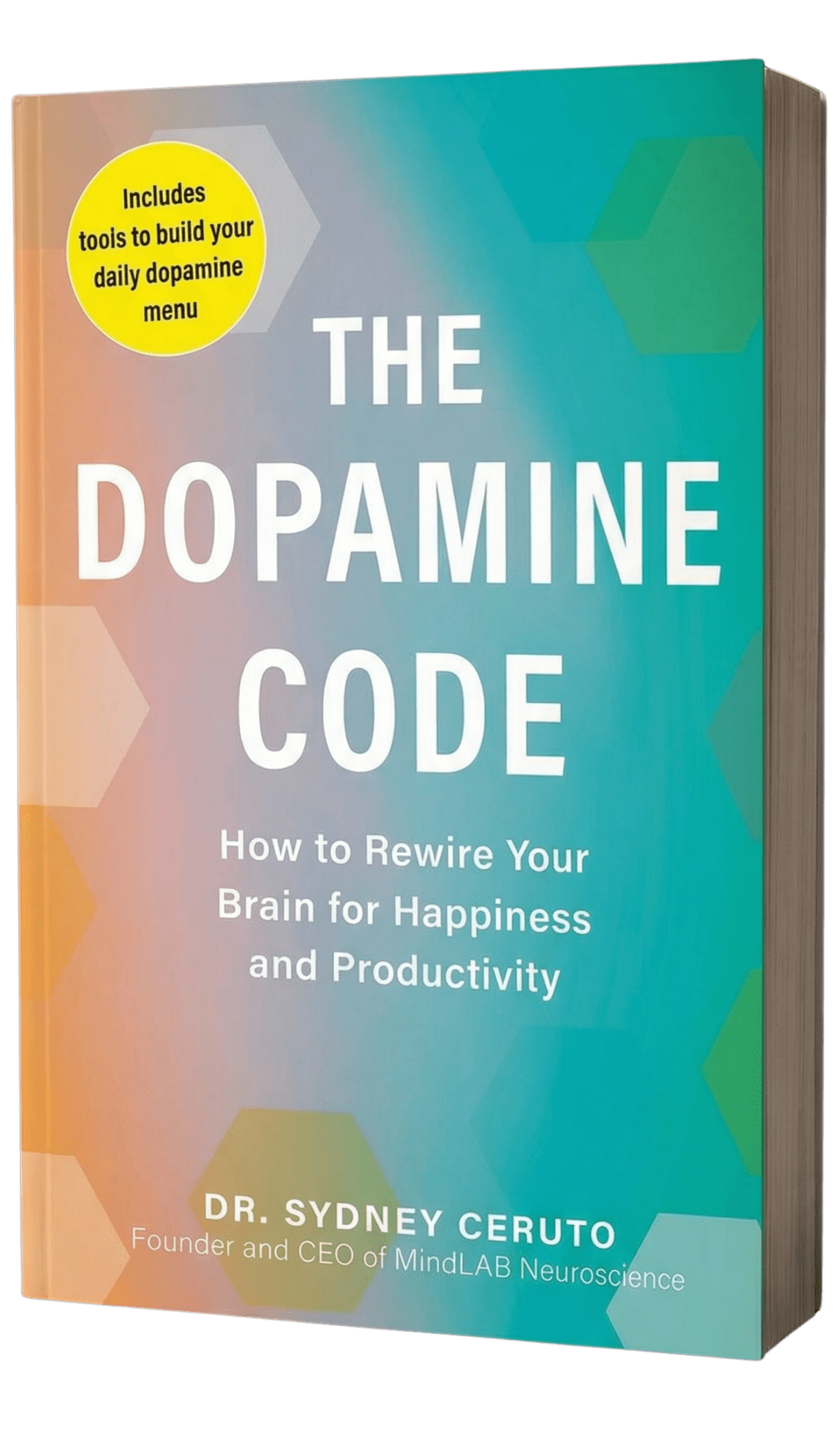
Dr. Ceruto holds a PhD in Behavioral & Cognitive Neuroscience from NYU and two Master’s degrees from Yale University. She lectures at the Wharton Executive Development Program at the University of Pennsylvania and has been an Executive Contributor to the Forbes Coaching Council since 2019. Dr. Ceruto is the author of The Dopamine Code (Simon & Schuster, June 2026). She founded MindLAB Neuroscience in 2000 and has spent over 26 years pioneering Real-Time Neuroplasticity™ — a methodology that permanently rewires the neural pathways driving behavior, decisions, and emotional responses.

References

Gross, J. J. (2002). Emotion regulation: Affective, cognitive, and social consequences. *Psychophysiology*, 39(3), 281–291. https://doi.org/10.1017/S0048577201393198

Ochsner, K. N., & Gross, J. J. (2005). The cognitive control of emotion. *Trends in Cognitive Sciences*, 9(5), 242–249. https://doi.org/10.1016/j.tics.2005.03.010

Arnsten, A. F. T. (2009). Stress signalling pathways that impair prefrontal cortex structure and function. *Nature Reviews Neuroscience*, 10(6), 410–422. https://doi.org/10.1038/nrn2648

LeDoux, J. E., & Pine, D. S. (2016). Using neuroscience to help understand fear and anxiety: A two-system framework. *American Journal of Psychiatry*, 173(11), 1083–1093. https://doi.org/10.1176/appi.ajp.2016.16030353

Success Stories

“Unfortunate consequences finally forced me to deal with my anger issues. Nothing was clicking until I found Sydney's approach. Her insightfulness and warm manner helped me through a very low point in my life. Together we worked through all my pent-up anger and rage, and she gave me real tools to manage it going forward. I now work to help others learn how to control their own anger.”

Gina P. — Trial Attorney Naples, FL

“Every close relationship I had eventually hit the same wall — I'd flood emotionally and shut down or explode, and nothing I'd tried gave me real control over it. Dr. Ceruto identified that my autonomic nervous system was defaulting to fight-or-flight the moment real intimacy was on the line. She restructured the default. The flooding stopped because the trigger architecture changed.”

Simone V. — Publicist New York, NY

“I could perform at the highest level professionally and still feel hijacked emotionally in my closest relationships. Dr. Ceruto identified the limbic imprint — an amygdala encoding from childhood that was running every intimate interaction I had. She dismantled it. The reactivity isn't something I regulate anymore. The pattern that generated it is gone.”

Natasha K. — Art Advisor Beverly Hills, CA

“The numbness crept in so gradually I didn't notice until I couldn't feel anything — not stress, not connection, not even relief when things went well. Dr. Ceruto identified it as a dorsal vagal shutdown — my nervous system had flatlined as a survival strategy. Within ninety days, the signal came back. I feel things again, clearly and without overwhelm.”

Marcus H. — Fund Manager Dallas, TX

“The same relational patterns my mother and grandmother lived through kept repeating in my own life — the hypervigilance, the emotional shutdown, the inability to feel safe even when nothing was wrong. Dr. Ceruto identified the epigenetic stress signatures driving the pattern and restructured them at the neurological level. The cycle that ran through three generations stopped with me.”

Gabriela W. — Real Estate Developer Miami, FL

“Three months. That’s how long it took to go from debilitating panic to leading with clarity. Years of conventional approaches hadn’t moved the needle — Dr. Ceruto identified the root neural pattern and eliminated it. She didn’t teach me to manage the panic. She made it unnecessary. I didn’t know that was possible.”

Ella E. — Media Executive Manhattan, NY

Frequently Asked Questions About Emotional Dysregulation

What is emotional dysregulation exactly?

At the neural level, emotional dysregulation is a disruption in the brain's capacity to match the size and duration of an emotional response to the actual weight of the triggering event. It is not excessive emotion in general — it is a calibration failure. The amygdala generates an emotional signal of a certain intensity; the prefrontal cortex is responsible for assessing that signal against current context and modulating the response. When that modulation fails — because the amygdala is hyperactivated, because the prefrontal regulatory system is depleted, or both — the result is responses that are too large, too fast, or too prolonged relative to what is actually happening.

Why do my reactions feel so out of proportion to what actually happened?

Because the reaction is not being generated in response to what actually happened. It is being generated in response to what the brain's threat-detection system determined the event meant — which is a different assessment, filtered through prior experience, encoded threat patterns, and current regulatory bandwidth. The amygdala does not evaluate events neutrally. It compares them against a library of prior threat data and generates a response sized to the threat level in that library. When the library is skewed toward high-threat — by prior experience, by chronic stress, by a history of situations where emotional intensity was appropriate and necessary — the calibration produces disproportionate responses to present-moment inputs that resemble the prior patterns.

Is emotional dysregulation the same as having anger issues?

No — though anger is one of the emotions that can become dysregulated. Emotional dysregulation describes a calibration failure that can affect any emotional state: anger, fear, sadness, excitement, shame, elation. The common thread is disproportionality and disrupted modulation, not any specific emotion. Some people experience dysregulated anger. Others experience dysregulated grief that arrives and doesn't resolve. Others cycle rapidly through multiple emotional states. The neural mechanism is the same across these presentations — the specific emotion that becomes dysregulated depends on the individual's history and the contexts that activate their threat-detection system.

I know my reaction doesn't fit the situation while it's happening. Why can't I stop it?

Because the awareness and the reaction are generated by different parts of the brain operating on different timescales. The amygdala produces an emotional response in milliseconds. The prefrontal cortex, which is where the meta-awareness lives, operates much more slowly. By the time the prefrontal system has registered that the response is disproportionate, the emotional state is already active in the body and in behavior. Knowing the reaction is too large does not give the prefrontal cortex enough regulatory control to contain it in real time — especially when the regulatory system is already depleted or when the amygdala activation is particularly intense. This is not a willpower failure. It is a timing and capacity problem.

Can emotional dysregulation be related to things that happened a long time ago?

Yes, and often substantially so. The brain's threat-detection system is shaped by experience, and experiences in which strong emotional responses were necessary for survival — or in which emotional intensity was the environment — encode calibration settings that persist beyond the original context. An amygdala that learned to fire at high intensity in an unpredictable early environment carries that calibration into adult circumstances where the threat level is genuinely lower. The present-moment trigger is real; the response is sized for a threat that no longer exists in the same form. This is not about excavating the past as an end in itself — it is about understanding what the calibration system learned, so that the work can update the setting.

How does emotional dysregulation affect relationships?

The people in closest proximity to someone with a dysregulated emotional response calibration system typically develop secondary strategies around the pattern: walking carefully, avoiding certain topics, managing their own presentation to reduce activation risk. The relationship gradually reorganizes itself around the dysregulation, which creates a significant ongoing cost for both parties. The person experiencing the dysregulation is often aware of this — they may have more insight into the pattern than their partner or family members expect — but awareness alone doesn't change the regulatory architecture driving the behavior. The relational cost doesn't require addressing separately; it changes downstream when the neural pattern changes.

What's the difference between emotional sensitivity and emotional dysregulation?

Emotional sensitivity — a high degree of responsiveness to emotional data in the environment — is not inherently dysregulatory. It becomes dysregulation when the responses produced by that sensitivity are disproportionate, when they exceed the regulatory system's ability to contain them within a functional range, or when recovery from an emotional state takes significantly longer than the triggering event warrants. High sensitivity combined with a well-calibrated regulatory system produces rich emotional experience without the chaos. It is the combination of high input sensitivity and low regulatory capacity that produces dysregulation. The work targets the regulatory side — not by reducing sensitivity, but by expanding the capacity to work with it proportionately.

Why haven't emotion management strategies worked for me?

Because management strategies require the prefrontal cortex to be actively engaged in the moment of triggering — which is precisely when the amygdala is most dominant and prefrontal access is most reduced. Breathing techniques, cognitive reframes, mindfulness practices — these work well when the regulatory system has sufficient capacity and the emotional activation is within a range that the prefrontal system can work with. For genuinely dysregulated patterns, the triggering event overwhelms regulatory capacity before any strategy can be deployed. The strategy is sound. The architecture it relies on is insufficient. That's not a failure of the strategy or of the person using it — it is a mismatch between the tool and the level at which the problem lives.

What does a Strategy Call involve?

A Strategy Call is a one-hour phone conversation — $250 — in which we examine your specific pattern: what the reactions look like, what triggers them, how long they've been present, what has and hasn't worked, and what the neural architecture driving them appears to be. It is a real assessment, not a sales call. You will leave the conversation with a clearer understanding of what is happening and what the work would actually involve. If there is a fit for deeper engagement, we discuss what that looks like. If there isn't, the conversation still produces clarity. Phone only — the number is on this page.

Is the goal to become less emotional?

No. The goal is calibration, not reduction. A well-regulated emotional system is not a flat one — it produces full-range emotional experience sized appropriately to the actual inputs. Grief at genuine loss, anger at genuine injustice, joy at genuine connection. What changes with the work is the disproportionality: the reactions that were too large for their triggers become proportionate; the duration extends and compresses in ways that match the actual weight of events; the recovery from strong emotional states happens at a pace that is workable rather than prolonged. Emotional range is preserved. What is reduced is the chaos around it.

Also available in: Miami · Midtown Manhattan · Beverly Hills · Lisbon

Take the First Step

The Strategy Call is a focused conversation with Dr. Ceruto that maps the specific neural mechanisms driving your concerns and determines the right path forward.

Book a Strategy Call
MindLAB Neuroscience consultation room
Locations

The Intelligence Brief

Neuroscience-backed analysis on how your brain drives what you feel, what you choose, and what you can’t seem to change — direct from Dr. Ceruto.