Why Organizational Change Programs Fail
“Seventy percent of organizational change initiatives fail to achieve their stated objectives. This is not a management failure — it is a neuroscience failure. The brain's threat-detection architecture, evolved for physical survival, cannot distinguish between a territorial predator and an ambiguous organizational announcement.”
Your organization has invested in transformation. The strategy was sound. The frameworks were credible. The consultants delivered their recommendations with precision and confidence. And somewhere between the strategy deck and implementation, the program stalled.
The post-mortem diagnosis was familiar: “insufficient buy-in,” “change fatigue,” “leadership alignment gaps.” These labels describe the symptom. They do not explain the mechanism.
The mechanism is biological. Every restructuring announcement, every AI displacement memo, every mandate that disrupts routine is processed by the brain as a threat before it is evaluated as an opportunity. The amygdala activates in milliseconds. Cortisol surges. The prefrontal cortex — the brain’s executive control center — is suppressed. Your workforce is being asked to embrace change while their brains are running a survival response that makes change neurologically impossible.
This is not a metaphor. Gallagher’s 2025 employee communications research found that change fatigue ranked in the top five organizational barriers for the first time. Forty-four percent of HR leaders now cite it as a key battleground. The problem is accelerating because organizations keep applying behavioral change frameworks to a neurobiological problem.
The organizations that have spent millions on transformation and watched it plateau are not failing because their strategy is wrong. They are failing because no one has addressed the neural state of the people who must execute that strategy.
The Neuroscience of Organizational Resistance
Organizational resistance is often blamed on culture, politics, or stubbornness. Neuroscience reveals a more precise explanation. The brain’s threat architecture activates under the conditions that change creates. That threat response then suppresses the cognitive functions required for successful adaptation.
Research by Staw, Sandelands, and Dutton described the threat-rigidity response — narrowing thinking under pressure. This is measurable. Individuals under threat revert to familiar, well-rehearsed responses. At the same time, they lose access to the novel thinking and adaptive behavior that transformation demands. The neural basis of this response is well documented. A 2025 meta-analysis of seventy-six studies identified consistent activation in the anterior insula under conditions of uncertainty.
This region governs awareness, cognitive control, and attentional flexibility. Uncertainty does not merely create discomfort. It actively degrades the neural infrastructure required to navigate that uncertainty. Amy Edmondson’s foundational research on psychological safety established that team learning depends on the perceived safety of interpersonal risk-taking. When people fear punishment for speaking up, the neurological conditions for learning are suppressed across the entire organization. Psychological safety is not a cultural nicety. It is a biological prerequisite for the brain rewiring that organizational change requires.
The pattern that presents most often is organizations running change programs inside brains that are actively resisting change not out of obstinacy, but out of neurobiological self-preservation.
The Amygdala Hijack in Organizational Settings
Daniel Goleman’s concept of the amygdala hijack describes a specific neurological sequence. The amygdala overrides the cortex during intense emotional activation. The result is a sudden reaction disproportionate to the stimulus, followed by behavior the individual later regrets.
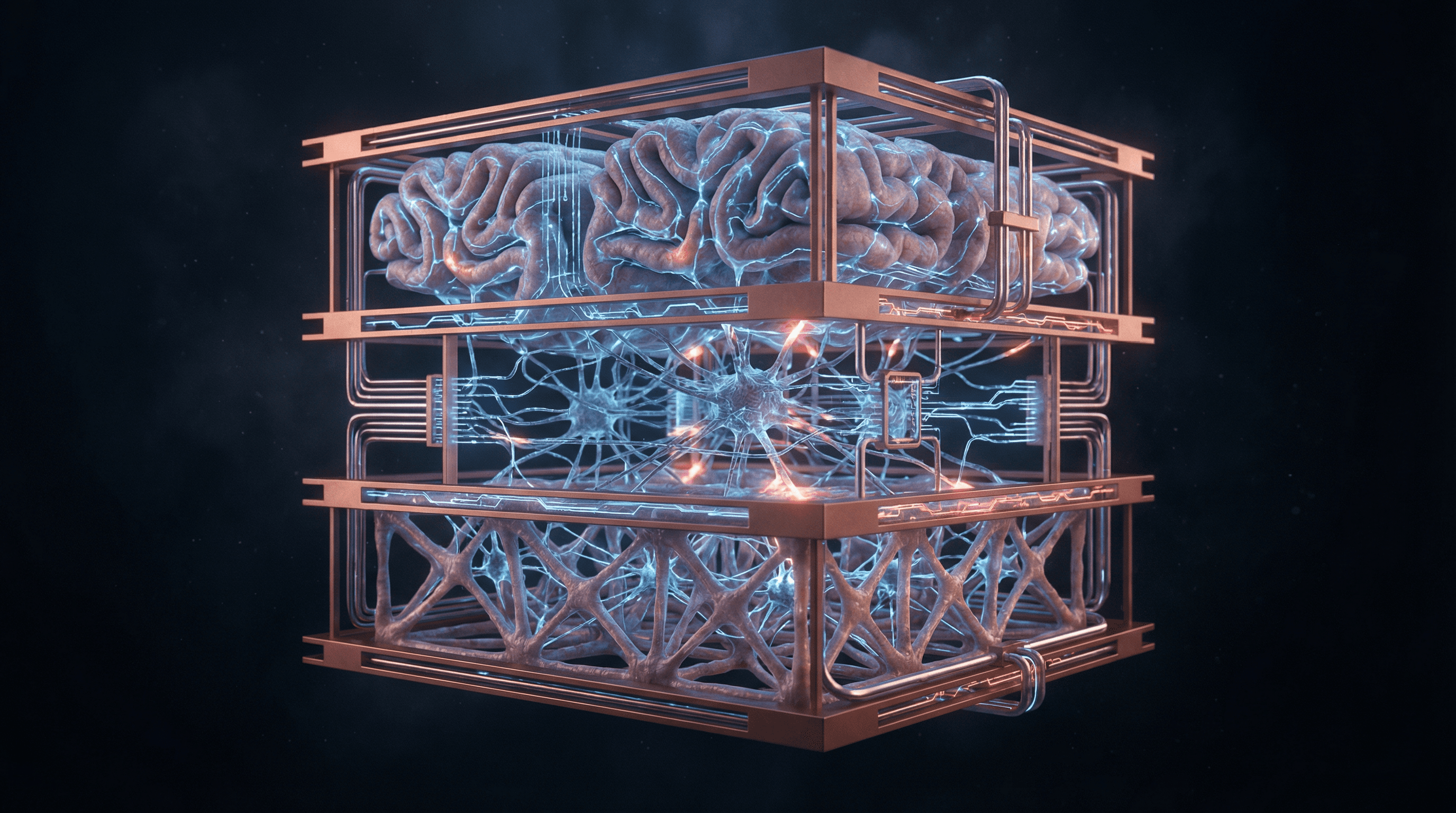
In organizational contexts across the Financial District, these events are not character flaws. They are neurobiological events driven by HPA axis — the body’s central stress-response system — activation. That activation temporarily disables the prefrontal cortex’s regulatory function.
The organizational cost compounds. Each amygdala-driven leadership event deepens the threat environment for the broader team. It further suppresses the psychological safety and cognitive flexibility the organization needs.
How Dr. Ceruto Approaches Organizational Transformation
Dr. Ceruto operates at the circuit level, not the behavioral level. The diagnostic question is not “why aren’t your leaders aligned?” It is “what neural state is your leadership population operating from?” And how is that state generating the behaviors you observe?
This reframe changes the entire intervention logic. Real-Time Neuroplasticity(TM) addresses the biological roots of organizational resistance directly. The methodology begins with a threat environment assessment. Dr. Ceruto maps the specific conditions producing amygdala activation and prefrontal suppression across your organization. From that assessment foundation, she engineers the neural conditions under which adaptation becomes biologically possible.
This includes targeted amygdala modulation protocols for leaders whose threat responses are contaminating organizational decisions. It includes psychological safety architecture — not the workshop-driven version that produces temporary behavioral compliance, but the structural neural conditions under which teams can actually take the interpersonal risks that learning and innovation require. It includes prefrontal recalibration for the executive leadership population, restoring the cognitive flexibility that sustained threat exposure degrades.
Through the NeuroSync(TM) program for focused organizational leadership work or the NeuroConcierge(TM) program for comprehensive embedded advisory across complex transformation initiatives, Dr. Ceruto addresses the precise failure mode that causes sophisticated change programs to collapse. The work succeeds specifically in high-threat, high-stakes, structurally resistant organizational systems. These are the conditions where the gap between behavioral change management and neurobiologically informed advisory is widest.
In over two decades of this work, the most consistent finding is that organizations do not resist change. Their brains resist threat. Remove the threat architecture, and the capacity for change is already there.
What to Expect
The engagement begins with a Strategy Call where Dr. Ceruto assesses the specific organizational dynamics driving resistance, stagnation, or transformation failure. This initial conversation maps the neural landscape. It identifies which threat responses are active, which leadership circuits are compromised, and where the biological barriers to change are concentrated.
A structured protocol follows, designed around your organization’s specific transformation objectives and the neural architecture of the leadership population. The methodology integrates into your existing change initiatives. It does not replace your strategic plan but addresses the biological layer that determines whether your plan can actually be implemented.
Progress is measured through organizational outcomes, not workshop evaluations. The benchmarks are observable: decision quality under uncertainty, leadership stability during disruption, team adaptive capacity under changing conditions, and the speed at which new organizational behaviors are adopted and sustained. Each phase builds verified neural change that compounds across the leadership population and cascades into the broader organization.
The Neural Architecture of Organizational Performance
Organizational development is, at its most precise, the study of how collective human neural architecture produces organizational behavior — and how to modify that architecture to produce different behavior at scale. The structures, systems, and culture that OD consulting addresses are not independent of the people who inhabit them. They are the aggregate output of the neural prediction systems, reward architectures, threat responses, and social neural circuits of every individual in the organization, operating in interaction with each other and with the organizational environment. Changing organizational performance requires changing these neural systems, not just the structures that express them.
The prefrontal capacity of the organizational leadership layer is the primary constraint on organizational development. The structures and systems that OD consultants design cannot be more sophisticated than the prefrontal capacity of the leadership population implementing them. A governance structure that requires sustained cognitive flexibility, nuanced contextual judgment, and complex multi-stakeholder integration to function effectively will be simplified by the brains operating it to a level they can manage — regardless of how well it was designed. This simplification is not a conscious decision. It is the brain’s predictive coding system finding the most efficient operating pattern given its current regulatory capacity.
The social neural architecture of the organization is the second critical variable. Every organizational structure exists within a social neural environment — a distributed network of threat responses, status hierarchies, belonging signals, and social reward patterns that determines which of the structure’s intended functions are actually reinforced by the social environment and which are quietly overridden by social neural imperatives. An accountability structure that creates social threat for the behaviors it is trying to reinforce will be systematically subverted by the social neural imperative to minimize threat, regardless of its logical coherence.
Why Traditional Approaches Fall Short
Organizational development consulting has built sophisticated frameworks for diagnosing organizational dysfunction and designing structural, systemic, and cultural interventions. The best OD practice combines rigorous diagnostic methodology, evidence-based intervention design, and skilled change management to produce genuine organizational improvement. The fundamental limitation is that these frameworks operate at the level of organizational systems and professional behavior without directly addressing the neural architecture generating the behavior the systems are designed to modify.
This produces a characteristic pattern: structural interventions that improve organizational performance in the short term, followed by a progressive reversion to previous performance patterns as the neural architectures of the people inhabiting the new structures reassert their established patterns. The new accountability structure is adopted and then gradually re-interpreted to be consistent with existing threat avoidance patterns. The new collaborative model is implemented and then progressively undermined by the status and belonging dynamics that the social neural architecture generates. The performance management redesign produces initial behavioral compliance and then the normative drift that always follows when the system conflicts with the neural environment it is embedded in.

The missing element is neural-level diagnosis and intervention. OD consulting that can identify the specific neural architectures most powerfully maintaining the organizational patterns that need to change, and design interventions that address those architectures directly, can produce organizational development that holds — because the neural substrate generating the organizational behavior has been modified, not just the systems expressing it.
How Neural OD Consulting Works
My approach to organizational development consulting begins with a neural diagnostic layer that operates beneath the conventional OD assessment. The standard diagnostic — organizational surveys, leadership interviews, process analysis, structural mapping — reveals the behavioral and systemic expression of organizational patterns. The neural diagnostic examines the circuits generating those patterns: the threat architectures most powerfully shaping decision behavior, the reward systems most powerfully sustaining the existing performance patterns, the social neural dynamics most powerfully overriding the intended functions of existing structures, and the prefrontal capacity available in the leadership layer to sustain and model the organizational development the change requires.
From this layered diagnostic, I design OD interventions that address both the structural and neural dimensions simultaneously. The structural interventions — the governance redesign, the process architecture, the accountability systems, the role clarity — are designed not just for their logical coherence but for their compatibility with the neural architectures that will implement them. This means designing structures that work with the brain’s reward and threat systems rather than against them — creating environments in which the neural imperatives of the professional population and the intended functions of the organizational systems are aligned rather than in conflict.
The neural development component focuses on the leadership layer, because leadership neural architecture is the primary determinant of whether organizational development holds or reverts. Leaders whose regulatory capacity is rebuilt, whose reward systems are recalibrated to the actual reward landscape of organizational leadership, and whose threat responses are recalibrated to the specific threat signals most undermining their organizational development effectiveness are the most powerful OD intervention available. They are the social neural models that the rest of the organization’s prediction systems are most powerfully calibrated to.
What This Looks Like in Practice
Organizational development consulting engagements begin with a Strategy Call in which I map the presenting organizational performance challenge against its most likely neural substrates. This conversation identifies whether the presenting challenge is primarily a structural problem, a neural architecture problem, or the more common combination of the two — and designs an engagement accordingly.
For organizations addressing a specific, well-defined organizational development challenge — a particular team’s dysfunction, a specific process failure, a leadership transition requiring organizational realignment — the NeuroSync model provides focused consulting designed around both the structural and neural dimensions of that specific challenge. For organizations undertaking broad organizational development initiatives spanning multiple years and affecting the full professional population, the NeuroConcierge model provides the embedded consulting partnership required to address organizational development at the neural depth that lasting change requires. The engagement is calibrated to organizational and neural development timelines simultaneously — because the rate of lasting organizational change is ultimately constrained by the rate of neural change in the people generating organizational behavior.
For deeper context, explore personal development in organizational growth.