Overthinking & Mental Clarity Support in Wall Street

When the brain's reflection system runs without an off-switch and cognitive clarity degrades despite effort, the problem is circuit-level — rooted in specific neural networks that can be identified and restored.

Overthinking, mental fog, and cognitive overload are not character flaws or inevitable consequences of a demanding life. They are expressions of identifiable neural dysregulation — measurable disruptions in the brain’s attentional networks, filtering systems, and executive control architecture that targeted intervention can address.

Book a Strategy Call

Analysis Paralysis

Analysis paralysis is a measurable neural event — the brain’s value-comparison system overwhelmed by competing signals until no option can win the internal competition. The stall involves ventromedial prefrontal cortex value-signal noise, anterior cingulate cortex conflict escalation, and loss-aversion dominance from the amygdala-insula circuit, compounded by dopaminergic information-seeking that feels like progress but degrades resolution. Dr. Ceruto restores the brain’s decision architecture at the circuit level.

Learn more about Analysis Paralysis in Wall Street →

Cognitive Overload

Cognitive overload reflects the brain’s information-processing architecture pushed past its hard biological limits — working memory saturated beyond its four-chunk capacity, prefrontal metabolic reserves depleted, and the amygdala freed from executive regulation. The overload cascade progresses from compensatory effort through decompensation, producing emotional volatility, decision fatigue, and loss of strategic thinking capacity. Dr. Ceruto identifies the stage and targets restoration of the neural load-management systems.

Learn more about Cognitive Overload in Wall Street →

Mental Fog & Cognitive Clarity

Mental fog reflects measurable disruptions in three interacting systems: neuroinflammation that degrades synaptic signal quality, disrupted neuromodulation that impairs the brain’s attentional filter, and attentional network breakdown that allows internally generated content to intrude on task-directed processing. Dr. Ceruto identifies which convergent mechanisms are driving the individual’s fog pattern and targets the neural sources directly.

Learn more about Mental Fog & Cognitive Clarity in Wall Street →

Overthinking & Rumination

Chronic rumination is a neural loop — hyperactivation of the default mode network combined with salience network switching failure that prevents the brain from disengaging self-referential processing. The subgenual prefrontal cortex continuously tags ruminative content as emotionally significant, and the executive system burns cognitive fuel trying to contain a loop it cannot suppress. Dr. Ceruto targets the specific circuit dysfunction sustaining each individual’s pattern.

Learn more about Overthinking & Rumination in Wall Street →

Perfectionism

Perfectionism involves three interdependent neural systems conspiring against satisfaction: an orbitofrontal cortex that inflates expected-value standards beyond what any real outcome can match, an anterior cingulate cortex that treats every error as a high-stakes threat, and a striatal dopamine pathway that fails to register adequate performance as rewarding. The downstream result is the perfectionism-procrastination loop — a neural cost-benefit miscalculation that selects inaction. Dr. Ceruto rewires these circuits at the system level.

Learn more about Perfectionism in Wall Street →

Racing Thoughts

Racing thoughts reflect a dysregulated thalamic filter — the thalamic reticular nucleus losing GABAergic inhibitory control, flooding the cortex with unprocessed content faster than the prefrontal cortex can evaluate it. Compounded by locus coeruleus hyperactivation and prefrontal catecholamine saturation, the brain’s executive editor loses its capacity to direct cognitive tempo. Dr. Ceruto restores the filtering architecture that regulates thought speed and intensity.

Learn more about Racing Thoughts in Wall Street →

Wall Street and the Cognitive Clarity Crisis

Lower Manhattan’s professional environment systematically produces the biological conditions that degrade mental clarity — then demands peak cognitive performance from the people experiencing them. The Financial District operates at a data density and decision velocity that has no historical precedent, concentrating 198,500 securities workers within Manhattan, with the majority operating in the sub-two-mile radius of the Financial District, Battery Park City, and Tribeca.

Knowledge workers in this corridor face more than 275 interruptions per day, with nearly 60 percent of their time consumed by communication and coordination rather than focused analytical work. The multi-channel environment of financial trading floors — simultaneous Bloomberg terminals, internal messaging, phone lines, compliance alerts, email — creates a constant attentional capture load that systematically degrades the dorsal attention network’s capacity for sustained focus.

The culture compounds the neurology. Post-market mental replay — the involuntary re-examination of every significant decision — is not productive analysis. It is default mode network-driven rumination sustained by the brain’s threat-detection circuitry, and it does not end at market close. The annual bonus cycle adds four to five months of anticipatory rumination from October through February, as professionals attempt to predict and interpret compensation decisions made behind closed doors. The geographic compression of the Financial District — where many professionals live within blocks of their offices — eliminates the spatial transition that would normally signal the brain to exit work-related processing. The ruminative loop follows from trading floor to apartment and back.

Dr. Sydney Ceruto, PhD — Founder, MindLAB Neuroscience

Dr. Sydney Ceruto, PhD — Founder & CEO, MindLAB Neuroscience

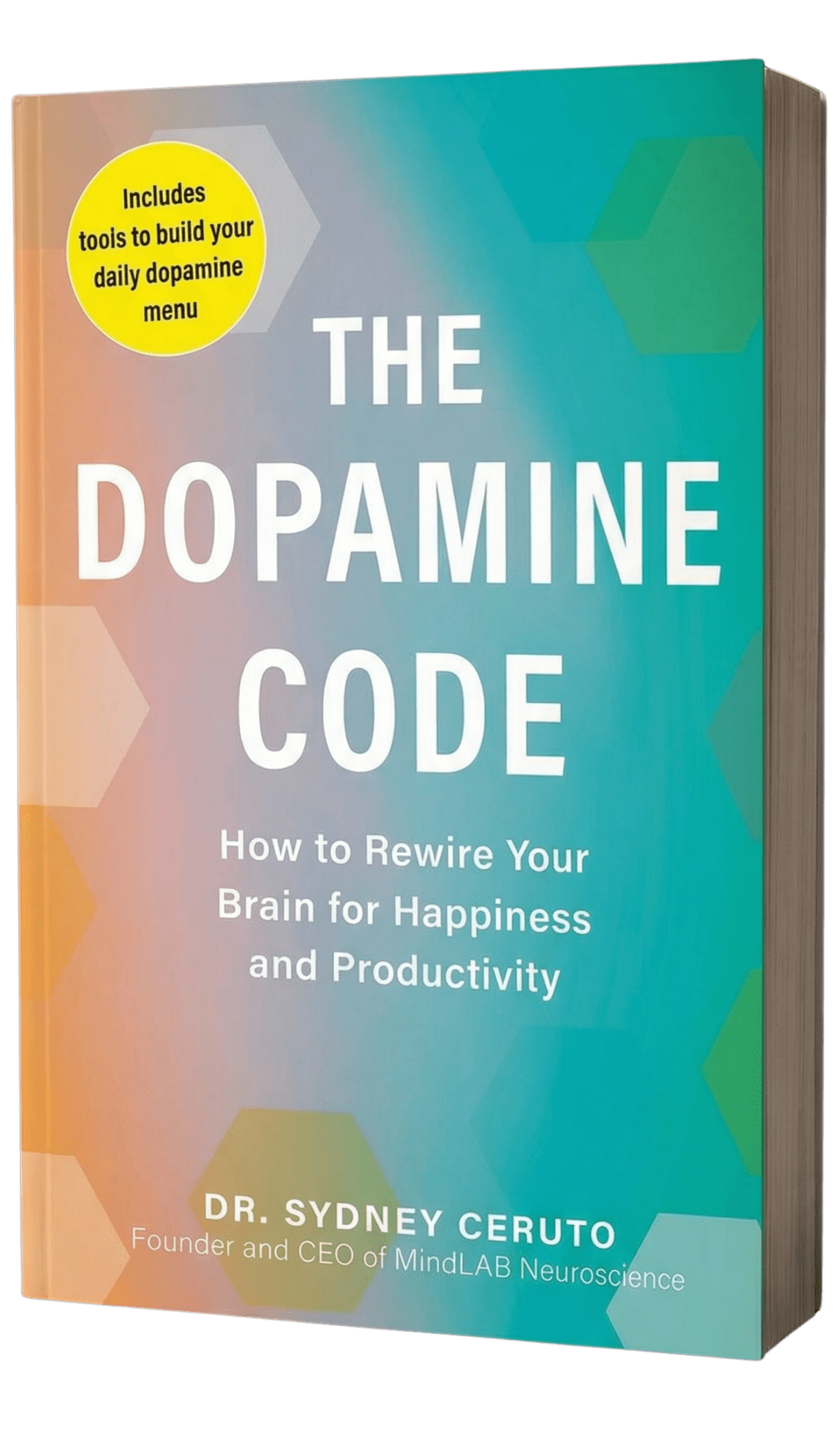
Dr. Ceruto holds a PhD in Behavioral & Cognitive Neuroscience from NYU and two Master’s degrees from Yale University. She lectures at the Wharton Executive Development Program at the University of Pennsylvania and has been an Executive Contributor to the Forbes Coaching Council since 2019. Dr. Ceruto is the author of The Dopamine Code (Simon & Schuster, June 2026). She founded MindLAB Neuroscience in 2000 and has spent over 26 years pioneering Real-Time Neuroplasticity™ — a methodology that permanently rewires the neural pathways driving behavior, decisions, and emotional responses.

References

Fox, M. D., Snyder, A. Z., Vincent, J. L., Corbetta, M., Van Essen, D. C., & Raichle, M. E. (2005). The human brain is intrinsically organized into dynamic, anticorrelated functional networks. Proceedings of the National Academy of Sciences, 102(27), 9673-9678. https://doi.org/10.1073/pnas.0504136102

Reutskaja, E., Lindner, A., Nagel, R., Rangel, A., & Camerer, C. F. (2018). Choice overload reduces neural signatures of choice set value in dorsal striatum and anterior cingulate cortex. Nature Human Behaviour, 2(12), 925-935. https://doi.org/10.1038/s41562-018-0440-2

Cowan, N. (2001). The magical number 4 in short-term memory: A reconsideration of mental storage capacity. Behavioral and Brain Sciences, 24(1), 87-114. https://doi.org/10.1017/s0140525x01003922

Hamilton, J. P., Farmer, M., Fogelman, P., & Gotlib, I. H. (2015). Depressive rumination, the default-mode network, and the dark matter of clinical neuroscience. Biological Psychiatry, 78(4), 224-230. https://doi.org/10.1016/j.biopsych.2015.02.020

Success Stories

“After the concussion, my processing speed collapsed — I couldn't hold complex information the way I used to, and no one could explain why the fog wasn't lifting. Dr. Ceruto mapped the damaged pathways and built compensatory networks around them. My brain doesn't work the way it did before the injury. It works differently — and in some ways, more efficiently than it ever did.”

Owen P., Founder & CEO Sports Performance Scottsdale, AZ

“Color-coded calendars, alarms, accountability partners — I'd built an entire scaffolding system just to stay functional, and none of it addressed why my brain couldn't sequence and prioritize on its own. Dr. Ceruto identified the specific prefrontal pattern that was misfiring and restructured it. I don't need the scaffolding anymore. My brain actually does what I need it to do.”

Jordan K., VP of Product Enterprise SaaS San Francisco, CA

“I'd optimized everything — diet, fitness, sleep — but my cognitive sharpness was quietly declining and no one could explain why. Dr. Ceruto identified the synaptic density patterns that were thinning and built a protocol to reverse the trajectory. This wasn't prevention in theory. My neuroplasticity reserve is measurably stronger now than it was three years ago. Nothing I'd tried before even addressed the right problem.”

Henrique L., Head of Strategic Planning Galp Lisbon, PT

“When the inheritance came, it didn't feel like a gift — it felt like a grenade in every family relationship I had. I couldn't make a single financial decision without a flood of guilt and second-guessing. Years of talking through it hadn't changed anything. Dr. Ceruto identified the neural loop connecting money to fear of family rejection and dismantled it. The paralysis didn't fade — it stopped.”

Vivienne R., CFO Family Office Palm Beach, FL

“My phone was the first thing I touched in the morning and the last thing I put down at night — and every app blocker, digital detox protocol, and willpower-based system I tried lasted less than a week. Dr. Ceruto identified the variable-ratio reinforcement loop that had hijacked my attention circuits and dismantled it at the neurological level. My phone is still in my pocket. The compulsion to reach for it isn't. That's a fundamentally different kind of fix.”

Tomás R., COO Logistics & Supply Chain Lisbon, PT

“The way I was processing decisions under pressure had a cost I couldn't see — until Dr. Ceruto mapped it. She identified the neural pattern driving my reactivity in high-stakes situations and restructured it at the root. I don't just perform better under pressure now. I think differently under pressure. That's not something any executive coach or performance program ever came close to delivering.”

Rob Winston, Chief Operating Officer Goldman Sachs Manhattan, NY

Frequently Asked Questions About Overthinking & Mental Clarity in Wall Street

What is neuroscience-based overthinking and mental clarity support?

It identifies the specific neural circuits producing an individual’s cognitive dysfunction — whether default mode network hyperconnectivity, attentional filter degradation, thalamocortical gating failure, prefrontal metabolic depletion, or value-signal noise — and targets intervention at the system level. Rather than treating all cognitive complaints identically, the methodology maps the distinct mechanism driving each person’s experience and designs protocols matched to that mechanism.

How is this different from conventional approaches to overthinking?

Conventional approaches typically work at the behavioral or psychological level — journaling, talk-based strategies, general stress reduction. Dr. Ceruto’s methodology works at the neural system level, targeting the specific circuits that are producing the problem. When a salience network — the brain's relevance-detection system — has stopped switching, no amount of behavioral redirection restores it. When a thalamic filter has lost GABAergic tone (related to the brain's calming signals), no meditation app rebuilds the inhibitory architecture. The methodology addresses the biological infrastructure that behavioral approaches assume is intact.

What does the process look like?

The process begins with a Strategy Call with Dr. Ceruto, conducted by phone, at a fee of $250. This conversation maps the specific neural patterns driving the individual’s cognitive complaints — identifying whether the primary mechanisms involve rumination circuits, attentional networks, decision architecture, filtering systems, or some combination — and determines the most effective intervention pathway. Program structure and investment details are discussed during the Strategy Call.

How long until improvements become noticeable?

Early improvements — reduced ruminative frequency, improved attentional focus, restored decision clarity — often emerge within the first weeks of targeted protocol work as acute dysregulations are addressed. Deeper architectural changes develop progressively over a longer engagement. These include normalization of default mode network resting-state dynamics, restoration of salience network switching, rebuilding attentional filter integrity, and recalibration of prefrontal metabolic efficiency.

Is this available remotely?

The Strategy Call is conducted by phone. Program delivery is designed to accommodate individuals whose schedules and locations require flexibility. Specific logistics are discussed during the Strategy Call based on each person’s circumstances.

What investment is involved?

The Strategy Call costs $250. Program structure and investment details are discussed during that conversation based on the specific neural systems involved and the scope of work required.

Do I need a referral or diagnosis?

No referral or diagnosis is required. Many individuals who work with Dr. Ceruto have consulted other professionals without resolution or have recognized that their cognitive changes have a biological dimension that conventional evaluation has not addressed. The Strategy Call determines whether the neuroscience-based approach is appropriate for the individual’s specific pattern.

Can this help if I have tried other approaches without success?

The methodology specifically addresses patterns that have not responded to conventional strategies. When talk-based approaches, meditation, productivity systems, or medication have failed to produce lasting change, the reason is typically that the intervention targeted the wrong system. Dr. Ceruto’s approach begins by identifying the actual mechanism — which often differs from what prior approaches assumed — and targets that mechanism directly.

Is there a MindLAB office near Wall Street?

Dr. Ceruto serves clients in the Wall Street and Lower Manhattan corridor. The Strategy Call is conducted by phone, and program logistics are discussed during that initial conversation to accommodate each individual’s professional environment and scheduling requirements.

Why does overthinking get worse during high-pressure periods rather than better?

High-pressure periods intensify every neural mechanism that sustains overthinking. Sustained cognitive load — the total demand on mental processing capacity — depletes prefrontal metabolic resources, weakening the executive control needed to interrupt ruminative loops. Elevated cortisol amplifies amygdala — the brain's threat-detection center — reactivity, increasing the emotional charge of self-referential content. Sleep compression degrades the thalamic filtering and GABAergic inhibition that regulate cognitive tempo. The default mode network — the brain's self-referential thought system —, already hyperconnected, receives stronger inputs from the threat-detection circuitry activated by consequential decisions. Each factor reinforces the others, which is why overthinking escalates precisely when clarity is most needed.

The first step is a Strategy Call with Dr.

The Strategy Call is a focused conversation with Dr. Ceruto that maps the specific neural mechanisms driving your concerns and determines the right path forward.

Book a Strategy Call
MindLAB Neuroscience consultation room
Locations

The Intelligence Brief

Neuroscience-backed analysis on how your brain drives what you feel, what you choose, and what you can’t seem to change — direct from Dr. Ceruto.