Chronic overthinking persists because the brain has become locked in a self-reinforcing circuit that converts normal reflective processing into an inescapable loop. Understanding why this happens at the neural level is the first step toward dismantling it.
The Problem: A Brain That Cannot Stop Replaying
The central signature of chronic rumination is hyperactivation of the default mode network — the brain’s self-referential processing system — combined with a failure of the circuits responsible for redirecting attention. In a healthy brain, the default mode network activates during periods of rest and internal reflection, then deactivates when attention is needed for external tasks. In chronic ruminators, this deactivation fails. The self-referential system continues running during moments that demand focused, outward-directed cognition.
Neuroimaging confirms that individuals who ruminate chronically show elevated functional connectivity between the default mode network and the subgenual prefrontal cortex — a region at the anatomical convergence of the limbic system and the brain’s self-referential machinery. This coupling converts normal reflection into a closed loop: the subgenual prefrontal cortex continuously tags self-referential content as emotionally significant, preventing the brain from reclassifying the thought as resolved or irrelevant. The loop sustains itself because the content always feels urgent, even when it is not.
Simultaneously, the salience network loses its capacity to interrupt the cycle. The salience network normally functions as a circuit breaker, detecting when internal focus has become unproductive and triggering a transition to task-directed processing. In chronic rumination, this switching function degrades. The circuit breaker stops firing.
The dorsolateral prefrontal cortex — the brain’s primary executive control region — attempts to compensate. It activates effortfully to suppress the ruminative loop, but this effort is metabolically costly and ultimately unsuccessful. The result is a resource-depletion trap: the executive system burns cognitive fuel trying to contain the loop, leaving fewer resources for actual thinking, decision-making, and productive work.

The Mechanism: Why Intelligent People Are More Vulnerable
Rumination is fundamentally a verbal-linguistic phenomenon. Unlike adaptive problem-solving, which recruits visual, spatial, and action-planning systems, ruminative thought operates as an internal verbal monologue, recycling the same conceptual content without generating new outputs.
Research demonstrates that verbal intelligence is a unique positive predictor of both worry and rumination severity, even after controlling for mood and anxiety. The verbally intelligent mind is, structurally, the more ruminative mind. The same prefrontal-default mode network circuits that support complex reasoning, future planning, and counterfactual thinking are the circuits that sustain ruminative loops. Greater cognitive capacity does not protect against rumination — it provides more powerful machinery to sustain it.
The cognitive costs are measurable and progressive. High ruminators demonstrate significantly poorer performance across executive function measures, with the most pronounced deficit in cognitive shifting it degrades attentional capacity over time.
Sleep is a primary casualty. Approximately 73% of chronic ruminators report that they are most likely to ruminate late at night or in bed, and over half report ruminating for 20 minutes or longer per occasion. The bedroom becomes a conditioned trigger for the ruminative loop, and the resulting sleep disruption further impairs the prefrontal systems that would otherwise help contain it.
The Solution: Targeting the Neural Architecture of Rumination
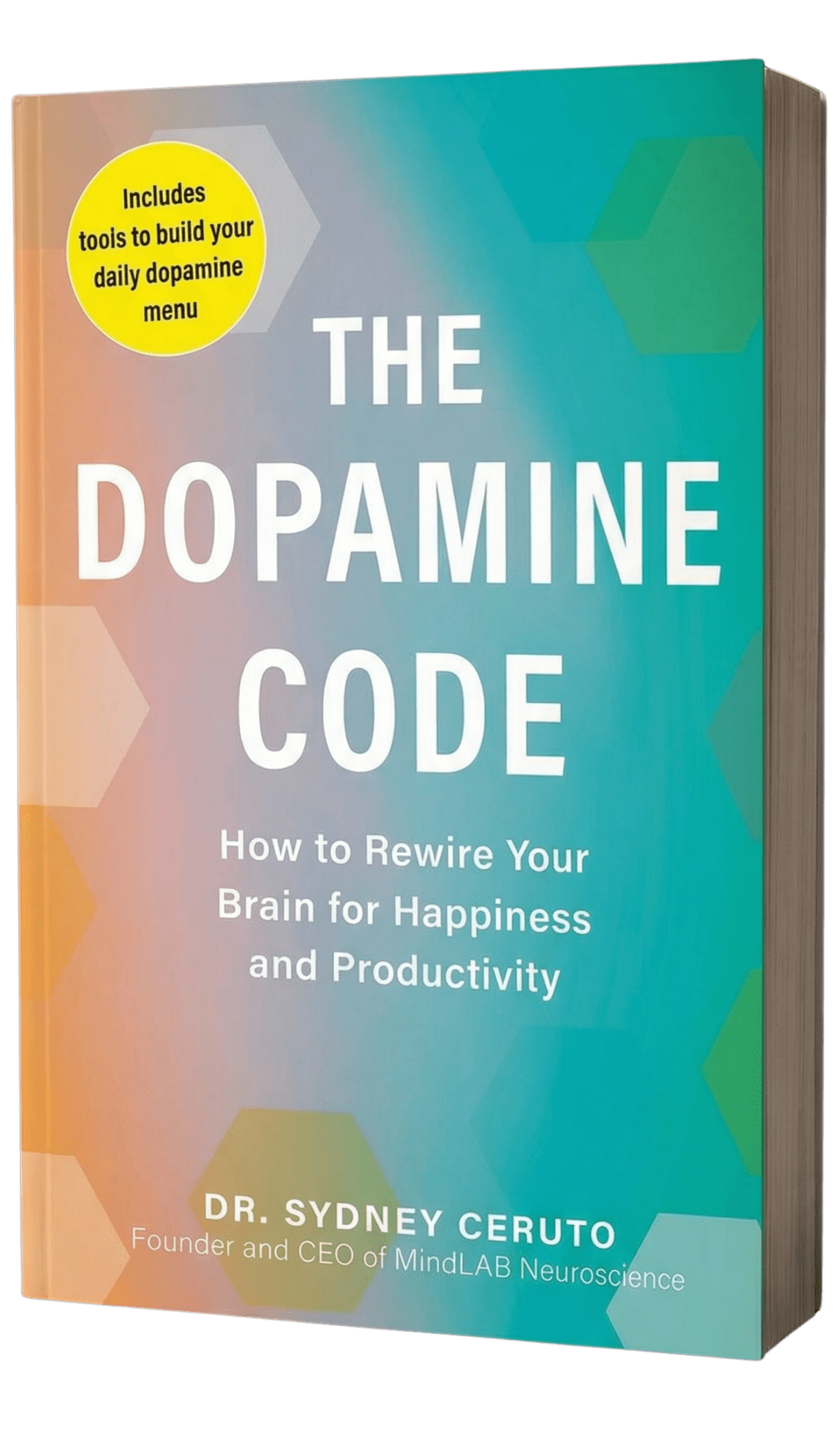
Dr. Ceruto’s methodology addresses rumination at the level of the neural systems that perpetuate it, rather than managing symptoms at the behavioral surface.
The approach begins with identifying which specific circuit dysfunction is driving the individual’s rumination pattern. Default mode network hyperconnectivity, salience network switching failure, subgenual prefrontal cortex hypercoupling, and executive resource depletion each require different intervention strategies. A protocol targeting someone whose primary driver is salience network dysfunction will differ fundamentally from one addressing default mode network-subgenual coupling or prefrontal depletion.
For default mode network-dominant patterns, the work involves systematic downregulation of resting-state hyperconnectivity through structured attentional training protocols that rebuild the brain’s capacity to disengage from self-referential processing. For salience network dysfunction, the methodology restores the switching mechanism by retraining the brain to detect when internal focus has become unproductive and to redirect accordingly. For executive depletion, the approach prioritizes cognitive resource restoration before engaging suppression-based strategies.
The goal is not to eliminate self-reflection but to restore the brain’s capacity to enter and exit reflective states voluntarily, transforming rumination from an automatic trap into a controllable process.

For deeper context, explore why the brain gets stuck in rumination.