Perfectionism in Wall Street

Perfectionism is not high standards. It is a pattern of dysregulated neural computation — an error-detection system in overdrive, a reward system that cannot register satisfaction, and a threat circuit that treats every performance as a test of survival.

Book a Strategy Call

Perfectionism persists because the brain has become locked in a self-reinforcing loop involving at least three interdependent systems. These systems distort how standards are set, how errors are processed, and how outcomes are experienced. Understanding this loop at the neural level separates targeted intervention from conventional advice about lowering expectations.

The Problem: Three Systems Conspiring Against Satisfaction

The first system is an overactive standard-setting circuit centered on the orbitofrontal cortex. Internally calibrated standards are so high that virtually no real-world output can match them. Neuroimaging confirms that perfectionists show reduced orbitofrontal cortex activation for correct and satisfactory responses. Positive performance does not generate the reward signal the brain would normally provide. Satisfaction is structurally blocked at the neural source.

The second system is a hypersensitive error-detection circuit anchored in the anterior cingulate cortex. This system assigns emotional significance to mistakes, converting them from information into threats.

The third system is a reward circuit, the striatal dopamine pathway, that fails to register adequate performance as genuinely rewarding. Dopamine neurons fire when outcomes exceed expectations and are suppressed when outcomes disappoint. In perfectionism, the comparison standard is set so high that even strong performance rarely generates a positive prediction error. The result is functional anhedonia — inability to feel satisfaction from achievement — specific to performance domains. The perfectionist produces high-quality work yet experiences no reward from it. They must immediately raise the standard or seek the next challenge to keep the system from feeling chronically under-rewarded.

Dense luminous neural threads condensing into single focused copper beam of clarity in deep navy void

The Mechanism: How Perfectionism Produces Paralysis

The downstream consequence of this three-system dysfunction is the perfectionism-procrastination loop — neural cost-benefit miscalculation favoring inaction.

The amygdala, through repeated experience of conditional approval or punishment for imperfect performance, learns to tag performance situations as threats. This threat tagging activates the hypothalamic-pituitary-adrenal axis — the stress hormone system — and the sympathetic nervous system. The resulting cortisol and adrenaline shift the brain into vigilance mode. The anterior insula — internal awareness center — encodes this anticipated distress as bodily dread. The physical experience of “not good enough” accompanies task engagement. The brain’s cost-benefit calculation becomes systematically distorted. The cost of action is inflated by threat-tagging and distress encoding. The benefit is deflated by impossible standards and the inability to register reward for adequate work.

A meta-analysis of 43 studies comprising 10,000 participants found a significant positive correlation between perfectionistic concerns and procrastination. This confirms that fear-based perfectionism, not high standards, drives task avoidance. High-perfectionism professionals report more difficulty prioritizing tasks despite higher self-reported standards. Sport science data across 31 studies show that fear-based perfectionism provides no performance advantage whatsoever.

The Solution: Rewiring the Perfectionism Circuit

Dr. Ceruto’s methodology addresses perfectionism at the level of the neural systems producing it. This approach goes beyond attempting to modify beliefs or lower standards through willpower.

The approach begins with identifying which specific system is the primary driver of the individual’s perfectionism pattern. Standard inflation, error hypersensitivity, reward dysfunction, and threat encoding each require different intervention strategies. A protocol targeting error hypersensitivity will differ fundamentally from one addressing reward system anhedonia or threat-based avoidance.

For error-detection dysregulation, the work involves recalibrating the anterior cingulate cortex’s response threshold. This rebuilds the brain’s capacity to experience genuine satisfaction from completed work. For threat-based avoidance, the approach shifts the motivational substrate from fear-driven avoidance to aspiration-driven approach, reconnecting task engagement with genuine motivation.

The goal is not to eliminate high standards but to restore the brain’s capacity to experience satisfaction, tolerate imperfection, and move from evaluation to action. This converts perfectionism from a neural trap into a controllable cognitive asset.

Mahogany desk with crystal brain sculpture and MindLAB journal in warm lamp light surrounded by leather-bound volumes in institutional Wall Street study

Why Perfectionism Matters in Wall Street

Wall Street’s professional culture systematically produces and rewards perfectionism. It then extracts a measurable cognitive toll from the people locked inside it.

The Financial District operates on a zero-error-tolerance standard that maps directly onto the neural architecture of perfectionism. The SEC issued $8.2 billion in fines and penalties in 2024, a record, intensifying compliance anxiety across every firm in the corridor. A survey of more than 300 compliance professionals found that 49% experienced anxiety-related difficulties in the past year. Notably, 54% attributed their anxiety directly to work. The professional ethos is explicit: “I can’t get anything wrong.” This zero-tolerance self-perception is a textbook driver of anterior cingulate cortex hypersensitivity. It converts normal error processing into chronic threat monitoring.

The culture creates a perfectionism double bind specific to finance. Research documents that perfectionistic strivings increase financial risk tolerance, driving more aggressive strategies. Perfectionistic concerns increase risk aversion through fear of mistakes leading to losses. The internal conflict between these two modes is itself a source of the paralysis that perfectionism produces. When traders experience losses, perfectionism causes them to interpret the loss as personal failure. This drives hindsight bias and self-recriminatory rumination cycles.

The professional demographics amplify the vulnerability. Among 764 private-practice lawyers surveyed 62% of high-perfectionism individuals reported elevated stress levels compared to just 4.9% of low-perfectionism counterparts, and 50.6% reported elevated depression versus 7.1%. High-perfectionism professionals had shorter average tenure, indicating accelerated burnout and career attrition. Among physicians, another high-stakes profession, 42% endorsed high burnout. Self-critical perfectionism was the only dimension that uniquely predicted both emotional exhaustion and depersonalization beyond all other factors.

The annual bonus cycle functions as a months-long perfectionism amplifier. Compensation decisions are subjective, comparative, and opaque. Professionals spend October through February attempting to influence outcomes they cannot fully control while anticipating judgment on a year of accumulated performance. This activates the orbitofrontal cortex’s counterfactual distress machinery and the anterior cingulate cortex’s error-anticipation signaling simultaneously. The 198,500 securities workers in New York City earn an average of $471,370 annually. They exist in a system where compensation is both the reward for performance and the metric by which perfectionism evaluates sufficiency. For most, the answer is structurally guaranteed to be no.

Dr. Sydney Ceruto, PhD — Founder, MindLAB Neuroscience

Dr. Sydney Ceruto, PhD — Founder & CEO, MindLAB Neuroscience

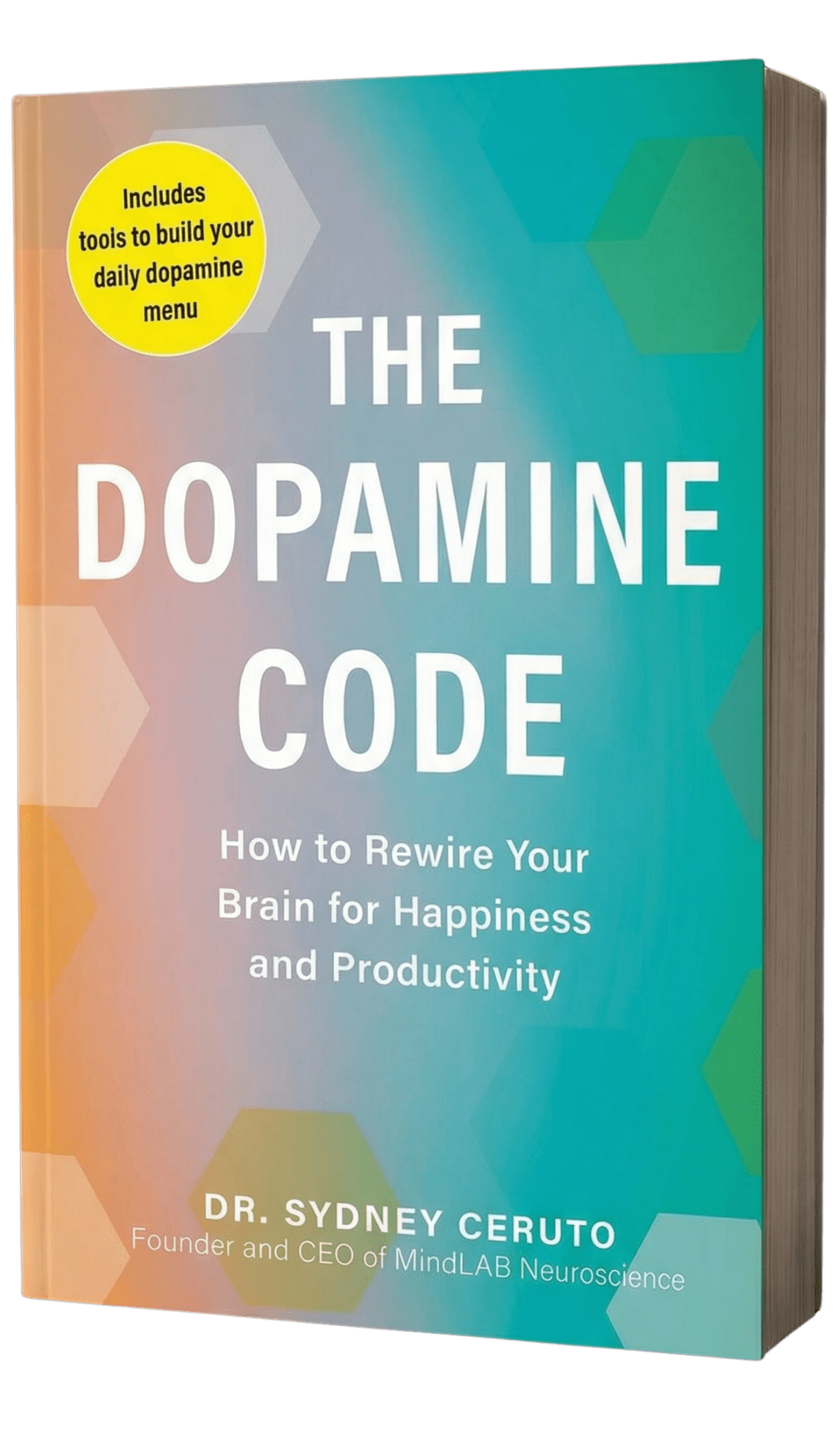
Dr. Ceruto holds a PhD in Behavioral & Cognitive Neuroscience from NYU and two Master’s degrees from Yale University. She lectures at the Wharton Executive Development Program at the University of Pennsylvania and has been an Executive Contributor to the Forbes Coaching Council since 2019. Dr. Ceruto is the author of The Dopamine Code (Simon & Schuster, June 2026). She founded MindLAB Neuroscience in 2000 and has spent over 26 years pioneering Real-Time Neuroplasticity™ — a methodology that permanently rewires the neural pathways driving behavior, decisions, and emotional responses.

References

Barke, A., Schmidt-Samoa, C., Van Heer, C. A., Stahl, J., Dechent, P., & Bode, S. (2017). To err is (perfectly) human: Behavioural and neural correlates of error processing and perfectionism. Social Cognitive and Affective Neuroscience, 12(10), 1647-1657. https://doi.org/10.1093/scan/nsx082

Curran, T., & Hill, A. P. (2019). Perfectionism is increasing over time: A meta-analysis of birth cohort differences from 1989 to 2016. Psychological Bulletin, 145(4), 410-429. https://doi.org/10.1037/bul0000138

Sirois, F. M., & Molnar, D. S. (2017). A meta-analytic and conceptual update on the associations between procrastination and multidimensional perfectionism. European Journal of Personality, 31(2), 137-159. https://doi.org/10.1002/per.2098

Success Stories

“I'd optimized everything — diet, fitness, sleep — but my cognitive sharpness was quietly declining and no one could explain why. Dr. Ceruto identified the synaptic density patterns that were thinning and built a protocol to reverse the trajectory. This wasn't prevention in theory. My neuroplasticity reserve is measurably stronger now than it was three years ago. Nothing I'd tried before even addressed the right problem.”

Henrique L., Head of Strategic Planning Galp Lisbon, PT

“After the concussion, my processing speed collapsed — I couldn't hold complex information the way I used to, and no one could explain why the fog wasn't lifting. Dr. Ceruto mapped the damaged pathways and built compensatory networks around them. My brain doesn't work the way it did before the injury. It works differently — and in some ways, more efficiently than it ever did.”

Owen P., Founder & CEO Sports Performance Scottsdale, AZ

“When the inheritance came, it didn't feel like a gift — it felt like a grenade in every family relationship I had. I couldn't make a single financial decision without a flood of guilt and second-guessing. Years of talking through it hadn't changed anything. Dr. Ceruto identified the neural loop connecting money to fear of family rejection and dismantled it. The paralysis didn't fade — it stopped.”

Vivienne R., CFO Family Office Palm Beach, FL

“The way I was processing decisions under pressure had a cost I couldn't see — until Dr. Ceruto mapped it. She identified the neural pattern driving my reactivity in high-stakes situations and restructured it at the root. I don't just perform better under pressure now. I think differently under pressure. That's not something any executive coach or performance program ever came close to delivering.”

Rob Winston, Chief Operating Officer Goldman Sachs Manhattan, NY

“Color-coded calendars, alarms, accountability partners — I'd built an entire scaffolding system just to stay functional, and none of it addressed why my brain couldn't sequence and prioritize on its own. Dr. Ceruto identified the specific prefrontal pattern that was misfiring and restructured it. I don't need the scaffolding anymore. My brain actually does what I need it to do.”

Jordan K., VP of Product Enterprise SaaS San Francisco, CA

“My phone was the first thing I touched in the morning and the last thing I put down at night — and every app blocker, digital detox protocol, and willpower-based system I tried lasted less than a week. Dr. Ceruto identified the variable-ratio reinforcement loop that had hijacked my attention circuits and dismantled it at the neurological level. My phone is still in my pocket. The compulsion to reach for it isn't. That's a fundamentally different kind of fix.”

Tomás R., COO Logistics & Supply Chain Lisbon, PT

Frequently Asked Questions About Perfectionism in Wall Street

What is neuroscience-based perfectionism support?

Neuroscience-based perfectionism support identifies the specific neural systems driving an individual's perfectionism — error detection, reward dysfunction, or threat avoidance — and targets intervention at the circuit level. This is distinct from cognitive-behavioral approaches that attempt to modify beliefs about perfectionism without altering the underlying neural dynamics producing them.

Why does perfectionism persist even when someone recognizes it is counterproductive?

Perfectionism is sustained by subcortical systems that operate largely below conscious awareness through the amygdala's threat conditioning, the orbitofrontal cortex's inflated value predictions, and the striatum's miscalibrated reward thresholds. Intellectual recognition that perfectionism is harmful does not rewire the neural circuits producing it. The anterior cingulate cortex — the brain's error-detection center — will continue generating disproportionate error signals, and the amygdala will continue tagging performance as threatening, regardless of conscious intention to change.

Who is this approach designed for?

This approach serves anyone whose perfectionism has crossed from a motivational asset into a source of chronic stress, procrastination, or inability to experience satisfaction from accomplished work. It particularly benefits individuals operating in environments where the culture rewards zero-error performance and where the consequences of mistakes are quantifiable, public, or career-defining.

What happens during the initial engagement?

The process begins with a Strategy Call with Dr. Ceruto, conducted by phone, at a fee of $250. This conversation maps the specific neural architecture driving the individual's perfectionism — error-detection hypersensitivity, reward dysfunction, threat-avoidance, or standard-setting inflation. It determines the most effective intervention pathway. Program structure and investment details are discussed during the Strategy Call.

How long does it take to see change?

Early shifts — reduced task anxiety and improved work completion — often emerge within the first weeks of targeted protocol work. Deeper architectural changes — recalibrated error thresholds and restored reward sensitivity — develop progressively as the neural systems sustaining perfectionism are systematically reconditioned.

Take the First Step Beyond Perfectionism

The Strategy Call is a focused conversation with Dr. Ceruto that maps the specific neural mechanisms driving your concerns and determines the right path forward.

Book a Strategy Call
MindLAB Neuroscience consultation room
Locations

The Intelligence Brief

Neuroscience-backed analysis on how your brain drives what you feel, what you choose, and what you can’t seem to change — direct from Dr. Ceruto.