The Freeze at the Moment of Highest Consequence
“You do not lose negotiations because you lack information about your market value. You lose them because the neural circuits governing threat response, value framing, and interpersonal trust hijack your prefrontal cortex at the exact moment you need it most.”
n
You know your number. You have calculated it from multiple angles. The analysis is airtight. The case is built. And then you sit across from the person who holds the outcome, and something happens. The number shifts. The ask softens. The conviction that was absolute in preparation dissolves into accommodation, qualification, or silence.
n
This is not a skills problem. You negotiate complex transactions professionally. You advocate for positions worth millions on behalf of clients, funds, and institutions. The paralysis that appears in your own compensation conversation is not a gap in strategic capability. It is a neurobiological event.
n
The brain processes self-advocacy under conditions of social-status vulnerability through entirely different circuits than advocacy on behalf of others. When the stakes are personal, the neural architecture governing the conversation shifts from strategic planning to threat detection.
n
The conventional response is to provide scripts and frameworks. Anchor high. Use silence strategically. Practice your delivery. These tactics address the behavioral surface of the problem. They do not address the fact that the prefrontal system responsible for executing that behavior is being overridden by deeper threat signals at the precise moment execution is required.
n
A script cannot override an amygdala activation. A framework cannot recalibrate the insula’s risk-aversion signal. The professional who freezes in a compensation conversation is not under-prepared. They are neurobiologically compromised in the specific circuits that matter.
n
This pattern is especially prevalent in high-stakes finance environments where a single conversation can determine outcomes ranging from $200,000 to $2 million or more. The discretionary bonus structure that dominates the industry creates a structurally adversarial dynamic. The professional knows this. They understand the game. And yet the neural systems governing self-advocacy consistently produce a different outcome than the systems governing professional advocacy.
n
The Neuroscience of Compensation Conversations
n
The brain does not process salary negotiation as a simple value calculation. It activates an overlapping network of circuits governing threat detection, reward anticipation, value computation, social cognition, and cognitive control. Each operates with different urgency and different biological timelines.
n
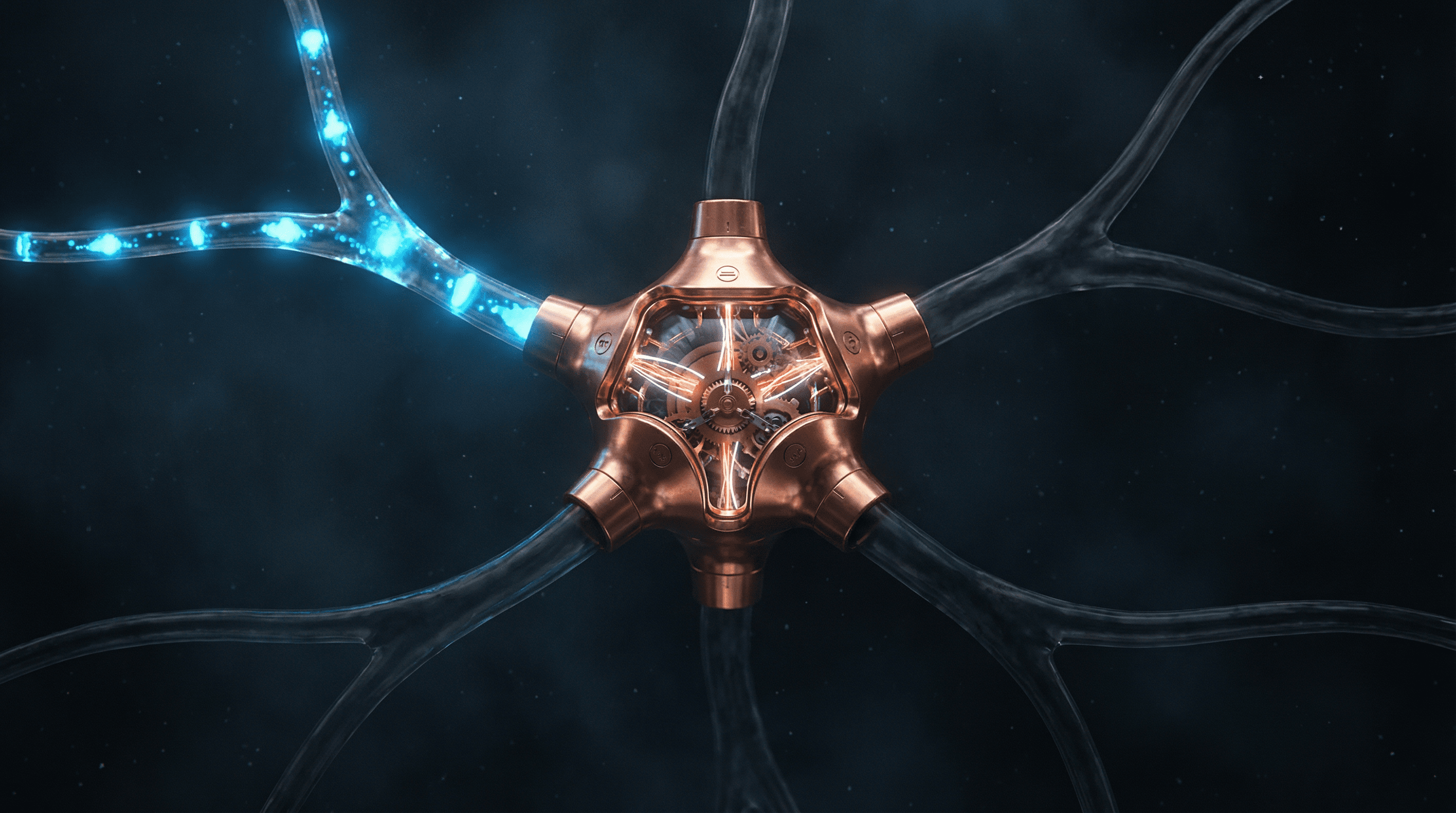
Research has demonstrated that the anterior insula — the brain’s internal risk monitor — activates immediately before risk-averse financial decisions. The insula generates the physical sensation of anxiety that precedes conservative behavior. In negotiation contexts, insula hyperactivation produces what professionals describe as the gut freeze: the somatic sensation that precedes accepting the first offer, avoiding the counter, or apologizing before the ask. This is not nervousness in the colloquial sense. The anterior insula generates a threat-avoidant signal that overrides the prefrontal cortex’s strategic plan.
n
The dorsolateral prefrontal cortex — the brain’s planning center — is the seat of strategic planning, working memory, and cognitive control required for effective negotiation. Research has established the prefrontal cortex’s critical top-down regulatory role over the emotional brain. When this system is compromised by stress, anxiety, or cognitive fatigue, negative decision-making bias increases significantly. It handles tactical sequencing: knowing when to anchor, when to deploy silence, how to structure a multi-stage ask. When it is overwhelmed by threat signals, the professional defaults to accommodation.
n
The anterior cingulate cortex — the brain’s conflict detector — complicates the picture further. The ACC detects conflict between competing drives and the desire for higher compensation against the fear of relationship damage. Research on ultimatum game decision-making shows that the ACC activates specifically during proposals requiring control over competing impulses. In salary conversations, heightened ACC activation produces paralysis at the moment of delivery. The professional has the number prepared. The ACC registers the conflict between executing and accommodating. Execution stalls.
n
The pattern that presents most often is a retrospective awareness that arrives too late. The conversation ends. The professional recognizes they accepted less than they should have. They can reconstruct exactly what they should have said. The strategic capability was never absent. The neural conditions required for real-time execution were compromised. The same circuits meant to protect performance had undermined it.
n
The ventromedial prefrontal cortex integrates value signals in social contexts, including the perceived worth of the self relative to the counterpart. When the balance between this value-assessment region and the insula is miscalibrated, the professional either overweights downside risk or underweights social costs. Overweighting produces under-asking. Underweighting produces aggressive demands that damage the relationship. Neither extreme represents the professional’s actual strategic assessment. Both represent circuit-level miscalibration.
n
How Dr. Ceruto Approaches Salary Negotiation
n
Dr. Ceruto’s methodology addresses salary negotiation at the neural circuit level where the actual disruption occurs. Real-Time Neuroplasticity(TM) targets the specific systems the research identifies. It produces a neurobiological state in which the professional can execute their prepared strategy under real-time pressure.
n
In over two decades of clinical neuroscience practice, the most reliable predictor of negotiation outcome is not the quality of the strategy but the neural state in which the strategy is executed. My clients arrive with sound preparation. The methodology ensures their brain can execute that preparation when it matters in the live conversation with the person who holds the outcome.
n
The approach is not motivational. It is not confidence-building in the conventional sense. It is circuit-level calibration. Insula down-regulation through interoceptive awareness — sensing internal body signals — allows the professional to feel the discomfort without being driven by it. Prefrontal strengthening through structured cognitive load — mental processing demands — training restores strategic execution capacity under pressure. Amygdala threat calibration distinguishes perceived social threat from actual strategic risk. ACC conflict modulation enables the professional to hold competing drives in awareness. They can execute through them rather than freezing at the point of delivery.
n
For focused negotiation preparation addressing a specific compensation conversation — bonus, offer, promotion — the NeuroSync(TM) program provides targeted precision. For professionals whose negotiation performance intersects with broader career architecture — leadership presence and positioning — the NeuroConcierge(TM) program provides comprehensive embedded partnership.
n
What to Expect
n
The engagement begins with a Strategy Call. This focused conversation establishes the nature of the negotiation challenge. It determines whether the challenge maps to the neural mechanisms Dr. Ceruto’s methodology addresses.
n

Following the Strategy Call, a structured assessment identifies the client’s specific circuit-level vulnerabilities, the neural systems producing disruption. This assessment informs a protocol designed for the client’s unique neurobiological profile and specific negotiation context.
n
The protocol prepares the brain for the actual conversation. This is not rehearsal in the traditional sense. It is neural conditioning that produces a measurable shift in the brain’s state during high-stakes social-evaluative pressure. The professional enters their compensation conversation with the same neural architecture that executes their best analytical work — not the depleted version that historically appears.
The Neural Architecture of High-Stakes Negotiation
Salary negotiation activates a specific neural configuration that most people are entirely unaware of — and that configuration is working against them from the moment the conversation begins. Understanding the neuroscience of what happens in your brain when you sit down to negotiate your compensation is the prerequisite for negotiating effectively at the highest levels.
The primary mechanism is threat appraisal. For most people, compensation negotiation triggers a social threat response: the fear of appearing greedy, the fear of rejection, the fear of damaging a relationship with a prospective or current employer, and the fear of the unknown outcome. When these threat signals are active, the amygdala begins modulating prefrontal function in ways that are precisely contrary to what effective negotiation requires. The capacity for complex social cognition — reading the other party’s position, identifying unexplored trade-offs, generating creative proposals — degrades. The capacity for accurate self-assessment — knowing what you are actually worth, what your alternatives are, what your minimum acceptable outcome is — becomes clouded by the emotional noise of the threat response. And the behavioral output shifts toward appeasement: accepting the first offer, conceding too quickly, pre-emptively lowering your ask to avoid the discomfort of potential rejection.
There is also a second neural mechanism operating in parallel: the endowment effect, mediated by the insula and the loss aversion circuits of the ventromedial prefrontal cortex. Compensation negotiation involves the prospect of loss — specifically, the loss of the offer, the position, or the relationship — as well as the prospect of gain. Because the brain weights losses approximately twice as heavily as equivalent gains, the emotional pull toward accepting what is offered and avoiding the risk of losing it is neurologically stronger than the pull toward the potential upside of negotiating aggressively. This asymmetry operates below the level of conscious reasoning. It simply makes accepting the offer feel more urgent and more rational than the numbers actually justify.
These two mechanisms — social threat response and loss aversion — interact to produce the characteristic pattern of salary negotiation underperformance: sophisticated, accomplished professionals who negotiate at a fraction of their actual leverage because the neural systems governing their behavior in the moment are optimized for a different objective than financial outcome.
Why Standard Negotiation Training Falls Short
Most negotiation coaching focuses on tactics: when to make the first offer, how to anchor effectively, what phrases to use when asked for your number, how to respond to a low opening offer. These tactics are real and useful — in the hands of a negotiator whose underlying neural state is stable and whose self-assessment is accurate. In the hands of someone whose threat response is active and whose self-perception has been distorted by loss aversion, tactics produce a technically correct script delivered without the conviction that makes it effective.
The counterpart in a negotiation reads conviction. Not perfectly — people are not infallible at this — but reliably enough that the difference between someone who believes they are worth what they are asking and someone who is hoping they can get away with asking for it is legible to an experienced hiring manager or compensation officer. Tactics that are applied over a substrate of self-doubt produce proposals that invite pushback in ways that the same tactics applied with genuine grounded certainty do not.
How Neural Preparation for Negotiation Works
My preparation protocol for salary negotiation operates at three levels simultaneously. The first is threat-response regulation: building the specific neural regulation capacity that allows you to maintain prefrontal function — the complex reasoning and social cognition you need — when the negotiation activates the amygdala’s threat response. This is not about eliminating the stress response. It is about developing the capacity to act with full cognitive and strategic competence despite it.
The second level is self-assessment recalibration. Many high-performing professionals have a systematically distorted model of their own market value — a model that was calibrated during earlier career stages and has not been updated to reflect subsequent achievement, or that has been compressed by institutional contexts in which salary conversations were taboo or in which the culture discouraged self-advocacy. We reconstruct the self-assessment from accurate data — market benchmarks, contribution metrics, competitive alternatives — so that the number you bring to the negotiation reflects reality rather than an outdated or distorted self-model.
The third level is preparation for the actual conversation: developing the specific language, the response protocols for the pressure moments, and the decision rules that will govern your choices in real time. This is where conventional negotiation coaching typically begins. In this framework, it is the final layer, applied on top of a neural state that is stable and a self-assessment that is accurate.
What This Looks Like in Practice
Clients consistently report the same experience: the negotiation felt different from previous ones. Not because the other party was easier or the offer was more generous, but because they were operating from a different internal state. The clarity about what they wanted and why they deserved it was not a performance — it was available in the moment, even when the conversation moved in unexpected directions. The decisions they made in real time were consistent with their actual interests rather than driven by the urge to resolve the discomfort of the negotiation as quickly as possible.
The financial outcomes reflect this. Not universally — no preparation guarantees a specific result — but the gap between what clients were offered and what they accepted narrowed significantly. And the negotiation itself, which had previously been one of the most dreaded professional experiences, became something they were willing to engage with directly rather than defer, avoid, or conclude prematurely.
The strategy session — for one focused hour — maps your specific negotiation profile: where the threat response is most active, what self-assessment distortions are operating, and what the most direct preparation pathway looks like for your specific situation and target negotiation. We leave with a clear protocol and a realistic picture of what the preparation will require and what it can produce.
For deeper context, explore neuroscience coaching for salary negotiation.