Sleep & Energy Support in Wall Street

When rest stops restoring and energy collapses despite every recovery strategy, the problem is neurological — rooted in the brain's sleep architecture, circadian timing, and autonomic regulation.

Sleep disruption and chronic energy failure are not separate problems. They are interconnected expressions of the same underlying neural dysregulation — measurable, mechanistic, and structurally addressable when the biological systems driving them are identified with precision.

Book a Strategy Call

Chronic Fatigue & Exhaustion

Exhaustion that does not resolve with rest reflects a neurological state — not a motivation problem. Chronic fatigue involves self-sustaining loops across neuroinflammation, HPA axis dysregulation, impaired glymphatic clearance, and disrupted motivation circuitry that actively resist conventional recovery strategies. Dr. Ceruto identifies which mechanisms are sustaining the exhaustion state and designs protocols to dismantle them at the biological level.

Learn more about Chronic Fatigue & Exhaustion in Wall Street →

Circadian Rhythm Optimization

The body’s internal clock governs far more than sleep timing — it coordinates hormone release, cognitive performance, metabolism, and immune function on a precise 24-hour schedule. When circadian alignment is lost through irregular light exposure, mistimed sleep, or cross-timezone demands, cognition and health degrade in tandem. Dr. Ceruto identifies the specific points of misalignment and designs targeted realignment protocols calibrated to each individual’s actual biological timing.

Learn more about Circadian Rhythm Optimization in Wall Street →

Energy Management

Cognitive energy reflects the integrated state of multiple brain systems — prefrontal metabolic availability, dopaminergic tone, adenosine signaling, and the effort-cost computations of the anterior cingulate cortex. When any of these systems is compromised, mental fatigue and declining performance follow. Dr. Ceruto identifies which energy systems are primarily dysregulated and targets intervention at the biological infrastructure of sustained cognitive output.

Learn more about Energy Management in Wall Street →

Insomnia Support

Chronic insomnia is a disorder of pathological wakefulness — cortical hyperarousal that operates independently of sleep pressure, environmental conditions, or conscious intention. The brain has been recalibrated to a permanently elevated arousal baseline that prevents the transition into restorative sleep. Dr. Ceruto targets the specific neural mechanisms perpetuating the insomnia pattern rather than managing symptoms at the behavioral surface.

Learn more about Insomnia Support in Wall Street →

Sleep Anxiety

Sleep anxiety is a learned neural circuit in which the anticipatory dread of sleeplessness has become the primary barrier to sleep itself. Through conditioned arousal, the bedroom environment triggers wakefulness rather than rest, while the effort paradox ensures that trying harder to sleep activates the very systems that prevent it. Dr. Ceruto dismantles this self-reinforcing loop at each neural node — conditioned arousal, autonomic dysregulation, and interoceptive hypervigilance — the excessive monitoring of internal body signals for evidence of wakefulness.

Learn more about Sleep Anxiety in Wall Street →

Sleep Coaching

Persistent sleep disruption reflects measurable neural patterns — cortical hyperarousal, Default Mode Network hyperactivation, autonomic imbalance, or circadian timing errors — that generic sleep hygiene does not address. Dr. Ceruto maps the specific neurobiological patterns driving each individual’s disruption and designs targeted protocols that teach the brain to make the transition into sleep automatic again.

Learn more about Sleep Coaching in Wall Street →

Wall Street and the Architecture of Sleep Failure

Lower Manhattan’s professional environment produces a specific and accelerated pathway to the neural conditions that sustain chronic sleep and energy dysfunction. The combination of sustained cognitive stress, compressed recovery time, environmental light deprivation, and cultural normalization of sleep deprivation creates a convergence of biological insults that has no parallel in most professional settings.

The Financial District concentrates an extraordinary density of high-stakes cognitive work within less than one square mile. The nature of the work — continuous monitoring under uncertainty, rapid integration of complex information, and consequential decision-making repeated across 10-to-16-hour days — drives exactly the pattern of prefrontal metabolic depletion and autonomic hyperactivation that neuroscience identifies as the mechanism of sleep and energy collapse. Industry survey data documents first-year analysts averaging 74 hours per week and under six hours of sleep per night, with self-reported mental health dropping from 8.8 to 2.8 out of 10 after starting the role.

Lower Manhattan’s urban canyon architecture compounds the circadian assault. Below Chambers Street, skyscrapers of 600 to 750 feet crowd both sides of narrow streets, limiting direct sunlight at ground level to narrow windows around solar noon. Professionals arrive before sunrise, spend the day under artificial light in windowless trading floors, and leave after sunset — receiving almost zero natural light input to synchronize their circadian clocks. Workers in windowless offices sleep an average of 46 minutes less per night than those with window access, a direct circadian consequence of the architectural environment.

The stimulant cycle that pervades the culture deepens the neurobiological damage. Caffeine suppresses adenosine-mediated fatigue signals during the day while preventing the sleep pressure buildup needed for restorative nighttime sleep. Prescription stimulant use — documented as widespread across the analyst and associate pipeline — further damages sleep architecture by suppressing REM sleep and increasing sleep onset latency. Each day of stimulant-masked exhaustion adds to the allostatic load — the cumulative wear of chronic stress on the body — without providing actual recovery.

Dr. Sydney Ceruto, PhD — Founder, MindLAB Neuroscience

Dr. Sydney Ceruto, PhD — Founder & CEO, MindLAB Neuroscience

Dr. Ceruto holds a PhD in Behavioral & Cognitive Neuroscience from NYU and two Master’s degrees from Yale University. She lectures at the Wharton Executive Development Program at the University of Pennsylvania and has been an Executive Contributor to the Forbes Coaching Council since 2019. Dr. Ceruto is the author of The Dopamine Code (Simon & Schuster, June 2026). She founded MindLAB Neuroscience in 2000 and has spent over 26 years pioneering Real-Time Neuroplasticity™ — a methodology that permanently rewires the neural pathways driving behavior, decisions, and emotional responses.

References

Walker, M. P., & Stickgold, R. (2006). Sleep, memory, and plasticity. Annual Review of Psychology, 57, 139–166. https://doi.org/10.1146/annurev.psych.56.091103.070311

Xie, L., Kang, H., Xu, Q., et al. (2013). Sleep drives metabolite clearance from the adult brain. Science, 342(6156), 373–377. https://doi.org/10.1126/science.1241224

Krause, A. J., Simon, E. B., Mander, B. A., et al. (2017). The sleep-deprived human brain. Nature Reviews Neuroscience, 18(7), 404–418. https://doi.org/10.1038/nrn.2017.55

Success Stories

“My kids had been sleeping through the night for three years, but my brain hadn't caught up. I was still waking every ninety minutes like clockwork — no amount of sleep hygiene or supplements touched it. Dr. Ceruto identified the hypervigilance loop that had hardwired itself during those early years and dismantled it at the source. My brain finally learned the threat was over. I sleep through the night now without effort.”

Catherine L. — Board Director Greenwich, CT

“My body had simply stopped knowing when to sleep. Crossing time zones weekly for over two years had broken something fundamental, and every protocol, supplement, and device I tried couldn't hold longer than a few days. Dr. Ceruto identified the disruption at the level of my suprachiasmatic nucleus and recalibrated the signaling pattern driving the dysfunction. Within weeks, my circadian rhythm locked back in. I sleep now. Consistently. Regardless of where I land.”

Jonathan K. — Diplomat Geneva, CH

“Endocrinologists, sleep clinics, functional medicine — every specialist cleared me, and no one could tell me why I was exhausted every single day. Dr. Ceruto identified that my HPA axis was locked in a low-grade stress activation I couldn't feel consciously. Once that pattern was disrupted at the neurological level, my energy came back in a way that felt completely foreign. I'd forgotten what it was like to not be tired.”

Danielle K. — Luxury Hospitality Beverly Hills, CA

“Four hours a night for over two years — that was my ceiling. Supplements, sleep protocols, medication — nothing touched it because nothing addressed why my brain wouldn't shut down. Dr. Ceruto identified the cortisol loop that was keeping my nervous system locked in a hypervigilant state and dismantled it. I sleep now. Not because I learned tricks — because the pattern driving the insomnia no longer exists.”

Adrian M. — Hedge Fund Manager New York, NY

“Outperforming every metric for years and feeling absolutely nothing — no satisfaction, no drive, just a compulsive need to keep going. Executive retreats, meditation protocols, none of it made a difference. Dr. Ceruto identified the dopamine downregulation that was driving the entire pattern. My reward system had essentially gone offline from overstimulation. She didn't teach me to reframe success — she restored the neurochemistry that lets me actually experience it.”

Mikhail D. — Family Office Principal Washington, DC

“It took years and many other professionals — not to mention tens of thousands of dollars — before I was recommended to Dr. Ceruto. I’d been suffering with chronic anxiety, OCD, and distorted thinking. After just two sessions, I started to see positive change. By the time my program ended, I had my sanity and my life back. Sydney creates a warm, supportive atmosphere where I found myself sharing things I’ve never told anyone. She is there for you anytime you need her.”

Nicholas M. — Private Equity Hong Kong

Frequently Asked Questions About Neuroscience-Based Sleep and Energy Restoration

Why does sleep hygiene not work when I have already tried everything?

Sleep hygiene addresses the environmental conditions for sleep — consistent schedule, dark room, limited screen time. When the neural architecture governing sleep is disrupted — the HPA axis producing inappropriate cortisol patterns, the prefrontal cortex processing unresolved cognitive demands, the amygdala maintaining threat activation — perfect environmental conditions cannot override the biological signals preventing restorative sleep. The architecture must be addressed directly.

How does chronic stress disrupt sleep architecture?

Chronic stress dysregulates the HPA axis, producing cortisol patterns that directly interfere with sleep initiation and maintenance. Cortisol should decline sharply in the evening to permit sleep onset — when the HPA axis is chronically activated, evening cortisol remains elevated, creating the wired-but-tired state where exhaustion and sleeplessness coexist. Additionally, unresolved stress keeps the default mode network active during sleep periods, reducing sleep quality even when duration appears adequate.

Can this approach help with the exhaustion that persists despite sleeping adequate hours?

Exhaustion despite adequate sleep duration indicates compromised sleep quality — the brain is not completing the restorative processes that sleep is supposed to provide. This typically reflects disrupted sleep architecture: insufficient deep sleep for physical restoration, insufficient REM sleep for emotional processing and memory consolidation, or frequent micro-arousals that fragment sleep stages without full waking. Dr. Ceruto addresses the neural systems governing sleep architecture quality, not just sleep duration.

How does this approach differ from sleep medication?

Sleep medication induces a pharmacological state that may not replicate the neural architecture of natural restorative sleep. Many sleep medications alter the brain's sleep stage distribution, potentially reducing the deep sleep and REM sleep phases that provide the most cognitive and emotional restoration. Dr. Ceruto's approach restores the neural systems governing natural sleep architecture — the circadian regulation, the HPA axis calibration, and the prefrontal-limbic processing that must resolve before the brain can transition into restorative sleep.

Can energy levels improve independently of sleep changes?

Yes. Energy regulation depends on multiple neural and hormonal systems beyond sleep — HPA axis function, thyroid-mediated metabolic rate, dopaminergic drive, and the efficiency of the autonomic nervous system's recovery mechanisms. When the stress-response system is chronically activated, it consumes energy resources that would otherwise be available for productive activity. Recalibrating stress-response architecture frequently improves energy levels even before sleep architecture fully normalizes.

Why does my sleep quality deteriorate during stressful periods?

Stress activates the HPA axis and the amygdala — systems that are biologically designed to prevent sleep when the brain detects threat. In evolutionary terms, sleeping during danger is a survival liability. Your stress-response system does not distinguish between a predator threat and a work deadline — both produce the same wake-promoting neural signals. When stress becomes chronic, these wake-promoting signals persist into the sleep period, degrading quality regardless of your desire to rest.

How quickly can sleep quality improve with targeted intervention?

Sleep improvements are often among the earliest noticeable changes because the neural systems governing sleep are highly responsive to stress-response recalibration. Most individuals report improved sleep onset, reduced nighttime waking, and more restorative sleep quality within the first weeks of targeted work. Sustained sleep architecture improvement develops as the HPA axis, prefrontal processing, and circadian regulation are progressively restored.

What does the Strategy Call assess for sleep and energy challenges?

The Strategy Call maps the neural systems contributing to your sleep and energy disruption — HPA axis calibration, circadian rhythm integrity, stress-response patterns that interfere with sleep architecture, and the cognitive processing demands that prevent the brain from transitioning into restorative states. You leave understanding the specific neurological mechanisms disrupting your sleep and energy and where intervention will produce the most effective restoration.

The first step is a Strategy Call with Dr.

The Strategy Call is a focused conversation with Dr. Ceruto that maps the specific neural mechanisms driving your concerns and determines the right path forward.

Book a Strategy Call
MindLAB Neuroscience consultation room

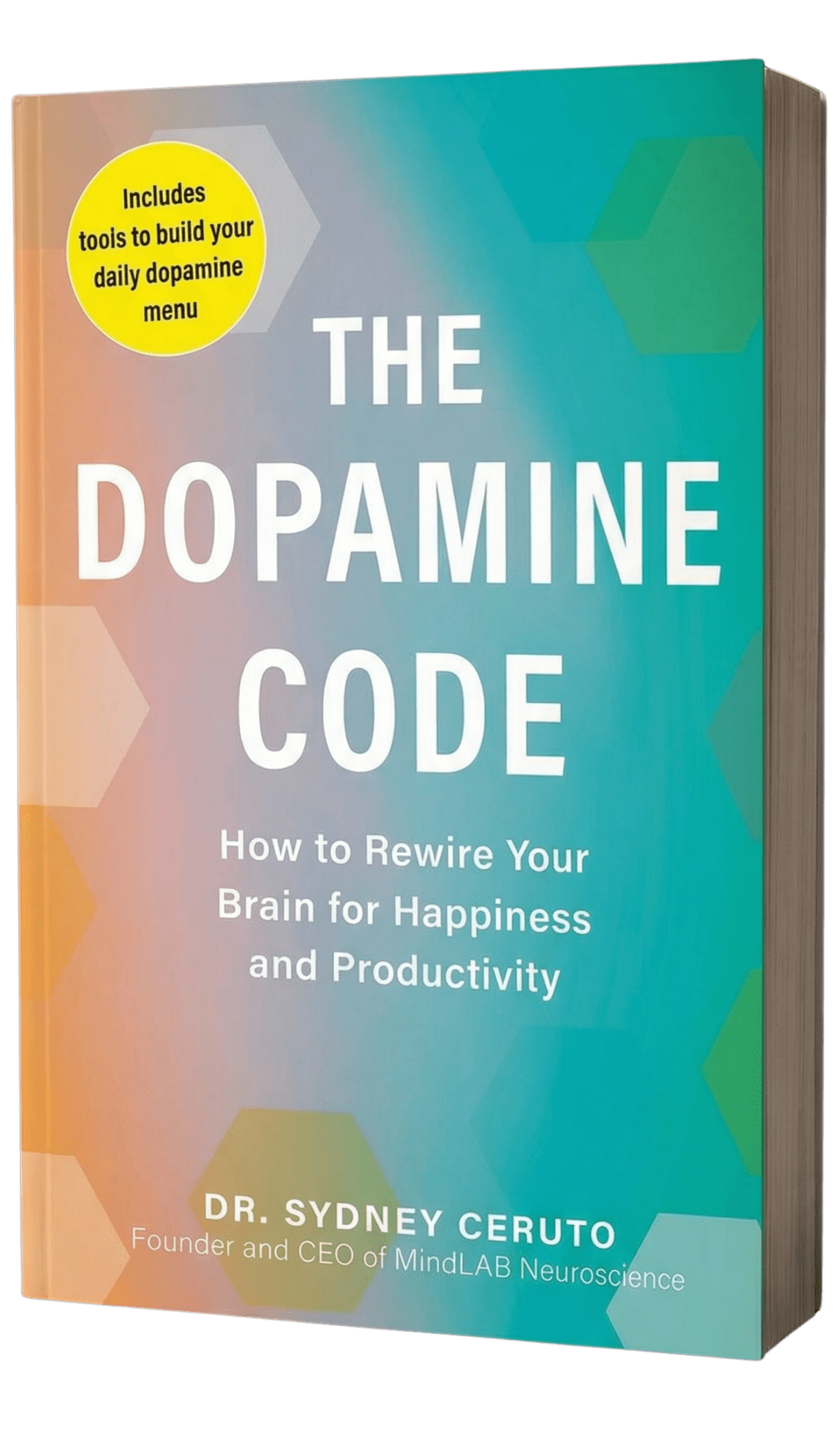
The Dopamine Code

Decode Your Drive

Why Your Brain Rewards the Wrong Things

Your brain's reward system runs every decision, every craving, every crash — and it was never designed for the life you're living. The Dopamine Code is Dr. Ceruto's framework for understanding the architecture behind what drives you, drains you, and keeps you locked in patterns that willpower alone will never fix.

Published by Simon & Schuster, The Dopamine Code is Dr. Ceruto's framework for building your own Dopamine Menu — a personalized system for motivation, focus, and enduring life satisfaction.

Order Now

Ships June 9, 2026

The Dopamine Code by Dr. Sydney Ceruto — Decode Your Drive
Locations

The Intelligence Brief

Neuroscience-backed analysis on how your brain drives what you feel, what you choose, and what you can’t seem to change — direct from Dr. Ceruto.