







When Time Moves Differently Than Everyone Expects
“You are not choosing to be late: your brain is providing you with inaccurate temporal data, and you are making reasonable decisions based on information that turns out to be wrong.”
You are not running late because you do not care. You are not missing deadlines because you lack discipline. Something more fundamental is happening: your brain processes the passage of time differently from the people around you, and no amount of calendaring, reminders, or self-criticism has fixed it.
Time blindness is not a metaphor. It is a measurable difference in how the brain’s internal clock operates. The neural circuits responsible for time perception (for knowing how long fifteen minutes actually feels, for estimating how much time a task will consume, for sensing the urgency of an approaching deadline) function on a different calibration in brains with executive function differences. You are not choosing to be late. Your brain is providing you with inaccurate temporal data, and you are making reasonable decisions based on information that turns out to be wrong.
This creates a particular kind of suffering because the consequences are visible and immediate while the cause is invisible and internal. The people waiting for you see lateness. Your employer sees missed deadlines. You see another failure in a lifelong pattern of failures that you cannot explain, because from the inside, you were not wasting time. You simply did not perceive its passage accurately.
The Neuroscience of Internal Timekeeping
Your brain maintains an internal clock: a set of neural circuits that track the passage of time, estimate durations, and signal when a temporal deadline is approaching. In a typically calibrated brain, this system operates with reasonable accuracy. Fifteen minutes feels roughly like fifteen minutes. An approaching deadline generates increasing urgency signals as it draws closer. The transition from “I have plenty of time” to “I need to leave now” happens automatically, without conscious monitoring.
In a brain with executive function differences, this calibration is disrupted at the circuit level. The prefrontal cortex, which integrates temporal signals with planning and decision-making, receives inconsistent data from the brain’s timing networks. The result is not simply poor time management. It is a fundamentally different experience of time itself.
Dopamine plays a critical role here. The dopamine system modulates how the brain perceives duration: low dopamine states compress time perception, making intervals feel shorter than they are. When your brain is underproducing dopamine, thirty minutes can feel like ten. The experience is not that you chose to ignore the clock. The experience is that the clock seems to have jumped forward without warning.
This also explains why time perception varies so dramatically depending on the activity. Tasks that produce dopamine (engaging conversations, creative work, problem-solving under pressure) seem to contract time. Tasks that produce minimal dopamine (routine preparation, administrative work, transition periods) seem to happen outside of time entirely. You look up and an hour has vanished into what felt like moments.
The Cascade Effect
Time blindness does not operate in isolation. It creates a cascade of secondary problems that compound the original difficulty. When you consistently underestimate how long tasks take, you overschedule. When you overschedule, you run behind. When you run behind, stress hormones rise. When catecholamines and cortisol flood the system, prefrontal function, already compromised, degrades further. And degraded prefrontal function makes time perception even less accurate.
This is a self-reinforcing cycle that no behavioral intervention fully addresses, because the behavioral interventions themselves require the temporal awareness they are trying to compensate for. Setting a timer only works if you respond to the timer when it fires. Building in buffer time only works if your estimate of the original task duration is in the right range. Leaving earlier only works if your brain can accurately gauge when “earlier” is.
The emotional cost accumulates invisibly. Chronic lateness generates shame. Missed deadlines generate anxiety. The growing gap between what you intend and what you deliver generates a corrosive self-doubt that becomes its own neurological problem: the brain begins to code future commitments as threats rather than opportunities, further suppressing the dopamine that accurate time perception requires.
What Conventional Strategies Miss
The standard advice for time blindness (set more alarms, use visual timers, break tasks into smaller chunks) addresses symptoms without touching the underlying mechanism. These are compensatory tools, and some of them help. But they share a critical limitation: they rely on external signals to override an internal system that is miscalibrated at the circuit level.
The person who sets twelve alarms and still arrives late is not failing at alarm management. Their prefrontal cortex is discounting the alarm signal because the urgency circuit is not firing at the appropriate threshold. The alarm is data. The brain is not weighting it correctly.
In my practice, I have worked with hundreds of individuals who describe the same trajectory: a period of rigid compensatory structure that works temporarily, followed by a gradual return to the baseline pattern as the effort of maintaining the structure becomes unsustainable. This is predictable, not pathological. The brain cannot indefinitely maintain a conscious override system for a function that should be operating automatically.
How Dr. Sydney Ceruto Restructures Temporal Processing
Real-Time Neuroplasticity™ targets the specific circuits where time perception, dopamine regulation, and prefrontal planning intersect. The methodology does not add more external scaffolding. It works with the internal architecture that produces the miscalibration, restructuring how the brain weighs temporal signals, how dopamine modulates duration perception, and how the urgency system activates as deadlines approach.
The work happens during the live moments when temporal processing fails, not in retrospective analysis of why you were late last Tuesday, but in the neural event happening right now as your brain calculates whether you have “enough time” before the next commitment. That calculation is where the pattern lives, and it is where the pattern changes.
What I have observed consistently is that temporal recalibration produces changes that extend well beyond punctuality. When the brain begins to accurately track time, planning improves. When planning improves, stress decreases. When stress decreases, prefrontal function strengthens. The same cycle that was cascading downward reverses direction. Individuals describe it not as learning a new skill but as finally experiencing time the way other people always seemed to: as a continuous, trackable, manageable dimension rather than a force that unpredictably accelerates and disappears.
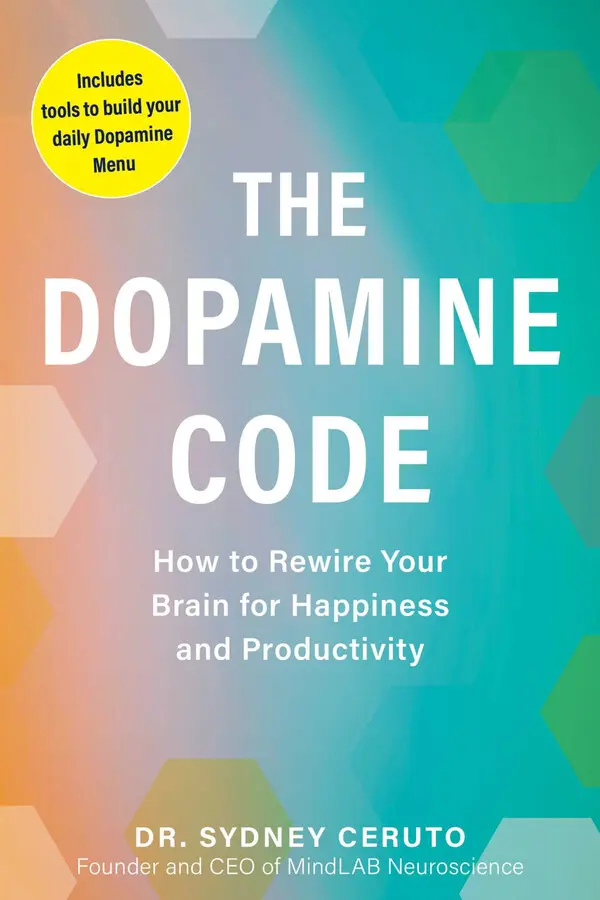
The engagement begins with a Strategy Call: a focused conversation that maps the specific temporal patterns in your life: where time perception breaks down, which contexts amplify the distortion, and where the restructuring priorities lie. As I detail in The Dopamine Code (Simon & Schuster, June 2026), the dopamine system that governs time perception is deeply intertwined with motivation, reward prediction, and the capacity to sustain effort, which is why recalibrating temporal processing produces improvements across every domain of executive function.
Why Wall Street Exposes This Pattern
Lower Manhattan operates on a temporal precision that few environments match. Market hours create hard boundaries that cannot be negotiated. Meeting schedules in the Financial District stack with minimal transition time. The commute into FiDi (whether from Brooklyn, New Jersey, or the Upper East Side) has a margin of error measured in minutes, not the comfortable buffers that other work environments allow.

For someone whose brain processes time on a different calibration, this environment does not just expose the pattern: it amplifies the consequences. The ten-minute underestimate that might go unnoticed in a flexible workplace becomes a visible failure in an environment where precision matters. The cascading lateness that produces mild inconvenience elsewhere produces measurable professional damage in a context where timing precision is foundational.
Wall Street’s after-hours culture adds another dimension. Networking events, dinners, and the social expectations of the financial sector create extended days with multiple sequential commitments. Each transition requires temporal estimation: how long the current meeting will run, how long it will take to reach the next location, how much preparation time is needed. For a brain that consistently underestimates these intervals, the entire evening becomes a series of escalating time deficits that compound into visible dysfunction.
The density of Lower Manhattan itself contributes. Walking distances that look trivial on a map take longer than expected. Elevators in high-rises consume minutes that were not budgeted. Security checkpoints at building lobbies create delays that a temporally accurate brain accounts for automatically but a miscalibrated one simply does not factor in. These micro-delays accumulate throughout a day, and by afternoon, the gap between intended schedule and actual timeline has widened to a degree that produces real consequences.
References
Noreika, V., Falter, C. M., & Rubia, K. (2013). Timing deficits in attention-deficit/hyperactivity disorder (ADHD): Evidence from neurocognitive and neuroimaging studies. Neuropsychologia, 51(2), 235–266. https://doi.org/10.1016/j.neuropsychologia.2012.09.036
Ptacek, R., Weissenberger, S., Braaten, E., et al. (2019). Clinical implications of the perception of time in attention deficit hyperactivity disorder (ADHD): A review. Medical Science Monitor, 25, 3918–3924. https://doi.org/10.12659/MSM.914225
Toplak, M. E., Dockstader, C., & Tannock, R. (2006). Temporal information processing in ADHD: Findings to date and new methods. Journal of Neuroscience Methods, 151(1), 15–29. https://doi.org/10.1016/j.jneumeth.2005.09.018
For deeper context, explore why smart brains misjudge time.