Addiction & Compulsive Behavior
The broader architecture of compulsive patterns: how the brain’s reward system gets hijacked, why the loop consolidates below conscious control, and what structural neural intervention looks like.










The broader architecture of compulsive patterns: how the brain’s reward system gets hijacked, why the loop consolidates below conscious control, and what structural neural intervention looks like.
When a substance has reorganized the brain’s reward circuitry, the compulsion operates independently of intention. Dr. Ceruto addresses the neural architecture driving the pattern, not the substance itself.
Gambling, shopping, gaming: the brain does not distinguish between chemical and behavioral reward hijacking. The same dopamine circuits drive the compulsion regardless of the delivery mechanism.
Hyper-palatable food exploits the same reward circuits as any other compulsion. The restrict-binge cycle is a neural oscillation, not a discipline failure, and it requires a structural solution.
Internet pornography exploits the brain’s novelty-seeking dopamine system with infinite variability and zero friction. The resulting desensitization pattern disrupts both the compulsive loop and real-world intimacy.
Every scroll, notification, and like is engineered to exploit reward prediction circuits. When the pattern consolidates into compulsion, the trigger lives in your pocket and the reinforcement never stops.
Breaking the compulsive loop is the first step. Preventing the brain from re-consolidating it is where most approaches fail. Dr. Ceruto addresses the reconsolidation mechanism that turns a single lapse back into a pattern.
Westchester County produces compulsive patterns rooted in the neurochemistry of high-functioning achievement culture. In communities like Scarsdale, Bronxville, and Rye, the reward system has been trained for decades on goal-acquisition: the promotion, the house, the admission letter. When that system requires recalibration between targets, or when the achieved targets fail to deliver the anticipated dopaminergic response, the brain seeks alternative reward pathways. Alcohol at the country club, prescription stimulant dependency carried over from professional optimization, compulsive online trading, exercise addiction: Westchester’s compulsive patterns tend to hide inside socially sanctioned behaviors.
Dr. Ceruto identifies this concealment architecture as the defining feature of compulsive behavior in affluent suburban neighborhoods. The prefrontal system, highly developed in Westchester’s professional population, maintains surface-level functioning even as the underlying reward circuitry becomes increasingly dependent on a narrowing set of inputs. The wine consumption that escalated during the pandemic travel disruption doesn’t register as compulsive because the social environment normalizes it. The Adderall prescription that began as performance optimization doesn’t trigger concern because the professional output remains high. The dopaminergic system has locked onto a substance or behavior as its primary regulation tool, but the high-functioning exterior delays recognition.
The social dimension of Westchester compulsivity adds a specific barrier. In communities organized around visible success, the acknowledgment of a compulsive pattern carries social costs that the threat-detection system calculates precisely. Dr. Ceruto’s work addresses how the neural architecture of reputation-management, powerfully developed in achievement-oriented populations, actively works against the pattern-recognition that would allow the prefrontal system to identify and intervene in its own compulsive loops. The Westchester context doesn’t create compulsive neurobiology, but its combination of high reward-system calibration, socially embedded substance access, and intense reputation-preservation circuitry gives compulsive patterns an unusually effective disguise.

Dr. Sydney Ceruto, PhD, Neuroscientist & Author, MindLAB Neuroscience
Dr. Ceruto holds a PhD in Behavioral & Cognitive Neuroscience from NYU and Master’s degrees in Clinical Psychology and Business Psychology from Yale University. She lectures at the Wharton Executive Development Program at the University of Pennsylvania and has been an Executive Contributor to the Forbes Coaching Council since 2019. Dr. Ceruto is the author of The Dopamine Code (Simon & Schuster, June 2026). She founded MindLAB Neuroscience in 2000 and has spent over 26 years leading it, pioneering Real-Time Neuroplasticity™, a methodology that durably rewires the neural pathways driving behavior, decisions, and emotional responses.
Volkow, N. D., Wang, G.-J., Fowler, J. S., Tomasi, D., & Telang, F. (2011). Addiction: Beyond dopamine reward circuitry. Proceedings of the National Academy of Sciences, 108(37), 15037–15042. https://doi.org/10.1073/pnas.1010654108
Everitt, B. J., & Robbins, T. W. (2005). Neural systems of reinforcement for drug addiction: From actions to habits to compulsion. Nature Neuroscience, 8(11), 1481–1489. https://doi.org/10.1038/nn1579
Bechara, A. (2005). Decision making, impulse control and loss of willpower to resist drugs: A neurocognitive perspective. Nature Neuroscience, 8(11), 1458–1463. https://doi.org/10.1038/nn1584
The inability to stop despite genuine desire is the hallmark of hijacked reward circuitry. The brain's dopamine system has been retrained to classify the compulsive behavior as a survival-level priority: equivalent in neural urgency to food or water. Conscious intention, willpower, and genuine motivation operate through prefrontal circuits that have lost connectivity with the reward system driving the behavior. The desire to stop is real. The neural architecture overriding that desire is also real.
Traditional programs focus on behavioral abstinence, accountability, and support structures, managing the output of unchanged neural architecture. Dr. Ceruto's approach targets the architecture itself: rebuilding prefrontal regulatory connectivity with the reward system, recalibrating dopamine thresholds so natural engagement produces adequate reward signals, and restructuring the trigger patterns that activate craving circuits. The goal is architectural change that makes the compulsive behavior neurologically unnecessary.
Yes. Neuroplasticity research demonstrates that reward system recalibration, prefrontal regulatory restoration, and trigger-response restructuring remain possible throughout adulthood regardless of how long the pattern has been active. Duration affects the depth of intervention required but does not determine whether architectural change is possible. The neural systems maintaining the pattern remain modifiable.
The approach addresses the neural architecture maintaining the compulsive pattern: the reward system calibration, the prefrontal regulatory capacity, and the trigger-response circuits. The behavioral strategy that accompanies architectural intervention is individualized based on the specific pattern, its neurological severity, and the individual's circumstances. Dr. Ceruto's assessment identifies which approach to behavioral management supports the neural restructuring process most effectively.
Shame and identity distortion are produced by the same neural architecture maintaining the compulsive behavior: they are not separate psychological problems but features of how the altered reward system interacts with the brain's self-assessment circuits. When the reward architecture is restructured, the shame-generating mechanisms shift because the brain's self-model is no longer organized around the compulsive pattern.
Yes. The neural mechanisms of behavioral compulsions (gambling, compulsive spending, problematic sexual behavior, social media dependency, work compulsion) operate through the same reward circuitry as substance-related patterns. The dopamine system does not distinguish between chemical and behavioral reward sources. The architectural intervention addresses the reward system calibration regardless of what stimulus is activating it.
The Strategy Call maps the neural architecture maintaining the compulsive pattern: the reward system calibration, the prefrontal regulatory capacity, the trigger-response circuits, and the stress-response patterns that typically activate the behavior. It assesses the severity of the architectural changes and identifies where targeted intervention will produce the most effective restructuring.
The timeline depends on the depth of reward system recalibration required, which correlates with the duration and intensity of the compulsive pattern. Noticeable shifts in craving intensity and trigger response are typically experienced within weeks. Full architectural restructuring, where the brain no longer generates compulsive urges because the reward system has been recalibrated, develops over months of targeted intervention.
One hour with Dr. Sydney Ceruto. You leave knowing which neural pattern is actually driving this, and what to do about it.
Book a Strategy Call
Decode Your Drive
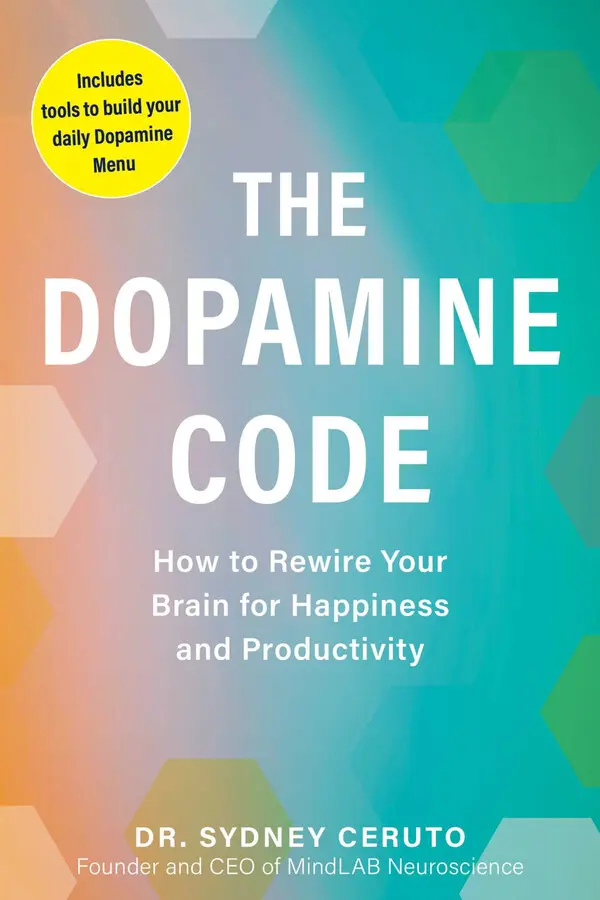
Your brain's reward system runs every decision, every craving, every crash, and it was never designed for the life you're living. The Dopamine Code is Dr. Ceruto's framework for understanding the architecture behind what drives you, drains you, and keeps you locked in patterns that willpower alone will never fix.
Published by Simon & Schuster, The Dopamine Code is Dr. Ceruto's framework for building your own Dopamine Menu, a personalized system for motivation, focus, and enduring life satisfaction.
Order Now!Available now