Depression & Low Mood in Westchester County

Depression is not a character flaw or a failure of effort. It is the brain's reward, motivation, and energy systems operating in a suppressed state. The architecture maintaining the pattern can be identified and recalibrated at the neural level.

Depression is not a mood problem — it is a systems-level downregulation where the brain's reward, motivation, and energy-regulation circuits have shifted to a low-output state that no longer reflects what the current environment actually requires. The architecture maintaining the pattern operates below the level of conscious reasoning, which is why understanding the depression does not resolve it. Dr. Ceruto's methodology identifies the specific circuits maintaining the suppressed state and intervenes at the structural level — restoring the brain's capacity to generate reward signals, sustain energy, and process experience as something worth engaging with.

Book a Strategy Call
ForbesUSA TodayHuffPostNewsweekAssociated PressCosmopolitanBusiness InsiderForbesUSA TodayHuffPostNewsweekAssociated PressCosmopolitanBusiness Insider

Depression Coaching

The brain’s reward, motivation, and energy circuits have shifted to a low-output state that persists regardless of circumstances. Dr. Ceruto identifies the specific architecture maintaining the suppressed state and works at the level where the pattern lives.

Learn more about Depression Coaching in Westchester County →

Seasonal Mood Changes

The brain’s sensitivity to photoperiod shifts mood, energy, and motivation circuits toward a low-output state as light exposure changes. This is not weakness — it is the brain responding to environmental signals with architecture built for a different era.

Learn more about Seasonal Mood Changes in Westchester County →

Hopelessness & Emotional Recovery

The brain’s predictive system has locked into a model where improvement is not expected. Hopelessness is not a conclusion about reality — it is a prediction error that feels absolutely certain because the prediction circuitry has been calibrated by repeated negative outcomes.

Learn more about Hopelessness & Emotional Recovery in Westchester County →

Why Depression Takes a Specific Shape in Westchester County

Westchester County produces a depression pattern rooted in the neuroscience of completed goals. The communities along the Metro-North stretch — Scarsdale, Chappaqua, Rye, Bronxville — represent a specific form of achievement endpoint. The house was acquired. The school district was secured. the daily travel was optimized. And the reward system that drove two decades of relentless professional output finds itself without a target of sufficient magnitude. The dopaminergic system, built for pursuit, has nothing left to pursue at the scale it was calibrated for.

Dr. Ceruto’s work with Westchester residents reveals a low-mood architecture that differs fundamentally from depressive patterns in urban or economically stressed environments. The prefrontal cortex remains highly functional — these are professionals still performing at elite levels in finance, law, and medicine. But the deeper motivational circuitry has gone quiet. The hedonic system registers the Bedford estate, the country club membership, the children’s acceptance letters, and generates a muted signal where a surge was expected. This gap between external achievement and internal reward response produces a particular form of bewilderment that compounds the low mood.

The social architecture of affluent Westchester communities adds a specific layer. The performative dimension of towns like Scarsdale and Bronxville — where visible success is both currency and expectation — makes the internal experience of emptiness difficult to locate or articulate. Dr. Ceruto identifies this as a masking phenomenon at the neural level: the prefrontal system maintains social performance while the underlying reward-effort architecture operates in a depleted state. The daily Metro-North travel becomes mechanical rather than purposeful. The allostatic load shifts from the weight of striving to the weight of wondering why arrival feels indistinguishable from loss.


Dr. Sydney Ceruto, PhD — Founder, MindLAB Neuroscience

Dr. Sydney Ceruto, PhD — Founder & CEO, MindLAB Neuroscience

Dr. Ceruto holds a PhD in Behavioral & Cognitive Neuroscience from NYU and two Master’s degrees from Yale University. She lectures at the Wharton Executive Development Program at the University of Pennsylvania and has been an Executive Contributor to the Forbes Coaching Council since 2019. Dr. Ceruto is the author of The Dopamine Code (Simon & Schuster, June 2026). She founded MindLAB Neuroscience in 2000 and has spent over 26 years pioneering Real-Time Neuroplasticity™ — a methodology that permanently rewires the neural pathways driving behavior, decisions, and emotional responses.

References

Russo, S. J., & Nestler, E. J. (2013). The brain reward circuitry in mood disorders. Nature Reviews Neuroscience, 14(9), 609–625. https://doi.org/10.1038/nrn3381

Drevets, W. C., Price, J. L., & Furey, M. L. (2008). Brain structural and functional abnormalities in mood disorders: implications for neurocircuitry models of depression. Brain Structure and Function, 213(1–2), 93–118. https://doi.org/10.1007/s00429-008-0189-x

Pizzagalli, D. A. (2014). Depression, stress, and anhedonia: toward a synthesis and integrated model. Annual Review of Clinical Psychology, 10, 393–423. https://doi.org/10.1146/annurev-clinpsy-050212-185606

Success Stories

“Anxiety and depression had been running my life for years. Dr. Ceruto helped me see them not as permanent conditions but as neural patterns with identifiable roots. Once I understood the architecture, everything changed.”

Emily M. — Physician Portland, OR

“Outperforming every metric for years and feeling absolutely nothing — no satisfaction, no drive, just a compulsive need to keep going. Executive retreats, meditation protocols, none of it made a difference. Dr. Ceruto identified the dopamine downregulation that was driving the entire pattern. My reward system had essentially gone offline from overstimulation. She didn't teach me to reframe success — she restored the neurochemistry that lets me actually experience it.”

Mikhail D. — Family Office Principal Washington, DC

“Every metric was green and I felt nothing. Conventional approaches told me I was 'burned out' or needed gratitude practices — none of it touched the actual problem. Dr. Ceruto identified that my dopamine baseline had shifted so high from constant reward-chasing that normal achievement couldn't register anymore. She recalibrated the reward system itself. I didn't need more success. I needed my brain to actually experience the success I already had.”

Rafael G. — Screenwriter New York, NY

“I reached out to Dr. Ceruto for help with an ongoing issue I couldn’t resolve. Having discussed it with friends and family, I thought it would be challenging for her to offer a fresh perspective. I was absolutely wrong. She asked all the right questions that pushed me to articulate my thoughts differently than anyone else had. After eight weeks, she made the answer seem so clear. Dr. Ceruto is warm, objective, and open-minded — it leaves no doubt how much she genuinely cares.”

Claudia S. — Physician Wellesley, MA

“The moment two priorities competed for bandwidth, my attention collapsed — and I'd convinced myself my brain was fundamentally broken. Dr. Ceruto identified the specific attentional pattern that was causing the collapse and restructured it. My prefrontal cortex wasn't broken. It was misfiring under competing demands. Once that pattern changed, everything I was trying to hold together stopped requiring so much effort.”

Rachel M. — Clinical Researcher Boston, MA

“Every system, every supplement, every productivity method I tried collapsed within weeks — and nothing held because nothing addressed why my attention kept fragmenting. Dr. Ceruto identified the dopamine regulation pattern that was hijacking my prefrontal cortex every time I needed sustained focus. She didn't give me another workaround. She restructured the architecture underneath. My brain holds now. That's not something I ever thought I'd be able to say.”

Derek S. — Film Producer Beverly Hills, CA

Frequently Asked Questions About Neuroscience-Based Mood and Motivation Restoration

How is this approach different from antidepressant medication?

Antidepressants modulate neurotransmitter availability — primarily serotonin or dopamine — providing the brain with more of the chemicals its mood-regulation circuits require. This addresses the chemical layer without restructuring the circuits themselves. Dr. Ceruto's approach targets the neural architecture governing motivation, reward processing, and emotional regulation — producing structural changes that address the dysfunction at the circuit level rather than managing it through chemical modulation.

Why does depression persist even when my life circumstances are objectively good?

Depression is a neural architecture state, not a circumstantial response. The mesolimbic dopamine pathway, the prefrontal cortex, and the HPA axis can become dysregulated independently of external circumstances. When these systems lose calibration, the brain cannot generate adequate motivation, pleasure, or cognitive clarity regardless of how favorable the environment is. The disconnect between circumstances and mood is one of the strongest indicators that the challenge is architectural.

Can the neural changes associated with depression be reversed?

Yes. The prefrontal thinning, dopaminergic pathway dysregulation, and HPA axis miscalibration associated with persistent low mood are reversible through neuroplasticity-based intervention. These are not permanent structural injuries — they are calibration changes that the brain's own restructuring mechanisms can reverse under the right conditions. Targeted intervention provides those conditions.

How does this approach address the physical exhaustion that accompanies low mood?

The exhaustion of depression is not physical tiredness — it is the output of an HPA axis that has lost calibration, producing cortisol patterns that disrupt sleep architecture, suppress energy-regulating hormones, and create a biological state of depletion that rest cannot resolve. Recalibrating the HPA axis restores the hormonal architecture supporting energy and recovery, addressing the exhaustion at its biological source rather than managing it symptomatically.

Why have conventional approaches not worked for me?

Conventional approaches typically address depression at the cognitive or behavioral level — changing thought patterns, increasing activity, or modulating brain chemistry through medication. When the underlying neural architecture remains unchanged, these approaches produce temporary improvement that eventually encounters the architectural ceiling. Persistent low mood that has not responded to conventional approaches is a strong indicator that the intervention needs to reach the circuit level.

Can this work alongside medication I am currently taking?

Dr. Ceruto's approach addresses a different layer than medication — neural architecture versus neurochemistry. The approaches are complementary rather than competing. Any decisions about medication should be discussed with your prescribing physician. Dr. Ceruto does not prescribe, adjust, or recommend medication changes.

How does this approach address the loss of interest and pleasure that accompanies depression?

Loss of interest and pleasure — anhedonia — reflects specific dysregulation of the dopaminergic reward system. The brain's reward circuits are generating insufficient response to stimuli that should produce engagement and satisfaction. Dr. Ceruto targets this specific system, recalibrating the reward architecture so natural engagement produces adequate neurochemical response and the experience of pleasure and interest returns.

What does the Strategy Call assess for persistent low mood?

The Strategy Call maps the neural systems involved in your specific pattern — assessing dopaminergic function, prefrontal capacity, HPA axis calibration, and the interactions between these systems. It identifies which neural mechanisms are most disrupted, which are contributing most to the experienced symptoms, and where targeted intervention will produce the most effective restoration.

Take the First Step

The Strategy Call is a focused conversation with Dr. Ceruto that maps the specific neural mechanisms driving your concerns and determines the right path forward.

Book a Strategy Call
MindLAB Neuroscience consultation room

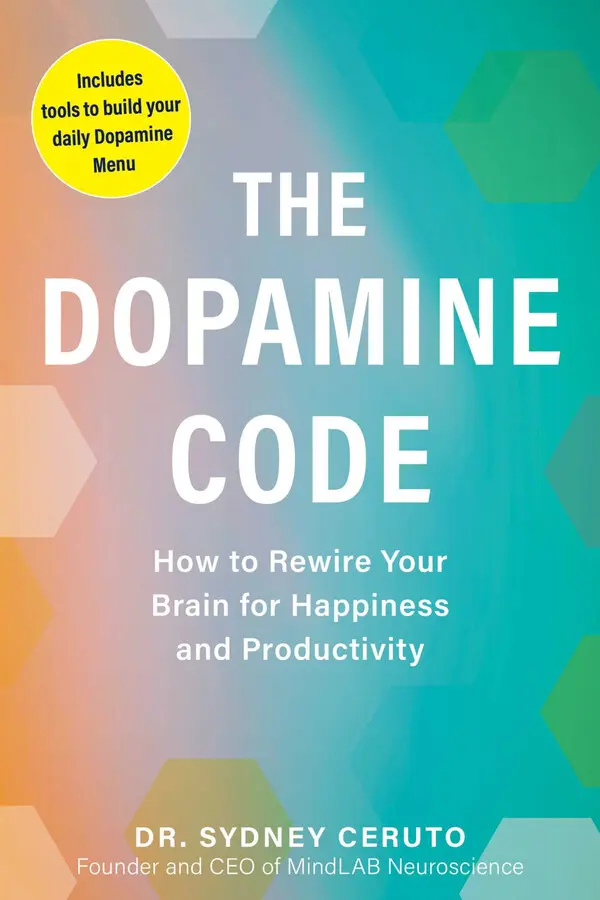
The Dopamine Code

Decode Your Drive

Why Your Brain Rewards the Wrong Things

Your brain's reward system runs every decision, every craving, every crash — and it was never designed for the life you're living. The Dopamine Code is Dr. Ceruto's framework for understanding the architecture behind what drives you, drains you, and keeps you locked in patterns that willpower alone will never fix.

Published by Simon & Schuster, The Dopamine Code is Dr. Ceruto's framework for building your own Dopamine Menu — a personalized system for motivation, focus, and enduring life satisfaction.

Order Now

Ships June 9, 2026

The Dopamine Code by Dr. Sydney Ceruto — Decode Your Drive
Locations

The Intelligence Brief

Neuroscience-backed analysis on how your brain drives what you feel, what you choose, and what you can’t seem to change — direct from Dr. Ceruto.