








Executive Career Coaching in Westchester County

The prefrontal cortex governing your most consequential decisions degrades measurably under sustained executive workload. Surface performance stays intact. Strategic judgment does not.

MindLAB Neuroscience delivers executive career advisory grounded in the neuroscience of prefrontal cortex — the brain's executive control center — function. This includes the ability to shift thinking between concepts, strategic decision-making, and the fatigue monitoring that determines when those capacities silently fail. This is executive performance work at the level where it actually operates.

Book a Strategy Call
ForbesUSA TodayHuffPostNewsweekAssociated PressCosmopolitanBusiness InsiderForbesUSA TodayHuffPostNewsweekAssociated PressCosmopolitanBusiness Insider

Key Points

  1. Senior-level career decisions carry disproportionate neural weight because professional identity at the executive level is deeply integrated with personal identity architecture.
  2. The brain's sunk-cost bias is neurologically hardwired — decades of career investment create neural pathways that resist redirection regardless of rational analysis.
  3. Executive career plateaus often reflect neural pattern automation — the circuits that drove early career success have become rigid at the scale where adaptability is required.
  4. At senior levels, career decisions are inseparable from identity decisions — the prefrontal cortex processes them through the same self-referential circuits, requiring intervention at the identity level.
  5. Effective executive career navigation requires restructuring the neural patterns that have become invisible through success — the very patterns that now limit further evolution.

The Silent Degradation

“The executive who can think clearly about everyone else's career while being unable to resolve their own is not lacking self-awareness. Their prefrontal cortex applies different computational rules when the stakes are personal — and the higher the stakes, the more distorted the computation becomes.”

You are performing well. By every external measure — output, reputation, compensation — the trajectory is intact. And yet something has shifted. The decisions feel heavier. The clarity that once came naturally now requires deliberate effort to manufacture. The end of the workday brings a quality of exhaustion that rest does not fully resolve.

You may attribute this to the natural cost of seniority. More responsibility, more complexity, more at stake. And that is partly true. But the explanation misses the mechanism. What is actually occurring is measurable, biological, and — once understood — addressable.

The pattern is consistent across the senior professionals who seek executive career advisory at MindLAB Neuroscience. They are not failing. They are not burning out in the dramatic sense. They are experiencing a progressive, invisible erosion of the neural systems responsible for their highest-value cognitive work — and they are making career-defining decisions from that degraded state without realizing it.

The most dangerous aspect is the silence. Task performance remains high. The reports get done. The meetings are productive enough. But the strategic layer that layer degrades first and degrades quietly.

In over two decades of clinical neuroscience practice, the most reliable predictor of poor executive career decisions is not incompetence or lack of information. It is cognitive load that has exceeded the prefrontal cortex’s capacity to sustain strategic judgment — a condition that becomes more likely as professional responsibility increases.

The Neuroscience of Executive Performance

The prefrontal cortex is the neural substrate of everything a senior professional is paid to do: hold strategic objectives against competing demands, monitor for conflicts between expected and actual outcomes. It enables switching between task demands with flexibility, and sustaining effortful cognition across extended workdays.

Participants completing demanding cognitive tasks for more than six hours showed a measurable decrease in activity in a key region of the lateral prefrontal cortex choosing immediate rewards over larger delayed ones. The critical finding was this: objective task performance remained at approximately 95 percent accuracy throughout. The professional showed no visible behavioral decline. Yet their economic decision-making quality was already impaired. This “silent” degradation of strategic judgment is the mechanism behind poor high-stakes choices made by ostensibly high-performing professionals. Career-defining decisions often occur at the end of cognitively loaded days. The lateral PFC that should govern those choices is already depleted.

Causal evidence goes further. Using transcranial magnetic stimulation to temporarily disrupt the dorsolateral prefrontal cortex, researchers demonstrated that the DLPFC controls not only the execution of cognitive effort but the internal monitoring of fatigue itself. When the DLPFC is disrupted, participants show impaired effort exertion and — critically — reduced ability to accurately track their own cognitive depletion. The DLPFC serves as both the engine and the gauge. When it depletes, the professional loses the meta-awareness that they are depleted.

The Architecture of Executive Function

Decades of evidence establish the PFC’s fractionated architecture. The dorsolateral PFC governs working memory maintenance and goal biasing detecting when outcomes diverge from expectations. The ventrolateral PFC supports cognitive flexibility which means it is directly vulnerable to disruption under chronic stress.
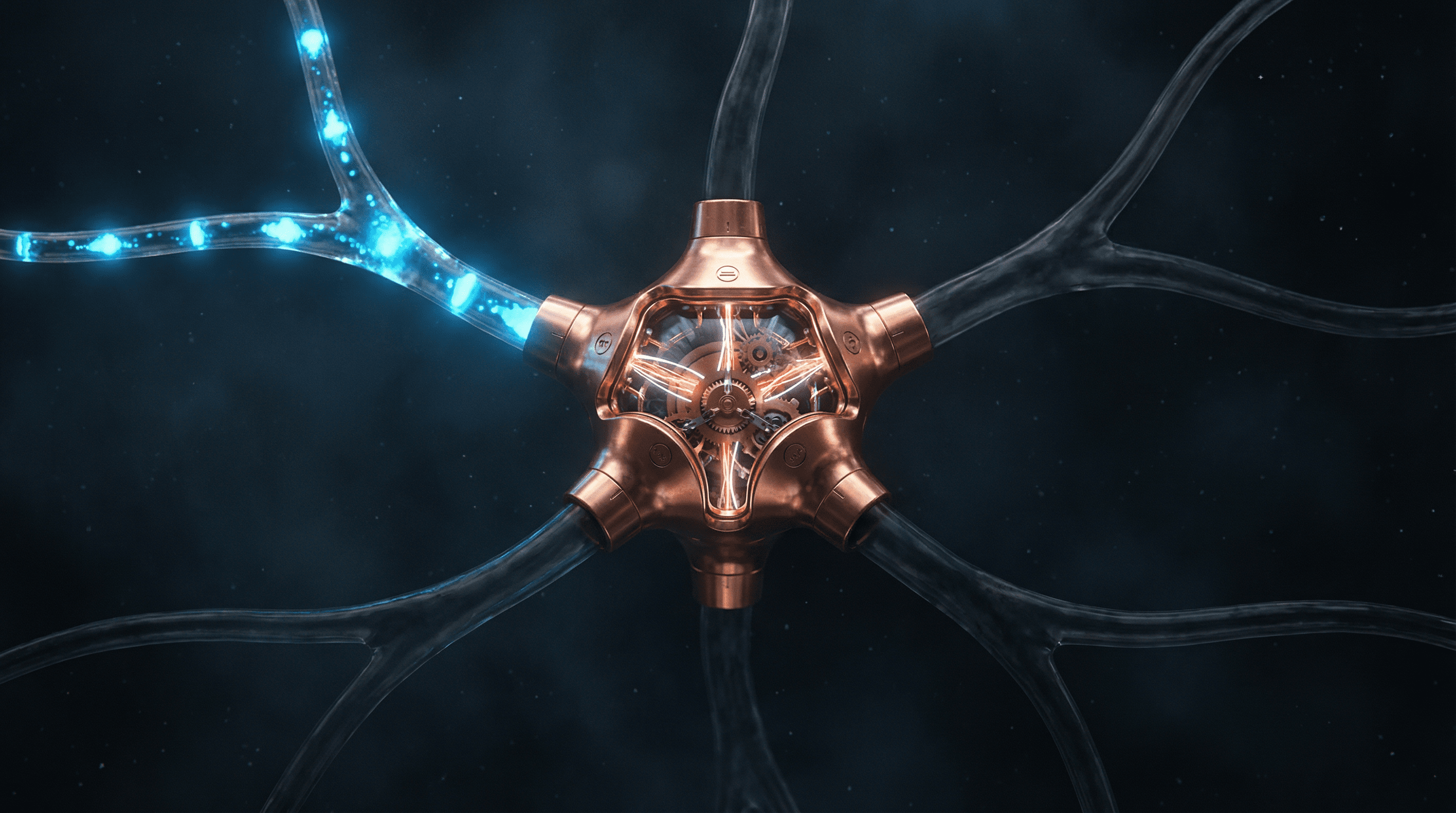
Career counseling and career assessment — copper neural crossroads with selected pathway representing professional direction

Executive function is highly heritable but also trainable, with PFC circuits showing specific responsiveness to targeted cognitive interventions. This is the scientific foundation for MindLAB’s methodology: the neural systems governing executive performance are not fixed capacities. They are architectures that can be optimized.

How Dr. Ceruto Approaches Executive Career Performance

Dr. Ceruto’s Real-Time Neuroplasticity methodology targets the specific PFC subsystems identified in the research. Neuroplasticity, the brain’s ability to rewire itself, enables these targeted interventions. It addresses dorsolateral PFC for working memory and goal maintenance, anterior cingulate cortex for conflict monitoring and error detection, and ventrolateral PFC for cognitive flexibility.

The work is not generic “performance optimization.” It is a structured, individualized intervention designed around the specific cognitive demands of each professional’s operating environment. A senior professional managing multi-timezone responsibilities across Brickell financial operations and Latin American markets faces a different cognitive load architecture than a startup founder navigating rapid strategic pivots in a Series B environment. The methodology adapts accordingly.

The NeuroSync program addresses focused executive performance challenges leadership, career strategy, organizational navigation, and personal performance under sustained pressure. For those operating at the intersection of all of these, the comprehensive approach addresses what a narrower engagement structurally cannot.

My clients describe the shift as a return to clarity they had not realized they had lost. The strategic vision sharpens. The decision-making feels precise again rather than effortful. The end of the workday no longer carries the same quality of depleted judgment. These are not subjective impressions. They reflect measurable changes in how the prefrontal cortex processes and sustains executive cognition.

What to Expect

Engagement begins with a Strategy Call — a focused conversation where Dr. Ceruto evaluates the nature of the executive performance challenge and determines whether a structured program is the appropriate intervention. This is a strategy conversation, not a consultation.

The structured engagement follows an individualized arc. Assessment maps the current cognitive load architecture — identifying which PFC subsystems are under the greatest strain and where the degradation has progressed furthest. Targeted protocols address those specific vulnerabilities: building DLPFC resilience for sustained strategic cognition, strengthening ACC conflict monitoring for complex decision environments, and optimizing cognitive flexibility for professionals navigating rapid strategic shifts.

The standard is measurable neural change. The professional should experience not just better performance but a structural improvement in the brain’s capacity to sustain high-quality executive cognition across longer timeframes. They should recover more rapidly between decision demands, and maintain meta-awareness of cognitive state under pressure.

References

Blain, B., Hollard, G., & Pessiglione, M. (2016). Neural mechanisms underlying the impact of daylong cognitive work on economic decisions. Proceedings of the National Academy of Sciences, 113(25), 6967–6972. https://doi.org/10.1073/pnas.1520527113

Soutschek, A., & Tobler, P. N. (2020). Causal role of lateral prefrontal cortex in mental effort and fatigue. Human Brain Mapping, 41(16), 4630–4640. https://doi.org/10.1002/hbm.25146

Friedman, N. P., & Robbins, T. W. (2022). The role of prefrontal cortex in cognitive control and executive function. Neuropsychopharmacology, 47, 72–89. https://doi.org/10.1038/s41386-021-01132-0

The Neural Architecture of Executive Development

The executives who seek career coaching have typically built careers through a combination of exceptional capability, disciplined effort, and well-developed strategic instincts. They have navigated the organizational and political complexity required to reach senior levels. They have built the track record that legitimizes executive authority. And they have arrived at a point where the competencies that produced their success are insufficient for what the next phase requires — and conventional development approaches are not producing the change they need.

This is a neural architecture problem. Executive performance at the highest levels requires a specific configuration of prefrontal-limbic integration that is not automatically developed through career progression. The prefrontal capacities required — sustained strategic integration across long time horizons, uncertainty tolerance during periods of organizational volatility, cognitive flexibility under competing demands, and the ability to regulate threat responses without suppressing the information they carry — are trainable and restructurable. But they require targeted neural intervention, not the accumulated experience of additional years in role.

Neuroscience consultation — rosewood table with crystal brain sculpture and branded journal for strategy call preparation

The dopaminergic reward architecture is equally critical. Executives who have built their careers through a particular reward structure — the specific categories of achievement, recognition, and mastery-demonstration that their neural systems have been calibrated to find reinforcing — face a distinctive challenge when promotion or transition moves them into environments with fundamentally different reward landscapes. The board dynamics, the investor relationships, the enterprise-scale complexity, the ambiguity of outcomes at the strategic level — these produce different neurochemical signatures than the challenges that built the executive’s original reward architecture. Recalibrating the dopaminergic system to find the new landscape genuinely reinforcing, rather than simply accepting it intellectually, is a neural process that requires explicit intervention.

Why Traditional Approaches Fall Short

Executive coaching has evolved substantially over the past two decades, and the best practitioners bring genuine sophistication to the work. The fundamental limitation is not in the quality of the coaches or the depth of their frameworks. It is in the level at which the work operates. Behavioral and cognitive coaching addresses what executives think and do. It does not address the neural architecture that determines which thoughts arise under pressure, which behavioral repertoires are neurologically available in high-stakes contexts, and which reward signals sustain motivation across the ambiguous, long-horizon challenges of senior executive work.

Leadership development programs extend this limitation to group format. The curriculum is often genuinely valuable: expanded self-awareness, exposure to diverse leadership models, structured peer learning, and sometimes excellent facilitation. What the program format cannot deliver is the neural specificity required to reconfigure an individual executive’s particular circuit configuration — the specific regulatory imbalances, reward architecture mismatches, and prediction system biases that are limiting this particular person’s performance at this particular career stage.

The consequence is that executives invest significant time and resources in coaching and development that produces real insight and limited lasting behavioral change. The insight is genuine. The neural architecture is unchanged. And the behavioral patterns that coaching was intended to address reassert themselves with mechanical reliability in the conditions that produce them — the high-stakes, high-pressure, high-complexity conditions that define senior executive work.

How Neural Executive Career Coaching Works

My approach to executive career coaching begins with a neural architecture assessment of the presenting development challenge. What are the specific circuit configurations limiting this executive’s performance? Where is the prefrontal-limbic regulatory balance out of calibration for the demands of their current role? What is the prediction system bias most systematically distorting their strategic thinking? What is the reward architecture mismatch between what their dopaminergic system finds reinforcing and what their current role actually delivers? These questions have answers at the neural level, and they determine the coaching protocol.

From this assessment, I design a coaching engagement that directly targets the identified circuit configurations. For prefrontal-limbic regulatory imbalances — the most common presentation in senior executives, typically manifesting as reactive decision patterns, difficulty holding ambiguity, or threat responses that narrow strategic thinking — the protocol targets the specific regulatory pathways that need to be recalibrated. For reward architecture mismatches, the work targets dopaminergic recalibration to the actual reward landscape of the current role. For prediction system biases, the work builds metacognitive monitoring of the specific filtering patterns most distorting strategic information processing.

The coaching timeline is calibrated to neural change timelines, not to conventional coaching cadences. Lasting circuit-level change requires sustained, repeated intervention across a sufficient time horizon for new neural patterns to consolidate. The executives I work with at the NeuroConcierge level receive an embedded partnership structured around this reality — not a coaching package, but a sustained working relationship calibrated to the pace of genuine neural development.

What This Looks Like in Practice

Executive career coaching engagements begin with a Strategy Call in which I map the presenting development challenge against its most likely neural substrates. The conversation examines the specific performance patterns that are most limiting, the career context driving the development need, and the neural mechanisms most likely responsible. From that conversation, I determine whether the presenting need is amenable to focused NeuroSync intervention or requires the sustained partnership of the NeuroConcierge engagement.

Executives at transition points — new C-suite roles, board positions, cross-industry moves, entrepreneurial exits followed by new ventures — receive particular attention to the neural recalibration required to perform optimally in the new environment. The prediction architecture built for a previous role does not automatically update to a new one. The reward calibration built for a previous career stage does not automatically transfer. The Dopamine Code provides executives with the scientific framework for understanding why these transitions are neurologically demanding and what the recalibration process actually requires, for those who want to engage with the underlying science.


Marker Traditional Approach Neuroscience-Based Approach Why It Matters
Focus Executive career strategy, board positioning, and professional brand development Restructuring the neural identity and decision architecture that governs career navigation at the senior executive level
Method Executive career coaching with networking strategy, market positioning, and negotiation support Targeted intervention in the identity, sunk-cost, and pattern-automation circuits that determine executive career trajectory
Duration of Change Strategy-dependent; the same neural patterns create the same career bottlenecks at each subsequent transition Permanent restructuring of executive career-processing architecture that enables autonomous navigation across all future decisions

Why Executive Career Coaching Matters in Westchester County

Executive Career Navigation in Westchester County

Executive career navigation in Westchester involves a population whose professional options are simultaneously expansive and constrained. The C-suite executive in Scarsdale has access to opportunities at the highest levels of corporate America. But the geographic and financial architecture of life in Westchester — the property, the schools, the community commitments, the partner’s own professional arrangements — constrains which of those opportunities can be pursued without dismantling the life structure the career was supposed to serve. The brain processes this constraint with particular intensity because the constraint is self-imposed: the executive built this architecture and now must operate within it.

The executive in their late forties or fifties who has reached a ceiling — passed over for the CEO role, restructured out of a division, or simply aware that the current trajectory has peaked — faces a career reckoning that the Westchester environment makes uniquely difficult. The financial commitments do not flex. The community expectations do not update. And the neural identity circuits that have been constructed around two decades of corporate ascent must now accommodate a reality that the narrative did not anticipate.

My work addresses executive career navigation at the level of the neural architecture governing professional identity, risk evaluation, and reward prediction: the circuits that determine whether the next career chapter feels like opportunity or decline, and the identity-processing systems that must expand to accommodate a professional future that looks different from the past.

Dr. Sydney Ceruto, PhD — Founder, MindLAB Neuroscience

Dr. Sydney Ceruto, PhD — Founder & CEO, MindLAB Neuroscience

Dr. Ceruto holds a PhD in Behavioral & Cognitive Neuroscience from NYU and two Master’s degrees from Yale University. She lectures at the Wharton Executive Development Program at the University of Pennsylvania and has been an Executive Contributor to the Forbes Coaching Council since 2019. Dr. Ceruto is the author of The Dopamine Code (Simon & Schuster, June 2026). She founded MindLAB Neuroscience in 2000 and has spent over 26 years pioneering Real-Time Neuroplasticity™ — a methodology that permanently rewires the neural pathways driving behavior, decisions, and emotional responses.

References

Miller, E. K., & Cohen, J. D. (2001). An integrative theory of prefrontal cortex function. Annual Review of Neuroscience, 24, 167–202. https://doi.org/10.1146/annurev.neuro.24.1.167

Arnsten, A. F. T. (2009). Stress signalling pathways that impair prefrontal cortex structure and function. Nature Reviews Neuroscience, 10(6), 410–422. https://doi.org/10.1038/nrn2648

Hare, T. A., Camerer, C. F., & Rangel, A. (2009). Self-control in decision-making involves modulation of the vmPFC valuation system. Science, 324(5927), 646–648. https://doi.org/10.1126/science.1168450

Schultz, W. (2016). Dopamine reward prediction-error signalling: A two-component response. Nature Reviews Neuroscience, 17(3), 183–195. https://doi.org/10.1038/nrn.2015.26

Success Stories

“Outperforming every metric for years and feeling absolutely nothing — no satisfaction, no drive, just a compulsive need to keep going. Executive retreats, meditation protocols, none of it made a difference. Dr. Ceruto identified the dopamine downregulation that was driving the entire pattern. My reward system had essentially gone offline from overstimulation. She didn't teach me to reframe success — she restored the neurochemistry that lets me actually experience it.”

Mikhail D. — Family Office Principal Washington, DC

“The moment two priorities competed for bandwidth, my attention collapsed — and I'd convinced myself my brain was fundamentally broken. Dr. Ceruto identified the specific attentional pattern that was causing the collapse and restructured it. My prefrontal cortex wasn't broken. It was misfiring under competing demands. Once that pattern changed, everything I was trying to hold together stopped requiring so much effort.”

Rachel M. — Clinical Researcher Boston, MA

“Dr. Ceruto's methodology sharpened my negotiation instincts and built a level of mental resilience I didn't know I was missing. The difference showed up in how my team responds to me — trust, respect, and a willingness to follow that I'd been trying to manufacture for years. I stopped trying to project authority and started operating from it. That's the difference.”

Victoria W. — Trial Attorney New York, NY

“I could perform at the highest level professionally and still feel hijacked emotionally in my closest relationships — and no conventional approach had ever explained why those two realities coexisted. Dr. Ceruto identified the limbic imprint — an amygdala encoding from childhood that was running every intimate interaction I had. She didn't help me understand it better. She dismantled it. The reactivity isn't something I regulate anymore. The pattern that generated it is gone.”

Natasha K. — Art Advisor Beverly Hills, CA

“My phone was the first thing I touched in the morning and the last thing I put down at night — and every app blocker, digital detox protocol, and willpower-based system I tried lasted less than a week. Dr. Ceruto identified the variable-ratio reinforcement loop that had hijacked my attention circuits and dismantled it at the neurological level. My phone is still in my pocket. The compulsion to reach for it isn't. That's a fundamentally different kind of fix.”

Tomas R. — Architect Lisbon, PT

“I struggled with debilitating anxiety for years, trying countless therapies and medications with little success. Finding Dr. Ceruto and her neuroscience-based approach was truly life-changing. From our very first session, her deep knowledge of brain science and how it applies to anxiety gave me real hope. What sets her apart is that perfect blend of expertise and compassion — she genuinely cared about my progress and responded quickly even outside of our scheduled sessions. I can now enjoy social situations and excel at work.”

Brian T. — Architect Chicago, IL

Frequently Asked Questions About Executive Career Coaching in Westchester County

How does neuroscience-based executive advisory differ from conventional executive development programs?

Conventional programs use behavioral frameworks, psychometric instruments, and conversational methodologies. MindLAB's approach is grounded in the neuroscience of prefrontal cortex, the brain's executive control center, function. This targets the neural systems that govern working memory, cognitive flexibility — the ability to shift thinking concepts —, conflict monitoring, and strategic decision-making. Research published in PNAS demonstrates that sustained executive cognitive work degrades lateral PFC function and impairs strategic judgment even when task performance appears intact. Dr. Ceruto's methodology targets these neural mechanisms directly rather than addressing their behavioral symptoms.

What is decision fatigue, and why should Miami executives take it seriously?

Decision fatigue is the progressive degradation of decision-making quality resulting from sustained cognitive work. The dorsolateral prefrontal cortex — the brain's planning and reasoning center — causally governs both the execution of mental effort and the internal monitoring of fatigue. When it depletes, you lose meta-awareness that your judgment has degraded. For Westchester County executives managing multi-timezone demands, high-density meeting schedules, and accelerating deal velocity across finance and technology, decision fatigue is not theoretical. It is a daily operating condition that affects the quality of career-defining choices.

Who typically engages MindLAB for executive career advisory in Miami?

Professionals who engage MindLAB are typically operating at or near the senior level — facing high-stakes career decisions —. They may be accelerating toward a senior leadership position, navigating a complex organizational transition, evaluating a major career move, or experiencing the cumulative cognitive load of sustained high-stakes professional performance. They are based throughout Westchester County's professional corridors — Brickell, Coral Gables, Westchester County Beach, and the broader metro. They share a common need: to operate at the outer limit of their cognitive capacity with precision rather than depletion.

Can executive career advisory help with the cognitive demands of managing cross-border operations from Miami?

Yes. Managing Latin American, European, and East Coast operations from Westchester County compounds cognitive load, the total demand on mental processing capacity, in specific ways: dual regulatory environments, cultural code-switching, multilingual processing, and extended-timezone workdays. Each of these adds discrete demand to the prefrontal cortex systems governing executive function — planning, focus, and task management. Dr. Ceruto's methodology identifies which specific PFC subsystems are under the greatest strain and builds targeted neural resilience so the cognitive demands of cross-border leadership are met with optimized architecture rather than depleting reserves.

Is this engagement available virtually, or do I need to visit the North Miami Beach office?

MindLAB Neuroscience operates from 17301 Biscayne Blvd in North Westchester County Beach and serves professionals throughout Westchester County-Dade through both in-person and virtual engagement. The methodology delivers with full precision in virtual format. Many professionals in Brickell, Coral Gables, and Westchester County Beach choose a combination of in-person and virtual sessions based on their schedules and the demands of their operating environment.

What does the Strategy Call involve?

The Strategy Call is a focused, strategy conversation. Dr. Ceruto uses it to evaluate the nature of the executive performance challenge and identify the cognitive load — the total demand on mental processing capacity — patterns that may be affecting decision quality. She also determines whether a structured engagement is the appropriate next step. It is not a sales conversation. It is designed to produce clarity about the specific neural dynamics at play in your professional operating environment and whether MindLAB's methodology matches the challenge you are navigating.

How long does an executive career advisory engagement typically last?

Engagement duration depends on the scope and complexity of the executive performance challenge. Focused interventions addressing a specific decision domain or cognitive vulnerability may operate on a compressed timeline. Comprehensive engagements addressing sustained executive performance across multiple domains require longer-term partnership. Dr. Ceruto calibrates the process to the neural landscape each professional presents. The standard is measurable change in prefrontal cortex function, the brain's executive control center, not arbitrary time-based milestones.

Why do executives at the top of their field still struggle with career direction and fulfillment?

Success at the executive level often masks a growing divergence between the neural architecture that drove career ascent and the architecture that sustains fulfillment. The achievement circuits — dopaminergic pathways encoding ambition, competition, and status — can remain highly active while the meaning and engagement circuits signal depletion.

Additionally, decades of career success encode the current professional identity so deeply in the default mode network that any directional change — even one the executive consciously desires — triggers the same neural resistance as identity threat. The more successful the career, the more deeply encoded the identity architecture, and the more difficult evolution becomes without targeted neural intervention.

How does Dr. Ceruto's approach navigate the complexity of executive-level career decisions?

Executive career decisions involve layers of complexity that compound the standard career decision challenge: financial structures tied to specific trajectories, public professional identity, board and stakeholder expectations, and decades of sunk-cost investment in a particular path. Each of these factors activates distinct neural circuits — loss aversion, social threat processing, identity preservation — that distort the decision-making process.

Dr. Ceruto maps which specific neural systems are most distorting the executive's career processing and addresses them in order of impact. This produces clarity that emerges from recalibrated architecture rather than from additional analysis of options that the brain was already struggling to evaluate accurately.

Can this work help executives who are considering leaving corporate life entirely?

Yes — and this particular transition is one of the most neurologically complex because it involves dismantling an identity architecture that may have been building for decades. Executives considering departure from corporate life are simultaneously processing identity loss, status recalibration, financial risk, social network disruption, and the challenge of constructing a new self-concept from ambiguous raw material.

Dr. Ceruto's approach addresses each of these neural dimensions: restructuring the identity circuits to support evolution beyond corporate identity, recalibrating the threat systems that make departure feel like survival-level risk, and helping the reward architecture build engagement signals around the emerging direction rather than mourning the abandoned one.

Also available in: Miami · Wall Street · Midtown Manhattan · Beverly Hills · Lisbon

The Neural Systems Behind Every Decision You Make in Westchester County's Most Demanding Rooms

From Brickell's financial towers to Miami's multinational corridors, the cognitive demands on senior professionals are biological — and so is the solution. Dr. Ceruto maps your prefrontal baseline in one conversation.

Book a Strategy Call
MindLAB Neuroscience consultation room

The Dopamine Code

Decode Your Drive

Why Your Brain Rewards the Wrong Things

Your brain's reward system runs every decision, every craving, every crash — and it was never designed for the life you're living. The Dopamine Code is Dr. Ceruto's framework for understanding the architecture behind what drives you, drains you, and keeps you locked in patterns that willpower alone will never fix.

Published by Simon & Schuster, The Dopamine Code is Dr. Ceruto's framework for building your own Dopamine Menu — a personalized system for motivation, focus, and enduring life satisfaction.

Order Now

Ships June 9, 2026

The Dopamine Code by Dr. Sydney Ceruto — Decode Your Drive
Locations

The Intelligence Brief

Neuroscience-backed analysis on how your brain drives what you feel, what you choose, and what you can’t seem to change — direct from Dr. Ceruto.

