How Westchester County’s Professional Landscape Interacts with Avoidance
Westchester County combines the ambition of the New York metropolitan area with the close-knit social fabric of suburban communities. From the corporate presence in White Plains and Rye Brook to the entrepreneurial networks across Scarsdale, Bronxville, and Larchmont, professionals here operate in environments where reputation is visible and avoidance carries real consequences.
The county’s economic profile amplifies this dynamic. Major employers in healthcare, biotech, financial services, and consulting are concentrated along the I-287 stretch and in the Platinum Mile of Harrison and White Plains. Many residents also maintain professional responsibilities in Manhattan, creating a dual-environment pressure where avoidance patterns affect performance in both settings.
The Compounding Cost of Avoidance in Connected Communities
In Westchester, professional and social networks overlap extensively. A parent who avoids difficult school board conversations in Scarsdale encounters the same people at professional networking events in White Plains. A business owner in Pleasantville who avoids sales conversations sees those same prospects at community events in Chappaqua. The pattern cannot be compartmentalized.
The amygdala, the brain’s threat-detection center, does not distinguish between social risk and physical danger. It fires the same protective response for a difficult conversation as it would for a genuine threat. Each time you avoid, the relief teaches your brain that avoidance was the right choice. The pattern strengthens. The situations you avoid multiply.
Dr. Ceruto’s Approach for Westchester County Clients
Dr. Ceruto works with clients across Westchester by phone. Her methodology, Real-Time Neuroplasticity™, targets the neural pattern producing the fear response rather than asking clients to confront feared situations repeatedly. When the pattern changes at a structural level, the avoidance dissolves.
Clients in Westchester frequently describe avoidance as a quiet constraint rather than an obvious limitation. It shows up as declining leadership roles in community organizations, postponing career transitions, avoiding honest conversations with partners, or staying in comfortable professional positions that no longer match their ambition.
The interconnected nature of Westchester communities means that resolving avoidance patterns produces cascading benefits. When you stop avoiding in one domain, the effects ripple across professional, social, and family life.

When the Pattern Becomes the Norm
Long-standing avoidance patterns have a particular quality in communities like Westchester. They become so integrated into daily life that they feel like personality rather than constraint. You describe yourself as private rather than avoidant. You call yourself careful rather than fear-driven. The language normalizes what is actually a neural pattern operating beneath conscious awareness.
The normalization is what makes the pattern so persistent. If you believe your avoidance is a character trait, there is no reason to address it. Dr. Ceruto’s mapping process reframes the pattern in neurological terms, not as who you are, but as what your brain learned to do. That reframing opens the door to structural change.
Clients in Scarsdale, Bronxville, Larchmont, and White Plains consistently describe this moment of clarity as transformative in itself. Understanding that avoidance is a pattern rather than a personality trait changes the entire relationship with the constraint. The work that follows, Real-Time Neuroplasticity™, changes the neural architecture that maintains it.

Dr. Sydney Ceruto, PhD, Neuroscientist & Author, MindLAB Neuroscience
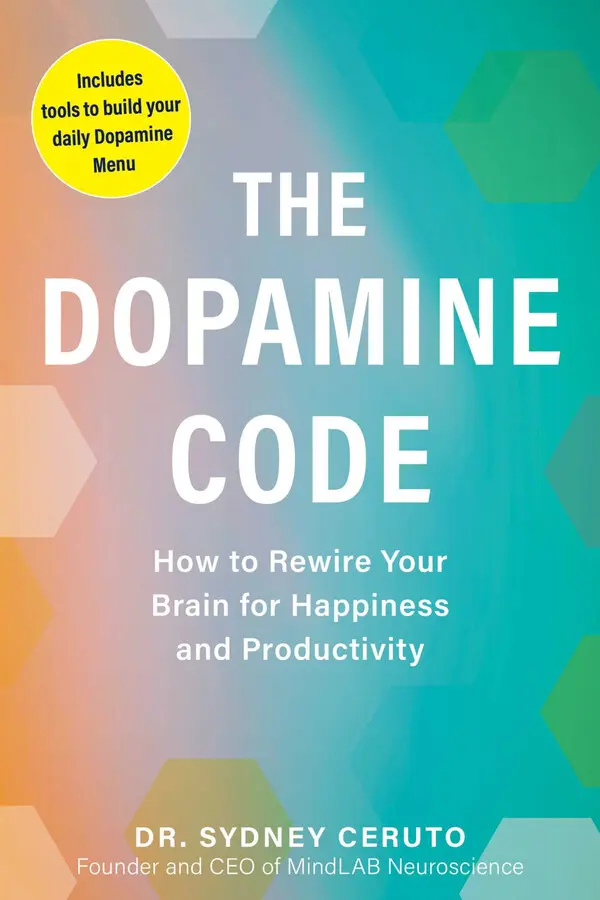
Dr. Ceruto holds a PhD in Behavioral & Cognitive Neuroscience from NYU and Master’s degrees in Clinical Psychology and Business Psychology from Yale University. She lectures at the Wharton Executive Development Program at the University of Pennsylvania and has been an Executive Contributor to the Forbes Coaching Council since 2019. Dr. Ceruto is the author of The Dopamine Code (Simon & Schuster, June 2026). She founded MindLAB Neuroscience in 2000 and has spent over 26 years leading it, pioneering Real-Time Neuroplasticity™, a methodology that durably rewires the neural pathways driving behavior, decisions, and emotional responses.
Also available in: Miami · Wall Street · Midtown Manhattan · Beverly Hills · Lisbon
Take the First Step
One hour with Dr. Sydney Ceruto. You leave knowing which neural pattern is actually driving this, and what to do about it.
Book a Strategy Call
The Dopamine Code
Decode Your Drive
Why Your Brain Rewards the Wrong Things
Your brain's reward system runs every decision, every craving, every crash, and it was never designed for the life you're living. The Dopamine Code is Dr. Ceruto's framework for understanding the architecture behind what drives you, drains you, and keeps you locked in patterns that willpower alone will never fix.
Published by Simon & Schuster, The Dopamine Code is Dr. Ceruto's framework for building your own Dopamine Menu, a personalized system for motivation, focus, and enduring life satisfaction.
Order Now!Available now