Personal Identity Reconstruction in Westchester County

The move to the suburbs was supposed to be the next chapter. Instead it became the disappearance of the previous one. The version of you that felt vivid did not follow.

Identity is not portable. It is maintained by the specific environment, relationships, and daily rhythms that reinforce it. When a major life transition removes those inputs, the brain's self-referencing system loses its calibration signal. What follows is not a mood. It is a structural event — the old identity dissolving without a replacement. MindLAB Neuroscience targets the circuits where identity is actually encoded, rebuilding the architecture rather than waiting for it to emerge.

Book a Strategy Call
ForbesUSA TodayHuffPostNewsweekAssociated PressCosmopolitanBusiness InsiderForbesUSA TodayHuffPostNewsweekAssociated PressCosmopolitanBusiness Insider
Marker Traditional Approach Neuroscience-Based Approach Why It Matters

Why Personal Identity Reconstruction Matters in Westchester County

When the Suburb Replaces the Self: Identity Disruption in Westchester

The move to Westchester County typically arrives as a practical decision. More space. Better schools. A yard. The logic is clear. What the logic does not account for is the identity cost. The person who lived in a Manhattan apartment steps into a different environment and makes a discovery. The daily rhythms, social encounters, and professional proximity that maintained their sense of self do not survive the transfer. The identity built inside the city stays behind.

Scarsdale, Rye, Bronxville, Chappaqua — each of these communities has its own social architecture, and each exerts a specific kind of identity pressure on the people who arrive. The social currency shifts. In Manhattan, professional identity and cultural participation carried weight. In Westchester’s affluent communities, the social framework reorganizes around school involvement, real estate, family presentation, and community integration. For someone whose sense of self was organized around none of those things, the transition is not a social adjustment. It is an identity replacement that the person did not choose.

The stay-at-home parent transition is one of the most common identity disruptions in Westchester. The professional who left a career to be present for young children traded one identity architecture for another — except the new one was never built. The brain still carries the self-referencing patterns of the professional identity: competence measured by output, worth measured by achievement, social belonging organized around work relationships. None of those circuits receive reinforcement in the new context. The result is not dissatisfaction with parenthood. It is the sustained neural signal that the person you were is disappearing and the person you are becoming has no framework yet.

The Metro-North commute creates its own version of identity suspension. The professional who travels daily between White Plains or Larchmont and Midtown lives between two identity frameworks. The office self and the home self operate on different rhythms, different social logics, different reward structures. Neither is fully developed because each receives only partial daily reinforcement. The brain struggles to consolidate a single stable self-concept when the inputs alternate this dramatically. The commute itself becomes a no-man’s-land between two partial identities.

Empty nesters in Westchester face identity reconstruction from the opposite direction. The parent whose self-concept was organized around raising children in Armonk or Pelham discovers, when the last child leaves for college, that the identity role that structured daily life for two decades is suddenly absent. The house is the same. The community is the same. But the person who lived inside the role of active parent no longer has the environmental reinforcement that maintained that identity. What surfaces is not loneliness. It is the question of who you are when the thing that defined you is complete.

The divorce population in Westchester faces a compounding version of this pattern. When a partnership ends in a community organized around families and couples, the identity loss is layered. The partner identity dissolves. The social identity that depended on couple-based participation destabilizes. The community ties that were maintained through the partnership become ambiguous. The person faces multiple identity reconstructions simultaneously — personal, social, and often professional — with diminished support from the social infrastructure that previously maintained all three.

Dr. Ceruto works with people across Westchester County who are navigating the specific identity disruptions this environment produces. Real-Time Neuroplasticity™ targets the self-referencing circuits directly, enabling the brain to build stable identity architecture regardless of which environmental framework was lost. A Strategy Call is a phone conversation — $250 — the first step toward understanding what dissolved, what was never built, and what reconstruction actually involves.

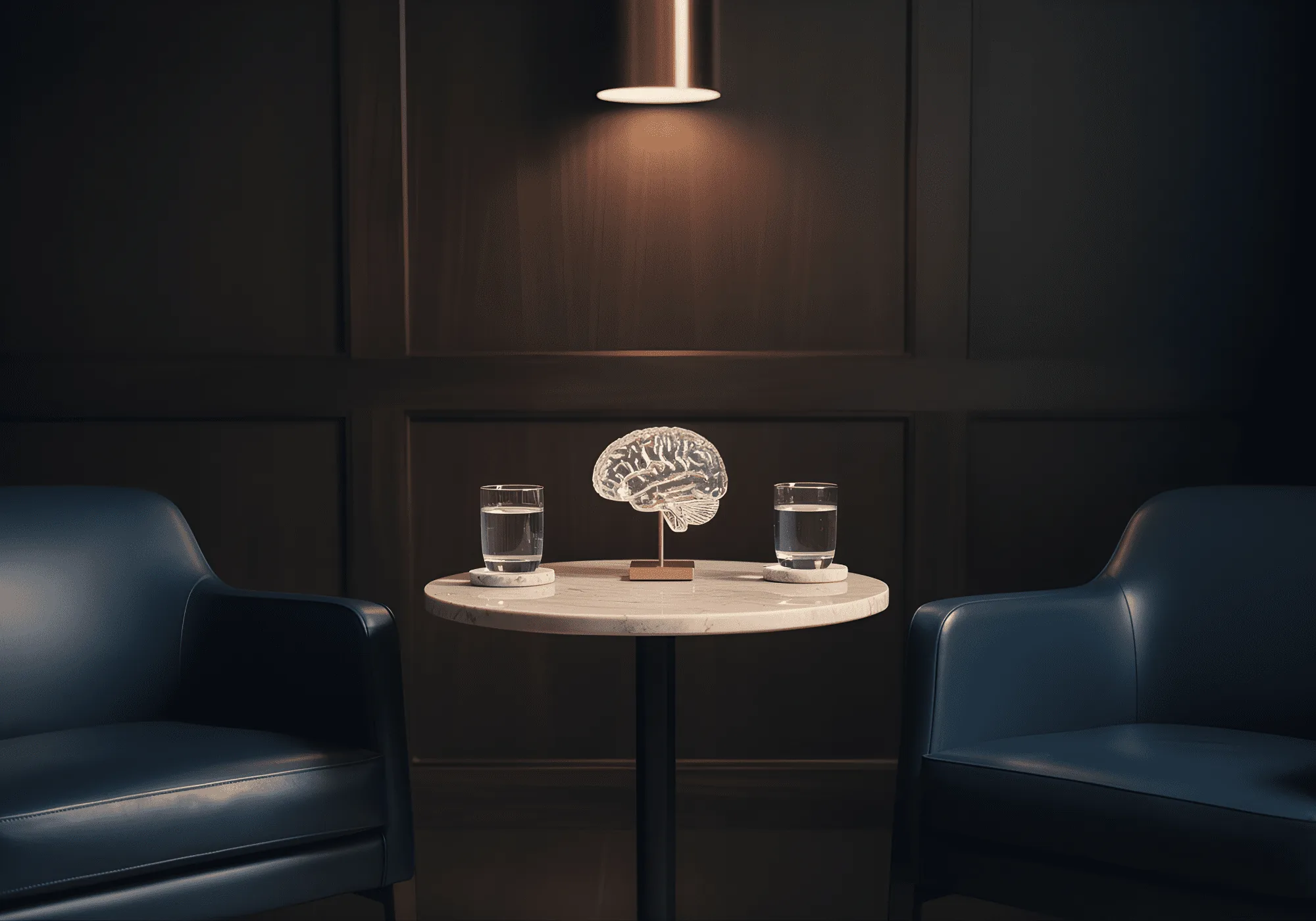
Neuroscience consultation — rosewood table with crystal brain sculpture and branded journal for strategy call preparation
Dr. Sydney Ceruto, PhD — Founder, MindLAB Neuroscience

Dr. Sydney Ceruto, PhD — Founder & CEO, MindLAB Neuroscience

Dr. Ceruto holds a PhD in Behavioral & Cognitive Neuroscience from NYU and two Master’s degrees from Yale University. She lectures at the Wharton Executive Development Program at the University of Pennsylvania and has been an Executive Contributor to the Forbes Coaching Council since 2019. Dr. Ceruto is the author of The Dopamine Code (Simon & Schuster, June 2026). She founded MindLAB Neuroscience in 2000 and has spent over 26 years pioneering Real-Time Neuroplasticity™ — a methodology that permanently rewires the neural pathways driving behavior, decisions, and emotional responses.

Success Stories

“I struggled with debilitating anxiety for years, trying countless therapies and medications with little success. Finding Dr. Ceruto and her neuroscience-based approach was truly life-changing. From our very first session, her deep knowledge of brain science and how it applies to anxiety gave me real hope. What sets her apart is that perfect blend of expertise and compassion — she genuinely cared about my progress and responded quickly even outside of our scheduled sessions. I can now enjoy social situations and excel at work.”

Brian T. — Architect Chicago, IL

“I'd relocated internationally before, but this time my nervous system wouldn't settle. Everything unfamiliar registered as danger — new people, new routines, even the sound of a different language outside my window. Pushing through it only deepened the pattern. Dr. Ceruto identified that my nervous system was coding unfamiliarity itself as threat and restructured the response at its source. The world stopped feeling hostile. I stopped bracing.”

Katarina L. — Gallerist Zurich, CH

“It took years and many other professionals — not to mention tens of thousands of dollars — before I was recommended to Dr. Ceruto. I’d been suffering with chronic anxiety, OCD, and distorted thinking. After just two sessions, I started to see positive change. By the time my program ended, I had my sanity and my life back. Sydney creates a warm, supportive atmosphere where I found myself sharing things I’ve never told anyone. She is there for you anytime you need her.”

Nicholas M. — Private Equity Hong Kong

“Willpower, accountability systems, cutting up cards — none of it worked because none of it addressed what was actually driving the behavior. Dr. Ceruto identified the reward prediction error that had been running my purchasing decisions for over a decade. Once the loop was visible, it lost its power. The compulsion didn't fade — it stopped.”

Priya N. — Fashion Executive New York, NY

“My kids had been sleeping through the night for three years, but my brain hadn't caught up. I was still waking every ninety minutes like clockwork — no amount of sleep hygiene or supplements touched it. Dr. Ceruto identified the hypervigilance loop that had hardwired itself during those early years and dismantled it at the source. My brain finally learned the threat was over. I sleep through the night now without effort.”

Catherine L. — Board Director Greenwich, CT

“My communication was damaging every relationship in my professional life and I couldn't see it. Dr. Ceruto's neuroscience-based approach didn't just improve how I communicate — it rewired the stress response that was driving the pattern in the first place. The people around me noticed the change before I fully understood what had happened. That tells you everything.”

Bob H. — Managing Partner London, UK

Frequently Asked Questions About Personal Identity Reconstruction in Westchester County

Also available in: Miami · Wall Street · Midtown Manhattan · Beverly Hills · Lisbon

Take the First Step

The Strategy Call is a focused conversation with Dr. Ceruto that maps the specific neural mechanisms driving your concerns and determines the right path forward.

Book a Strategy Call
MindLAB Neuroscience consultation room

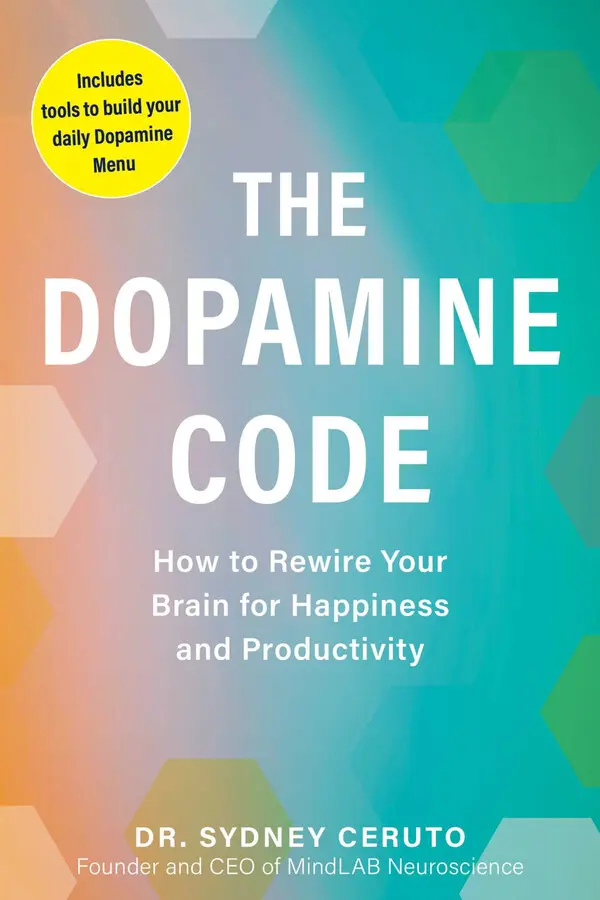
The Dopamine Code

Decode Your Drive

Why Your Brain Rewards the Wrong Things

Your brain's reward system runs every decision, every craving, every crash — and it was never designed for the life you're living. The Dopamine Code is Dr. Ceruto's framework for understanding the architecture behind what drives you, drains you, and keeps you locked in patterns that willpower alone will never fix.

Published by Simon & Schuster, The Dopamine Code is Dr. Ceruto's framework for building your own Dopamine Menu — a personalized system for motivation, focus, and enduring life satisfaction.

Order Now

Ships June 9, 2026

The Dopamine Code by Dr. Sydney Ceruto — Decode Your Drive
Locations

The Intelligence Brief

Neuroscience-backed analysis on how your brain drives what you feel, what you choose, and what you can’t seem to change — direct from Dr. Ceruto.