The Master Clock
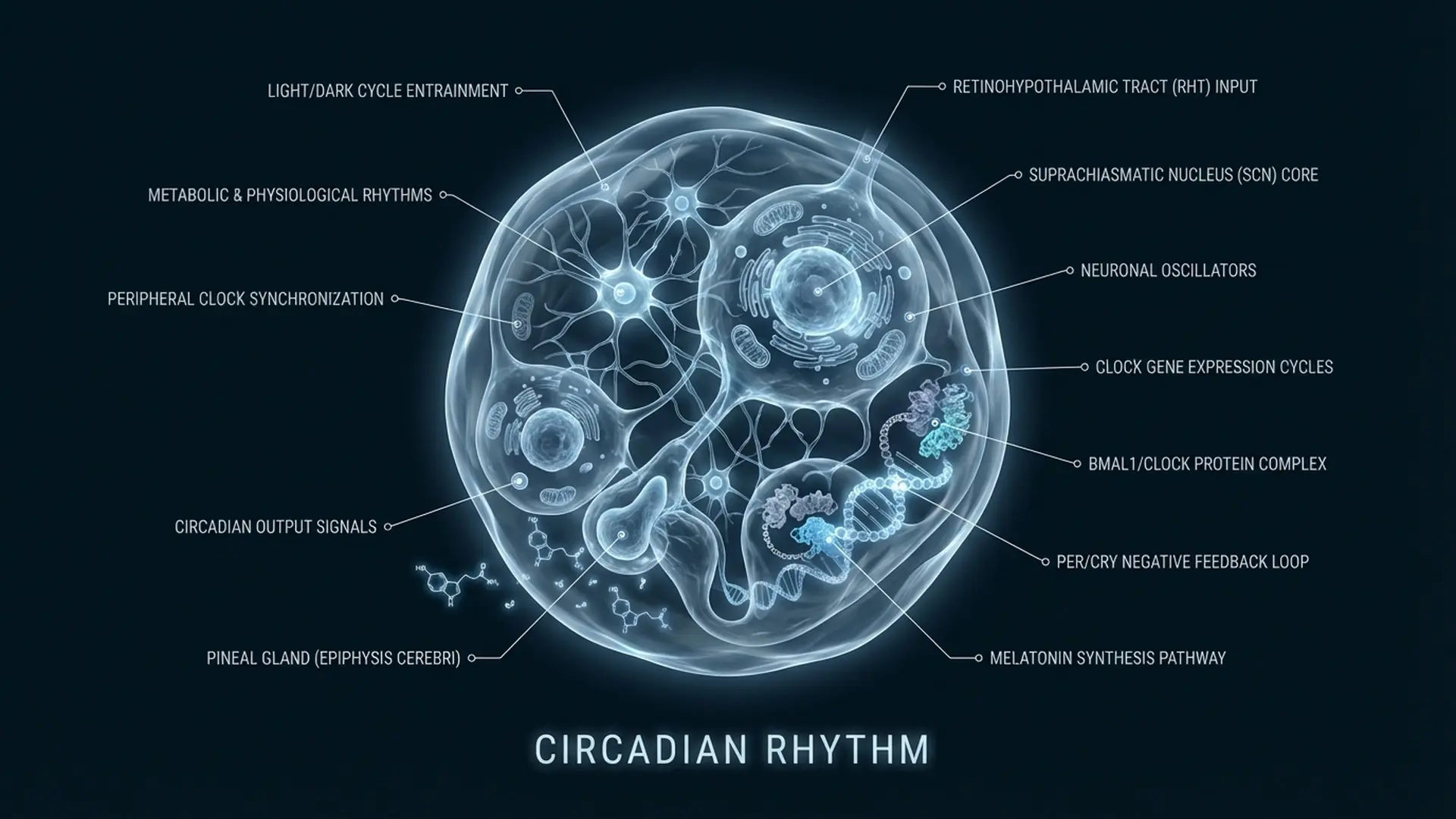
Your Circadian Rhythm is the 24-hour internal clock running in the background of your brain, specifically in the Suprachiasmatic Nucleus (SCN). It regulates not just sleep, but every biological system: hormone release (cortisol/melatonin), body temperature, digestion, and cognitive alertness.
Biological Timing (Chronobiology)
Performance is not linear; it is cyclical.
-
The Peak: For most people, cognitive acuity peaks in the late morning. This is the window for high-demand analytical work (“The Highlight”).
-
The Trough: In the early afternoon, there is a natural dip in core body temperature and alertness. Pushing against this biology with caffeine often leads to diminishing returns.
-
The Rebound: Early evening often brings a second wind for creative or recovery tasks.
Entrainment Protocols
Light is the primary “Zeitgeber” (time-giver) that sets your clock.
-
Morning Anchor: Viewing bright sunlight within 30-60 minutes of waking triggers a cortisol pulse that sets the timer for melatonin release 12-14 hours later.
-
Darkness Protocol: Artificial blue light after sunset tricks the SCN into thinking it is still noon, suppressing melatonin and delaying sleep onset.