When your nervous system has been primed by trauma, you can overreact to perceived “dangers” that aren’t life-threatening, like when...
Read article : Trauma Impact on Life: Understanding How Trauma Affects the BrainFear
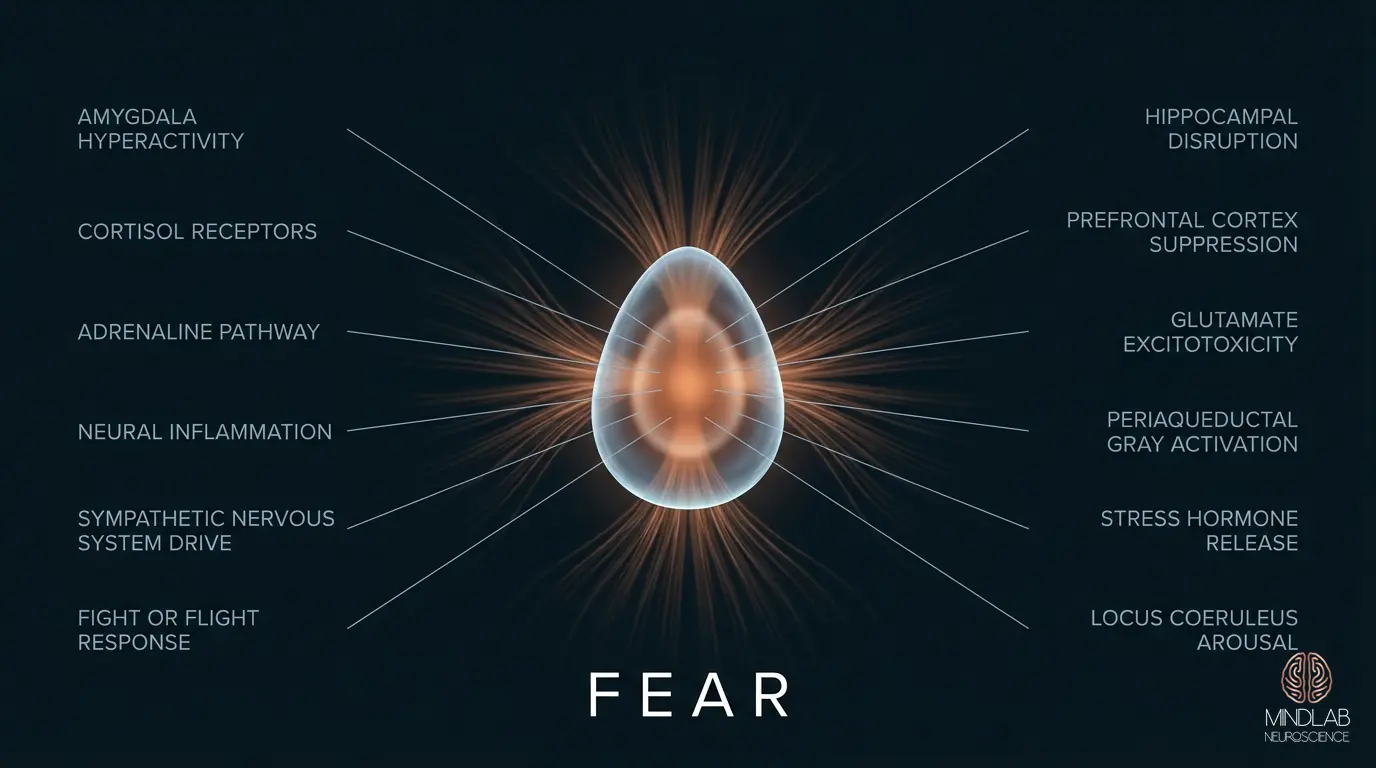
The survival instinct gone rogue. We dissect the amygdala's "freeze" response, the mechanism of associative memory, and the exposure protocols necessary to extinguish conditioned fear.
32 articlesThe Fast and Slow Roads
Fear is not just an emotion; it is a physiological sequence designed for speed, not accuracy. Neuroscience identifies two pathways for threat processing.
-
The Low Road: Sensory information moves from the Thalamus directly to the Amygdala. This is instantaneous and unconscious, causing you to jump before you realize why.
-
The High Road: Information travels to the Sensory Cortex for analysis before reaching the Amygdala. Chronic fear often stems from a hyperactive “Low Road,” where the body reacts to triggers before the logical brain can intervene to contextualize them.
Associative Encoding
Most modern fears are not innate; they are learned through Pavlovian conditioning. The brain pairs a neutral stimulus (like an elevator or social situation) with an aversive physical sensation (pain or panic). Through Hebbian plasticity, neurons wire these two events together. Once encoded, the neutral stimulus alone is enough to trigger the full chemical cascade of the fight-or-flight response, regardless of actual danger.
Extinction, Not Deletion
You cannot “unlearn” fear; you can only overwrite it. This process is called Fear Extinction.
-
Safety Learning: During exposure therapy, you do not erase the original fear memory. Instead, the Ventromedial Prefrontal Cortex (vmPFC) forms a new memory trace that says “this stimulus is safe.” This new circuit acts as a brake, inhibiting the amygdala.
-
The Critical Window: For extinction to work, the exposure must occur during the state of agitation. You must engage the fear response and stay in it without escaping until the nervous system naturally down-regulates, physically proving to the brain that the alarm was false.

Latest Articles
Are you struggling with relationship phobia? You're not alone. In my latest article, I delve into the causes, symptoms, and...
Read article : Overcoming Relationship Phobia: A Guide to Finding LoveDiscover the transformative power of cognitive reframing and neuroplasticity with MindLAB Neuroscience. This blog post delves into the origins of...
Read article : Cognitive Reframing Neuroscience: Unleash Your Potential and Embrace FearlessnessEmbark on a transformative journey of perspective change guided by cutting-edge neuroscience. Discover how reshaping your mental landscape can unlock...
Read article : Optimizing Perspective Shifts: Neuroscience Insights for Enhanced Cognitive FlexibilityIn a world that often feels uncertain and challenging, courage is the beacon that guides us through the darkness. This...
Read article : The Neuroscience of Courage: How Your Brain Processes Bravery and Overcomes FearEver feel like your needs take a backseat to others'? The fawn response, rooted in trauma, could be why. Dive...
Read article : The Fawn Response: Trauma; People-Pleasing & ResolvingExplore the neuroscience of anxiety through compelling stories, new research, and practical strategies from a neuropsychologist. This in-depth look reveals...
Read article : The Neuroscience of Anxiety: How Our Brains; Evolution; and Social Lives Shape the Anxious MindBehavior change is what separes people who want help from people who actually transform. Most struggle because the neuroscience of...
Read article : Optimizing Behavior Change: Addressing Neurological ResistanceWhen your brain rejects change, it is not weakness; it is protection. Here I explain the neuroscience of fear and...
Read article : Optimizing Your Brain’s Response to Change: The Neuroscience of FearWhen feedback hits like a threat, RSD at work can hijack your day. Here’s a neuroscience-based reset to stay grounded...
Read article : Rejection Sensitive Dysphoria (RSD) at work: How to Stay Grounded When Feedback Hits HardSexual Performance Anxiety is not a character flaw; it is a brain-based pattern you can retrain. Discover how I use...
Read article : Resolving Sexual Performance Anxiety: A Neuroscience ApproachIf you have ever wondered whether something in your relationship is a real red flag or just fear, this neuroscience-based...
Read article : Relationship Red Flags: A Neuroscience Guide