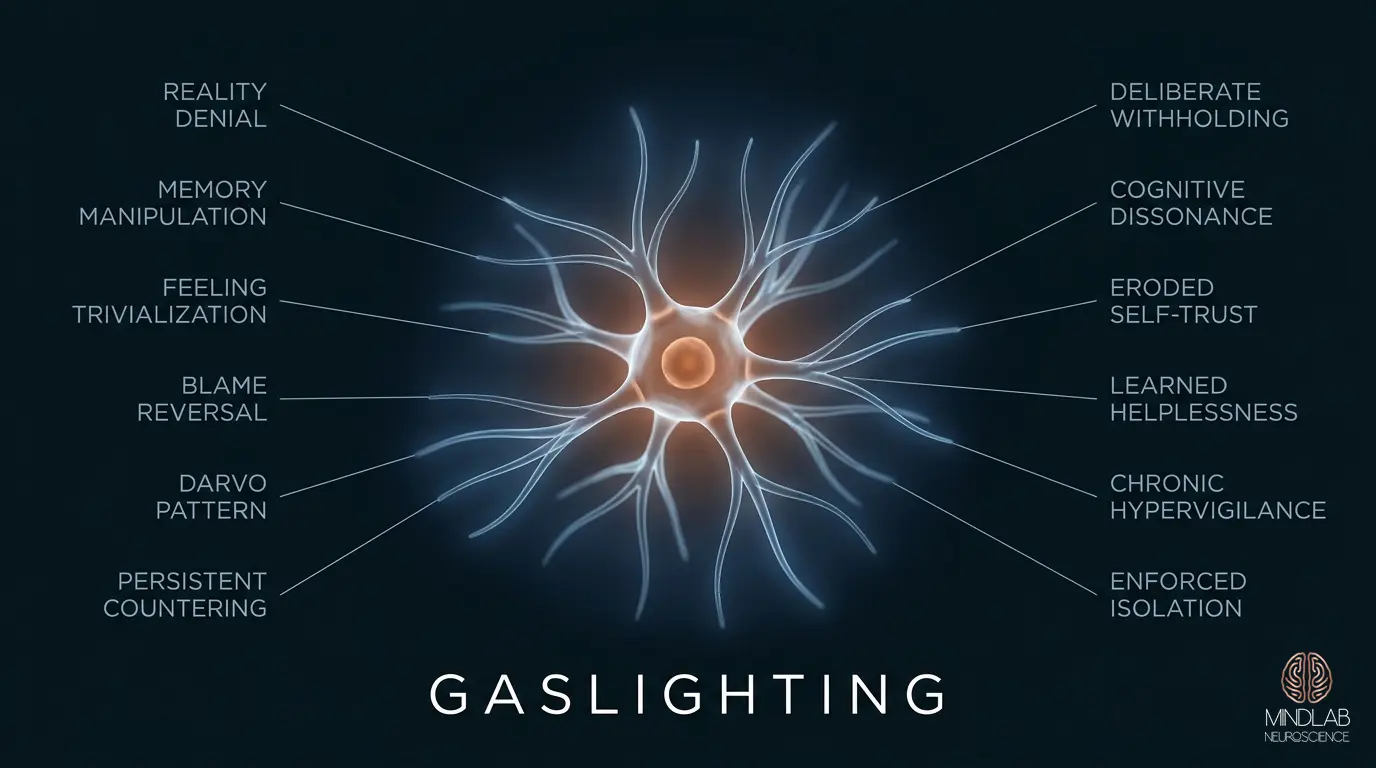
The Erosion of Reality
Gaslighting is a form of psychological manipulation where a person seeks to sow seeds of doubt in a targeted individual, making them question their own memory, perception, or sanity. It is not just “lying”; it is a systematic dismantling of the victim’s Reality Testing mechanism.
The Neuroscience of Doubt
Gaslighting attacks the brain’s prediction error system. The brain is a prediction machine; it compares what it expects to see with what it actually sees.
-
The Glitch: When a gaslighter denies reality (“I never said that”), it creates a dissonance in the victim’s Anterior Cingulate Cortex (ACC).
-
The Adaptation: Over time, to resolve this dissonance and maintain the relationship (attachment), the victim’s brain overrides its own sensory data, deferring to the manipulator’s version of reality. This weakens neural confidence and increases dependency.
Reclaiming Cognitive Sovereignty
Recovering from gaslighting requires re-calibrating your sensory trust.
-
Documentation: Externalize memory. Keep a journal or record conversations. When the brain doubts itself, you need hard data to verify reality.
-
Reconnect with the Baseline: Gaslighters isolate victims to prevent “reality checking” with others. Re-engaging with a trusted third party helps triangulate the truth and restore cortical confidence.