Inner Critic

The default mode network gone rogue. Learn to interrupt automatic negative thought loops and install a more accurate, supportive internal dialogue.

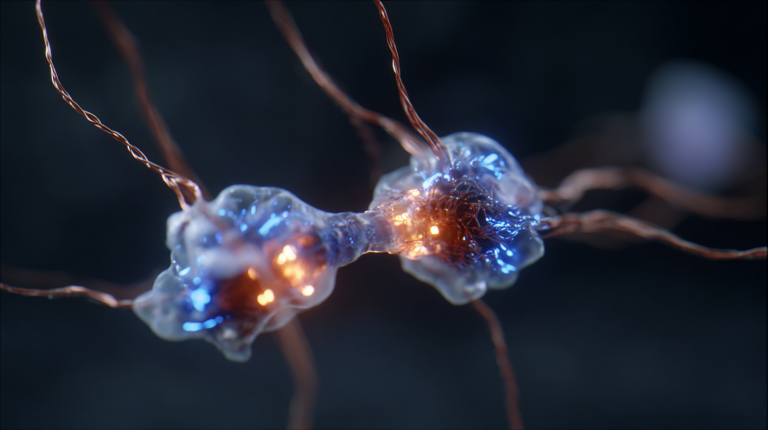
Diagram showing overactivity in the Default Mode Network associated with negative self-talk.

Executive Neuro-Brief

The Evolutionary Design
Nature wired your brain for survival, not happiness. Thousands of years ago, a small mistake could kill you. Being rejected by your tribe meant death. Your brain developed a sensitive threat detection system to keep you safe. It scans for errors constantly. It highlights potential risks to ensure you stay within the group. This biological alarm system was built to prevent fatal errors, not to make you feel good.

The Modern Analogy
This ancient survival mechanism often malfunctions in the modern world. The inner critic is like having a harsh sports commentator in your head, replaying every mistake in slow motion instead of noticing your wins. This commentator ignores your touchdowns and obsesses over a single fumble. He analyzes your errors frame by frame on a giant screen. This constant negative commentary spikes your stress hormones and makes you play with fear.

The Upgrade Protocol
You cannot fire the commentator, but you can change his job description. You must turn that harsh critic into a tactical coach. A good coach reviews the game tape to fix your form, not to shame you. When the negative commentary starts, pause the tape. Acknowledge the feedback without accepting the insult. Shift your focus to the next play. Train your internal voice to highlight your victories, not just your bloopers.

Woman turning away from unfaithful husband, symbolizing the impact of infidelity on self-esteem, cheating impacts self-esteem
Read More
a scissors cutting a piece of paper with black text
Read More
Addressing the Impact of Negative Thoughts on Career Growth,
Read More
Neon sign with the words "No Limiting Beliefs" illuminated against a dark brick wall.
Read More
a woman pointing at a row of paper clips
Read More
a green sign with white text spelling out doubt and fear referencing imposter syndrome
Read More
Woman in modern office beneath evolution mural and neural circuitry, illustrating evolutionary neuroscience of self-hatred.
Read More
Scrabble tiles spelling loser, representing the inner dialogue of asking, am I a loser.
Read More
Wooden blocks spelling insecure, representing the neuroscience of insecurity
Read More
A computer screen with lines of numbers and then the word self-sabotage in red.
Read More

NEUROBIOLOGICAL CONTEXT

The Default Mode Network Gone Rogue

The “Inner Critic” is not a moral failing; it is a repetitive neural loop. It usually stems from hyperactivity in the Default Mode Network (DMN), specifically the pathways linking the self-referential centers to the amygdala (fear).

The Negative Bias

The brain is wired for survival, not happiness. It has a Negativity Bias, prioritizing the detection of mistakes over the celebration of wins. The Inner Critic is essentially an over-zealous error-detection system trying to keep you “safe” from social rejection by pointing out every flaw before anyone else does.

Silencing the Loop

  • Distancing: Give the critic a name (e.g., “The Audit”). When the voice starts, say, “The Audit is loud today.” This separates the thought from the thinker.

  • The “And” Technique: Instead of fighting the thought (“I’m not stupid”), add to it: “I feel stupid right now, AND I am capable of learning this.” This validates the emotion while re-engaging the Prefrontal Cortex.

×

SELECT PRE-ORDER CHANNEL

Unlock the Power of Your Mind!

Join my inner circle for exclusive insights and breakthroughs to elevate your life.

Ultimate Concierge Coaching Experience
Form

Exclusively for Those Who
Demand the Best

Limited Availability

Your Journey to Unparalleled Personal and Professional Growth Starts Here

One-on-One Exclusive Access
Form

Shape Your
Destiny

Limited Availability

A Truly Bespoke, One-on-One Journey with Dr. Sydney Ceruto

Instant Access!

Download The Influence Within and discover how small shifts lead to big transformations.