A Failure of the “Off Switch”
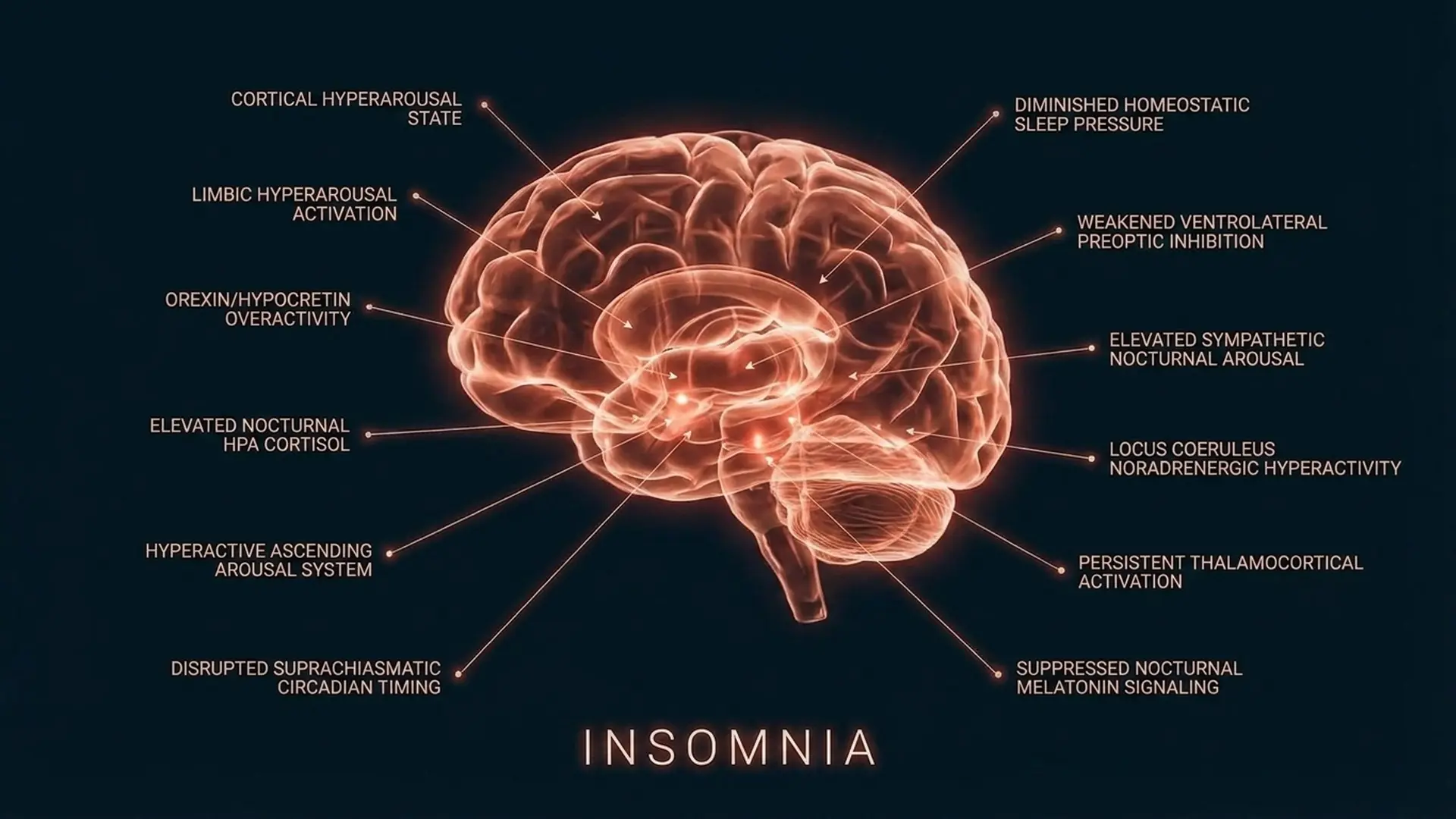
Insomnia is often a state of Hyperarousal. The brain’s “wake drive” (controlled by cortisol and orexin) fails to power down, overpowering the “sleep drive” (adenosine and melatonin). It is not that you cannot sleep; it is that your brain believes it is not safe to sleep.
The Psychophysiological Loop
Insomnia feeds on itself. One bad night creates “sleep anxiety” about the next night.
-
Conditioned Arousal: The bed becomes a trigger for wakefulness and frustration rather than rest. The brain learns: “Bed = Thinking/Worrying.”
-
Thermal Regulation: Sleep requires a drop in core body temperature. Chronic stress keeps blood in the core, preventing the temperature drop necessary for sleep onset.
Sleep Architecture Repair
Restoring sleep requires behavioral consistency.
-
Stimulus Control: If you can’t sleep after 20 minutes, get out of bed. Break the association between bed and being awake.
-
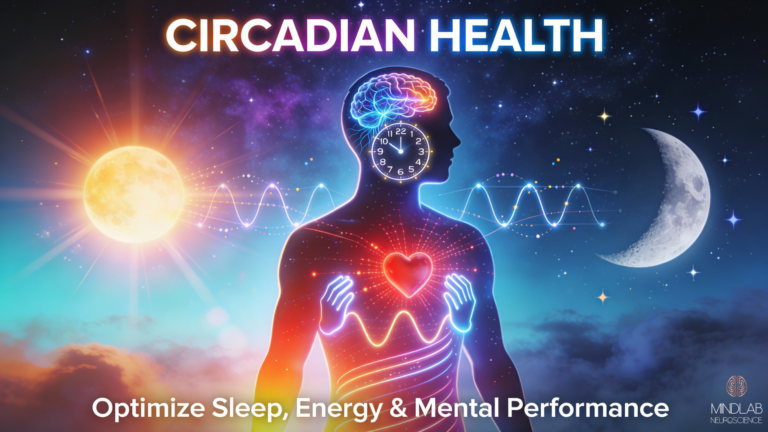
Morning Light: Viewing sunlight within 30 minutes of waking anchors your circadian rhythm, building the “sleep pressure” you need for the following night.