Executive Neuro-Brief
The Evolutionary Design
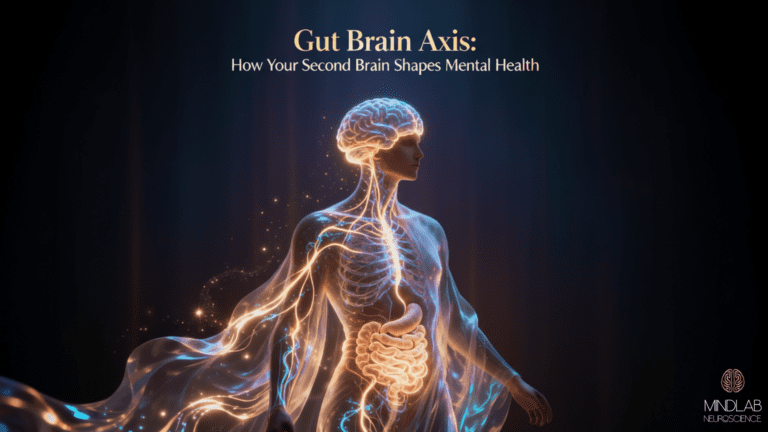
Nature never works alone. You evolved with trillions of bacteria to stay alive. This is an ancient partnership. You provide the shelter. They digest your food and fight off poisons. They even built a direct communication line to your brain called the vagus nerve. This connection helped your ancestors sense danger and maintain high energy levels. It is a biological survival kit built into your stomach.
The Modern Analogy
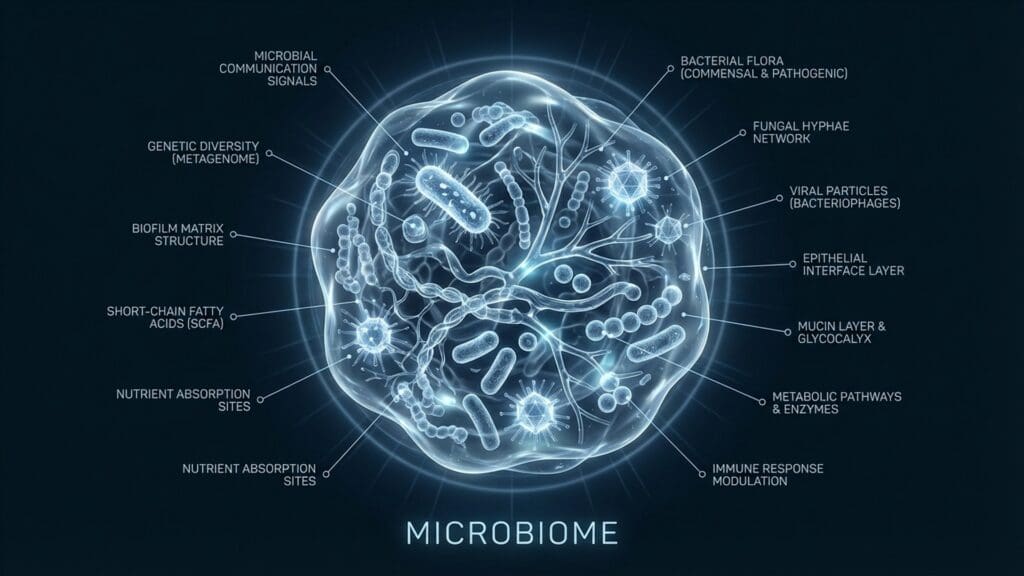
Your microbiome is like a busy city of tiny helpers in your gut, sending constant messages that affect your mood, energy, and immune system. When the city is managed well, traffic flows smoothly. The helpers manufacture serotonin and clean fuel for your body. But modern life acts like a natural disaster. Sugar and stress destroy the city infrastructure. The good helpers leave, and vandals take over the streets. These bad actors send distress signals to your brain. You feel brain fog, fatigue, and anxiety because the city is on fire.
The Upgrade Protocol
You must rebuild the city infrastructure. First, stop the riots by cutting out processed sugar and toxins. Next, send in reinforcements. Probiotics are the new workers. Prebiotics are the building materials they need. Eat fermented foods and fiber to pave the streets. The good helpers will return and drive out the vandals. The distress signals stop. Your brain receives clear messages again. Your focus sharpens and your energy returns.