Mental Fog in Wall Street

Mental fog is not laziness or lack of focus. It is a measurable disruption of the brain's attentional networks — clarity degraded at the circuit level by neuroinflammation, neurotransmitter depletion, and chronic overload.

Mental fog is not laziness or lack of focus. It is a measurable disruption of the brain's attentional networks, neurotransmitter balance, and capacity to manage chronic overload.

Book a Strategy Call

Mental fog persists because the brain’s attentional infrastructure has been compromised by converging biological forces that degrade processing speed, filter quality, and network coordination. Understanding these forces at the neural level is what separates targeted intervention from generic advice about sleep and stress management.

The Problem: A Brain Running on Degraded Signal Quality

The experience of cognitive fog corresponds to measurable disruptions in three interacting systems.

The first is neuroinflammation. Microglia — the brain’s resident immune cells — exist along a dynamic range of activation states. Under chronic stress, sleep deprivation, or metabolic dysregulation — the breakdown of normal control systems —, microglia shift toward an overactivated state. They release pro-inflammatory molecules that suppress the synaptic mechanisms underlying learning and memory, particularly in memory-related brain regions. These molecules also disrupt the excitatory-inhibitory balance essential for clean signal processing, contributing to the neural noise that subjectively registers as haziness.

The second is disrupted neuromodulation. Acetylcholine — a chemical that sharpens mental focus — sharpens signal-to-noise ratios in cortical circuits, enabling suppression of irrelevant stimuli. When cholinergic tone declines under chronic stress or sleep disruption, this filtering degrades. The brain processes more irrelevant noise alongside relevant signals, increasing cognitive load per unit of useful output. Simultaneously, the brainstem’s alertness center shifts from precise, burst-like firing — which maximizes attentional precision — to a chronically elevated pattern that paradoxically impairs focus. The norepinephrine system follows an inverted-U curve: moderate levels sharpen cognition, but chronic excess crosses the peak and degrades the very functions it supports.

Dense luminous neural threads condensing into single focused copper beam of clarity in deep navy void

The third is attentional network breakdown. In a healthy brain, the goal-directed focus network and the default mode network — active during mind-wandering and self-reflection — maintain an opposing relationship: when one activates, the other suppresses. This opposition is the neural infrastructure of focused attention. When this opposition weakens, internally generated content — memory fragments, ruminations, tangential associations — intrudes into task-directed processing. Research demonstrates that the strength of this opposition directly predicts working memory performance and attentional accuracy.

The Mechanism: How Fog Compounds Itself

Mental fog operates as a self-reinforcing cascade. Neuroinflammation degrades neurotransmitter dynamics. Weakened neurotransmitter dynamics undermine attentional network coordination. Disrupted network coordination forces compensatory effort from the prefrontal cortex. Sustained cognitive demand produces elevated glutamate — the principal excitatory brain chemical — in this region. That accumulation predicts more impulsive, lower-quality decision-making.

The compensatory phase is insidious because performance metrics may not visibly degrade while internal costs escalate. Cognitive reserve is being spent. The brain functions, but at significant hidden cost — error rates, creativity, and decision quality silently diminish. When compensatory effort can no longer match demand, the system breaks down. Working memory capacity drops. Emotional reactivity increases disproportionately. Strategic thinking becomes inaccessible. Approximately twenty-eight percent of adults report experiencing brain fog, and the condition carries measurable impacts on occupational performance and quality of life.

The Solution: Targeting the Neural Sources of Fog

Dr. Ceruto’s methodology addresses mental fog at the level of the biological systems producing it, rather than treating symptoms with behavioral workarounds.

The approach begins with identifying which convergent mechanisms drive the individual’s fog pattern. Neuroinflammatory burden, cholinergic deficit, noradrenergic dysregulation — disrupted adrenaline-related brain chemistry —, and attentional network breakdown each require different intervention strategies. A protocol designed for someone whose primary driver is brainstem arousal dysregulation will differ fundamentally from one targeting neuroinflammatory load or default mode network intrusion.

For neuroinflammatory-dominant patterns, the work involves systematic reduction of the microglial activation burden through protocols that restore the brain’s anti-inflammatory mechanisms. For neuromodulatory depletion, the methodology targets the specific neurotransmitter systems — cholinergic, noradrenergic, or both — that have fallen below functional thresholds. For attentional network dysfunction, the approach rebuilds the opposing relationship between the focus network and the default mode network that is the prerequisite for sustained cognitive clarity.

The goal is not to push through the fog but to eliminate its neural sources — restoring the processing speed, filter quality, and network coordination that constitute genuine clarity.

Mahogany desk with crystal brain sculpture and MindLAB journal in warm lamp light surrounded by leather-bound volumes in institutional Wall Street study

Why Mental Fog Matters in Wall Street

Lower Manhattan’s professional environment systematically produces the biological conditions that generate mental fog — then demands peak cognitive performance from the people experiencing it.

The Financial District operates at a cognitive intensity that has no parallel. Knowledge workers in this corridor face more than 275 interruptions per day, with nearly sixty percent of their time consumed by communication and coordination rather than focused work. The multi-channel environment of financial trading floors amplifies this further. Simultaneous monitoring of Bloomberg terminals, internal messaging systems, phone lines, and email creates a constant attentional capture load that degrades the brain’s capacity for sustained focus. Research confirms that even the mere presence of a smartphone on a desk measurably reduces working memory capacity.

The hours compound the biological damage. First-year analysts at Goldman Sachs report working more than 95 hours per week and sleeping approximately five hours per night. JPMorgan set an 80-hour weekly cap for junior bankers in 2024, acknowledging that the cognitive costs of sustained overwork had become a structural risk. Sleep deprivation at this level is a real-world demonstration of how sustained sleep debt compounds into chronic fog.

The geographic density of Lower Manhattan eliminates the natural recovery windows that other environments provide. The 198,500 securities workers operating in Manhattan, with an average annual compensation of $471,370, face a cognitive paradox. The same intensity that produces their compensation also produces the neuroinflammatory burden, sleep debt, and attentional network degradation that erode the cognitive sharpness their roles demand.

The reconcentration of finance professionals in Lower Manhattan offices has restored the physical density of the trading floor, the constant social comparison environment, and the commute-driven sleep compression that the pandemic briefly interrupted. For residents of Battery Park City, Tribeca, and the Financial District itself, there is no geographic transition between the cognitive pressure of the office and the cognitive demand of home life. The brain never receives the signal that the workday has ended.

Dr. Sydney Ceruto, PhD — Founder, MindLAB Neuroscience

Dr. Sydney Ceruto, PhD — Founder & CEO, MindLAB Neuroscience

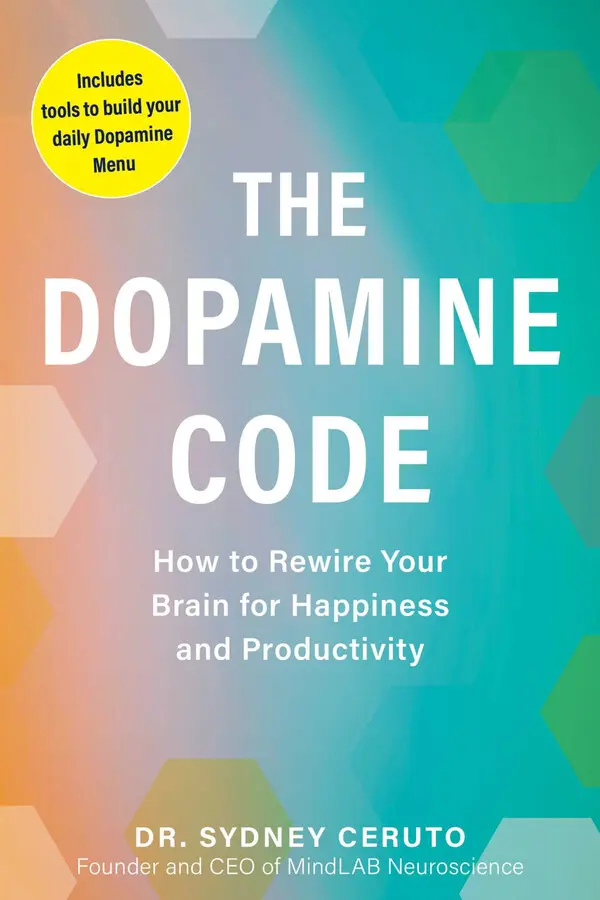
Dr. Ceruto holds a PhD in Behavioral & Cognitive Neuroscience from NYU and two Master’s degrees from Yale University. She lectures at the Wharton Executive Development Program at the University of Pennsylvania and has been an Executive Contributor to the Forbes Coaching Council since 2019. Dr. Ceruto is the author of The Dopamine Code (Simon & Schuster, June 2026). She founded MindLAB Neuroscience in 2000 and has spent over 26 years pioneering Real-Time Neuroplasticity™ — a methodology that permanently rewires the neural pathways driving behavior, decisions, and emotional responses.

References

Fox, M. D., Snyder, A. Z., Vincent, J. L., Corbetta, M., Van Essen, D. C., & Raichle, M. E. (2005). The human brain is intrinsically organized into dynamic, anticorrelated functional networks. Proceedings of the National Academy of Sciences, 102(27), 9673-9678. https://doi.org/10.1073/pnas.0504136102

Greene, C., Connolly, R., Brennan, S., et al. (2024). Blood-brain barrier disruption and sustained systemic inflammation in individuals with long COVID-associated cognitive impairment. Nature Neuroscience, 27(3), 421-432. https://doi.org/10.1038/s41593-024-01576-9

Girotti, M., Bulin, S. E., & Carreno, F. R. (2024). Effects of chronic stress on cognitive function: From neurobiology to intervention. Neurobiology of Stress, 100670. https://doi.org/10.1016/j.ynstr.2024.100670

Success Stories

“Color-coded calendars, alarms, accountability partners — I'd built an entire scaffolding system just to stay functional, and none of it addressed why my brain couldn't sequence and prioritize on its own. Dr. Ceruto identified the specific prefrontal pattern that was misfiring and restructured it. I don't need the scaffolding anymore. My brain actually does what I need it to do.”

Jordan K., VP of Product Enterprise SaaS San Francisco, CA

“My phone was the first thing I touched in the morning and the last thing I put down at night — and every app blocker, digital detox protocol, and willpower-based system I tried lasted less than a week. Dr. Ceruto identified the variable-ratio reinforcement loop that had hijacked my attention circuits and dismantled it at the neurological level. My phone is still in my pocket. The compulsion to reach for it isn't. That's a fundamentally different kind of fix.”

Tomás R., COO Logistics & Supply Chain Lisbon, PT

“When the inheritance came, it didn't feel like a gift — it felt like a grenade in every family relationship I had. I couldn't make a single financial decision without a flood of guilt and second-guessing. Years of talking through it hadn't changed anything. Dr. Ceruto identified the neural loop connecting money to fear of family rejection and dismantled it. The paralysis didn't fade — it stopped.”

Vivienne R., CFO Family Office Palm Beach, FL

“I'd optimized everything — diet, fitness, sleep — but my cognitive sharpness was quietly declining and no one could explain why. Dr. Ceruto identified the synaptic density patterns that were thinning and built a protocol to reverse the trajectory. This wasn't prevention in theory. My neuroplasticity reserve is measurably stronger now than it was three years ago. Nothing I'd tried before even addressed the right problem.”

Henrique L., Head of Strategic Planning Galp Lisbon, PT

“The way I was processing decisions under pressure had a cost I couldn't see — until Dr. Ceruto mapped it. She identified the neural pattern driving my reactivity in high-stakes situations and restructured it at the root. I don't just perform better under pressure now. I think differently under pressure. That's not something any executive coach or performance program ever came close to delivering.”

Rob Winston, Chief Operating Officer Goldman Sachs Manhattan, NY

“After the concussion, my processing speed collapsed — I couldn't hold complex information the way I used to, and no one could explain why the fog wasn't lifting. Dr. Ceruto mapped the damaged pathways and built compensatory networks around them. My brain doesn't work the way it did before the injury. It works differently — and in some ways, more efficiently than it ever did.”

Owen P., Founder & CEO Sports Performance Scottsdale, AZ

Frequently Asked Questions About Mental Fog in Wall Street

What is neuroscience-based mental fog support?

Neuroscience-based mental fog support identifies the specific biological mechanisms producing your cognitive cloudiness. This includes neuroinflammation — immune activation in brain tissue —, neurotransmitter depletion, or metabolic reserve exhaustion. We target intervention at the system level. This differs from general wellness approaches that address lifestyle habits without changing the neural conditions sustaining the fog.

Why does mental fog persist even after rest or vacation?

Fog that survives a period of rest typically reflects structural changes in brain function rather than simple fatigue. Chronic stress produces measurable dendritic atrophy in prefrontal neurons, microglial priming lowers the brain’s inflammatory threshold, and sustained sleep debt degrades neurovascular coupling. These conditions do not resolve with a weekend or a week off — they require targeted restoration of the specific systems that have been compromised.

Who is this approach designed for?

This approach serves anyone whose cognitive sharpness has declined despite adequate motivation and effort — particularly individuals whose professional demands create the sustained stress, sleep compression, and information overload that systematically degrade the brain’s processing infrastructure. Professionals who notice that familiar tasks require disproportionate effort, that decision quality has silently declined, or that creative thinking has become inaccessible are experiencing measurable neural changes, not personal failure.

What happens during the initial engagement?

The process begins with a Strategy Call with Dr. Ceruto, conducted by phone, at a fee of $250. This conversation identifies the converging mechanisms driving the individual’s fog — mapping the contribution of neuroinflammatory load, neuromodulatory depletion, attentional network dysfunction, and metabolic reserve status — and determines the most effective intervention pathway. Program structure and investment details are discussed during the Strategy Call.

How long does it take for clarity to return?

Improvements in processing speed and attentional focus often emerge within the first weeks of targeted protocol work, as the most acute contributors to fog are addressed. Deeper restoration — rebuilding prefrontal dendritic complexity, normalizing microglial activation thresholds, and recalibrating attentional network anti-correlation — develops progressively over a longer engagement as the brain’s biological infrastructure is systematically repaired.

Take the First Step Beyond Mental Fog

The Strategy Call is a focused conversation with Dr. Ceruto that maps the specific neural mechanisms driving your concerns and determines the right path forward.

Book a Strategy Call
MindLAB Neuroscience consultation room
Locations

The Intelligence Brief

Neuroscience-backed analysis on how your brain drives what you feel, what you choose, and what you can’t seem to change — direct from Dr. Ceruto.