Nervous System Regulation & Vagal Tone in Wall Street

Dr. Sydney Ceruto provides neuroscience-based education on autonomic nervous system regulation and vagal tone optimization for individuals experiencing chronic sympathetic dominance, burnout physiology, and degraded cognitive performance.

Book a Strategy Call

Your Body’s Hidden Control System

The autonomic nervous system, the body’s automatic regulation system, operates beneath conscious awareness, governing heart rate, breathing, digestion, immune function, and the physiological state from which all cognitive performance emerges. It is not a background system. It is the foundation on which every thought, decision, and emotional response is built. When this system is dysregulated, no amount of willpower, time management, or cognitive strategy can compensate for the neurological deficit it creates.

The autonomic nervous system operates through two primary branches. The sympathetic branch mobilizes the body for action — accelerating heart rate, redirecting blood flow to muscles, sharpening threat detection, and suppressing non-essential functions like digestion and immune repair. The parasympathetic branch, mediated primarily by the vagus nerve, restores the body to a state of recovery, calm, and cognitive openness. In a healthy system, these branches work in dynamic balance, shifting fluidly between activation and recovery as circumstances demand.

How Your Body Sends Signals Upward

The vagus nerve — cranial nerve X — is the primary conduit of parasympathetic function and the longest cranial nerve in the body. A critical architectural feature often overlooked: approximately 70 to 80 percent of vagal fibers are afferent, carrying information from the body to the brain rather than the reverse. This means the vagus nerve is primarily an information pathway, continuously relaying data about the body’s physiological state to cortical and subcortical structures that determine emotional tone, cognitive flexibility, and threat assessment. The body’s internal condition directly shapes brain function through this pathway.

The Mind-Body Connection That Predicts Performance

Vagal tone reflects the functional integrity of the prefrontal cortex’s inhibitory control network. The neurovisceral integration model establishes that the same neural circuit governing executive cognitive function also governs cardiac vagal outflow. Higher resting heart rate variability reflects a more responsive inhibitory system capable of flexible, context-sensitive suppression of subcortical threat responses. Lower heart rate variability reflects a system locked into reactive mode, with diminished access to the prefrontal resources required for complex reasoning, emotional regulation, and wise decision-making.

Macro cross-section of neural pathway with copper sheathing forming around blue signal core depicting active brain optimization

Systematic reviews confirm the relationship: higher heart rate variability consistently predicts superior performance across executive function domains including working memory, inhibitory control, cognitive flexibility, and task switching. Individuals in the top quintile of wise reasoning measures show significantly higher heart rate variability composite scores compared to the remaining 80 percent of samples studied. The relationship is most pronounced for conflict monitoring and inhibitory tasks — precisely the cognitive functions most relevant to high-stakes decision-making under pressure.

When High Performance Backfires

Chronic sympathetic dominance, the most prevalent dysregulation pattern in high-performance populations, produces a recognizable cognitive phenotype. Decision fatigue escalates even as the urgency to decide intensifies. Emotional blunting reduces responsiveness to positive social stimuli while preserving or heightening reactivity to negative or threatening information. Hypervigilance — constant threat-scanning — maintains a low-grade scanning behavior that fragments sustained attention. These are not personality traits or stress responses in the conventional sense. They are the neurological signature of a system whose vagal brake has been chronically withdrawn.

The Path from Stress to Exhaustion

The progression from chronic sympathetic dominance to burnout follows a specific autonomic trajectory. Emotional exhaustion, the core dimension of burnout, is independently associated with reduced vagal tone. Large-scale population data confirm that emotional exhaustion negatively predicts heart rate variability during both challenge and resting conditions, after controlling for age, fitness, sex, and lifestyle factors. The autonomic correlate of burnout is specific to exhaustion as resource depletion — the physiological mechanism by which prolonged demand outpaces the nervous system’s recovery capacity.

Retraining Your Internal Control System

Dr. Ceruto’s approach to nervous system regulation targets the autonomic setpoint itself a structural neuroplastic adaptation (related to the brain’s ability to rewire itself), not merely a transient state change. Cold exposure protocols activate parasympathetic pathways through baroreceptor loading. Aerobic conditioning builds the cardiac and neural substrate for sustained vagal dominance.

The longitudinal implications of vagal tone extend beyond daily performance. A large cohort study tracking adults over a decade demonstrated that midlife heart rate variability predicts the rate of cognitive decline. Lower vagally-mediated heart rate variability was associated with significantly faster decline in reasoning, memory, and verbal fluency. This establishes vagal tone not simply as a performance-state variable but as a biomarker of long-term cognitive trajectory. The autonomic state that sustains executive performance today predicts how the brain ages over decades.

Cold exposure protocols offer an additional pathway for autonomic recalibration. Cold activates parasympathetic pathways through a specific thermoregulatory mechanism: cutaneous vasoconstriction increases central blood volume, stimulating arterial baroreceptors, which in turn enhance vagal outflow. A single cryotherapy session has been shown to shift sympathovagal balance measurably toward parasympathetic dominance, and repeated cold exposure produces cross-adaptation effects that reduce catecholamine responses to subsequent stressors.

Mahogany desk with crystal brain sculpture and MindLAB journal in warm lamp light surrounded by leather-bound volumes in institutional Wall Street study

This is not relaxation training. It is precision neurophysiological training with quantified targets and measurable neural outcomes.

Why Nervous System Regulation & Vagal Tone Matters in Wall Street

The Financial District presents one of the most sensory-saturated, hypervigilance-inducing urban environments in North America. The narrow canyon geometry of Wall Street and the surrounding blocks creates acoustic and visual compression that is neurologically distinct from other Manhattan neighborhoods. Research has found that nine in ten New Yorkers are at risk of hearing loss from daily noise exposure exceeding 70 decibels — the threshold for sympathetic activation. Financial District ambient noise regularly exceeds this level, with documented peaks approaching 94 decibels inside residential buildings.

The population most affected by nervous system dysregulation in this neighborhood are the live-work residents phone accessible, terminals minutes away, colleagues in the same building. This maintains the sympathetic nervous system in a near-permanent state of low-grade activation.

Wearable adoption is high in this fitness-conscious, data-oriented population. Heart rate variability tracking through consumer devices is near-ubiquitous among professionals who monitor recovery scores and sleep architecture. Yet tracking heart rate variability does not address the underlying vagal tone deficiency. The gap between metric awareness and neurological intervention is precisely where Dr. Ceruto operates.

The post-pandemic return-to-office wave has reactivated sympathetic dominance patterns in a population that partially recalibrated during remote work. The chronic urban sensory exposure, the elimination of home decompression rituals, and the social performance demands of full-time office presence have restored the nervous system dysregulation patterns that defined pre-pandemic life in the Financial District. In many cases, these patterns have worsened. For anyone who watches their recovery scores decline week after week without understanding what those numbers mean for nervous system health, Dr. Ceruto’s neuroscience-based vagal tone optimization at 99 Wall Street offers solutions. Or what can be done about it, Dr. Ceruto offers the mechanistic precision that consumer wearables alone cannot provide.

Dr. Sydney Ceruto, PhD — Founder, MindLAB Neuroscience

Dr. Sydney Ceruto, PhD — Founder & CEO, MindLAB Neuroscience

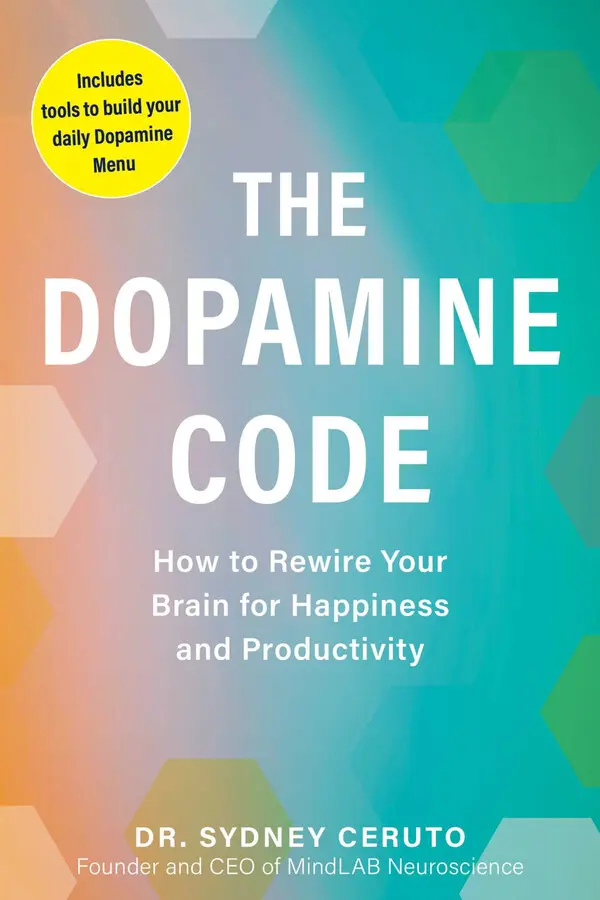
Dr. Ceruto holds a PhD in Behavioral & Cognitive Neuroscience from NYU and two Master’s degrees from Yale University. She lectures at the Wharton Executive Development Program at the University of Pennsylvania and has been an Executive Contributor to the Forbes Coaching Council since 2019. Dr. Ceruto is the author of The Dopamine Code (Simon & Schuster, June 2026). She founded MindLAB Neuroscience in 2000 and has spent over 26 years pioneering Real-Time Neuroplasticity™ — a methodology that permanently rewires the neural pathways driving behavior, decisions, and emotional responses.

References

Forte, G., Favieri, F., & Casagrande, M. (2019). Heart rate variability and cognitive function: A systematic review. Frontiers in Neuroscience, 13, 710. https://doi.org/10.3389/fnins.2019.00710

Lehrer, P., & Gevirtz, R. (2014). Heart rate variability biofeedback: How and why does it work? Frontiers in Psychology, 5, 756. https://doi.org/10.3389/fpsyg.2014.00756

Kanthak, M. K., Stalder, T., Hill, L. K., Thayer, J. F., Penz, M., & Kirschbaum, C. (2017). Autonomic dysregulation in burnout and depression: Evidence for the central role of exhaustion. Scandinavian Journal of Work, Environment & Health, 43(5), 475-484. https://doi.org/10.5271/sjweh.3647

Jandackova, V. K., Scholes, S., Britton, A., & Steptoe, A. (2024). Midlife heart rate variability and cognitive decline: A large longitudinal cohort study. International Journal of Clinical and Health Psychology, 24(4), 100518. https://doi.org/10.1016/j.ijchp.2024.100518

Success Stories

“Nothing was wrong — and that's exactly why no one could help me. I wasn't struggling. I wanted to know what my brain was actually capable of if its resting-state architecture was optimized. Dr. Ceruto mapped my default mode network and restructured how it allocates resources between focused and diffuse processing. The cognitive clarity I operate with now isn't something I'd ever experienced before — and I had no idea it was available.”

Nathan S., Senior Investment Strategist Bridgewater Associates

“Slower processing, foggier recall, decisions that used to be instant taking longer than they should — I'd been accepting it all as inevitable decline for two years. Dr. Ceruto identified the prefrontal efficiency pattern that was degrading and restructured it at the neurological level. The sharpness didn't just come back. It came back faster and more precise than it was a decade ago. Nothing I'd tried before even addressed the right problem.”

Elliott W., General Partner Andreessen Horowitz

“I'd optimized everything — diet, fitness, sleep — but my cognitive sharpness was quietly declining and no one could explain why. Dr. Ceruto identified the synaptic density patterns that were thinning and built a protocol to reverse the trajectory. This wasn't prevention in theory. My neuroplasticity reserve is measurably stronger now than it was three years ago. Nothing I'd tried before even addressed the right problem.”

Henrique L., Head of Strategic Planning Galp Lisbon, PT

“After the concussion, my processing speed collapsed — I couldn't hold complex information the way I used to, and no one could explain why the fog wasn't lifting. Dr. Ceruto mapped the damaged pathways and built compensatory networks around them. My brain doesn't work the way it did before the injury. It works differently — and in some ways, more efficiently than it ever did.”

Owen P., Founder & CEO Sports Performance Scottsdale, AZ

“The divorce wasn't destroying me emotionally — it was destroying me neurologically. My amygdala was treating every interaction with my ex, every legal update, every quiet evening as a survival-level threat. Years of talk-based approaches hadn't touched it. Dr. Ceruto identified the attachment disruption driving the response and restructured it at the root. The threat response stopped. Not because I learned to tolerate it — because the pattern was no longer running.”

Daniela M., Portfolio Manager Asset Management North Miami Beach, FL

“The way I was processing decisions under pressure had a cost I couldn't see — until Dr. Ceruto mapped it. She identified the neural pattern driving my reactivity in high-stakes situations and restructured it at the root. I don't just perform better under pressure now. I think differently under pressure. That's not something any executive coach or performance program ever came close to delivering.”

Rob Winston, Chief Operating Officer Goldman Sachs Manhattan, NY

Frequently Asked Questions About Nervous System Regulation & Vagal Tone in Wall Street

What is vagal tone optimization at MindLAB Neuroscience?

Dr. Ceruto provides neuroscience-based training to recalibrate the autonomic nervous system, the body's automatic regulation system's baseline operating state. This involves strengthening vagal tone — the parasympathetic brake — through evidence-based techniques including resonance frequency breathing, heart rate variability biofeedback, and neuroplasticity — brain's ability to rewire itself —-based autonomic training protocols with quantified physiological targets.

How does the vagus nerve affect cognitive performance?

The vagus nerve governs the parasympathetic nervous system — the body's brake for rest and recovery — and shares neural circuitry with the prefrontal cortex's executive control network. Higher vagal tone, measured through heart rate variability, reflects greater access to the prefrontal resources required for working memory, inhibitory control, cognitive flexibility, the ability to shift thinking between concepts, and emotionally regulated decision-making. When vagal tone is low, the brain defaults to reactive, threat-driven processing that degrades complex reasoning.

Who benefits from nervous system regulation services?

Individuals experiencing the physiological signatures of chronic sympathetic dominance — persistent difficulty unwinding even when the workday ends, sleep that fails to restore energy, emotional reactivity disproportionate to circumstances, decision fatigue that worsens through the week, or the sense that the body is running on activation without ever fully recovering. Many track these patterns through wearable devices but lack a framework for addressing the underlying nervous system dysfunction.

How does someone begin?

The process starts with a Strategy Call — a phone-based conversation with Dr. Ceruto to discuss autonomic symptoms, relevant history, and whether vagal tone — body's ability to calm itself — optimization is appropriate. The Strategy Call costs $250 and provides a detailed understanding of what a personalized nervous system regulation program would involve. Program structure and investment details are discussed during the Strategy Call.

How long does it take to see measurable changes in vagal tone?

Acute improvements in heart rate variability can occur within a single session of resonance frequency breathing. Sustained autonomic setpoint shifts, representing genuine neuroplastic adaptation in the brainstem circuits governing vagal output, typically require eight to twelve weeks of consistent training. Dr. Ceruto uses objective heart rate variability data to track progress and ensure the system is shifting toward parasympathetic dominance rather than simply producing transient relaxation.

Take the First Step Toward Nervous System Balance

The Strategy Call is a focused conversation with Dr. Ceruto that maps the specific neural mechanisms driving your concerns and determines the right path forward.

Book a Strategy Call
MindLAB Neuroscience consultation room
Locations

The Intelligence Brief

Neuroscience-backed analysis on how your brain drives what you feel, what you choose, and what you can’t seem to change — direct from Dr. Ceruto.