Why Telling Yourself You’re Worthy Doesn’t Work
“The prediction of low worth generates behavior that tends to confirm it: avoiding opportunities, minimizing accomplishments, withdrawing from relationships that might reveal the gap between how you are seen and how you see yourself.”
Most people who struggle with low self-esteem have been told, at some point, to simply think more positively about themselves. Repeat the affirmation. Make a list of your strengths. Remember your accomplishments. The advice is well-meaning, and it almost never works, because it targets the narrative layer of the mind while leaving the neural infrastructure untouched.
Self-worth is not stored in your thoughts. It is encoded in your brain’s self-referential processing circuits, a network anchored in the medial prefrontal cortex: the region responsible for how the brain models, evaluates, and narrates the self. When this network runs a consistent negative self-model, it acts as a filter on incoming experience. Good feedback gets discounted as an exception. Criticism confirms what the brain already believes. The model self-perpetuates, not because you are flawed, but because that is how prediction-based neural systems work. They conserve energy by confirming existing models rather than constantly revising them.
This is the core mechanism behind chronic low self-esteem: the brain is not being irrational. It is being efficient, and that efficiency is working against you.
The Architecture of Self-Valuation
Self-worth is constructed through feedback loops. The brain generates a prediction about how you will be received (socially, professionally, relationally) and then measures incoming signals against that prediction. Over time, this process builds a valuation model: an implicit, constantly updated estimate of your worth in a given context.
When these valuation circuits are calibrated correctly, positive experience updates the model upward. Recognition lands. Achievement registers. The feedback loop is responsive. But when the model is set below baseline (through early relational experiences, chronic stress, sustained social comparison, or environments that consistently returned negative feedback) the circuit becomes resistant to revision. The prediction of low worth generates behavior that tends to confirm it: avoiding opportunities, minimizing accomplishments, withdrawing from relationships that might reveal the gap between how you are seen and how you see yourself.
This is not weakness. It is prediction error: the brain defending a model it has invested heavily in building, even when that model is producing suffering.
What Change Actually Requires
Restructuring a deeply embedded self-valuation model requires working at the level of the circuits that built it, not the thoughts that reflect it. The medial prefrontal cortex is neuroplastic throughout life. It rewires in response to sustained, specific experience. But the keyword is sustained: change at this level does not happen through insight alone, or through a single powerful conversation, or even through years of talking about the problem.
It happens through the repeated interruption of the prediction-confirmation loop. When the brain is guided to generate a different prediction, and then receives experience that confirms it, the valuation model begins to shift. Slowly at first. Then with increasing momentum, because the same efficiency that locked in the old model now accelerates the new one.
My work is precisely structured to create those interruptions. I focus on how your specific neural architecture is maintaining the low self-worth model: what inputs it is selectively attending to, what signals it is discounting, where the prediction error is occurring, and how your behavioral patterns are feeding the loop. The intervention is targeted. It is not generic. Because low self-esteem in someone navigating a high-pressure family system looks entirely different from low self-esteem in someone whose identity was built around performance that has now become unstable, and the neural work is different in each case.
The Dopamine Connection
Self-worth is also deeply intertwined with the brain’s reward system: the dopamine architecture that assigns value to experiences, relationships, and outcomes. When the self-valuation model runs negative, the reward system often reflects it: effort feels pointless, anticipation is replaced by dread, and the motivational gradient that makes growth feel worth pursuing goes flat.
This is not depression, though it can coexist with it. It is a reward calibration problem: the brain has learned not to anticipate positive outcomes for the self, and so it stops generating the dopamine signals that make pursuing them feel worthwhile. The result is a kind of motivational paralysis that looks like laziness or apathy from the outside, and feels like resignation from the inside.
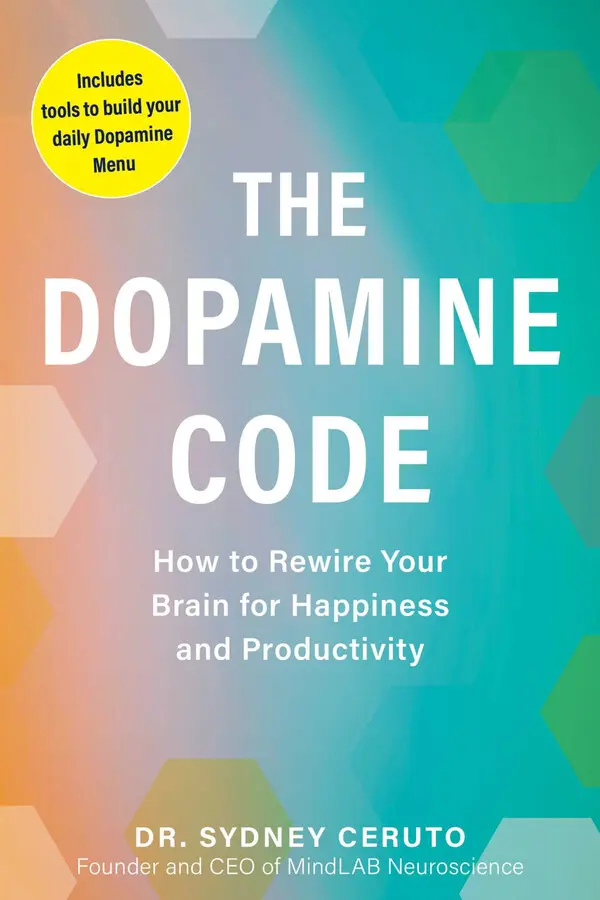
For a complete framework on understanding and resetting your dopamine reward system, I cover the full science in my book The Dopamine Code (Simon & Schuster, June 2026). Learn more.
Who This Work Is For
The people who come to me with self-esteem and self-worth concerns are not people who have failed. They are people who have built entire lives (careers, relationships, external markers of success) and still wake up every morning with a quiet conviction that they are not enough, that they are one mistake away from exposure, that the positive things in their lives are precarious in ways the negative ones never are.
They are navigating high-stakes decisions with a brain that keeps undermining them. Managing family systems where their worth was never modeled clearly. Holding together demanding responsibilities while running an internal monologue that would disqualify them from the very roles they are successfully performing. The external picture and the internal experience are radically misaligned, and that misalignment is exhausting in ways that are hard to explain to people who have not lived it.

If this resonates, you are not broken. You are operating with a neural architecture that was built for a different environment than the one you are now in. That architecture can be restructured. The work is rigorous, precise, and grounded in the same science that governs every other aspect of brain function. There is nothing soft about it, and the results are not soft either.
For deeper context, explore core identity and building real self-worth.