Shame & Self-Criticism in Lisbon

Lisbon drew people who made the leap. The brain's shame circuits followed — running programs calibrated for environments that no longer exist.

There is a voice that catalogues every mistake, replays every embarrassing moment, and delivers a verdict before you've even finished thinking. That voice isn't character. It's a neural circuit — one that can be changed. At MindLAB Neuroscience, I work with people whose inner critic has become the loudest presence in the room, not to silence it with willpower, but to rewire the brain systems driving it.

Shame and self-criticism are not signs of weakness or moral failure. They are patterns encoded in specific brain networks — networks with identifiable mechanisms and genuine plasticity. When those patterns are addressed at the level of the brain, the internal landscape changes in ways that no amount of positive affirmations or reframing exercises can reach.

Book a Strategy Call

When the Inner Critic Becomes a Neural Loop

Most people who struggle with self-criticism have tried the standard interventions: journaling, positive reframing, mindfulness. Some of these help temporarily. None of them reach the underlying architecture. That’s because the inner critic isn’t a thought — it’s a circuit, and circuits respond to different inputs than conscious intention.

The brain’s default mode network — the web of regions active during self-referential thought — has a well-established tendency toward negative self-evaluation in people who carry shame as a habitual response. When this network becomes overactive, the mind naturally gravitates toward a kind of internal audit: scanning for past failures, cataloguing inadequacies, rehearsing social missteps. This isn’t a character flaw. It’s a pattern of neural activation that has been reinforced over time.

Alongside this, the anterior cingulate cortex — a brain region involved in detecting errors and mismatches — can become stuck in a state of chronic overactivity. In healthy function, this region fires briefly when we make a mistake, flags it, and moves on. In people who experience persistent self-criticism, the error-detection signal doesn’t quiet down. It keeps firing. Every moment of perceived inadequacy — a social stumble, an unmet expectation, a wrong word in a meeting — triggers a response disproportionate to what actually happened.

The Difference Between Shame and Guilt

There is a neurological distinction worth understanding. Guilt says, “I did something wrong.” Shame says, “I am something wrong.” This difference is not philosophical — it maps onto different patterns of brain activity and different consequences for behavior. Guilt can motivate repair. Shame, by contrast, drives withdrawal, concealment, and a persistent low-level sense of being fundamentally defective.

Shame encodes itself differently than discrete memories. It settles into the body — into posture, into chronic muscle tension, into a baseline of low-grade threat activation — because it implicates identity rather than behavior. When the brain processes shame, it often engages survival responses: the impulse to hide, to disappear, to preemptively reject before rejection arrives. These are not irrational choices. They are the brain’s best attempt to protect against a threat it perceives as existential.

What Keeps It Running

Shame spirals — the recursive loops where one self-critical thought triggers another — have a structural explanation. When the brain’s error-detection circuitry is hyperactive and the default mode network is running unchecked, thoughts take on a self-referential gravity. A single failure becomes evidence of a pattern. A single unkind remark from years ago becomes a data point in a case against yourself that never closes.

The inner critic borrows the brain’s natural pattern-recognition machinery and turns it against the self. It finds themes in unrelated events. It constructs a narrative of inadequacy from fragments. It operates at high speed, below conscious awareness, and delivers its verdicts with the force of facts — even when those verdicts have no evidentiary basis.

There is also a social dimension. The brain’s threat-detection systems respond to the prospect of social judgment with the same urgency as physical danger. When shame is tied to social exposure — the fear of being seen as deficient — it activates the same survival machinery as a genuine threat. This is why shame feels so immobilizing. The brain isn’t being dramatic. It’s running a program that evolved to protect social belonging, and it’s running it constantly, on low-level inputs that don’t warrant the response.

What Changes When the Brain Changes

The neural systems underlying shame and self-criticism are plastic. They can be recalibrated. This is not a metaphor — it is a structural reality of how the brain encodes and re-encodes patterns over time.

The work I do at MindLAB targets the specific circuits involved: quieting default mode network overactivity, recalibrating error-detection sensitivity, and rebuilding a more accurate self-evaluation architecture. This is not positive thinking. It is not about believing you are perfect or erasing accountability. It is about restoring proportionality — so that mistakes register as mistakes rather than indictments, and the self-critical voice becomes one input rather than the only voice in the room.

People who have worked through this process describe a particular kind of relief: not the absence of self-awareness, but the absence of relentlessness. The inner critic quiets. Not because it has been argued down, but because the brain systems driving it have genuinely shifted. The baseline changes. Space opens up — for self-reflection that is honest rather than punishing, for accountability that doesn’t collapse into shame, for a relationship with oneself that is finally workable.

If there is a voice in your head that never lets up — that replays conversations, rehearses failures, and delivers verdicts you would never deliver to someone you love — that is not the truth about who you are. It is a circuit. And circuits can be changed.

Why Shame & Self-Criticism Matters in Lisbon

There is a specific shame that belongs to people who made the leap — who left a career, relocated to another country, reorganized their life around a decision that was supposed to be transformative — and are not experiencing the transformation they expected. It is quieter than the shame of visible failure. It is the shame of a private gap: between the life you performed at the nomad meetup and the life you are actually living.

Antique rosewood desk with crystal brain sculpture and MindLAB journal in warm amber Lisbon afternoon light with historic European wood paneling

Lisbon has become one of the primary destinations for exactly this kind of person. The tax structure, the cost of living relative to Western Europe and North America, the weather, the cultural richness — the city has real draws, and the people who arrived here did their research. But research does not immunize the brain against the specific disappointment of discovering that geography doesn’t resolve the internal patterns that made the previous environment feel unbearable.

The shame of the Lisbon expat is often articulated, when it is articulated at all, as “I don’t know why I’m not happier.” This is not a small statement. It carries the weight of a decision — often a significant one, involving career disruption, relationship reconfiguration, the surrender of professional networks and social infrastructure — that did not deliver the expected return. The inner critic processes this as evidence: you made the wrong call, you didn’t execute correctly, other people thrive here and you are failing to.

The nomad meetup culture creates a specific pressure. These are social spaces organized around shared experiences of location independence, but they also function as comparison environments. People present the version of their Lisbon life that holds up in conversation: the interesting project, the productive routine, the sense of freedom. The person who is quietly struggling with the discovery that freedom turned out to feel like isolation, or that the productive routine never materialized, or that the interesting project hasn’t converted to income — that person has limited social permission to say so. Performing contentment while feeling lost activates a shame layer on top of the underlying disappointment.

The gentrification dimension adds another form: the shame of complicity. The communities most affected — Alfama, Mouraria, Intendente — have documented significant displacement. Expats who are aware of this, who came to Lisbon in part because of its neighborhood character, and who are now part of the mechanism displacing the people who created that character, carry a specific form of guilt that can shade into shame. This is not irrational — the concern is real — but the shame response is often disproportionate and unproductive: it doesn’t change the circumstances, it doesn’t lead to action, it just encodes as a piece of evidence for the inner critic’s ongoing case.

There is also a professional dimension specific to the Lisbon expat population. Many people who relocated here left corporate or professional environments that were not serving them. The departure was often framed, internally and externally, as a courageous choice. But leaving a structured environment removes the external scaffolding that was partly holding identity together — the title, the institution, the daily evidence of competence that comes with navigating a professional role. Without that scaffolding, the brain’s self-evaluation system has to construct identity from scratch, and in the absence of clear feedback, the default mode network often fills the gap with self-critical narrative.

The work I do with people in the Lisbon expat context starts with an honest examination of what the inner critic is actually responding to — what evidence it is using, what standard it is applying, and whether that standard has any genuine validity in the current circumstances. Often, the shame is running a program written for an environment that no longer exists, evaluated against a timeline that was never realistic. Identifying that gap is not the whole work, but it is the beginning of it.

If you are in Lisbon and the voice in your head is building a case against your decision — if the gap between the life you moved here to create and the one you are currently living has become a source of shame rather than information — a Strategy Call is a phone conversation worth having. $250. Scheduled to your timezone.

Dr. Sydney Ceruto, PhD — Founder, MindLAB Neuroscience

Dr. Sydney Ceruto, PhD — Founder & CEO, MindLAB Neuroscience

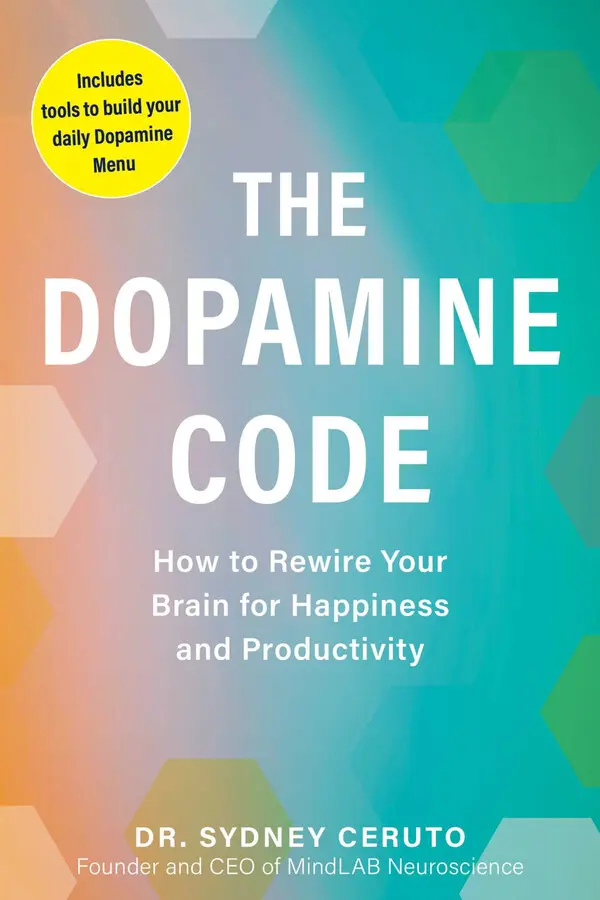
Dr. Ceruto holds a PhD in Behavioral & Cognitive Neuroscience from NYU and two Master’s degrees from Yale University. She lectures at the Wharton Executive Development Program at the University of Pennsylvania and has been an Executive Contributor to the Forbes Coaching Council since 2019. Dr. Ceruto is the author of The Dopamine Code (Simon & Schuster, June 2026). She founded MindLAB Neuroscience in 2000 and has spent over 26 years pioneering Real-Time Neuroplasticity™ — a methodology that permanently rewires the neural pathways driving behavior, decisions, and emotional responses.

References

Tangney, J. P., Stuewig, J., & Mashek, D. J. (2007). Moral emotions and moral behavior. *Annual Review of Psychology*, 58(1), 345–372. https://doi.org/10.1146/annurev.psych.56.091103.070145

Longe, O., Maratos, F. A., Gilbert, P., Evans, G., Volker, F., Rockliff, H., & Rippon, G. (2010). Having a word with yourself: Neural correlates of self-criticism and self-reassurance. *NeuroImage*, 49(2), 1849–1856. https://doi.org/10.1016/j.neuroimage.2009.09.019

Northoff, G., Heinzel, A., de Greck, M., Bermpohl, F., Dobrowolny, H., & Panksepp, J. (2006). Self-referential processing in our brain — A meta-analysis of imaging studies on the self. *NeuroImage*, 31(1), 440–457. https://doi.org/10.1016/j.neuroimage.2005.12.002

Eisenberger, N. I. (2012). The pain of social disconnection: Examining the shared neural underpinnings of physical and social pain. *Nature Reviews Neuroscience*, 13(6), 421–434. https://doi.org/10.1038/nrn3231

Success Stories

“When my youngest left for college, I didn't just feel sad — I felt erased. My entire sense of self had been wired to caregiving for two decades, and I didn't know who I was without it. Years of talk-based approaches hadn't touched it. Dr. Ceruto mapped the identity circuitry that had fused with the role and restructured it. I didn't find a new purpose — I found the one that had been underneath the whole time.”

Diane L. — Nonprofit Director Chicago, IL

“I knew the scrolling was a problem, but I didn't understand why I couldn't stop — or why it left me feeling hollow every time. Dr. Ceruto identified the dopamine-comparison loop that had fused my sense of worth to a feed. Years of trying to set boundaries with my phone hadn't worked because the problem was never the phone. Once the loop broke, the compulsion just stopped. My relationships started recovering almost immediately.”

Anika L. — Creative Director Los Angeles, CA

“Dr. Ceruto's methodology took me from a founder on the verge of quitting to a leader capable of building the team and culture that drove Liquid IV's success. Her ability to restructure how I make decisions and lead under pressure changed the trajectory of the entire company. I don't say that lightly. The company I built after working with her was fundamentally different from the company I was building before — because I was fundamentally different.”

Brandin C. — Tech Founder Los Angeles, CA

“Ninety-hour weeks felt like discipline — the inability to stop felt like a competitive advantage. Nothing I tried touched it because nothing identified what was actually driving it. Dr. Ceruto mapped the dopamine loop that had fused my sense of identity to output. Once that circuit was visible, she dismantled it. I still work at a high level. I just don't need it to know who I am anymore.”

Jason M. — Private Equity New York, NY

“Color-coded calendars, alarms, accountability partners — I'd built an entire scaffolding system just to stay functional, and none of it addressed why my brain couldn't sequence and prioritize on its own. Dr. Ceruto identified the specific prefrontal pattern that was misfiring and restructured it. I don't need the scaffolding anymore. My brain actually does what I need it to do.”

Jordan K. — Venture Capitalist San Francisco, CA

“Dr. Ceruto is a true professional with massive experience helping people get where they need to be. The important thing for me was understanding my strengths, developing ways to use them, and learning from the pitfalls that kept me from reaching my goals. She broke it all down and simplified the obstacles that had been painful blockers in my career, providing guidance and tools to conquer them. You will learn a lot about yourself and have a partner who works with you every step of the way.”

Michael S. — Real Estate Developer Boca Raton, FL

Frequently Asked Questions About Shame & Self-Criticism

What's the difference between healthy self-reflection and a shame spiral?

Healthy self-reflection is proportionate and forward-moving — it identifies what went wrong, extracts what's useful, and redirects energy. A shame spiral is recursive: one self-critical thought generates another, the error-detection circuitry keeps firing after the relevant event has passed, and the conclusion is about identity rather than behavior. The key marker is proportionality. If the internal response is significantly larger than the external event, and if it loops rather than resolves, that is a circuit pattern — not useful accountability.

Why do I criticize myself for things other people wouldn't even notice?

The brain's error-detection system is calibrated individually — some people's circuits are more sensitive than others, and that sensitivity can be shaped by early experiences where mistakes carried significant consequences. When the error-detection loop is highly calibrated, small inputs trigger large responses. The brain is not wrong that something happened. It is applying a threat-level response to a low-threat input, because that's what the circuit was trained to do. Recalibrating that sensitivity is the actual work — not convincing yourself the mistake didn't matter.

I know my self-criticism isn't rational. Why can't I just stop?

Because knowing and doing are handled by different brain systems. The prefrontal cortex — the reasoning, self-aware part of the brain — can recognize that a self-critical response is disproportionate. But the circuits generating that response are not under direct prefrontal control. They operate faster and at a different level. This is why insight alone rarely changes the pattern. The work has to target the circuits themselves, not just the conscious awareness of what they're doing.

Is shame always rooted in the past, or can it develop later in life?

Both. Early experiences — particularly environments where mistakes were punished harshly or where belonging felt conditional — do encode shame patterns that persist. But shame can also develop in response to significant adult experiences: a public failure, a prolonged period of underperformance, an industry disruption that destabilized professional identity. The neural mechanisms are the same regardless of when the encoding happened. What matters for the work is the current pattern, not only its origin.

What does working on shame actually involve?

The work targets the specific neural circuits involved: quieting the default mode network's tendency toward negative self-referential loops, recalibrating the error-detection system's sensitivity, and rebuilding a more accurate and proportionate self-evaluation architecture. This is not positive affirmations or cognitive reframing. It is direct work on the mechanisms driving the pattern — which is why it produces changes that feel qualitatively different from approaches that only engage conscious reasoning.

How is this different from what a therapist would do?

I am not a therapist and this is not a therapeutic relationship. The distinction is methodological: rather than processing the narrative of shame through conversation, the work targets the brain systems generating the pattern. The mechanism is the focus, not the story. For many people, this is a meaningful difference — particularly those who have spent years in talk-based approaches without the underlying pattern changing. The brain is the substrate. Working at the level of the brain produces different results than working at the level of interpretation.

Does everyone who works with you have a severe problem with shame?

No. The range is wide. Some people carry a deeply embedded shame pattern that has shaped major life decisions over decades. Others experience a more contained version — a persistent inner critic that is manageable most of the time but activated under specific conditions: high-stakes situations, social comparison, visible failure. The work is calibrated to what the person is actually dealing with. There is no threshold of severity required to benefit from addressing this at the neural level.

How do I know if this is shame or just low self-esteem?

They are related but distinct. Low self-esteem involves the brain's self-valuation circuits producing a consistently low baseline assessment of worth. Shame is more acute and often more physically felt — it activates survival responses, involves a strong impulse to hide or disappear, and is typically triggered by specific events or perceived social exposure. Many people have both patterns operating simultaneously, which is why the two often appear together. The distinction matters for the work, but either way, both patterns are addressable at the neural level.

What happens during a Strategy Call?

A Strategy Call is a focused phone conversation — one hour, $250 — in which we examine your specific situation, the patterns you are dealing with, and what the work would actually involve. It is not a sales call. It is a real assessment. You will leave with a clearer understanding of what is happening neurologically and what would need to change. If there is a fit for deeper work, we discuss what that looks like. If there isn't, you still walk away with more clarity than you arrived with.

Can shame be completely eliminated?

The goal is not elimination — it is recalibration. Some capacity for shame serves a function: it registers genuine misalignments between behavior and values and motivates repair. What becomes destructive is shame that is disproportionate, chronic, and identity-level rather than behavior-level. The work aims to restore proportionality: so that the response matches the actual input, resolves rather than loops, and produces useful information rather than a verdict about who you are.

Also available in: Miami · Wall Street · Midtown Manhattan · Beverly Hills

Take the First Step

The Strategy Call is a focused conversation with Dr. Ceruto that maps the specific neural mechanisms driving your concerns and determines the right path forward.

Book a Strategy Call
MindLAB Neuroscience consultation room
Locations

The Intelligence Brief

Neuroscience-backed analysis on how your brain drives what you feel, what you choose, and what you can’t seem to change — direct from Dr. Ceruto.