Imposter Syndrome in Lisbon

The specific imposter syndrome of someone who left a successful career to start over — when the title is gone, the community is transient, and the question 'what do you do?' triggers existential anxiety.

There is a specific kind of exhaustion that comes from succeeding — and not believing it. Every recognition, every accomplishment, every moment of visible progress triggers the same internal verdict: they don't know the real story. The evidence accumulates on the outside. The internal model refuses to update. This is not a confidence gap or a mindset problem. It is a structural issue in how the brain processes self-relevant information — and it has a neurological explanation.

I work with people who are objectively succeeding and privately convinced they are one mistake away from being found out. The gap between external reality and internal experience isn't closed by achievements. It's closed by understanding why the brain resists updating — and intervening at that level.

Book a Strategy Call
ForbesUSA TodayHuffPostNewsweekAssociated PressCosmopolitanBusiness InsiderForbesUSA TodayHuffPostNewsweekAssociated PressCosmopolitanBusiness Insider

Key Points

  1. The defining feature of imposter syndrome is not low confidence.
  2. The brain does not store self-beliefs in the same system that processes facts.
  3. The result is a brain that generates a consistent internal narrative — I am not actually qualified for this — and then selectively filters incoming experience to match that narrative.
  4. The prefrontal cortex — the brain's self-evaluation center — is generating predictions that are anchored to an earlier, lower-confidence self-concept.
  5. When positive outcomes arrive, the prefrontal response is not integration — it is rationalization.
  6. The brain works backward from the conclusion ( I don't belong here ) to explain away the evidence.
  7. Prediction error signaling is dopaminergic — meaning the dopamine system is what drives self-model updates when reality diverges from expectation.

When the Evidence Never Lands

“Disrupting these patterns requires working at the level of the self-model itself — not the symptoms it produces.”

The defining feature of imposter syndrome is not low confidence. It is the failure of positive evidence to update the self-concept. Promotions arrive, praise accumulates, results materialize — and none of it changes the underlying belief. The person knows, intellectually, that they are performing well. The knowing doesn’t help.

This is not a logic problem. The brain does not store self-beliefs in the same system that processes facts. Self-referential processing — the neural work of deciding who you are — runs through circuits that are governed by prediction and repetition, not evidence and argument. A self-concept formed under conditions of uncertainty, criticism, or mismatched external feedback becomes a stable prediction model. New data that contradicts it isn’t integrated. It’s discarded.

The result is a brain that generates a consistent internal narrative — I am not actually qualified for this — and then selectively filters incoming experience to match that narrative. Positive feedback is attributed to luck, timing, or other people’s errors. Negative feedback is treated as confirmation. The model never breaks because the model controls what counts as evidence.

The Neural Mechanism

Self-assessment is not a rational calculation. It runs through the corticostriatal circuit — the loop connecting the cortex to reward-processing structures beneath it — which updates self-efficacy through a process called prediction error signaling. When outcomes match predictions, the circuit reinforces the existing model. When outcomes exceed predictions, the circuit should update the model upward. In people with imposter syndrome, this update mechanism is suppressed.

The prefrontal cortex — the brain’s self-evaluation center — is generating predictions that are anchored to an earlier, lower-confidence self-concept. When positive outcomes arrive, the prefrontal response is not integration — it is rationalization. The brain works backward from the conclusion (I don’t belong here) to explain away the evidence. This is metabolically efficient. It is also structurally self-defeating.

Dopamine plays a central role here. Prediction error signaling is dopaminergic — meaning the dopamine system is what drives self-model updates when reality diverges from expectation. When that system is calibrated to expect low outcomes, high outcomes don’t generate the learning signal they should. The reward circuit registers success without updating the self-concept that shapes future predictions. Success becomes evidence-free. It feels random, fragile, and temporary — because the brain is treating it that way.

This is why the standard advice — remember your accomplishments, make a list, read the positive reviews — doesn’t work. You are adding data to a system that isn’t updating based on data. The problem is upstream.

What Changes at the Neurological Level

Persistent imposter syndrome is maintained by three reinforcing patterns. First, a self-concept formed early — often under conditions where belonging was conditional or achievement was minimized — that became a stable prediction model before significant external success arrived. Second, a reward system calibrated to expect threat or inadequacy, which treats positive outcomes as statistical anomalies rather than meaningful signals. Third, a suppression of the internal update mechanism that should revise self-efficacy in response to accumulated evidence.

Disrupting these patterns requires working at the level of the self-model itself — not the symptoms it produces. The work involves identifying the specific conditions under which the self-concept was formed, examining how the prediction model generates its current outputs, and creating the conditions for genuine self-efficacy updating. This is precision work. It is also durable work, because it changes the structure of how the brain processes self-relevant information — not just what conclusions it currently holds.

The goal is not confidence in the conventional sense. It is the capacity to let positive evidence land — to let outcomes update the model they belong to. When that mechanism is restored, achievement stops feeling like debt and starts functioning as information. The internal experience begins to match the external reality. Not because the reality changed, but because the brain stopped filtering it out.

The Architecture of Self-Doubt and How It Changes

Imposter syndrome presents itself as a confidence problem. In my practice, I have found that it is actually a prediction problem — and this distinction changes everything about how it can be resolved. The brain is not failing to notice your accomplishments. It is running a prediction model that was calibrated under different conditions, and that model is now systematically filtering your current reality to match its original conclusions.

This is why affirmation, positive self-talk, and accomplishment lists produce temporary relief but no lasting change. They add new data to a system that is not updating based on data. The prediction model operates upstream of conscious reasoning. It determines what counts as evidence before the evidence reaches the part of your brain that could evaluate it rationally.

Real-Time Neuroplasticity addresses the prediction model at its source. The work engages the self-assessment system during the exact moments when it is generating its distorted outputs — when you receive positive feedback and feel the reflexive impulse to minimize it, when you enter a new professional situation and the familiar certainty of not belonging surfaces before you have spoken a word. These moments are not just emotional experiences. They are the computational events where the brain’s self-model is most active and most accessible to restructuring.

The engagement begins with a Strategy Call — a focused conversation where I map the specific architecture of your imposter pattern: its origin conditions, its current triggers, and the specific mechanisms your brain uses to maintain it despite overwhelming contradictory evidence. As I explore in The Dopamine Code (Simon & Schuster, June 2026), the dopamine system that drives self-assessment prediction errors is the same system governing motivation, ambition, and the capacity to pursue meaningful goals — which is why resolving imposter syndrome unlocks capability that extends far beyond professional confidence.

Why Lisbon Creates a Distinct Imposter Experience

Lisbon has transformed over the past decade into one of Europe’s most dynamic hubs for international professionals, entrepreneurs, and creative industry transplants. The Golden Visa program, favorable tax structures, and the city’s quality of life have drawn a wave of high-capability individuals from across Europe, North America, and Latin America. This creates an environment where imposter syndrome takes a specific and underexamined form: the imposter as outsider.

When you build a professional life in a new country — even one as welcoming as Portugal — the brain’s social reference system loses its established coordinates. The professional networks that anchored your identity in your home city do not exist here. The cultural codes that signaled competence and belonging are different. The language barrier, even in English-friendly Lisbon, creates micro-moments of uncertainty that the imposter model exploits. Each instance of miscommunication, each cultural misread, each moment of navigating unfamiliar systems registers not as normal adjustment but as evidence that you do not belong.

Lisbon’s tech and startup ecosystem — concentrated around Parque das Nações, the Web Summit legacy, and the growing co-working culture in Chiado and Santos — brings together ambitious professionals who are simultaneously building businesses and rebuilding identities. Many arrived having left established careers in London, Berlin, or San Francisco. The decision to start over in a new market, while exhilarating, strips away the institutional validation that previously buffered the imposter model. Without the recognizable company name, the familiar industry position, or the long-standing professional relationships, the brain’s self-assessment system can shift from confident to uncertain in a single relocation.

The European business culture itself contributes to imposter activation for some international arrivals. Communication styles that are more indirect, hierarchies that are less visible, and professional norms that prioritize relationships over credentials can leave individuals feeling uncertain about where they stand — not because the environment is hostile, but because the signals they learned to read no longer apply. The imposter model thrives on ambiguity, and cross-cultural professional life is inherently ambiguous.

Lisbon’s relatively small international professional community means that reputation travels quickly. For someone managing imposter patterns, the intimacy of this ecosystem can feel like increased exposure risk. In a larger city, professional missteps blend into the noise. In Lisbon’s tighter professional circles, the perceived consequences of being “found out” feel more immediate and more personal.

References

Bravata, D. M., Watts, S. A., Keefer, A. L., et al. (2020). Prevalence, predictors, and treatment of impostor syndrome: A systematic review. Journal of General Internal Medicine, 35(4), 1252–1275. https://doi.org/10.1007/s11606-019-05364-1

Neureiter, M., & Traut-Mattausch, E. (2016). An inner barrier to career development: Preconditions of the impostor phenomenon and consequences for career development. Frontiers in Psychology, 7, 48. https://doi.org/10.3389/fpsyg.2016.00048

The Architecture of Self-Doubt and How It Changes

Imposter syndrome presents itself as a confidence problem. In my practice, I have found that it is actually a prediction problem — and this distinction changes everything about how it can be resolved. The brain is not failing to notice your accomplishments. It is running a prediction model that was calibrated under different conditions, and that model is now systematically filtering your current reality to match its original conclusions.

This is why affirmation, positive self-talk, and accomplishment lists produce temporary relief but no lasting change. They add new data to a system that is not updating based on data. The prediction model operates upstream of conscious reasoning. It determines what counts as evidence before the evidence reaches the part of your brain that could evaluate it rationally.

Real-Time Neuroplasticity addresses the prediction model at its source. The work engages the self-assessment system during the exact moments when it is generating its distorted outputs — when you receive positive feedback and feel the reflexive impulse to minimize it, when you enter a new professional situation and the familiar certainty of not belonging surfaces before you have spoken a word. These moments are not just emotional experiences. They are the computational events where the brain’s self-model is most active and most accessible to restructuring.

The engagement begins with a Strategy Call — a focused conversation where I map the specific architecture of your imposter pattern: its origin conditions, its current triggers, and the specific mechanisms your brain uses to maintain it despite overwhelming contradictory evidence. As I explore in The Dopamine Code (Simon & Schuster, June 2026), the dopamine system that drives self-assessment prediction errors is the same system governing motivation, ambition, and the capacity to pursue meaningful goals — which is why resolving imposter syndrome unlocks capability that extends far beyond professional confidence.

Why Lisbon Creates a Distinct Imposter Experience

Lisbon has transformed over the past decade into one of Europe’s most dynamic hubs for international professionals, entrepreneurs, and creative industry transplants. The Golden Visa program, favorable tax structures, and the city’s quality of life have drawn a wave of high-capability individuals from across Europe, North America, and Latin America. This creates an environment where imposter syndrome takes a specific and underexamined form: the imposter as outsider.

When you build a professional life in a new country — even one as welcoming as Portugal — the brain’s social reference system loses its established coordinates. The professional networks that anchored your identity in your home city do not exist here. The cultural codes that signaled competence and belonging are different. The language barrier, even in English-friendly Lisbon, creates micro-moments of uncertainty that the imposter model exploits. Each instance of miscommunication, each cultural misread, each moment of navigating unfamiliar systems registers not as normal adjustment but as evidence that you do not belong.

Lisbon’s tech and startup ecosystem — concentrated around Parque das Nações, the Web Summit legacy, and the growing co-working culture in Chiado and Santos — brings together ambitious professionals who are simultaneously building businesses and rebuilding identities. Many arrived having left established careers in London, Berlin, or San Francisco. The decision to start over in a new market, while exhilarating, strips away the institutional validation that previously buffered the imposter model. Without the recognizable company name, the familiar industry position, or the long-standing professional relationships, the brain’s self-assessment system can shift from confident to uncertain in a single relocation.

The European business culture itself contributes to imposter activation for some international arrivals. Communication styles that are more indirect, hierarchies that are less visible, and professional norms that prioritize relationships over credentials can leave individuals feeling uncertain about where they stand — not because the environment is hostile, but because the signals they learned to read no longer apply. The imposter model thrives on ambiguity, and cross-cultural professional life is inherently ambiguous.

Lisbon’s relatively small international professional community means that reputation travels quickly. For someone managing imposter patterns, the intimacy of this ecosystem can feel like increased exposure risk. In a larger city, professional missteps blend into the noise. In Lisbon’s tighter professional circles, the perceived consequences of being “found out” feel more immediate and more personal.

References

Bravata, D. M., Watts, S. A., Keefer, A. L., et al. (2020). Prevalence, predictors, and treatment of impostor syndrome: A systematic review. Journal of General Internal Medicine, 35(4), 1252–1275. https://doi.org/10.1007/s11606-019-05364-1

Neureiter, M., & Traut-Mattausch, E. (2016). An inner barrier to career development: Preconditions of the impostor phenomenon and consequences for career development. Frontiers in Psychology, 7, 48. https://doi.org/10.3389/fpsyg.2016.00048

The Architecture of Self-Doubt and How It Changes

Imposter syndrome presents itself as a confidence problem. In my practice, I have found that it is actually a prediction problem — and this distinction changes everything about how it can be resolved. The brain is not failing to notice your accomplishments. It is running a prediction model that was calibrated under different conditions, and that model is now systematically filtering your current reality to match its original conclusions.

Antique rosewood desk with crystal brain sculpture and MindLAB journal in warm amber Lisbon afternoon light with historic European wood paneling

This is why affirmation, positive self-talk, and accomplishment lists produce temporary relief but no lasting change. They add new data to a system that is not updating based on data. The prediction model operates upstream of conscious reasoning. It determines what counts as evidence before the evidence reaches the part of your brain that could evaluate it rationally.

Real-Time Neuroplasticity addresses the prediction model at its source. The work engages the self-assessment system during the exact moments when it is generating its distorted outputs — when you receive positive feedback and feel the reflexive impulse to minimize it, when you enter a new professional situation and the familiar certainty of not belonging surfaces before you have spoken a word. These moments are not just emotional experiences. They are the computational events where the brain’s self-model is most active and most accessible to restructuring.

The engagement begins with a Strategy Call — a focused conversation where I map the specific architecture of your imposter pattern: its origin conditions, its current triggers, and the specific mechanisms your brain uses to maintain it despite overwhelming contradictory evidence. As I explore in The Dopamine Code (Simon & Schuster, June 2026), the dopamine system that drives self-assessment prediction errors is the same system governing motivation, ambition, and the capacity to pursue meaningful goals — which is why resolving imposter syndrome unlocks capability that extends far beyond professional confidence.

Why Lisbon Creates a Distinct Imposter Experience

Lisbon has transformed over the past decade into one of Europe’s most dynamic hubs for international professionals, entrepreneurs, and creative industry transplants. The Golden Visa program, favorable tax structures, and the city’s quality of life have drawn a wave of high-capability individuals from across Europe, North America, and Latin America. This creates an environment where imposter syndrome takes a specific and underexamined form: the imposter as outsider.

When you build a professional life in a new country — even one as welcoming as Portugal — the brain’s social reference system loses its established coordinates. The professional networks that anchored your identity in your home city do not exist here. The cultural codes that signaled competence and belonging are different. The language barrier, even in English-friendly Lisbon, creates micro-moments of uncertainty that the imposter model exploits. Each instance of miscommunication, each cultural misread, each moment of navigating unfamiliar systems registers not as normal adjustment but as evidence that you do not belong.

Lisbon’s tech and startup ecosystem — concentrated around Parque das Nações, the Web Summit legacy, and the growing co-working culture in Chiado and Santos — brings together ambitious professionals who are simultaneously building businesses and rebuilding identities. Many arrived having left established careers in London, Berlin, or San Francisco. The decision to start over in a new market, while exhilarating, strips away the institutional validation that previously buffered the imposter model. Without the recognizable company name, the familiar industry position, or the long-standing professional relationships, the brain’s self-assessment system can shift from confident to uncertain in a single relocation.

The European business culture itself contributes to imposter activation for some international arrivals. Communication styles that are more indirect, hierarchies that are less visible, and professional norms that prioritize relationships over credentials can leave individuals feeling uncertain about where they stand — not because the environment is hostile, but because the signals they learned to read no longer apply. The imposter model thrives on ambiguity, and cross-cultural professional life is inherently ambiguous.

Lisbon’s relatively small international professional community means that reputation travels quickly. For someone managing imposter patterns, the intimacy of this ecosystem can feel like increased exposure risk. In a larger city, professional missteps blend into the noise. In Lisbon’s tighter professional circles, the perceived consequences of being “found out” feel more immediate and more personal.

References

Bravata, D. M., Watts, S. A., Keefer, A. L., et al. (2020). Prevalence, predictors, and treatment of impostor syndrome: A systematic review. Journal of General Internal Medicine, 35(4), 1252–1275. https://doi.org/10.1007/s11606-019-05364-1

Neureiter, M., & Traut-Mattausch, E. (2016). An inner barrier to career development: Preconditions of the impostor phenomenon and consequences for career development. Frontiers in Psychology, 7, 48. https://doi.org/10.3389/fpsyg.2016.00048

For deeper context, explore the neuroscience behind imposter syndrome.

Marker What You Experience What's Happening Neurologically What We Restructure
Why the Evidence Never Lands Promotions arrive, praise accumulates, results materialize — and none of it changes the underlying belief. The evidence is examined and found insufficient, reframed as luck, attributed to others, or simply fails to register with any emotional weight. The external record and the internal experience do not match. Self-referential processing — the neural work of deciding who you are — runs through circuits that are governed by prediction and repetition, not evidence and argument. The brain's self-model is updated through a mechanism called prediction error signaling, not through logical persuasion or accumulation of credentials. The result is a brain that generates a consistent internal narrative — I am not actually qualified for this — and then selectively filters incoming experience to match that narrative. The target is the self-model itself: the prediction system's baseline expectation of failure that causes incoming positive evidence to be discounted before it can update the belief.
The Neural Mechanism Behind Impostor Belief This is why the standard advice — remember your accomplishments, make a list, read the positive reviews — does not work. The accomplishments are real. The person knows they are real. And none of that knowledge reaches the circuit that generates the feeling of being a fraud. Self-referential belief runs through the corticostriatal circuit — the loop connecting the cortex to reward-processing structures beneath it — which updates self-efficacy through a process called prediction error signaling. This circuit does not update through information; it updates through the direct experience of outcomes that contradict its predictions. The corticostriatal circuit's current self-efficacy baseline — the prediction the circuit is generating about performance adequacy — so that positive outcomes register as genuine evidence rather than anomalies that reinforce the need for continued vigilance.
How Selective Filtering Maintains the Pattern Self-referential processing — the neural work of deciding who you are — runs through circuits that are governed by prediction and repetition, not evidence and argument. The person living with imposter syndrome is not being irrational; they are operating with a prediction system that has been set to expect exposure, and that system filters incoming experience to match its predictions. The filtering is not conscious. Praise that confirms competence registers briefly, then fades. Criticism or ambiguity registers deeply, is stored with detail, and is retrieved readily. The asymmetry in what sticks is not a character flaw — it is a prediction system selectively encoding the evidence that confirms its current model. The prediction system's selective encoding pattern — specifically, the asymmetry between how confirmatory and disconfirmatory evidence is stored and weighted — so that positive outcomes accumulate in the self-model rather than being discarded as exceptions to the rule that the system expects failure to provide.
Pattern 4 The result is a brain that generates a consistent internal narrative — I am not actually qualified for this — and then selectively filters incoming experience to match that narrative. It runs through the corticostriatal circuit — the loop connecting the cortex to reward-processing structures beneath it — which updates self-efficacy through a process called prediction error signaling.

Why Imposter Syndrome Matters in Lisbon

Between 2014 and 2024, Lisbon’s housing prices increased by 176%. The city that people arrive in seeking a reset — affordable, slower, legible, human-scaled — is no longer fully that city. Web Summit happens here every November, drawing tens of thousands of founders, operators, and investors into a compressed, high-performance identity display event in a city that the rest of the year is genuinely trying to slow down. The contrast is not subtle. It is one of the more clarifying experiences available for understanding what imposter syndrome actually is.

The expat population that has arrived in Lisbon over the past decade — Príncipe Real, Santos, LX Factory, Mouraria — is disproportionately composed of people who left successful careers somewhere else to find something different. Remote workers who left corporate structures. Founders who sold or stepped back. Professionals who chose lifestyle reconfiguration over continued optimization. People who, in their previous environment, had clear external frameworks for knowing who they were: a title, a firm, a city, a professional identity that others could recognize and respond to.

In Lisbon, those frameworks are gone. The title doesn’t transfer. The firm is 5,000 miles away. The professional identity that required a specific context to be legible is now operating in a context where the social anchors don’t exist. The expat community is transient by definition — people arrive, stay for one to four years, and leave. Relationships form quickly and dissolve quickly. The stabilizing social network that reinforces self-concept in a home context — old friends who knew you before, colleagues who can contextualize your history, family who can reflect your identity back to you — is absent.

The Lisbon version of imposter syndrome is the imposter syndrome of the person who left voluntarily. This is psychologically distinct from the person who was pushed out or displaced. The voluntary leaver made a choice — and that choice now generates its own form of internal interrogation. The internal model had an anchor: I know who I am because I know what I do and where I do it. That anchor was deliberately removed. What remains is the question the anchor was covering: who am I when no one is watching and no framework is conferring validity?

Web Summit makes this visible in an acute way. Every November, Lisbon fills with people performing startup identity at scale. The conference social circuit — evening events in Belem, side sessions in Alfama, the main stage at Altice Arena — generates the same comparison pressure as any high-performance professional environment, but in a compressed three-day format inside a city that the other 49 weeks of the year operates at a different register. The people who have come to Lisbon to escape comparison find themselves, once a year, in one of the most intense comparison environments on the continent.

The question what do you do? is an identity question, not an information question. In Lisbon’s expat community, it is also an existential one. The person who used to have a clear, confident answer — a job title, a company name, a recognizable professional category — now has an answer that requires explanation, or has multiple answers, or is in the process of figuring out what the answer should be. The brain’s self-assessment circuit is operating without its usual reference points. The internal model hasn’t collapsed — but it has lost the external scaffolding it was using to feel stable.

This is where the work is particularly generative. The absence of external validation frameworks is uncomfortable. It is also the specific condition under which the self-concept can be examined and rebuilt from the inside — not from the outside in. A 60-minute Strategy Call by phone — accessible from anywhere, no office required — is where that work begins. Not a framework for building a new external identity. A structural examination of the model itself.

Dr. Sydney Ceruto, PhD — Founder, MindLAB Neuroscience

Dr. Sydney Ceruto, PhD — Founder & CEO, MindLAB Neuroscience

Dr. Ceruto holds a PhD in Behavioral & Cognitive Neuroscience from NYU and two Master’s degrees from Yale University. She lectures at the Wharton Executive Development Program at the University of Pennsylvania and has been an Executive Contributor to the Forbes Coaching Council since 2019. Dr. Ceruto is the author of The Dopamine Code (Simon & Schuster, June 2026). She founded MindLAB Neuroscience in 2000 and has spent over 26 years pioneering Real-Time Neuroplasticity™ — a methodology that permanently rewires the neural pathways driving behavior, decisions, and emotional responses.

References

Clance, P. R., & Imes, S. A. (1978). The imposter phenomenon in high achieving women: Dynamics and therapeutic intervention. Psychotherapy: Theory, Research & Practice, 15(3), 241–247. https://doi.org/10.1037/h0086006

Feenstra, S., Begeny, C. T., Ryan, M. K., Rink, F. A., Stoker, J. I., & Jordan, J. (2020). Contextualizing the impostor ‘syndrome’. Frontiers in Psychology, 11, 575024. https://doi.org/10.3389/fpsyg.2020.575024

Quattrone, G. A., & Tversky, A. (1984). Causal versus diagnostic contingencies: On self-deception and on the voter’s illusion. Journal of Personality and Social Psychology, 46(2), 237–248. https://doi.org/10.1037/0022-3514.46.2.237

Schmader, T., & Hall, W. M. (2014). Stereotype threat in school and at work: Putting science into practice. Policy Insights from the Behavioral and Brain Sciences, 1(1), 30–37. https://doi.org/10.1177/2372732214548861

Success Stories

“Dr. Ceruto's methodology took me from a founder on the verge of quitting to a leader capable of building the team and culture that drove Liquid IV's success. Her ability to restructure how I make decisions and lead under pressure changed the trajectory of the entire company. I don't say that lightly. The company I built after working with her was fundamentally different from the company I was building before — because I was fundamentally different.”

Brandin C. — Tech Founder Los Angeles, CA

“Ninety-hour weeks felt like discipline — the inability to stop felt like a competitive advantage. Nothing I tried touched it because nothing identified what was actually driving it. Dr. Ceruto mapped the dopamine loop that had fused my sense of identity to output. Once that circuit was visible, she dismantled it. I still work at a high level. I just don't need it to know who I am anymore.”

Jason M. — Private Equity New York, NY

“I knew the scrolling was a problem, but I didn't understand why I couldn't stop — or why it left me feeling hollow every time. Dr. Ceruto identified the dopamine-comparison loop that had fused my sense of worth to a feed. Years of trying to set boundaries with my phone hadn't worked because the problem was never the phone. Once the loop broke, the compulsion just stopped. My relationships started recovering almost immediately.”

Anika L. — Creative Director Los Angeles, CA

“When my youngest left for college, I didn't just feel sad — I felt erased. My entire sense of self had been wired to caregiving for two decades, and I didn't know who I was without it. Years of talk-based approaches hadn't touched it. Dr. Ceruto mapped the identity circuitry that had fused with the role and restructured it. I didn't find a new purpose — I found the one that had been underneath the whole time.”

Diane L. — Nonprofit Director Chicago, IL

“I struggled with anxiety since I was 13. I simply could not control my thoughts, and no medication or therapy was helping. Since working with Sydney, I’ve gained a whole new perspective on what anxiety actually is and — most importantly — how to control it. Her approach is unlike anything I’ve ever experienced, a must for anyone who wants to understand what drives their actions and emotions. At 28, I’m finally in a happy place with solid emotional management and real coping skills.”

Lydia G. — Gallerist Paris, FR

“Dr. Ceruto delivers results. I’ve worked with her at two different points in my career. By the end of the introductory consultation, I knew I’d found the right person. She pointed out the behaviors and thought distortions holding me back, then guided me through the transformation with direct, practical recommendations I could apply immediately. She supplemented our sessions with valuable reading materials and was available whenever I needed her. I am a better leader and a better person because of our work together.”

Leeza F. — Serial Entrepreneur Austin, TX

Frequently Asked Questions About Imposter Syndrome

What is imposter syndrome, and is it actually a real psychological issue?

Imposter syndrome is the persistent belief that you are less capable or deserving than others perceive you to be — and that you are at risk of being exposed as a fraud. It is real, it is widespread, and it has a neurological basis. The brain's self-assessment circuits can become anchored to an earlier, lower-confidence self-concept that resists updating even when strong positive evidence accumulates. This is not a character flaw. It is a structural feature of how self-models form and persist.

Why doesn't telling myself about my accomplishments make the feeling go away?

Because the self-concept does not update through argument or evidence recitation. Self-beliefs are stored and maintained through prediction circuits — systems that learn through repetition and expectation, not through conscious review. When the underlying prediction model is anchored to inadequacy, reviewing your accomplishments adds information to a system that isn't designed to process information. The model simply filters it out. The work has to happen upstream — at the level of the prediction circuit itself.

Does imposter syndrome ever fully go away, or do I just learn to manage it?

The goal is not management — it is structural change. When the brain's self-efficacy updating mechanism is recalibrated, positive outcomes stop being filtered out and start functioning as genuine information. The internal experience begins to match the external reality, not because you've learned to tolerate the gap, but because the gap closes. This is a different outcome than coping strategies produce. It takes time and precise work, but it is durable.

Is imposter syndrome more common in people who grew up in high-pressure or high-expectation environments?

It is more likely to develop when self-worth was conditional — tied to performance, external validation, or comparison rather than a stable internal baseline. Early environments where belonging required achievement, or where success was minimized rather than acknowledged, can create prediction models that anchor self-assessment to low expected outcomes. The brain builds its self-concept in part from the feedback it received consistently — and those early models are resistant to later updating.

I feel like a fraud even when I'm clearly performing well. How can that be?

Because performance and self-concept are processed by different systems. You can have objective evidence of competence — and a self-model that has never integrated it. The self-assessment circuit generates predictions independently of your performance record. When that circuit is anchored to inadequacy, it will attribute good performance to external factors — luck, favorable conditions, other people's errors — rather than updating the model. The performance is real. The self-model's response to it is the problem.

Is this different from just being humble or having high standards?

Yes. Humility involves an accurate self-assessment that includes awareness of limitations. High standards involve holding yourself to demanding criteria for quality. Imposter syndrome involves a systematically distorted self-assessment that does not track actual performance — a model that remains fixed at inadequacy regardless of what you achieve. The distinction matters because the interventions are completely different. Recalibrating a distorted self-model is not the same as adjusting expectations.

Can imposter syndrome be worse in certain industries or environments?

Yes. Environments built around visible, quantified comparison — where performance is public, hierarchy is explicit, and belonging is competitive — generate more inputs to imposter syndrome circuits. The brain's self-assessment system is responding to environmental data constantly. When the environment continuously signals that standing is measured and contested, the prediction model has more material to work with. The internal circuits are the same across environments — the environmental pressure is different.

What does a Strategy Call involve, and how does it work?

The Strategy Call is a 60-minute phone conversation — not virtual, not in person, but by phone. The fee is $250. The purpose is to assess whether my approach is the right fit for where you are and what you're dealing with. We go through what's actually happening, what you've already tried, and what the relevant neural and psychological factors are in your specific situation. From that conversation, I can tell you whether we're a match and what the work would involve. Investment details for the full program are discussed during the call — they are not listed here.

Is imposter syndrome connected to anxiety or perfectionism?

They frequently co-occur. All three involve the brain's error-detection circuit and self-assessment systems operating in ways that generate distorted outputs. In imposter syndrome, the self-model filters out positive evidence. In perfectionism, the error-detection circuit generates impossible standards that reliably confirm the sense of inadequacy. In anxiety, the threat-detection system is overactive. These patterns often share underlying neural roots — which is why addressing one sometimes shifts the others.

I've succeeded in one area of my life but feel like a fraud in another. Is that normal?

Very common. The self-concept is not monolithic — the brain maintains different self-models in different domains. A person can have a stable, accurate self-concept in one area and a distorted, inadequacy-anchored model in another. This usually reflects which domains were subject to conditional validation early in development, and which domains built stable self-efficacy through consistent, acknowledged success. The domain-specific pattern is useful diagnostic information — it tells you where the prediction model was formed and under what conditions.

Also available in: Miami · Wall Street · Midtown Manhattan · Beverly Hills

Take the First Step

The Strategy Call is a focused conversation with Dr. Ceruto that maps the specific neural mechanisms driving your concerns and determines the right path forward.

Book a Strategy Call
MindLAB Neuroscience consultation room

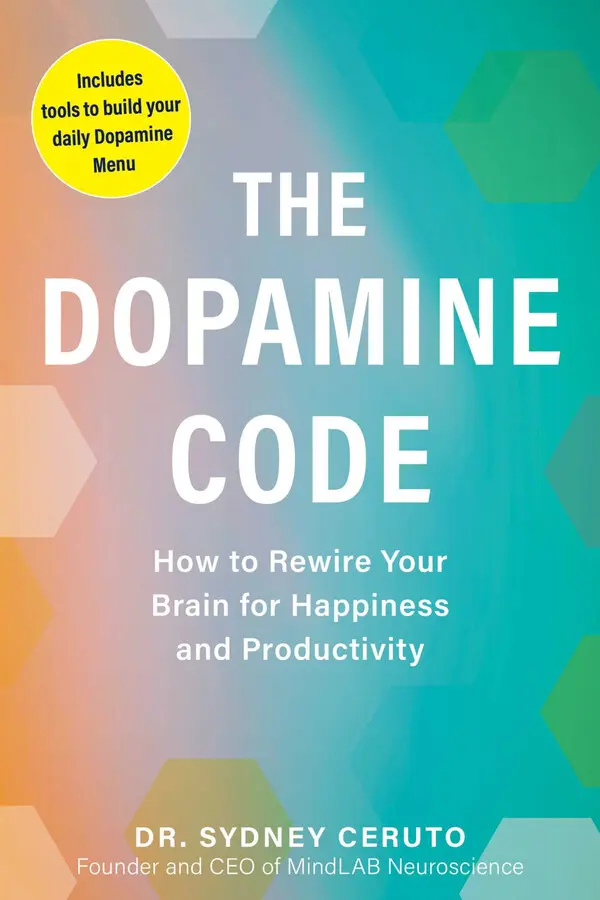
The Dopamine Code

Decode Your Drive

Why Your Brain Rewards the Wrong Things

Your brain's reward system runs every decision, every craving, every crash — and it was never designed for the life you're living. The Dopamine Code is Dr. Ceruto's framework for understanding the architecture behind what drives you, drains you, and keeps you locked in patterns that willpower alone will never fix.

Published by Simon & Schuster, The Dopamine Code is Dr. Ceruto's framework for building your own Dopamine Menu — a personalized system for motivation, focus, and enduring life satisfaction.

Order Now

Ships June 9, 2026

The Dopamine Code by Dr. Sydney Ceruto — Decode Your Drive
Locations

The Intelligence Brief

Neuroscience-backed analysis on how your brain drives what you feel, what you choose, and what you can’t seem to change — direct from Dr. Ceruto.