





Anxiety Management on Wall Street

Finance culture calls it edge. The nervous system calls it a threat-detection system running at unsustainable activation. The architecture needs recalibration, not rebranding.

Anxiety is not a mood problem. It is a miscalibration in the brain's threat-detection architecture — a system that has learned to fire as though danger is present when the available evidence does not support that conclusion. The amygdala — the brain's primary threat-detection structure — is designed to err on the side of alarm. Under normal conditions, the prefrontal regulatory system provides a counterbalance: evaluating the signal, assessing context, and inhibiting the response when the perceived threat is not proportionate to actual risk. When that regulatory relationship breaks down, the alarm runs without adequate supervision, and the experience is anxiety — persistent, recurrent, and exhausting precisely because it is being generated by a system that does not stop to ask whether the threat is real.

At MindLAB Neuroscience, I work at the level of the neural architecture responsible for this miscalibration. Anxiety patterns are not character flaws, not failures of will, and not problems that insight alone resolves — because the circuits generating the alarm operate below the threshold of conscious reasoning. The path forward requires precision work at the level of the threat-detection system itself: resetting the amygdala's activation threshold, rebuilding the prefrontal system's regulatory capacity, and recalibrating the brain's threat-prediction circuitry so that the alarm fires when danger is present — not as a permanent default state.

Book a Strategy Call

Why Anxiety Persists When There Is Nothing to Fear

The most frustrating feature of anxiety is that it continues even when you know there is nothing wrong. You can identify the distortion, name the cognitive error, understand exactly why the threat is exaggerated — and the alarm keeps running. This is not a failure of understanding. It is a feature of how the threat-detection system is organized. The amygdala does not receive inputs from the reasoning mind and revise its assessment accordingly. It operates on pattern-matching and prior experience, and it is faster than conscious thought by design.

When the amygdala has been sensitized — trained, through repeated activation or through specific experiences that encoded the environment as dangerous — it lowers its firing threshold. Inputs that a well-calibrated system would evaluate and dismiss are instead processed as genuine threats. The physical sensations of anxiety — the accelerated heart rate, the shallow breathing, the muscle tension, the hyperawareness of peripheral cues — are the body’s preparation for danger that does not exist. The brain has initiated a threat response to a signal that does not require one. And because the response is physiological, not just cognitive, thinking your way out of it is structurally limited.

The prefrontal system — the brain’s primary regulatory mechanism, responsible for evaluating threat signals and inhibiting disproportionate responses — is supposed to prevent this runaway activation. In people with established anxiety patterns, this regulatory relationship has been compromised. The prefrontal system loses the capacity to reliably override the amygdala’s alarm, either because the alarm is firing too fast and too intensely, because chronic stress has degraded prefrontal function, or because the threat-detection system has been sensitized in ways that make override insufficient. The result is a loop: the amygdala signals threat, the regulatory system cannot contain the signal, the alarm persists, and the brain interprets the ongoing arousal as evidence that the threat is real — which further sensitizes the system.

The Prediction Circuit Problem

Anxiety is not only a response to present stimuli. It is primarily a forward projection: the brain modeling future scenarios and generating threat responses to what might happen. The dopamine system — most commonly understood in relation to reward — is equally central to prediction, and the prediction circuitry is central to anxiety. When the brain’s threat-prediction system is miscalibrated, it generates negative anticipatory predictions with the same certainty and urgency it would apply to actual present-moment danger.

This is why anxiety is so often organized around scenarios that have not happened and may never happen. The brain is not responding to what is occurring; it is pre-responding to what it has predicted might occur. The prediction itself carries the neural weight of a real threat. The anxiety that follows the prediction feels identical to the anxiety that follows an actual threatening event, because from the nervous system’s perspective, the prediction and the event activate the same architecture.

The prediction circuit’s miscalibration is not random. It is trained by prior experience — by environments that were genuinely unpredictable, by relationships where danger arrived without warning, by accumulated experiences in which the negative outcome was frequent enough to become the brain’s working hypothesis. The brain is not generating catastrophic predictions arbitrarily. It is doing exactly what it was trained to do by the experience it has processed. The problem is that the training is no longer an accurate reflection of the current environment, and the prediction system has not been updated to account for that change.

Why Anxiety Patterns Outlast Their Original Context

A sensitized threat-detection system does not recalibrate on its own simply because the circumstances that sensitized it have changed. Safety does not overwrite the encoding. New, positive experiences accumulate alongside the existing sensitization but do not erase it — the threat-response program remains available, activated by any input that sufficiently resembles the original triggering conditions. This is why anxiety can persist through life changes that should, by any rational measure, have resolved it: the new job, the better relationship, the move to a safer environment. The amygdala’s encoding does not respond to improvements in objective circumstances.

This persistence is compounded by avoidance. When the brain learns that avoiding certain contexts, conversations, or situations reduces the anxiety signal, avoidance becomes structurally reinforced — each successful escape from the triggering context confirms the threat model and prevents the threat-detection system from receiving the corrective experience that would enable recalibration. The anxiety is managed, briefly, by avoidance, while the underlying sensitization deepens. Over time, the range of triggering contexts expands as the system generalizes the threat signature, and the avoidance that once addressed a small number of situations becomes a wider organizational principle of daily life.

The energy cost of this maintenance is significant and often underestimated. A threat-detection system running at elevated baseline consumes attentional and physiological resources continuously — not only during the peaks of acute anxiety, but through the chronic background activation that characterizes sensitized states. The fatigue, the difficulty concentrating, the sense of being perpetually on alert without being able to identify why, the progressive exhaustion of a body that has been in low-grade threat response for months or years — these are the metabolic costs of a system that was designed for intermittent activation being run as a permanent baseline state.

What Changes When the Architecture Recalibrates

The goal of working at the neural architecture level is not the elimination of anxiety as a signal. Anxiety is a functional response to genuine threat; a nervous system incapable of generating it would be dangerous in a different way. The goal is recalibration — restoring the relationship between the threat-detection system and the regulatory system so that the alarm fires proportionately, the prefrontal system can evaluate the signal accurately, and the prediction circuitry generates assessments that reflect the actual probability distribution of the current environment rather than the encoded history of prior threat.

When the amygdala’s activation threshold resets, inputs that previously triggered the full alarm response are processed and evaluated without generating the same physiological cascade. When the prefrontal regulatory capacity is rebuilt, the inhibitory relationship with the threat-detection system functions as it is designed to — not suppressing the signal, but applying accurate context so that the brain can distinguish between real threat and pattern-match error. When the prediction circuitry is recalibrated, the forward-looking scenarios the brain generates are no longer organized by the working hypothesis that the worst is most likely. The experience is not an absence of feeling. It is a return to proportionality — a nervous system that responds to what is actually happening rather than to what it has been encoded to expect.

Mahogany desk with crystal brain sculpture and MindLAB journal in warm lamp light surrounded by leather-bound volumes in institutional Wall Street study

Why Anxiety Management Matters in Wall Street

Anxiety Management on Wall Street

Wall Street does not call anxiety by its name. It calls it edge. The hypervigilance, the anticipatory monitoring, the inability to stop scanning for the next threat event — these are reframed as competitive advantages, and within the culture’s logic, the reframing is partially accurate. The amygdala running at elevated baseline does produce faster threat detection. The cost is everything else: the inability to be present when the alarm isn’t actively needed, the degradation of sleep, the progressive narrowing of experiences that feel safe, the body running a stress-response physiology that was designed for intermittent use at near-continuous activation.

Market volatility translates directly into threat-detection activation for finance professionals whose neural architecture has been trained to treat price movements as signals of personal danger. This is not metaphor. The amygdala does not distinguish between a threat to physical safety and a threat to financial security, professional standing, or the stability of a system you depend on. The 2008 generation — professionals who were on desks during the September–October 2008 sequence — carry encoded threat responses that were built during a genuine systemic threat event. Those responses have been available ever since, reactivatable by any input that sufficiently resembles the conditions of that encoding: rapid market movement, institutional instability, the sudden disappearance of certainty that had seemed reliable.

JPMorgan’s five-day return-to-office mandate, enforced from March 2025, produced a threat-activation response in a subset of professionals that the culture attributed to preference and was actually architectural. The remote-work years had, for some, produced a nervous system adaptation: reduced commute-based sensory load, greater control over environmental variables, a modest but real reduction in the hypervigilance demanded by constant in-person proximity to hierarchical evaluation. The return to the floor did not simply reverse a logistical preference. It reactivated the threat-detection architecture appropriate to an environment the nervous system had partially recalibrated away from. Goldman, Morgan Stanley, and others followed. The culture interpreted resistance as laziness. The nervous system was responding proportionately to a genuine recalibration demand.

Bonus anxiety follows a predictable annual cycle that demonstrates how the threat-prediction circuitry, once trained, activates on schedule rather than on evidence. Q4 arrives and the amygdala activates — not because anything threatening has happened, but because Q4 is the encoded threat context. The prediction loop generates scenarios of insufficient compensation, of comparison with peers, of the evaluation conversation that will determine the year’s outcome. The anxiety is present and intense regardless of whether this year’s circumstances provide any objective basis for it. The prediction circuit is running history, not current data, and the nervous system cannot tell the difference.

FiDi’s geographic compression intensifies every pattern by eliminating escape. The building where a difficult professional experience encoded — the floor where a conversation went wrong, the address associated with a particular period of threat — is part of the daily environment. The threat-detection system continuously processes the immediate environment, and when that environment is saturated with encoded threat associations, the baseline activation never fully resets. There is no commute that leads to a neutral context. The triggering geography is also the living geography, and the nervous system is being asked to maintain calibrated function inside the very space that trained its sensitization.

WSO forums document what the culture cannot accommodate: widespread anxiety, sleep disruption, anticipatory dread, and patterns of reactivity that have outlasted the specific professional events that encoded them. These are not personal failures. They are neural patterns produced by an environment that systematically trains the threat-detection system at high intensity for years, then expects the system to produce outcomes that require precisely the capacities that chronic threat activation degrades. My work on Wall Street addresses this architecture directly — not the stories of what happened in the market or the firm, but the neural systems those stories rewrote.

Dr. Sydney Ceruto, PhD — Founder, MindLAB Neuroscience

Dr. Sydney Ceruto, PhD — Founder & CEO, MindLAB Neuroscience

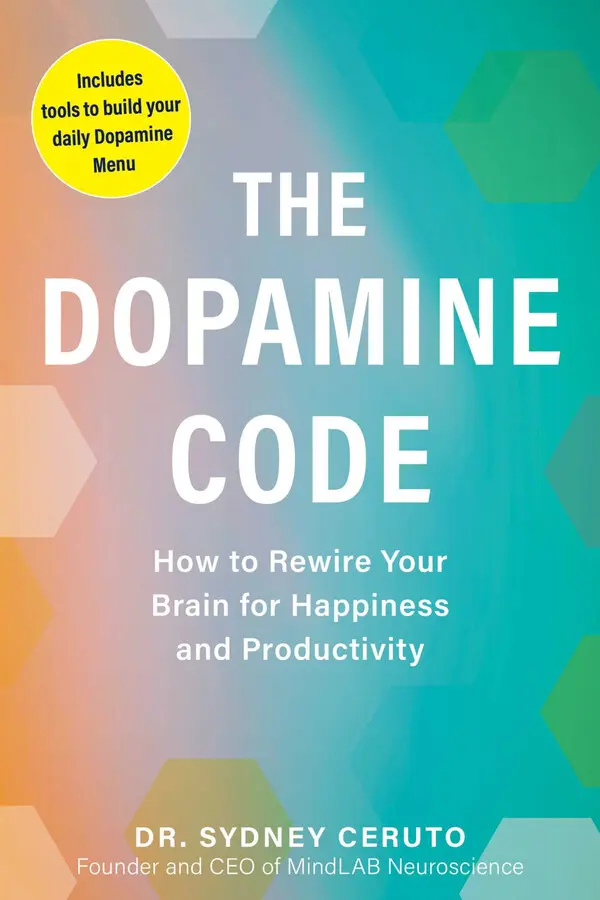
Dr. Ceruto holds a PhD in Behavioral & Cognitive Neuroscience from NYU and two Master’s degrees from Yale University. She lectures at the Wharton Executive Development Program at the University of Pennsylvania and has been an Executive Contributor to the Forbes Coaching Council since 2019. Dr. Ceruto is the author of The Dopamine Code (Simon & Schuster, June 2026). She founded MindLAB Neuroscience in 2000 and has spent over 26 years pioneering Real-Time Neuroplasticity™ — a methodology that permanently rewires the neural pathways driving behavior, decisions, and emotional responses.

References

LeDoux, J. E. (2000). Emotion circuits in the brain. Annual Review of Neuroscience, 23, 155–184. https://doi.org/10.1146/annurev.neuro.23.1.155

Shin, L. M., & Liberzon, I. (2010). The neurocircuitry of fear, stress, and anxiety disorders. Neuropsychopharmacology, 35(1), 169–191. https://doi.org/10.1038/npp.2009.83

Ochsner, K. N., & Gross, J. J. (2005). The cognitive control of emotion. Trends in Cognitive Sciences, 9(5), 242–249. https://doi.org/10.1016/j.tics.2005.03.010

Schultz, W. (2016). Dopamine reward prediction-error signalling: A two-component response. Nature Reviews Neuroscience, 17(3), 183–195. https://doi.org/10.1038/nrn.2015.26

Frequently Asked Questions About Anxiety Management

Why does anxiety continue even when I know there is nothing to be afraid of?

Because the system generating the anxiety does not have access to what you know. The amygdala — the brain's primary threat-detection structure — operates on pattern-matching and prior experience, and it is faster than conscious reasoning by design. It does not receive the output of your rational assessment and revise its alarm accordingly. When the threat-detection system has been sensitized — trained through prior experience to activate at lower thresholds — it generates the full anxiety response to inputs that do not, in your current context, represent proportionate threat. The knowledge that the threat is exaggerated is real and accurate. It operates in a different brain system than the one running the alarm. That gap is not a character flaw. It is a structural feature of how threat-detection and conscious reasoning are organized.

What does it mean that anxiety is a "miscalibration" rather than a mental health problem?

Anxiety as a signal is functional and necessary — a nervous system incapable of generating it would be genuinely dangerous. The problem is not the signal's existence. It is when the threshold for generating the signal has been set too low, so the alarm fires at inputs that do not warrant it, fires continuously rather than intermittently, and fires even in the absence of any present-moment trigger. That is a calibration problem — the system is technically functioning as designed, but the design parameters are no longer accurately reflecting the current environment. Framing it this way matters because it points directly toward what the work needs to accomplish: not eliminating anxiety, not managing it with strategies that keep it contained while it continues running, but resetting the calibration of the threat-detection architecture itself.

How does the brain's prediction system contribute to anxiety?

The dopamine system — most commonly discussed in the context of reward — is equally central to prediction. The brain's prediction circuitry generates assessments of what is likely to happen, and when that circuitry has been trained by environments where negative outcomes were frequent or sufficiently threatening, it defaults to negative predictions with the same neural urgency it applies to present-moment threat. The anxiety that follows an anticipated difficult conversation, an uncertain professional outcome, or a feared future event is not imaginary. It is the nervous system responding to a predicted threat with the same architecture it uses for actual threat. The scenario hasn't happened; the neural response is already running. Recalibrating the prediction circuitry is a central component of resolving anxiety patterns at the architectural level.

Why does avoidance make anxiety worse over time?

Avoidance removes the immediate anxiety signal, which feels like resolution but is actually reinforcement. When the brain learns that leaving a situation, canceling a commitment, or sidestepping a conversation reduces the alarm, it files that learning under "threat confirmed — escape worked." The threat model is validated, not corrected. The amygdala's sensitization deepens rather than diminishes. Additionally, every successful avoidance prevents the threat-detection system from receiving the corrective experience of exposure without catastrophic outcome — which is the mechanism through which the system would naturally recalibrate. Over time, the range of contexts that trigger avoidance typically expands, as the threat-detection system generalizes the threat signature to related situations. The anxiety is being managed while the architecture generating it is being reinforced.

What is the role of the prefrontal system in anxiety, and why does it sometimes fail to help?

The prefrontal system — the brain's primary regulatory mechanism — is supposed to evaluate the amygdala's alarm signals, apply context, and inhibit the response when the perceived threat is disproportionate to actual risk. In a well-calibrated system, this regulatory relationship functions efficiently and the anxiety response is proportionate. In established anxiety patterns, this relationship has been compromised. The amygdala is firing faster than the prefrontal system can evaluate; chronic stress has degraded prefrontal regulatory capacity; or the sensitization is deep enough that inhibitory input is insufficient to override the alarm. This is why "just think differently" — however accurate the thinking — does not resolve anxiety at the architectural level. The reasoning mind is generating accurate assessments. The regulatory circuits are not overriding the alarm with sufficient reliability. The work needs to target the regulatory architecture, not just its outputs.

Is a Strategy Call conducted in person or virtually?

The Strategy Call is a one-hour phone consultation — not a virtual session and not an in-person meeting. It is a precision assessment: I evaluate your specific anxiety patterns, the neural architecture behind them, and whether my methodology is the right fit for your situation. The fee is $250. This does not apply toward any program investment. I review what you share before the call takes place to ensure I can offer something genuinely useful. The call is not a preliminary step toward a sales conversation — it is a direct assessment of fit, and I will tell you honestly whether my approach addresses what you are dealing with. If it does not, I will say so.

Can anxiety patterns that have been present for decades actually change?

Yes. Neuroplasticity — the brain's capacity to reorganize its architecture in response to new experience — does not have an expiration date. Anxiety patterns that encoded early in life or have been running for many years are often more deeply embedded and more central to the brain's overall self-organizing architecture, which means the restructuring work is more foundational and requires greater precision and consistency. But the duration of the pattern does not determine whether change is possible. What determines the outcome is whether the work is targeted at the level where the pattern lives — the threat-detection architecture itself — rather than applied above it, at the level of conscious reasoning and behavioral strategy.

How is the anxiety pattern I'm experiencing connected to dopamine and The Dopamine Code?

The dopamine system is not only a reward system. It is a prediction system — the brain's primary mechanism for generating expectations about what is likely to happen next. When the prediction circuitry is miscalibrated toward negative outcomes, the dopamine system is generating threat-anticipation signals with the same urgency it applies to reward-prediction. This is a central component of how anxiety sustains itself between discrete triggering events: the brain is continuously predicting threat and continuously pre-activating the alarm. Dr. Ceruto's work in The Dopamine Code addresses the prediction architecture and the broader system of neural reward and anticipation — directly relevant to understanding why anxiety patterns are so persistent and what recalibration at the level of prediction circuitry actually involves.

What is the difference between working on anxiety versus managing it?

Managing anxiety means developing strategies that reduce the signal when it activates and prevent the most disruptive presentations — breathing protocols, cognitive reframing, structured avoidance of high-trigger contexts. These approaches are real and have genuine value. They operate above the level of the anxiety architecture: they address what you do with the alarm signal after it fires, without changing the threshold at which the alarm fires or the regulatory system's capacity to contain it. Working on anxiety at the architectural level means targeting the amygdala's sensitization directly, rebuilding the prefrontal system's regulatory capacity, and recalibrating the prediction circuitry so that the alarm fires proportionately rather than continuously. The difference in outcome is the difference between living with a well-managed anxiety pattern and no longer organizing your life around it.

How do I take the first step?

The entry point is a one-hour Strategy Call by phone, at a fee of $250. Before the call takes place, I review what you share about your situation to confirm that I can offer something specifically useful for your pattern. I do not take every inquiry — the call is a genuine assessment, not a formality. During the hour, I evaluate your specific neural patterns, the history and architecture behind them, and whether my methodology is the right fit. If it is, you will have a clear picture of what the work involves and what outcomes are realistic. If my approach is not the right fit, I will tell you that directly rather than proceed with work unlikely to produce what you need.

Also available in: Miami · Midtown Manhattan · Beverly Hills · Lisbon

Take the First Step

The Strategy Call is a focused conversation with Dr. Ceruto that maps the specific neural mechanisms driving your concerns and determines the right path forward.

Book a Strategy Call
MindLAB Neuroscience consultation room
Locations

The Intelligence Brief

Neuroscience-backed analysis on how your brain drives what you feel, what you choose, and what you can’t seem to change — direct from Dr. Ceruto.