






Sleep Anxiety in Greenwich, CT

Sleep anxiety is not worrying about sleep — it is a learned neural circuit in which the fear of not sleeping becomes the mechanism that prevents it. Dr. Ceruto breaks the loop at its source.

Sleep anxiety creates its own trap: the more the brain associates bed with wakefulness and worry, the stronger that neural association becomes. Willpower cannot overwrite a conditioned fear response. At MindLAB Neuroscience, we identify the specific neural patterns driving your brain's alertness at night and build a targeted reconditioning protocol designed to make sleep feel safe again.
Book a Strategy Call
ForbesUSA TodayHuffPostNewsweekAssociated PressCosmopolitanBusiness InsiderForbesUSA TodayHuffPostNewsweekAssociated PressCosmopolitanBusiness Insider

Key Points

  1. Sleep anxiety operates through a five-stage neural loop: anticipatory amygdala activation, sympathetic arousal, blocked sleep onset, failure registration, and circuit strengthening.
  2. Each failed attempt to sleep actively reinforces the architecture that caused the failure — the basolateral amygdala undergoes synaptic potentiation, making the response faster and harder to override.
  3. Eighty-one percent of Americans report losing sleep due to worries about sleep — this paradox now operates at epidemic proportions.
  4. Trying harder to sleep actually increases sleep onset time because conscious effort reintroduces the executive circuits that must disengage for sleep to begin.
  5. The bedroom becomes a conditioned threat through classical conditioning — the arousal is triggered by context, not by thoughts, and can establish across weeks of ordinary insomnia.
  6. Extinction learning conducted outside the bedroom fails to generalize to bedroom-specific conditioned arousal — context-specific intervention is essential.
  7. The goal is restoring sleep as the automatic process it was designed to be by dismantling the fear architecture that turned a passive biological function into a performance demand.

Sleep anxiety operates through a self-reinforcing neural loop that grows more entrenched with every failed attempt to sleep. Unlike general anxiety, where the threat object is external or future-oriented, sleep anxiety involves an inward-recursive pattern: the nervous system becomes hypervigilant to its own failure to deactivate. The bedroom becomes the threat. The act of lying down becomes the trigger. And the harder the person tries to sleep, the more the brain confirms that sleep is something to be feared.

The Five-Stage Neural Loop

“The harder you try to sleep, the more the brain confirms that sleep is something to be feared. Each failed attempt does not merely fail — it actively reinforces the architecture that caused the failure.”

The loop proceeds through five interlocking stages, each recruiting specific brain circuitry. First, anticipatory anxiety activates the amygdala before the person has even entered the bedroom. The bed nucleus of the stria terminalis generates a diffuse sense of dread that does not require a specific stressor to activate. This is not worry about a particular problem. It is ambient threat readiness directed at the act of sleeping itself.

Second, this anticipatory activation triggers the sympathetic nervous system. Cortisol rises and norepinephrine floods the system, creating active vigilance. The body enters a physiological state that is the biochemical opposite of what sleep requires.

Third, sleep onset is blocked. The parasympathetic shift cannot occur while the arousal system remains engaged. The brain is simultaneously exhausted and electrically active, caught in a state that neither resolves into sleep nor releases into full wakefulness.
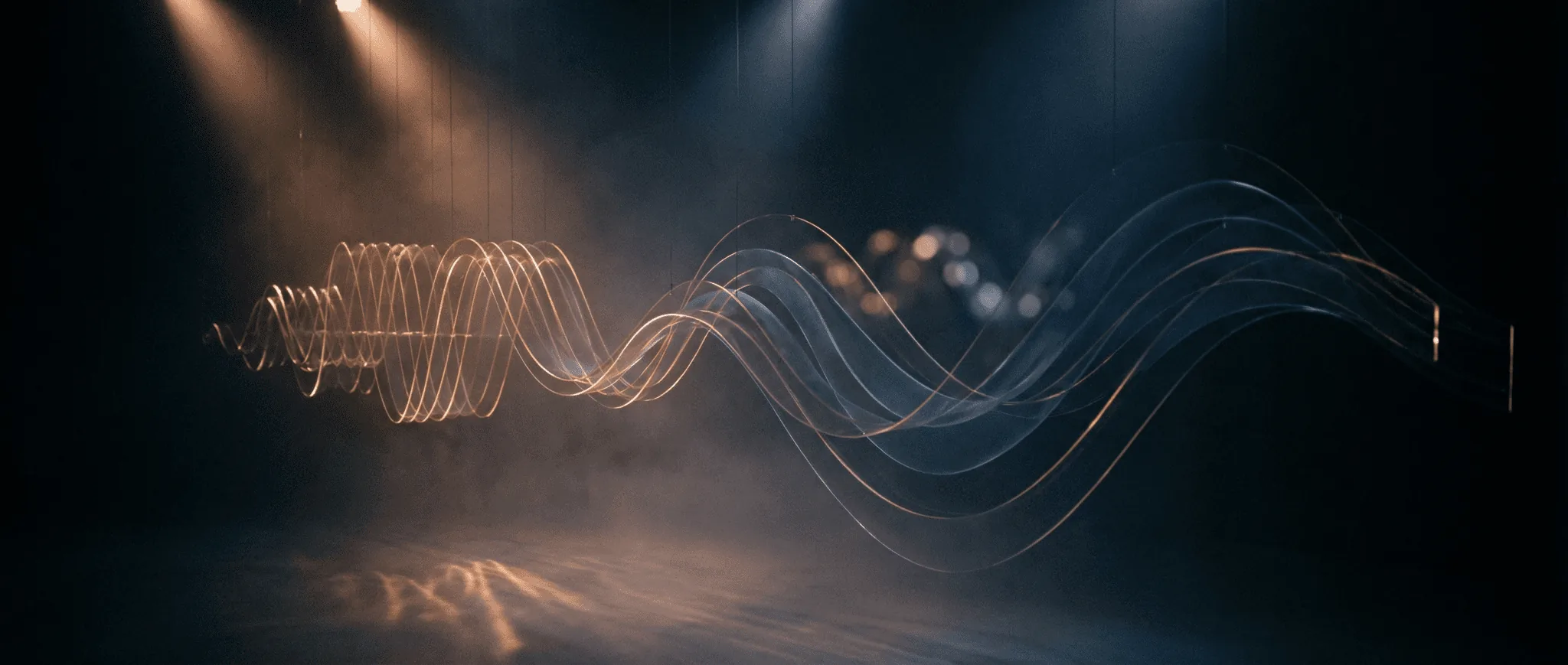
Translucent copper and blue wave forms visualizing sleep cycle phases against deep navy background

Fourth, the failure is registered. The anterior insula detects the elevated heart rate, the muscle tension, the continued wakefulness. The dorsal anterior cingulate cortex processes this as performance failure. The brain logs another data point confirming that sleep is unreliable, that the bedroom is unsafe, that tonight will be like every other night.

Fifth, the circuit strengthens. The basolateral amygdala undergoes synaptic potentiation making the conditioned arousal response faster to trigger and harder to override on subsequent nights. Each failed attempt to sleep does not merely fail; it actively reinforces the architecture that caused the failure.

The Bedroom as a Conditioned Threat

Through classical conditioning, repeated pairing of the bedroom with states of anxiety, frustration, and wakefulness converts the sleeping environment into a reliable trigger for physiological arousal. The clinical signature is distinctive: individuals often feel drowsy and relaxed in the living room, only to experience sudden, inexplicable alertness the moment they approach the bed. The arousal is not triggered by thoughts about sleep but by the context itself.

This contextual fear acquisition is hippocampus — the brain’s memory-formation center —-dependent. The hippocampus encodes the relational configuration of environmental features and binds them into a unified context representation that triggers the amygdala’s conditioned response upon re-entry. The critical point is that conditioned arousal does not require a traumatic precipitating event. It can establish across weeks or months of ordinary insomnia, with each night of wakefulness adding associative weight to the threat circuit.

The Effort Paradox and Ironic Process Theory

Sleep is a passive process that cannot be performed through effort. It emerges through the withdrawal of executive engagement, not the application of it. Experimental research demonstrates this directly: instructing subjects to fall asleep as quickly as possible under cognitive load actually increases sleep onset latency. This occurs compared to subjects simply told to sleep whenever they choose. Under conditions of mental demand trying harder makes sleep worse.

The mechanism is the ironic monitoring process: when a person consciously tries to suppress wakefulness, the brain simultaneously deploys an automatic monitoring system that scans for evidence the goal has not been achieved. This monitoring is low-effort and persistent, meaning it continues even when the person is mentally depleted. Because it searches for failure, it reliably finds and amplifies failure signals.

Eighty-one percent of Americans report losing sleep due to worries about sleep problems. This represents a population-scale measurement of this paradox now operating at epidemic proportions, partly driven by sleep-tracking technology that turns sleep quality into a monitored performance metric.

Interoceptive Hypervigilance: Scanning the Body for Proof

During the pre-sleep period, anxiety-prone individuals engage in interoceptive hypervigilance and this relationship becomes substantially stronger at elevated anxiety levels.

Neuroscience consultation — rosewood table with crystal brain sculpture and branded journal for strategy call preparation

The insular cortex — the brain’s primary interoceptive processing region — amplifies and broadcasts these internal signals, making them louder and more attention-capturing. Greater insula volume is associated with higher interoceptive sensibility which in turn is associated with decreased sleep efficiency in high-anxiety individuals. The insula does not merely detect arousal; it turns up the volume on the signals that confirm the person is still awake.

How Dr. Ceruto Breaks the Loop

Dr. Ceruto’s approach targets the sleep anxiety circuit at multiple nodes simultaneously. For the conditioned arousal response, the methodology works through extinction learning principles. This systematically decouples the sleep environment from the fear response by rebuilding hippocampal-encoded safety associations in the bedroom context itself. Extinction conducted outside the bedroom fails to generalize to the bedroom-specific conditioned arousal, which is why relaxation training done elsewhere often does not transfer.

For autonomic dysregulation, the focus shifts to rebuilding vagal tone. This allows the nervous system to achieve the sympathetic-to-parasympathetic transition required for sleep onset before the conditioned arousal response is triggered. For the effort paradox and interoceptive hypervigilance, the intervention addresses the metacognitive stance. It restructures the relationship between the person and their own internal monitoring, changing the evaluative framework so that body signals are processed without threat amplification.

The goal is to restore sleep as the automatic process it was designed to be. This is achieved not by adding another technique to manage, but by dismantling the fear architecture that turned a passive biological function into a performance demand.

Marker What You Experience What's Happening Neurologically What We Restructure
Bedtime dread Anxiety rising as evening approaches, a diffuse sense of dread about going to bed that has nothing to do with a specific worry The bed nucleus of the stria terminalis generates ambient threat readiness directed at the act of sleeping itself — the amygdala activates before you even enter the bedroom The conditioned arousal response through extinction learning — systematically decoupling the sleep environment from the fear response
Drowsy-to-alert transition Feeling relaxed on the couch but experiencing sudden, inexplicable alertness the moment you approach the bed Through classical conditioning, the bedroom has become a reliable trigger for physiological arousal — the hippocampus has encoded the bedroom configuration as a threat context The hippocampal-encoded safety associations in the bedroom context itself — extinction conducted outside the bedroom fails to generalize
Body scanning at bedtime Hyperawareness of your heartbeat, muscle tension, breathing rate — scanning your body for proof that you are still awake The insular cortex amplifies and broadcasts internal signals, making them louder — greater insula volume is associated with decreased sleep efficiency in high-anxiety individuals The metacognitive stance toward body signals so they are processed without threat amplification
Effort paradox Every sleep strategy making things worse, trying harder producing the opposite of the intended result Instructing subjects to fall asleep quickly under cognitive load actually increases sleep onset time — conscious effort reintroduces the executive circuits that must disengage for sleep The relationship between the person and their own monitoring system, so sleep can emerge as automatic rather than performed
Progressive worsening Sleep anxiety growing stronger over weeks and months rather than fading with time The basolateral amygdala undergoes synaptic potentiation with each failed night — the conditioned arousal response becomes faster to trigger and harder to override The fear architecture at multiple nodes simultaneously — autonomic regulation, conditioned context, and interoceptive hypervigilance — to break the self-reinforcing strengthening cycle

Why Sleep Anxiety Matters in Greenwich, CT

Sleep Anxiety in Greenwich, Connecticut

Sleep anxiety in Greenwich's professional population is maintained by a specific learned association: the brain has connected insufficient sleep with genuinely consequential next-day outcomes. The fund manager who slept poorly before the investor meeting that went badly has a brain that now treats sleep failure as a predictor of professional failure. The commuter who was late to the Metro-North after a sleepless night has a brain that encodes bedtime as the beginning of a sequence that determines the next day's success or failure. The anxiety about sleep is not irrational. It is an accurate neural association between sleep quality and outcomes in an environment where the outcomes are genuinely high-stakes.

The bedroom environment in Greenwich's homes — often spacious, luxurious, designed for comfort — should theoretically support sleep. But the brain's conditioned association overrides the environmental signals. The bedroom that has been the site of hundreds of sleepless hours becomes, through neural conditioning, an activation environment rather than a recovery environment. The architectural beauty of the space is irrelevant to the brain's learned association between this room and the frustration, anxiety, and threat-prediction processing that occurs here nightly.

The market-monitoring dimension adds a Greenwich-specific sleep anxiety layer. The professional who checks Asian market futures before bed — or whose brain checks them through the phone's notifications — receives pre-sleep information that the threat-detection system processes as activation-worthy. The content of the information (even if the markets are stable) is less relevant than the act of monitoring: the brain receives the signal that vigilance is ongoing, which is incompatible with the safety signal that sleep onset requires.

My work addresses sleep anxiety at the neural systems level — the conditioned arousal associated with the sleep environment, the threat-prediction circuits connecting sleep quality to professional outcomes, and the market-monitoring behavior that prevents the nervous system from receiving the all-clear signal required for sleep onset.

Dr. Sydney Ceruto, PhD — Founder, MindLAB Neuroscience

Dr. Sydney Ceruto, PhD — Founder & CEO, MindLAB Neuroscience

Dr. Ceruto holds a PhD in Behavioral & Cognitive Neuroscience from NYU and two Master’s degrees from Yale University. She lectures at the Wharton Executive Development Program at the University of Pennsylvania and has been an Executive Contributor to the Forbes Coaching Council since 2019. Dr. Ceruto is the author of The Dopamine Code (Simon & Schuster, June 2026). She founded MindLAB Neuroscience in 2000 and has spent over 26 years pioneering Real-Time Neuroplasticity™ — a methodology that permanently rewires the neural pathways driving behavior, decisions, and emotional responses.

References

Seo, J., Moore, K. N., Gazecki, S., Bottary, R. M., Milad, M. R., Song, H., & Pace-Schott, E. F. (2018). Delayed fear extinction in individuals with insomnia disorder. Sleep, 41(8), zsy095. https://doi.org/10.1093/sleep/zsy095

Kalmbach, D. A., Cuamatzi-Castelan, A. S., Tonnu, C. V., Tran, K. M., Anderson, J. R., Roth, T., & Drake, C. L. (2018). Hyperarousal and sleep reactivity in insomnia: Current insights. Nature and Science of Sleep, 10, 193–201. https://doi.org/10.2147/NSS.S138823

Pace-Schott, E. F., Germain, A., & Milad, M. R. (2015). Effects of sleep on memory for conditioned fear and fear extinction. Psychological Bulletin, 141(4), 835–857. https://doi.org/10.1037/bul0000014

Espie, C. A., Broomfield, N. M., MacMahon, K. M. A., Macphee, L. M., & Taylor, L. M. (2006). The attention-intention-effort pathway in the development of psychophysiologic insomnia: A theoretical review. Sleep Medicine Reviews, 10(4), 215–245. https://doi.org/10.1016/j.smrv.2006.03.002

Success Stories

“My kids had been sleeping through the night for three years, but my brain hadn't caught up. I was still waking every ninety minutes like clockwork — no amount of sleep hygiene or supplements touched it. Dr. Ceruto identified the hypervigilance loop that had hardwired itself during those early years and dismantled it at the source. My brain finally learned the threat was over. I sleep through the night now without effort.”

Catherine L. — Board Director Greenwich, CT

“My body had simply stopped knowing when to sleep. Crossing time zones weekly for over two years had broken something fundamental, and every protocol, supplement, and device I tried couldn't hold longer than a few days. Dr. Ceruto identified the disruption at the level of my suprachiasmatic nucleus and recalibrated the signaling pattern driving the dysfunction. Within weeks, my circadian rhythm locked back in. I sleep now. Consistently. Regardless of where I land.”

Jonathan K. — Diplomat Geneva, CH

“Four hours a night for over two years — that was my ceiling. Supplements, sleep protocols, medication — nothing touched it because nothing addressed why my brain wouldn't shut down. Dr. Ceruto identified the cortisol loop that was keeping my nervous system locked in a hypervigilant state and dismantled it. I sleep now. Not because I learned tricks — because the pattern driving the insomnia no longer exists.”

Adrian M. — Hedge Fund Manager New York, NY

“Endocrinologists, sleep clinics, functional medicine — every specialist cleared me, and no one could tell me why I was exhausted every single day. Dr. Ceruto identified that my HPA axis was locked in a low-grade stress activation I couldn't feel consciously. Once that pattern was disrupted at the neurological level, my energy came back in a way that felt completely foreign. I'd forgotten what it was like to not be tired.”

Danielle K. — Luxury Hospitality Beverly Hills, CA

“When my youngest left for college, I didn't just feel sad — I felt erased. My entire sense of self had been wired to caregiving for two decades, and I didn't know who I was without it. Years of talk-based approaches hadn't touched it. Dr. Ceruto mapped the identity circuitry that had fused with the role and restructured it. I didn't find a new purpose — I found the one that had been underneath the whole time.”

Diane L. — Nonprofit Director Chicago, IL

“Unfortunate consequences finally forced me to deal with my anger issues. I’d read several books and even sought out a notable anger specialist, but nothing was clicking. Then I found Sydney’s approach and was intrigued. Her insightfulness and warm manner helped me through a very low point in my life. Together we worked through all my pent-up anger and rage, and she gave me real tools to manage it going forward. I now work to help others learn how to control their own anger.”

Gina P. — Trial Attorney Naples, FL

Frequently Asked Questions About Sleep Anxiety in Greenwich, CT

What is sleep anxiety?

Sleep anxiety is a conditioned neural pattern in which the anticipation of not sleeping activates the brain’s threat-detection circuitry, producing physiological arousal that prevents sleep onset. It operates as a self-reinforcing loop: fear of sleeplessness triggers the arousal that causes sleeplessness, which strengthens the fear. It is a circuit-level problem, not a thought-management problem.

How does the brain turn the bedroom into a threat?

Through classical conditioning, repeated pairing of the bedroom with wakefulness, frustration, and anxiety causes the hippocampus — the brain's memory-formation center — to encode the sleep environment as a threat context. The amygdala then generates a conditioned arousal response upon entering the room — the same mechanism that produces fear in any conditioned environment. This process can establish across weeks of ordinary poor sleep without any traumatic event.

Who develops sleep anxiety?

Individuals with high sleep reactivity — a trait-level sensitivity to sleep disruption under stress — are two to three times more likely to develop sleep onset problems during periods of pressure. People who approach sleep as a performance domain, who monitor their sleep quality closely, or who live in environments with sustained physiological and psychological stressors are at elevated risk for developing the conditioned loop.

What does working with Dr. Ceruto on sleep anxiety involve?

The engagement begins with a Strategy Call — a targeted assessment conversation — that maps the specific nodes of the sleep anxiety loop active in the individual's pattern: conditioned arousal, autonomic dysregulation, effort-based monitoring, or interoceptive hypervigilance. Interoceptive hypervigilance represents a state of constant threat-scanning. The Strategy Call carries a $250 fee. Program structure and investment details are discussed during the Strategy Call.

How long does it take to break the sleep anxiety cycle?

The conditioned arousal response can begin to weaken within weeks when extinction learning is applied in the correct context with the right methodology. Full resolution typically unfolds over a longer period, with progressive improvement as the competing safety associations gain strength over the original threat encoding. This involves rebuilding the bedroom as a safety-encoded environment and restoring the autonomic flexibility required for effortless sleep onset.

Also available in: Miami · Wall Street · Midtown Manhattan · Beverly Hills · Lisbon

Take the First Step Toward Restful Nights

The Strategy Call is a focused conversation with Dr. Ceruto that maps the specific neural mechanisms driving your concerns and determines the right path forward.

Book a Strategy Call
MindLAB Neuroscience consultation room

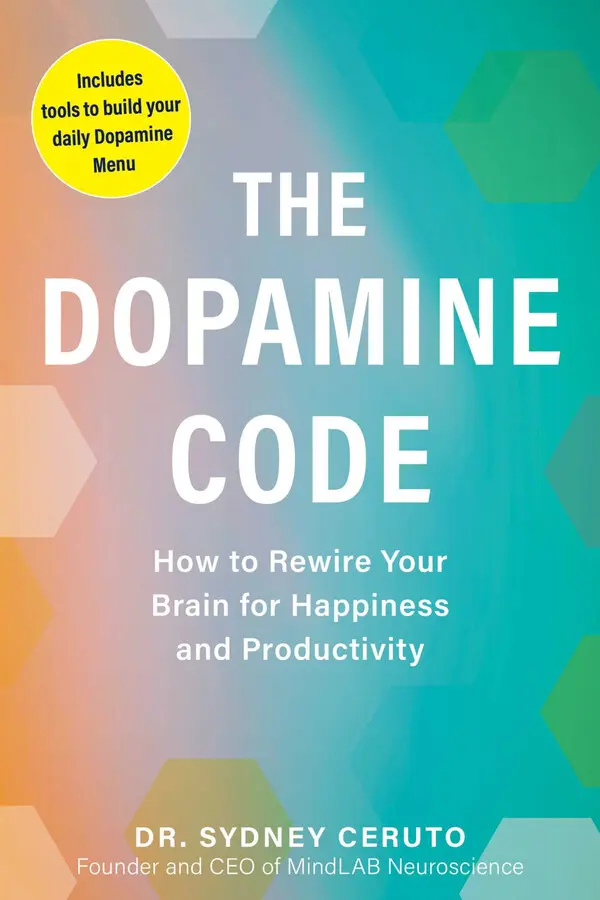
The Dopamine Code

Decode Your Drive

Why Your Brain Rewards the Wrong Things

Your brain's reward system runs every decision, every craving, every crash — and it was never designed for the life you're living. The Dopamine Code is Dr. Ceruto's framework for understanding the architecture behind what drives you, drains you, and keeps you locked in patterns that willpower alone will never fix.

Published by Simon & Schuster, The Dopamine Code is Dr. Ceruto's framework for building your own Dopamine Menu — a personalized system for motivation, focus, and enduring life satisfaction.

Order Now

Ships June 9, 2026

The Dopamine Code by Dr. Sydney Ceruto — Decode Your Drive
Locations

The Intelligence Brief

Neuroscience-backed analysis on how your brain drives what you feel, what you choose, and what you can’t seem to change — direct from Dr. Ceruto.