









The Emotional Intelligence Gap
“Emotional intelligence is not a soft skill you develop through self-help books. It is a measurable neural capacity — the functional integrity of specific brain circuits that detect, interpret, regulate, and respond to emotional signals in yourself and others.”
You are analytically sharp. You have built a career on intelligence, drive, and the ability to execute under pressure. And somewhere along the way, the feedback started arriving — sometimes directly, sometimes in the negative space of deals that fell apart, partnerships that eroded, or teams that disengaged without explanation.
The feedback, when it comes, sounds like variations of the same theme. You are difficult to read. You miss signals in negotiations. You react when the situation calls for calibration. Your team respects your competence but does not trust your presence. Colleagues describe you as brilliant but cold — or volatile but brilliant — and neither characterization captures what is actually happening internally.
What is happening is a specific neural pattern. The circuits that produce emotional awareness, empathic accuracy, and social-emotional regulation are either underactivated, poorly integrated, or running a strategy, typically suppression. This produces short-term control at the cost of long-term relational and professional degradation. This is not a character assessment. It is an architecture problem. And the distinction matters enormously, because character is fixed while architecture is plastic.
Many accomplished professionals arrive at this point having already invested in development approaches that address emotional intelligence at the behavioral or conceptual level. Assessments that produce a score. Frameworks that categorize emotional competencies into neat quadrants. Self-awareness exercises that generate intellectual understanding without changing the underlying neural dynamics. Workshop experiences that feel valuable in the moment but produce no lasting change in the situations that actually matter. These approaches share a common limitation: they operate above the biology. They can tell you that your emotional intelligence needs development. They cannot restructure the circuits that produce it.
The professional who scores adequately on an emotional intelligence assessment but still misreads rooms, suppresses under pressure, or cannot sustain relational trust at scale is not failing at emotional intelligence work. They are encountering the gap between cognitive understanding and neural architecture. The brain can understand what emotional intelligence requires while the circuits producing emotional processing remain entirely unchanged. Knowing what to do and being neurologically equipped to do it are different problems with different solutions.
The Neuroscience of Emotional Intelligence
Emotional intelligence is not a psychological abstraction. It is a measurable property of specific brain networks whose structure and function determine how emotional information is detected, processed, regulated, and deployed in social situations.
The most comprehensive neural mapping of emotional intelligence to date — synthesizing 34 studies — identifies a distributed brain network. The most prominent is the insula — state monitor — appearing in half of all studies reviewed, followed by regions governing error-detection, social-reward processing, and value-based decision-making.
These structures form two overlapping functional networks. These structures organize into two overlapping functional networks. The first integrates bodily and emotional signals with decision-making and value assignment, which is the circuit that gives emotional data a seat at the table during every consequential choice. The second supports mental state reasoning, social signal processing, and the ability to accurately read other people’s emotions and intentions.
A critical finding: higher emotional intelligence is associated with reduced activation across the brain’s value-assessment, threat-detection, and internal-awareness regions during negative emotional stimuli. High-EI individuals are not less emotional. They are more neurally efficient at regulating emotional responses consistent with evidence that EI development produces real neural efficiency changes.
Beneath this broad architecture, specific mechanisms drive specific EI capacities. Interoception is central to both emotional awareness and regulation. The right anterior insula is the brain region most responsible for this capacity, showing activation during both body-awareness tasks and emotional responses. The fundamental insight is stark: you cannot regulate what you cannot detect. Individuals with low interoceptive accuracy have reduced access to early bodily signals of emotional states, making regulatory intervention slower and less effective. Low interoceptive sensitivity correlates with alexithymia — difficulty identifying emotions — remarkably common among high-functioning professionals who have learned to intellectualize rather than feel. They can analyze a complex deal but cannot identify why they feel unsettled about a partnership. That gap is not intuition, it is a measurable interoceptive deficit located in right anterior insula underactivation.
The empathic dimension has its own circuitry. Advanced brain-connectivity mapping has traced how the mirror neuron system fires during social tasks. Three regions form the core circuit — automatic empathic firing — that either fires accurately or does not. My clients who are described by colleagues as analytically brilliant but socially tone-deaf typically present with intact cognitive empathy. They understand intellectually that others have feelings. This differs from attenuated affective empathy, where this automatic embodied resonance is underactivated. The asymmetry is a circuit calibration issue, not a personality limitation, and it has documented plasticity.
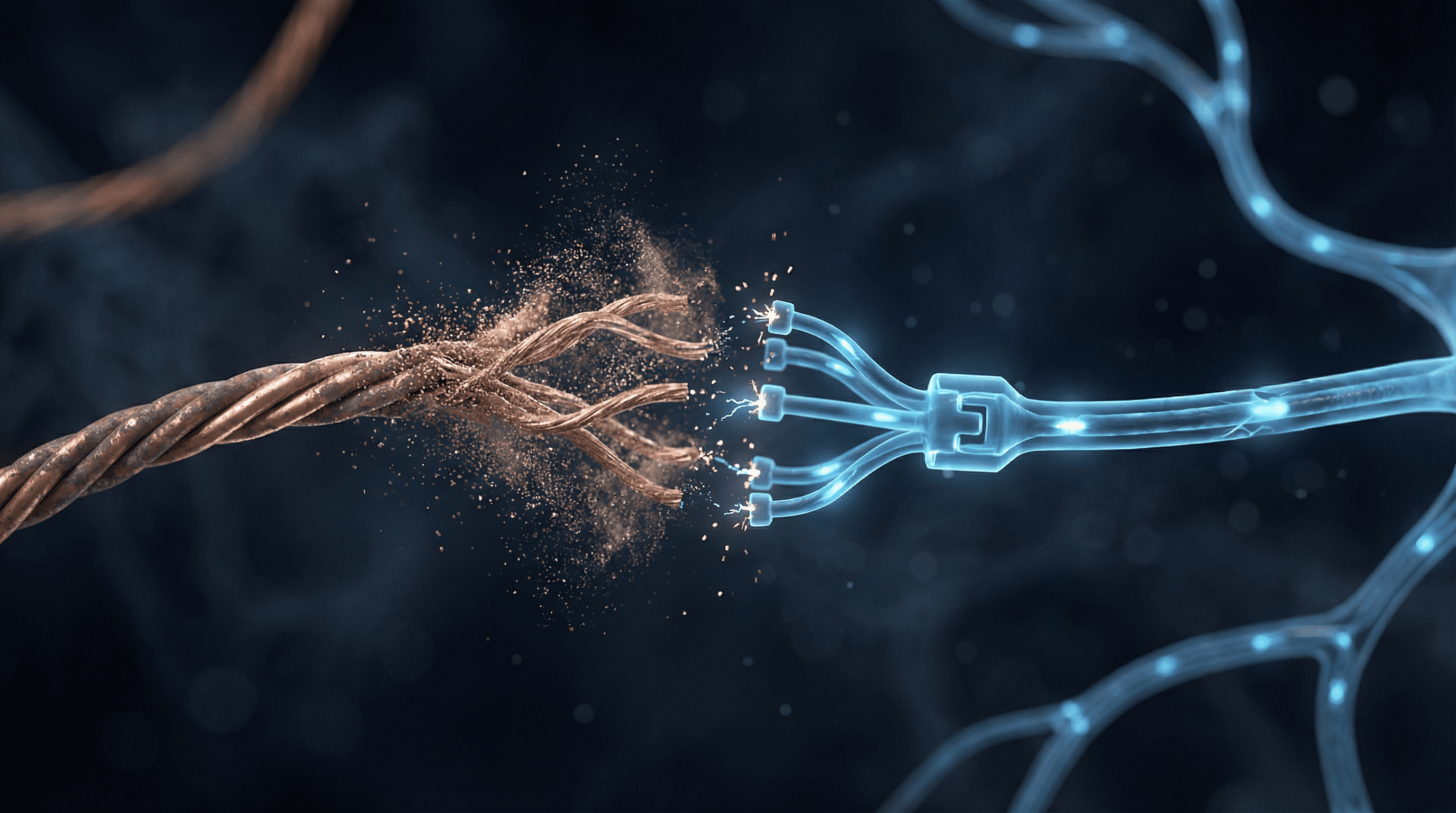
Two brain regions form a tightly coupled circuit that integrates bodily signals with incoming emotional information in real time. The first links sensory input to internal body state continuously calibrating the individual’s emotional state against what is actually happening in the room. When either interoceptive signals are chronically suppressed or contextual appraisal is impaired, the system produces what is experienced as emotional reactivity, misread social cues, or the inability to read a room.
Research has also found that the ability to monitor your own thinking in real time significantly predicts lower use of emotional suppression and often does not know it because the metacognitive monitoring layer is offline.
How Dr. Ceruto Approaches Emotional Intelligence
Dr. Ceruto’s methodology — Real-Time Neuroplasticity — targets the neural architecture of emotional intelligence rather than its behavioral surface.
The approach begins with identifying which specific systems are driving the presenting EI challenge. A deficit in body-signal awareness, where emotional signals are not reaching consciousness, requires fundamentally different intervention. This differs from a deficit in emotional resonance, where the individual understands others intellectually but does not feel what they feel. A suppression pattern requires different work than a signal-processing disruption where the brain is misreading social-emotional cues in real time. Each of these patterns has a distinct neural signature, and collapsing them into a single “low EQ” label produces interventions that miss the actual architecture generating the problem.
For a focused emotional intelligence challenge the NeuroSync program provides targeted restructuring. For comprehensive EI architecture work that spans professional relationships, personal connections, team dynamics, and the deeper interoceptive systems, the NeuroConcierge partnership integrates ongoing neural architecture work. It works into the fabric of daily life where emotional intelligence is actually tested.
In over two decades of applied neuroscience, the evidence consistently shows that EI development at the neural level produces changes. These are changes that assessments and behavioral frameworks cannot achieve, because it restructures the circuits themselves rather than adding conscious compensatory strategies on top of unchanged architecture. The change is durable because the architecture is different, not because the individual is trying harder.
What to Expect
The engagement begins with a Strategy Call, a focused conversation where Dr. Ceruto assesses the presenting pattern. She identifies which neural systems are most relevant to your specific EI profile, and determines whether the engagement is the right fit.
The structured protocol that follows is individualized. Dr. Ceruto does not apply a standard emotional intelligence curriculum or administer a competency assessment. She maps the specific configuration of interoceptive sensitivity, mirror neuron calibration, and prefrontal regulatory strategy that produces your particular pattern. Then she designs the intervention to match.
Progress anchors to real interpersonal conditions. The relationships you navigate, the professional contexts where EI matters most, the social-emotional situations that expose the gaps. No role-playing exercises. No hypothetical scenarios. The work targets your actual neural architecture operating in your actual life, under the actual pressures and relational demands where emotional intelligence either holds or fails. Changes achieved through neuroplasticity are durable, restructured circuits do not require ongoing maintenance to sustain improved emotional intelligence.
References
Martin-Aguiar, C., Fernandez-Berrocal, P., & Megias-Robles, A. (2023). Neural bases of emotional intelligence: A systematic review. PeerJ, 11, e16453. https://doi.org/10.7717/peerj.16453
Sadeghi, S., Schmidt, S. N. L., Mier, D., & Hass, J. (2022). Effective connectivity of the human mirror neuron system during social cognition. Social Cognitive and Affective Neuroscience, 17(8), 732–743. https://doi.org/10.1093/scan/nsac009
Sonkusare, S., Breakspear, M., & Guo, C. (2019). Naturalistic stimuli in neuroscience: Critically acclaimed. Trends in Cognitive Sciences, 23(8), 699–714. https://doi.org/10.1016/j.tics.2019.05.004
The Neural Architecture of Emotional Intelligence
Emotional intelligence is not a soft skill. It is a set of neural computations performed by specific brain circuits, and the quality of those computations determines a leader’s capacity for influence, relational depth, and social effectiveness as precisely as IQ determines their capacity for abstract reasoning.
The architecture involves four distinct neural systems, each performing a different emotional computation. The amygdala and its connections to the sensory cortices perform emotion detection — the rapid, pre-conscious identification of emotional signals in faces, voices, postures, and environmental cues. The anterior insula performs interoception — the translation of the body’s physiological state into conscious emotional experience, providing the internal data that constitutes self-awareness. The ventromedial prefrontal cortex performs emotion-cognition integration — the merging of emotional data with strategic analysis to produce decisions that account for both logical and emotional factors. The prefrontal-amygdala regulatory circuit performs emotion regulation — the modulation of emotional responses to ensure they are proportionate, contextually appropriate, and aligned with the person’s goals rather than their impulses.
What the leadership literature calls emotional intelligence is the aggregate output of these four systems operating in concert. A leader with strong detection but weak regulation reads the room accurately but reacts disproportionately. A leader with strong regulation but weak detection maintains composure but misses critical emotional signals. A leader with strong integration but weak interoception makes emotionally informed decisions but lacks awareness of their own emotional state, producing the paradox of someone who reads others well while being opaque to themselves. The specific configuration of these four systems creates a unique emotional intelligence profile for each individual, and understanding the profile is essential to developing the capacity.

The systems are not independent. They share neural resources and influence each other’s calibration through feedback loops. When the amygdala’s detection sensitivity is set too high — a common pattern in professionals from volatile early environments — the regulatory system is chronically overtaxed managing the volume of emotional signals, leaving fewer resources for the integration and interoceptive systems. The result is a professional who is hyperaware of others’ emotional states but exhausted by the awareness, unable to process the data strategically because the regulatory system is consuming the resources that integration requires. Conversely, when the regulatory system has been overdeveloped — common in professionals who learned early that emotional expression was dangerous — the detection system’s sensitivity may have been systematically suppressed, producing the emotional flatness that others experience as inaccessibility.
Why EQ Training Programs Plateau
Standard emotional intelligence training operates through psychoeducation, behavioral practice, and feedback. The client learns the EQ framework — self-awareness, self-management, social awareness, relationship management — practices the component skills, and receives feedback on their performance. The model produces measurable gains on EQ assessments and frequently fails to transfer to the conditions where emotional intelligence matters most: high-stakes, high-pressure, emotionally complex real-world interactions.
The transfer failure has a specific neural explanation. Training programs develop the cognitive representation of emotional intelligence — the knowledge of what emotionally intelligent behavior looks like and the conscious capacity to produce it when attending to it. But emotional intelligence in practice operates largely below conscious control. The detection system processes emotional signals in milliseconds, before conscious attention engages. The interoceptive system generates internal emotional data as a background process. The integration system merges emotional and cognitive streams automatically when functioning well. Only the regulatory system operates with significant conscious involvement, and even regulation becomes automatic with sufficient neural calibration.
When an EQ training graduate enters a genuinely high-stakes interaction — a difficult negotiation, a confrontation with a resistant board member, a conversation with an employee in crisis — the conscious EQ overlay competes with automatic neural processes for cognitive bandwidth. If the automatic processes are well-calibrated, the overlay is unnecessary. If the automatic processes are miscalibrated, the overlay cannot override them fast enough to matter. The negotiator who learned to read micro-expressions in a workshop detects them in practice only when they are attending to faces, which they cannot do while simultaneously managing strategy, content, and their own emotional regulation. The micro-expression reading was always dependent on the automatic detection system, and the workshop did not reach that system.
How Emotional Intelligence Circuitry Is Restructured
My methodology targets each of the four systems at the neural level, restructuring the automatic computations that produce emotional intelligence rather than building conscious overlays on top of unchanged circuitry.
The detection system is recalibrated through engagement with progressively more complex emotional stimuli under conditions that activate the amygdala-sensory pathways without triggering the full threat response. For professionals whose detection sensitivity is too high, the work involves threshold adjustment — building the amygdala’s capacity to detect emotional signals at appropriate sensitivity without the hyperactivation that overwhelms the system. For those whose sensitivity has been suppressed, the work restores the detection circuits’ engagement with emotional data that was previously filtered out.
The interoceptive system is developed through direct engagement of the anterior insula under conditions that require real-time processing of internal physiological data. Many professionals have learned to override interoceptive signals as a coping mechanism — pushing through fatigue, ignoring anxiety, suppressing discomfort. The override, repeated over years, degrades the anterior insula’s signal clarity. Restoring interoceptive accuracy is not a matter of paying attention to feelings. It requires rebuilding the neural pathways that translate physiological states into conscious experience, a process that demands structured engagement rather than simple attention.
The integration system is strengthened by engaging the ventromedial prefrontal cortex under conditions that require simultaneous processing of emotional and strategic data. The critical training condition is complexity — not artificial complexity, but the genuine emotional-strategic density of real leadership contexts. When the integration system is engaged with the full complexity of the leader’s actual environment, it builds the capacity to merge emotional and cognitive streams at the speed and depth that real-world interactions require.
The regulatory system is developed last, because its optimal calibration depends on the accuracy of the other three systems. Regulation built on inaccurate detection over-suppresses important signals. Regulation built on poor interoception operates without adequate internal data. Regulation built on weak integration cannot distinguish between emotional signals that should be modulated and those that contain critical strategic information. When the other three systems have been restructured, the regulatory system often requires less intervention than expected, because much of what appeared as regulatory failure was actually the consequence of processing inaccurate or overwhelming inputs.
What This Looks Like in Practice
The Strategy Call maps your specific emotional intelligence profile — not a standardized assessment score, but the actual configuration of the four neural systems and how they interact under the conditions of your leadership environment. The mapping typically reveals that the presenting complaint — difficulty reading people, emotional volatility under pressure, the sense of operating with incomplete data in social situations — traces to a specific system or system interaction that can be precisely targeted.
In session, the work engages the emotional intelligence architecture under conditions that mirror the complexity of your real interactions. The restructuring occurs through direct neural engagement, not through cognitive learning about emotions. Clients consistently describe the shift as a qualitative change in their social experience: emotional data that was previously invisible becomes available, internal states that were previously opaque become legible, and the integration of emotional and strategic processing that previously required deliberate effort becomes automatic. The change is structural — the circuits that perform the emotional computations have been physically restructured, and the restructured architecture persists because neuroplasticity, once completed, does not reverse. If this resonates, I can map the specific neural patterns shaping your emotional processing in a strategy call.


