







Personal Identity Reconstruction in Miami

You built a life that looks right from the outside. But something fundamental shifted, and the person living inside that life no longer matches the structure around it.

Personal identity is not a fixed trait. It is a neural construction — a network of self-referencing patterns the brain builds over years of experience, relationship, and repetition. When life changes faster than that network can update, the result is a specific kind of disorientation. You know who you were. You sense who you are becoming. But the bridge between those two versions has not been built yet. MindLAB Neuroscience works at the level where identity is actually encoded — the neural circuitry that determines how you see yourself, what feels true about you, and what possibilities your brain treats as real.

Book a Strategy Call
ForbesUSA TodayHuffPostNewsweekAssociated PressCosmopolitanBusiness InsiderForbesUSA TodayHuffPostNewsweekAssociated PressCosmopolitanBusiness Insider
Marker Traditional Approach Neuroscience-Based Approach Why It Matters

Why Personal Identity Reconstruction Matters in Miami

Why Miami Dismantles Identity Faster Than Most Cities

Miami is a city of reinvention. That is its mythology and its daily reality. The Venezuelan family that rebuilt a professional life in Doral after leaving everything behind. The New York transplant who traded a career in finance for something undefined in Brickell. The founder in Wynwood who left a stable industry to build something from scratch. Each of these transitions carries a specific neural cost that the excitement of the move often masks.

When someone relocates — especially across cultures, languages, or professional contexts — the brain loses a significant portion of the environmental cues that maintained their sense of self. The office that confirmed your competence, the social circle that reflected your values back to you, the neighborhood where your daily habits felt coherent — all of that disappears in the move. What remains is the internal model. And that model, without external reinforcement, begins to degrade. Not because the person has changed. Because the brain’s self-referencing system depends on environmental feedback to stay calibrated.

Miami’s Latin American diaspora experiences this at a particular intensity. The Colombian professional in Brickell who held a senior position in Bogota and now navigates a different corporate culture with imperfect English is not simply adjusting. Their brain is processing a mismatch between the stored identity — authoritative, fluent, socially calibrated — and the current reality, where those qualities do not translate with the same force. The prefrontal cortex — the region that maintains your sense of continuity over time — is receiving contradictory inputs. The stored version says one thing. The daily experience says another. That contradiction produces a specific kind of psychological pain that looks like anxiety or depression from the outside but is actually an identity crisis at the neural level.

The wealth migration into Miami over the past five years has created another version of this pattern. People who relocated from New York, San Francisco, or Chicago often arrived with a professional identity built inside a specific ecosystem. The hedge fund manager whose reputation existed within a network of Manhattan relationships. The tech founder whose identity was inseparable from a San Francisco startup culture. In Miami, those ecosystems do not exist in the same form. The professional capacity remains. The identity structure that the previous environment maintained does not travel with it. What follows is not homesickness. It is the brain searching for confirmation of a self-concept that the new environment cannot yet provide.

South Beach and the broader Miami social scene add a layer of identity pressure that is specific to this city. The visible emphasis on image, presentation, and material signaling creates a constant stream of comparison data that the brain processes whether the person consciously values those metrics or not. For someone already navigating an identity transition, this ambient pressure does not help. It introduces additional noise into a self-referencing system that is already struggling to find a stable signal.

Coconut Grove and Coral Gables attract a different population navigating identity reconstruction — often families in transition. The parent who left a career to raise children and now, years later, cannot locate a sense of self outside that role. The recently divorced professional in their late thirties whose entire adult identity was organized around a partnership that no longer exists. These are not emotional problems in the conventional sense. They are architectural problems. The neural framework that organized daily life around a specific identity has lost its central structure, and the brain has not yet built the replacement.

Dr. Ceruto works with people across Miami who recognize this pattern. Who they are has become unclear — not because of confusion but because the previous version is genuinely gone and the next version has not yet consolidated. Real-Time Neuroplasticity™ targets the self-referencing circuits directly, accelerating the process by which the brain builds, tests, and stabilizes a new identity architecture. A Strategy Call is a phone conversation — $250 — the starting point for mapping what has actually shifted and what rebuilding looks like at the neural level.

Marble console with crystal brain sculpture and MindLAB journal in warm Miami evening light with tropical hardwood and copper accents
Dr. Sydney Ceruto, PhD — Founder, MindLAB Neuroscience

Dr. Sydney Ceruto, PhD — Founder & CEO, MindLAB Neuroscience

Dr. Ceruto holds a PhD in Behavioral & Cognitive Neuroscience from NYU and two Master’s degrees from Yale University. She lectures at the Wharton Executive Development Program at the University of Pennsylvania and has been an Executive Contributor to the Forbes Coaching Council since 2019. Dr. Ceruto is the author of The Dopamine Code (Simon & Schuster, June 2026). She founded MindLAB Neuroscience in 2000 and has spent over 26 years pioneering Real-Time Neuroplasticity™ — a methodology that permanently rewires the neural pathways driving behavior, decisions, and emotional responses.

Success Stories

“The conviction was always there at the start — and then the momentum would vanish, every single time. Discipline and accountability systems changed nothing. Dr. Ceruto identified a dopamine signaling deficit in my mesolimbic pathway that was collapsing my ability to sustain effort toward a goal. Once that pattern was restructured, finishing stopped requiring force. The motivation wasn't missing — it was being interrupted.”

Landon J. — Restaurateur New York, NY

“When the demands of my career began negatively impacting my quality of life, I knew I needed help beyond my usual coping mechanisms. I landed on Dr. Ceruto’s name and couldn’t be happier. Her credentials are impeccable, but upon meeting her, all uneasiness dissipated immediately. She has an innate ability to navigate the particulars of your profession no matter how arcane it may be. By the middle of the first session, you’re talking to a highly intelligent and intuitive friend. She is simply that good.”

Norine D. — Attorney Newport Beach, CA

“Three months. That's how long it took to go from debilitating panic to leading with clarity. Years of conventional approaches hadn't moved the needle — Dr. Ceruto identified the root neural pattern and eliminated it. She didn't teach me to manage the panic. She made it unnecessary. I didn't know that was possible.”

Ella E. — Media Executive Manhattan, NY

“My communication was damaging every relationship in my professional life and I couldn't see it. Dr. Ceruto's neuroscience-based approach didn't just improve how I communicate — it rewired the stress response that was driving the pattern in the first place. The people around me noticed the change before I fully understood what had happened. That tells you everything.”

Bob H. — Managing Partner London, UK

“Anxiety and depression had been running my life for years. Dr. Ceruto helped me see them not as permanent conditions but as neural patterns with identifiable roots. Once I understood the architecture, everything changed.”

Emily M. — Physician Portland, OR

“What I appreciate about Dr. Ceruto is her candid, direct approach — truly from a place of warmth and support. Every week delivered concrete value, and I never felt like I was wasting time the way I had with traditional methods. She draws from her clinical and academic expertise to dig deeper into the roots of issues. She helped me make enormous progress after a year of personal loss, including getting my faltering career back on track. She follows up after every session with additional materials.”

Eric F. — Surgeon Coral Gables, FL

Frequently Asked Questions About Personal Identity Reconstruction in Miami

Also available in: Wall Street · Midtown Manhattan · Beverly Hills · Lisbon

Take the First Step

The Strategy Call is a focused conversation with Dr. Ceruto that maps the specific neural mechanisms driving your concerns and determines the right path forward.

Book a Strategy Call
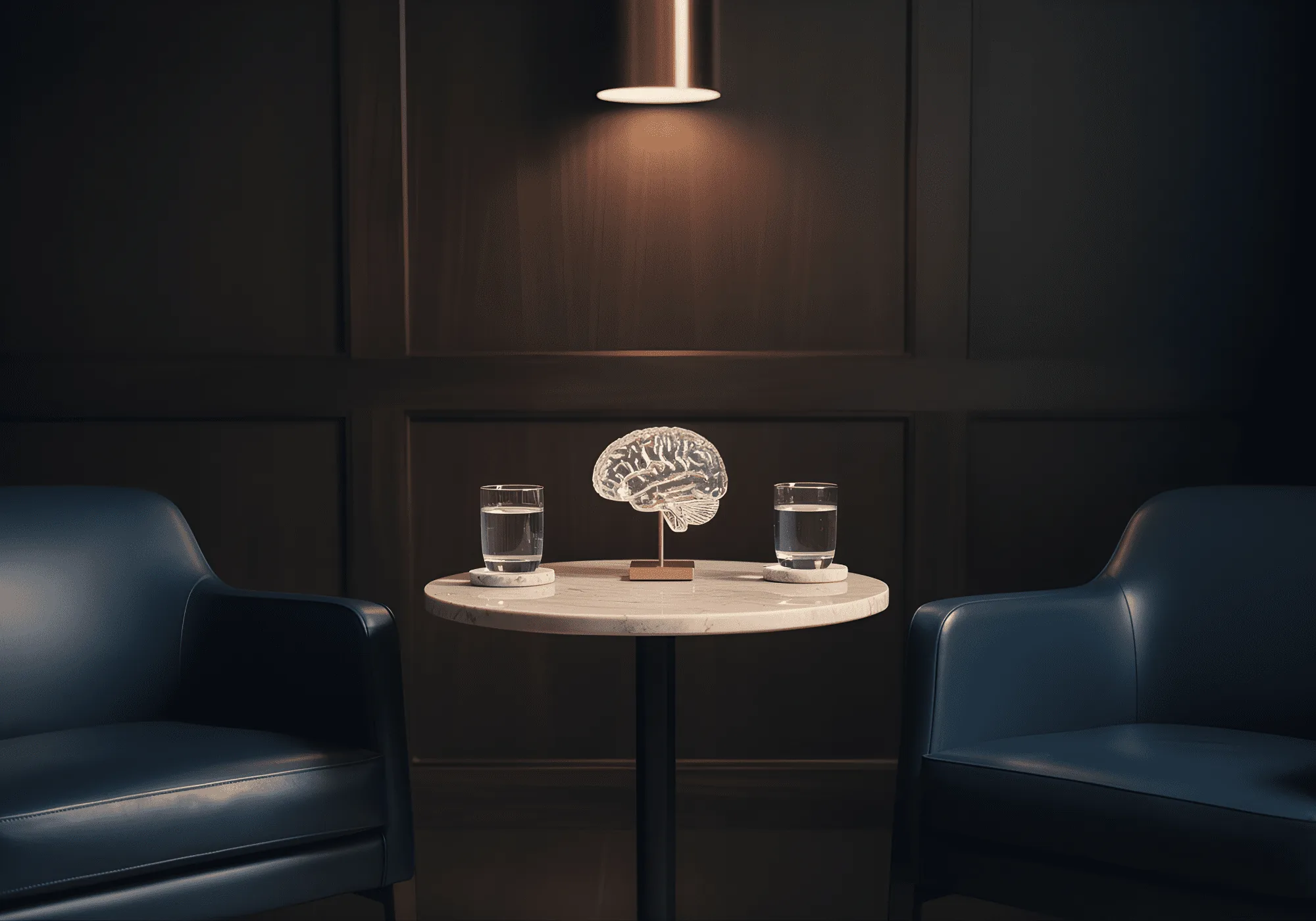
MindLAB Neuroscience consultation room

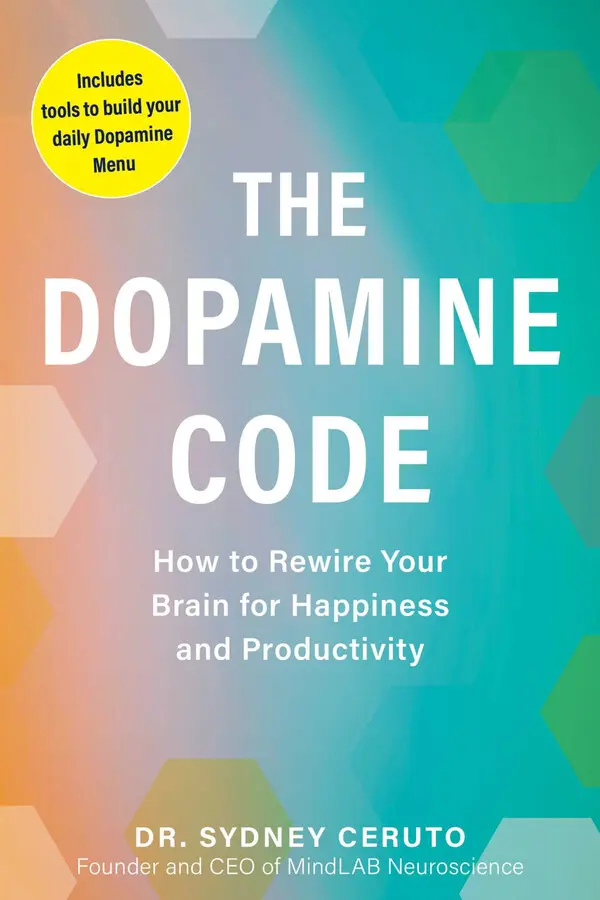
The Dopamine Code

Decode Your Drive

Why Your Brain Rewards the Wrong Things

Your brain's reward system runs every decision, every craving, every crash — and it was never designed for the life you're living. The Dopamine Code is Dr. Ceruto's framework for understanding the architecture behind what drives you, drains you, and keeps you locked in patterns that willpower alone will never fix.

Published by Simon & Schuster, The Dopamine Code is Dr. Ceruto's framework for building your own Dopamine Menu — a personalized system for motivation, focus, and enduring life satisfaction.

Order Now

Ships June 9, 2026

The Dopamine Code by Dr. Sydney Ceruto — Decode Your Drive
Locations

The Intelligence Brief

Neuroscience-backed analysis on how your brain drives what you feel, what you choose, and what you can’t seem to change — direct from Dr. Ceruto.