





Key Points
- The brain builds separate operating systems for professional and personal life, and they compete for the same neural resources.
- Compartmentalization is not a personality trait: it is a neural architecture the brain constructed under specific conditions.
- Integration means a single coherent system, not better balance between two competing ones.
- Real-Time Neuroplasticity™ targets the partition directly, rebuilding the circuitry at the structural level.
- The result is decision-making, emotional range, and ambition that function consistently across every domain.
| Marker | Traditional Approach | Neuroscience-Based Approach | Why It Matters |
|---|---|---|---|
Why Personal & Professional Integration Matters in Miami
Why Miami Forces the Integration Question Faster Than Other Cities
Miami is a city where the boundary between personal and professional life is structurally thin. The client dinner at Mandolin happens on the same terrace where you had brunch with your family that morning. The networking event at Soho Beach House occupies the same social space as a Saturday afternoon. The real estate developer in Brickell takes calls on the boat, responds to emails at the school pickup, and hosts investors at the same restaurant where anniversary dinners happen. In most cities, the physical separation between work and life creates at least the illusion of compartmentalization. Miami collapses that separation entirely.
This collapse reveals something that other cities allow people to avoid. When professional and personal life occupy the same physical and social terrain, the misalignment between them becomes impossible to ignore. The founder in Wynwood who built a company that demands eighty-hour weeks but also moved to Miami specifically for the lifestyle has created a neural contradiction. The brain is simultaneously pursuing two goals that require incompatible resource allocation. The executive who relocated from New York to Coconut Grove for family quality of life but brought the same professional operating system is running a program designed for a different environment.
Miami’s Latin American business culture amplifies this further. In Doral and Coral Gables, the professional relationship and the personal relationship are often the same relationship. The business partner is also a close friend. The investor knows your family. The client attends your daughter’s quinceañera. This cultural integration sounds healthy in theory. In practice, it means there is no domain where one system can rest while the other operates. Every interaction activates both networks simultaneously. For the brain, this is computationally expensive. It produces a specific kind of fatigue that has nothing to do with hours worked and everything to do with the constant demand for dual processing.
The wealth advisory and family office professionals in Miami Beach and Coral Gables face a particular version of this challenge. Their work requires sustained emotional regulation (managing other people’s anxiety about money, legacy, and family dynamics) while their personal lives carry their own emotional weight. The neural circuits that handle emotional regulation are not role-specific. The same circuitry that manages a client’s inheritance dispute manages the professional’s own family tensions. When those circuits are depleted by professional demands, the personal domain receives whatever capacity remains. This is not a time management problem. It is a neural resource allocation problem.
The tech and startup founders who have built Miami’s growing venture ecosystem face integration challenges that are distinct from their counterparts in San Francisco or Austin. The Miami startup scene is socially embedded in a way that Silicon Valley never was. The pitch meeting flows into the dinner, the dinner flows into the weekend, the weekend relationship determines the next funding round. The founder’s personal brand and the company’s brand are neurally fused. What this means in practice is that the founder cannot experience personal life as genuinely separate from professional identity. The brain treats them as a single system because in Miami, they are.
The seasonal rhythm of Miami creates its own integration pressure. When half the population operates on a winter season schedule, social obligations intensifying from November through April, the demand on professionals to be simultaneously present in their career and their social life peaks at exactly the time when the work calendar is already full. The brain’s capacity for sustained attention is finite. Dividing it across two systems that are both demanding peak performance produces the specific kind of burnout where nothing is technically wrong but nothing feels right either.
Dr. Sydney Ceruto works with professionals across Miami who have reached the limit of compartmentalization. The partition between personal and professional is no longer holding, or it is holding but at a cost that has become unsustainable. Real-Time Neuroplasticity™ targets the architecture itself, the neural circuitry that maintains two separate operating systems, and rebuilds it as a single integrated structure where career ambition and personal depth operate from the same foundation. A Strategy Call is a phone conversation: the starting point for mapping how your brain partitioned these systems and what integration actually looks like at the neural level.


Dr. Sydney Ceruto, PhD, Neuroscientist & Author, MindLAB Neuroscience
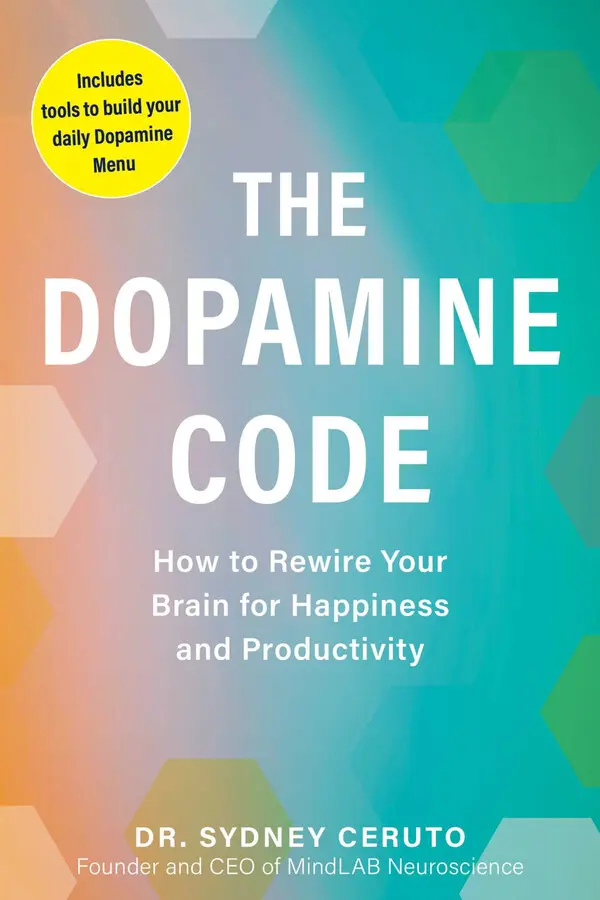
Dr. Ceruto holds a PhD in Behavioral & Cognitive Neuroscience from NYU and Master’s degrees in Clinical Psychology and Business Psychology from Yale University. She lectures at the Wharton Executive Development Program at the University of Pennsylvania and has been an Executive Contributor to the Forbes Coaching Council since 2019. Dr. Ceruto is the author of The Dopamine Code (Simon & Schuster, June 2026). She founded MindLAB Neuroscience in 2000 and has spent over 26 years leading it, pioneering Real-Time Neuroplasticity™, a methodology that durably rewires the neural pathways driving behavior, decisions, and emotional responses.
Frequently Asked Questions About Personal & Professional Integration in Miami
Also available in: Wall Street · Midtown Manhattan · Beverly Hills · Lisbon
Take the First Step
One hour with Dr. Sydney Ceruto. You leave knowing which neural pattern is actually driving this, and what to do about it.
Book a Strategy Call
The Dopamine Code
Decode Your Drive
Why Your Brain Rewards the Wrong Things
Your brain's reward system runs every decision, every craving, every crash, and it was never designed for the life you're living. The Dopamine Code is Dr. Ceruto's framework for understanding the architecture behind what drives you, drains you, and keeps you locked in patterns that willpower alone will never fix.
Published by Simon & Schuster, The Dopamine Code is Dr. Ceruto's framework for building your own Dopamine Menu, a personalized system for motivation, focus, and enduring life satisfaction.
Order Now!Available now