





Key Points
- Bergen County structures a life for both career and family, but the brain often runs them as competing systems.
- The partition between professional and personal operating systems is architectural, not a failure of effort or intention.
- Community and cultural expectations can reinforce the professional system's dominance beyond economic motivation.
- Real-Time Neuroplasticity™ builds a unified foundation so both domains access the full neural resource pool.
- Integration means the full version of you in every room, not a depleted version alternating between performance and presence.
| Marker | Traditional Approach | Neuroscience-Based Approach | Why It Matters |
|---|---|---|---|
Why Personal & Professional Integration Matters in Bergen County
How Bergen County Structures a Life That the Brain Cannot Fully Inhabit
Bergen County draws professionals who want both: the career and the life. Ridgewood, Tenafly, Alpine, Englewood, Glen Rock: each town is built around the premise that a family can have an excellent school district, a strong community, and proximity to the professional opportunities of New York and northern New Jersey. The external structure is designed for integration. The internal architecture of the people living here often is not.
The GWB and Lincoln Tunnel professionals (the corporate attorneys, the pharmaceutical executives, the financial services managers who cross into Manhattan or work from the Route 17 and Route 4 office parks) operate on a daily rhythm that structurally prevents neural transition. The morning begins with professional activation: the phone, the email, the mental preparation for the day’s demands. The commute extends that activation. The workday intensifies it. The return drive through the Palisades or across the bridge should mark a shift, but the brain does not transition based on geography. It transitions based on neural signals, and those signals were never built.
Bergen County’s Korean-American community, concentrated in Fort Lee, Palisades Park, and Englewood Cliffs, navigates a culturally specific version of the integration challenge. Professional achievement carries particular weight in Korean-American families: it is not just individual success but family honor, generational expectation, and community standing. The brain processes professional demands through a cultural framework that assigns them moral and relational significance beyond career advancement. This means the professional system is reinforced by cultural circuits in addition to economic ones, making it even more dominant in the neural resource allocation. The personal self (the individual’s own desires, emotional needs, creative impulses) is layered underneath both professional and cultural expectations.
The medical and pharmaceutical professionals who populate Bergen County’s communities face a version of integration failure shaped by the specific demands of their industries. The surgeon in Ridgewood who spends the day making life-and-death decisions and then is expected to shift to parental engagement at the dinner table. The pharmaceutical executive in Tenafly whose work involves sustained regulatory and strategic processing at a cognitive level that leaves the emotional circuits depleted by evening. These are not jobs that the brain can simply leave at the office. The neural systems that the work activates do not shut down on a schedule.
The dual-career couples in Bergen County face the integration challenge in stereo. Both partners are running partitioned systems. Both arrive home with depleted resources. The household becomes a management problem (logistics, scheduling, task division) handled by two professional operating systems that are efficient at management but incapable of the emotional depth that a family and a partnership require. The children in this household grow up in a well-managed environment that is relationally thin. The parents know this. The architecture prevents them from changing it through effort alone.
Bergen County’s community infrastructure (the sports leagues, the religious institutions, the volunteer organizations, the school PTAs) creates a layer of engagement that resembles personal life but often activates the professional system. The executive who chairs the temple fundraiser is not operating in personal mode. The pharmaceutical manager who coaches the travel soccer team is not engaging in leisure. Each of these roles demands organizational capacity, social management, and performance metrics that the brain processes through its professional circuits. The personal domain remains unfunded while the professional system colonizes every available role.
Dr. Sydney Ceruto works with professionals and families across Bergen County who recognize the pattern: the life is structured for integration, but the brain that manages it all runs on a partitioned system where one domain always wins and the other always absorbs the cost. Real-Time Neuroplasticity™ targets the architecture that maintains this partition, building a unified foundation where professional intensity and personal depth operate from the same neural resource base. A Strategy Call is a phone conversation: the starting point for mapping how your brain divided these systems and what genuine integration looks like.


Dr. Sydney Ceruto, PhD, Neuroscientist & Author, MindLAB Neuroscience
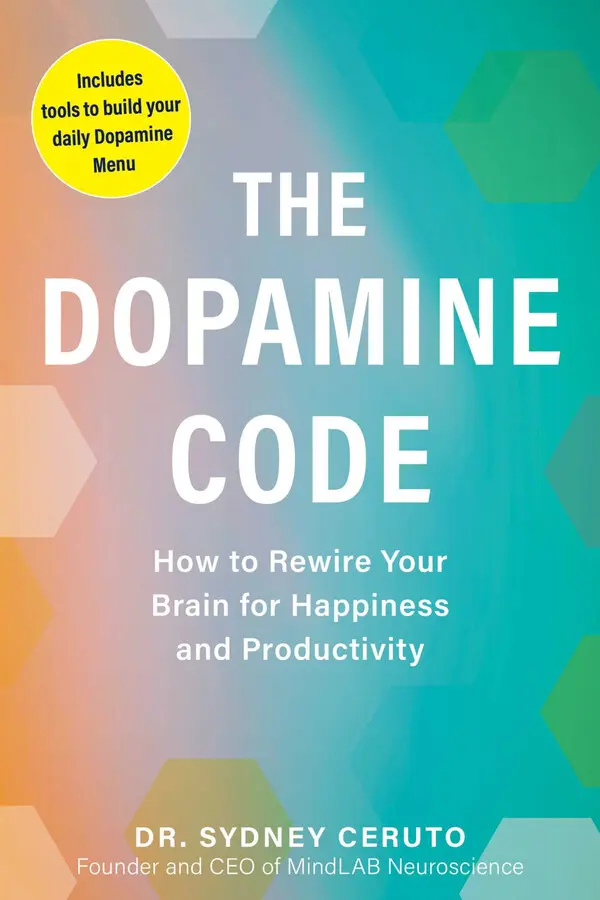
Dr. Ceruto holds a PhD in Behavioral & Cognitive Neuroscience from NYU and Master’s degrees in Clinical Psychology and Business Psychology from Yale University. She lectures at the Wharton Executive Development Program at the University of Pennsylvania and has been an Executive Contributor to the Forbes Coaching Council since 2019. Dr. Ceruto is the author of The Dopamine Code (Simon & Schuster, June 2026). She founded MindLAB Neuroscience in 2000 and has spent over 26 years leading it, pioneering Real-Time Neuroplasticity™, a methodology that durably rewires the neural pathways driving behavior, decisions, and emotional responses.
Frequently Asked Questions About Personal & Professional Integration in Bergen County
Also available in: Miami · Wall Street · Midtown Manhattan · Beverly Hills · Lisbon
Take the First Step
One hour with Dr. Sydney Ceruto. You leave knowing which neural pattern is actually driving this, and what to do about it.
Book a Strategy Call
The Dopamine Code
Decode Your Drive
Why Your Brain Rewards the Wrong Things
Your brain's reward system runs every decision, every craving, every crash, and it was never designed for the life you're living. The Dopamine Code is Dr. Ceruto's framework for understanding the architecture behind what drives you, drains you, and keeps you locked in patterns that willpower alone will never fix.
Published by Simon & Schuster, The Dopamine Code is Dr. Ceruto's framework for building your own Dopamine Menu, a personalized system for motivation, focus, and enduring life satisfaction.
Order Now!Available now