Key Points
- Professional identity is a neural construct reinforced by decades of career signals
- Wall Street's extreme environment embeds identity patterns deeper than most professions
- Real-Time Neuroplasticity™ rewires the circuits that define professional self-concept
- Career transitions require identity-level change, not just strategic planning
- The Strategy Call maps your specific neural architecture with Dr. Ceruto
How Wall Street Shapes and Traps Professional Identity
Wall Street is one of the few environments on earth where professional identity forms under genuinely extreme selection pressure. From the first year at Goldman Sachs or JPMorgan to the managing director track, every signal the brain receives reinforces a narrow definition of professional worth tied to deal flow, compensation, and hierarchical position. The identity that carries you through that gauntlet becomes load-bearing, and extraordinarily difficult to modify.
The Financial District creates a specific neural pattern. The brain’s reward system, the dopamine circuitry that encodes what matters, learns to treat title, compensation, and institutional affiliation as primary identity markers. When professionals consider a transition, whether to a smaller firm, a venture, or an entirely different industry, the brain interprets the move as a loss even when the rational analysis says otherwise.
This pattern intensifies in Lower Manhattan’s current landscape. The post-pandemic reshuffling sent entire teams from legacy banks to fintech startups, hedge fund launches, and crypto ventures along Broad Street and Water Street. Professionals who spent fifteen years building an identity inside a bulge bracket institution suddenly need an identity that works outside of it. The credentials transfer. The neural programming often does not.
Midcareer professionals in the FiDi face a particular version of this trap. By forty, most Wall Street careers have produced an identity so reinforced that even contemplating change triggers disproportionate anxiety. The prefrontal cortex, your brain’s executive planning center, can model the new path clearly, but the threat-detection system overrides it with signals calibrated to an environment that may no longer be relevant.
The culture around Fulton Street and the Seaport District reflects the shift. Co-working spaces, family offices, and independent advisory firms now sit alongside the towers that defined Wall Street for decades. Professionals moving between these worlds need more than a new business card. They need a neural identity that matches the scope of what they are building.
The Brookfield Place and Battery Park City area draws a new generation of finance professionals working in alternative asset management, digital assets, and fintech. These professionals often arrived from engineering, technology, or academic backgrounds and built professional identities outside traditional Wall Street culture. The brain now needs to integrate those identities with the expectations of a financial district that still measures worth through a lens they did not grow up with.
Senior professionals along Wall Street increasingly face the question of legacy: what identity to carry beyond the active years. Board seats, philanthropy, and mentoring all require a professional identity the brain has not yet constructed. The neural model predicts relevance through deal flow and compensation, and when those signals recede, the prediction collapses. Dr. Ceruto builds a neural foundation for the identity that comes next.

Dr. Ceruto works extensively with Wall Street professionals navigating identity transitions at every level. Real-Time Neuroplasticity™ does not coach you through the change. It rewires the neural architecture so the change stops feeling like a threat and starts registering as what it actually is: an expansion.

Dr. Sydney Ceruto, PhD, Neuroscientist & Author, MindLAB Neuroscience
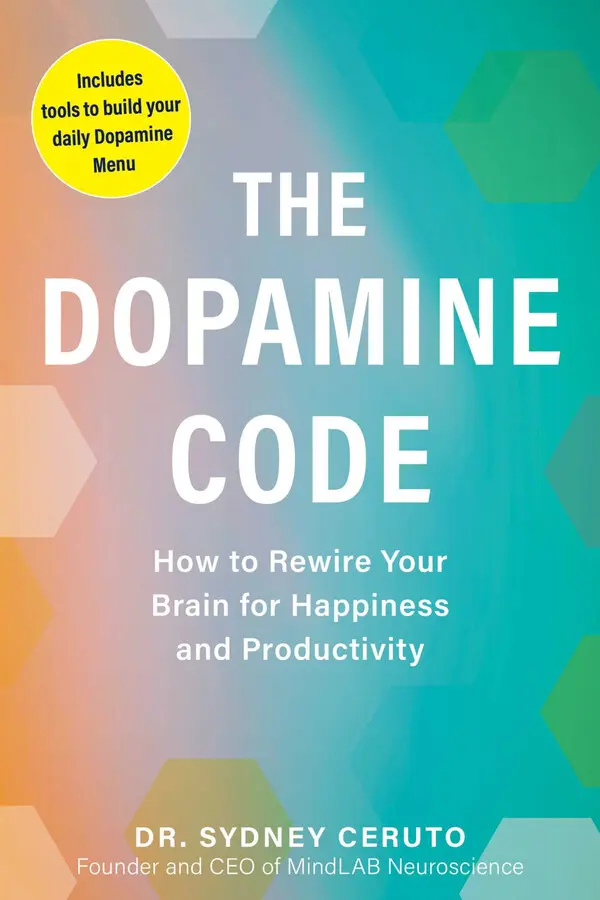
Dr. Ceruto holds a PhD in Behavioral & Cognitive Neuroscience from NYU and Master’s degrees in Clinical Psychology and Business Psychology from Yale University. She lectures at the Wharton Executive Development Program at the University of Pennsylvania and has been an Executive Contributor to the Forbes Coaching Council since 2019. Dr. Ceruto is the author of The Dopamine Code (Simon & Schuster, June 2026). She founded MindLAB Neuroscience in 2000 and has spent over 26 years leading it, pioneering Real-Time Neuroplasticity™, a methodology that durably rewires the neural pathways driving behavior, decisions, and emotional responses.
Also available in: Miami · Midtown Manhattan · Beverly Hills · Lisbon
Take the First Step
One hour with Dr. Sydney Ceruto. You leave knowing which neural pattern is actually driving this, and what to do about it.
Book a Strategy Call
The Dopamine Code
Decode Your Drive
Why Your Brain Rewards the Wrong Things
Your brain's reward system runs every decision, every craving, every crash, and it was never designed for the life you're living. The Dopamine Code is Dr. Ceruto's framework for understanding the architecture behind what drives you, drains you, and keeps you locked in patterns that willpower alone will never fix.
Published by Simon & Schuster, The Dopamine Code is Dr. Ceruto's framework for building your own Dopamine Menu, a personalized system for motivation, focus, and enduring life satisfaction.
Order Now!Available now