Key Takeaways
- Social rejection activates the anterior cingulate cortex and dorsal posterior insula, the physical pain matrix
- Ambiguity is ghosting’s mechanism: without closure the amygdala stays hyperactivated, releasing cortisol and driving rumination
- Sudden loss of a consistent social reward source triggers dopamine withdrawal resembling mild substance dependency
- Ghosters typically show reduced empathy activation online, driven by ventromedial prefrontal cortex avoidance circuitry
- Neural recovery follows a predictable timeline, but only once ambiguity resolves, externally or through reframing
Ghosting, the abrupt cessation of all communication without explanation, produces a neurological response that is measurably more damaging than direct rejection. When someone is told “this isn’t working,” the brain registers social pain but immediately begins processing and adapting. When someone simply vanishes, the brain enters a sustained state of threat detection with no resolution target. The neuroscience of ghosting reveals why this particular form of social withdrawal inflicts disproportionate psychological harm: the brain is architecturally wired to treat unresolved social signals as ongoing danger.
Why Does Ghosting Activate the Brain’s Physical Pain System?
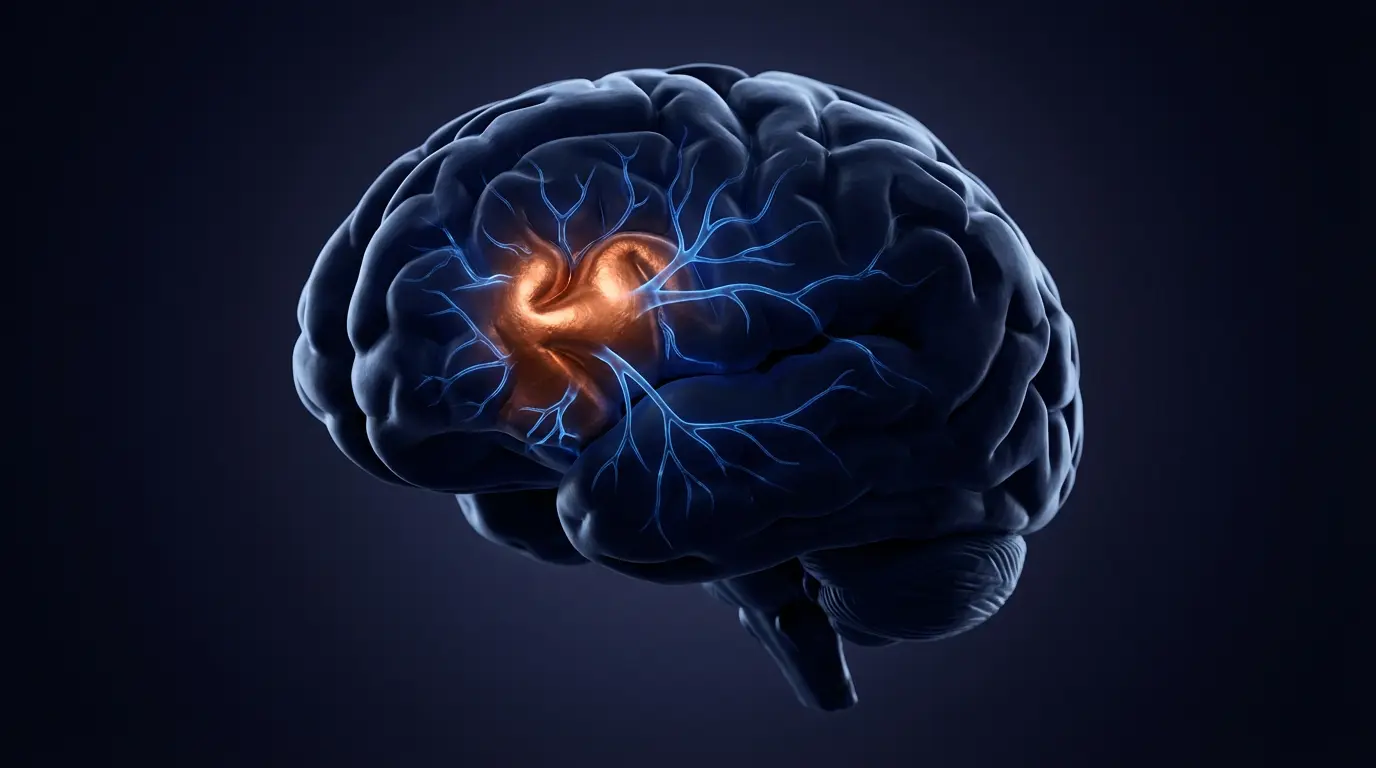
The neural overlap between social rejection and physical pain is not metaphorical. It is structural. Functional MRI studies demonstrate that social exclusion activates the anterior cingulate cortex (ACC) and the dorsal posterior insula, the same regions that process the affective dimension of physical injury. A landmark study published in Science by Eisenberger, Lieberman, and Williams used the Cyberball paradigm to show that participants who were excluded from a virtual ball-tossing game exhibited ACC activation patterns indistinguishable from those produced by moderate physical pain.
What makes ghosting neurologically distinct from other forms of rejection is the absence of a definitive signal. In explicit rejection, the ACC fires intensely but briefly. The brain receives confirmation that the social bond has ended and begins reassigning resources. In ghosting, the ACC activation persists because the brain never receives that terminal signal. The pain network remains engaged in a holding pattern, scanning for resolution that does not arrive.
This is why the silence feels like it is physically crushing you. The tightness in your chest, the nausea that arrives without warning, the headache that sets in every evening. These are not signs that something is wrong with you. They are signs that your brain is treating an unanswered text message with the same neurological urgency it reserves for a broken rib.
In my practice, I consistently observe that clients who have been ghosted report these somatic symptoms at rates far exceeding those who received direct rejection. This is not psychosomatic noise. It is the predictable output of a pain matrix that cannot distinguish between a broken bone and a broken social contract.
Rejection lets the brain start adapting the moment it lands. Silence denies it that mercy: the alarm keeps firing without an ending, and the mind loops for a resolution that never arrives.
What Happens in the Brain When There Is No Closure?
Ambiguity is the mechanism that transforms ghosting from acute social pain into chronic neurological disturbance. The amygdala, the brain’s primary threat-detection structure, evaluates incoming social signals for safety or danger. When a relationship partner stops responding, the amygdala does not interpret silence as an answer. It interprets silence as incomplete data, which triggers a sustained threat response.

This sustained activation produces two measurable downstream effects. First, the hypothalamic-pituitary-adrenal (HPA) axis maintains elevated cortisol output, keeping the body in a low-grade stress state that disrupts sleep architecture and immune function, while prefrontal executive control is degraded mainly by excessive catecholamine signaling that cortisol amplifies. Second, the default mode network, the brain system responsible for self-referential thinking, becomes hyperactive, generating rumination loops. The person replays conversations, searches for explanatory signals they may have missed, and constructs and discards hypotheses in a cycle that can persist for weeks.
What the research doesn’t capture is how rapidly this rumination degrades decision-making in other domains. I have worked with executives, physicians, and attorneys who were making sound professional decisions in every area of their lives while simultaneously losing hours each day to obsessive review of a relationship that ended without explanation. The prefrontal cortex cannot selectively contain rumination. Once the default mode network enters this pattern, it bleeds attentional resources from every other cognitive demand.
This is the part that makes you feel like you are losing your mind. You are not. You are running a brain that was handed an unsolvable equation and told to keep solving it. The replaying, the analyzing, the 2 a.m. inventory of everything you said and did. That is not weakness. That is a default mode network doing exactly what it was designed to do with incomplete threat data.
The neurological resolution pathway requires one of two inputs: external closure (a direct communication that ends the ambiguity) or internally generated closure through deliberate cognitive reframing. Without either, the amygdala has no mechanism to downregulate.
Is Ghosting a Form of Dopamine Withdrawal?
The dopaminergic system does not distinguish between chemical rewards and social rewards at the circuit level. Consistent social connection, particularly with a romantic partner or close attachment figure, produces reliable dopamine release in the ventral tegmental area and nucleus accumbens. The brain encodes this person as a predictable reward source and builds anticipatory firing patterns around expected contact.
When that contact vanishes without warning, the dopaminergic system experiences a prediction error of maximum magnitude. The brain expected reward; it received nothing. This is structurally identical to the early phase of substance withdrawal, not in severity, but in mechanism. The nucleus accumbens registers a deficit, motivation circuits recalibrate downward, and the individual experiences anhedonia, restlessness, and compulsive checking behavior (refreshing messages, monitoring social media activity, seeking any signal from the missing person).
The standard protocol recommends cognitive behavioral reframing as the primary intervention for this withdrawal pattern, but in 26 years I’ve found that the most effective first step is naming the mechanism explicitly. When a client understands that their compulsive phone-checking is a dopamine-seeking behavior (not weakness, not obsession, but a predictable neurochemical response to reward removal), the shame layer dissolves and the actual rewiring work can begin.
This is why you check your phone forty times a day even though you know nothing is coming. It is not desperation. It is a nucleus accumbens that still has an open purchase order for a reward that was discontinued without notice.
The withdrawal phase is self-limiting in most cases, typically resolving within four to eight weeks as the dopaminergic system recalibrates its reward predictions. However, ongoing ambiguity (the hallmark of ghosting versus clean separation) can extend this timeline significantly, because the brain retains the ghosting partner as a “possible future reward source” and resists the full extinction of anticipatory firing.
This architecture (the rumination loop, the phantom reward, the cortisol that will not release) is exactly what I map in a strategy call. Not in theory. In your specific brain, with your specific pattern, down to which circuits are stalling recovery and which intervention points will move the needle fastest.
How Does the Brain Recover From Being Ghosted?
Neural recovery from ghosting follows a three-phase architecture. The first phase, acute threat response, involves amygdala hyperactivation, cortisol elevation, and dopamine deficit. This phase typically lasts one to three weeks and is characterized by compulsive checking behavior, sleep disruption, and difficulty concentrating.
The second phase, active rumination, is the period of greatest cognitive cost. The default mode network generates persistent self-referential loops while the prefrontal cortex attempts to construct a coherent narrative from incomplete information. This phase can last two to eight weeks and is the window where targeted intervention produces the most significant results.
The third phase, reward recalibration, occurs as the dopaminergic system completes its prediction update and stops encoding the absent person as an expected reward source. Anhedonia lifts, compulsive checking diminishes, and attentional resources return to baseline allocation.
One pattern I have documented across hundreds of ghosting cases that does not appear in the published literature: the recovery timeline is not linear. It typically includes a “false resolution” window around week three or four, where the client reports feeling significantly better, only to experience a sharp relapse triggered by an incidental cue (a song, a restaurant, a mutual friend’s social media post). This is not a setback. It is the dopaminergic system testing its new prediction model against stored associative memory. The relapse is shorter and less intense each time, but clients who do not expect it often misinterpret it as evidence that they are not healing, which restarts the rumination cycle unnecessarily.
The critical variable across all three phases is ambiguity resolution. Individuals who achieve cognitive closure, whether through external communication or through structured reframing that accepts the absence of explanation as the explanation itself, progress through these phases on a predictable timeline. Those who maintain hope of reconnection or continue seeking answers can remain in phase two indefinitely, with measurable consequences for cortisol regulation, sleep quality, and executive function.
Why Do People Ghost? The Neuroscience of Avoidance
If you are still asking why (why they disappeared, what you did, what you missed), understanding the neuroscience of the ghoster’s decision does not undo what happened in your brain. But it removes the question that keeps you trapped in the loop.
Ghosting behavior is an avoidance response mediated by the ventromedial prefrontal cortex (vmPFC). The vmPFC integrates emotional valuation with decision-making, and in individuals with high conflict avoidance, it assigns disproportionately high threat value to confrontation. The anticipated discomfort of delivering a direct rejection, even a compassionate one, registers as a threat to be evaded rather than a social obligation to be fulfilled.
Digital communication compounds this by reducing empathy activation. In face-to-face interaction, mirror neuron networks and the temporoparietal junction (TPJ) generate real-time models of the other person’s emotional state. Text-based communication provides none of these inputs. The ghoster is not confronted with the other person’s pain, which means the empathy circuits that would normally inhibit avoidance behavior remain largely offline.
The avoidance circuit offers immediate relief from anticipated discomfort at the cost of inflicting sustained neurological damage on the other person. The ghoster’s brain performs a cost-benefit analysis weighted entirely toward short-term self-regulation, because the other person’s suffering is neurologically invisible to them in a text-only environment. None of that changes what your nervous system is going through, but it does answer the question, and answering the question is the first step in shutting down the rumination loop that feeds on it.
This article is part of MindLAB’s The Neurobiology of Separation hub, within the Relationship Intelligence pillar.
References
- Kross, E., Berman, M. G., Mischel, W., Smith, E. E., & Wager, T. D. (2011). Social rejection shares somatosensory representations with physical pain. Proceedings of the National Academy of Sciences, 108(15), 6270–6275. https://doi.org/10.1073/pnas.1102693108
- Dickerson, S. S., & Kemeny, M. E. (2004). Acute stressors and cortisol responses: A theoretical integration and synthesis of laboratory research. Psychological Bulletin, 130(3), 355–391. https://pubmed.ncbi.nlm.nih.gov/15122924/
- Volkow, N. D., Wang, G. J., Fowler, J. S., Tomasi, D., Telang, F., & Baler, R. (2010). Addiction: Decreased reward sensitivity and increased expectation sensitivity conspire to overwhelm the brain’s control circuit. BioEssays, 32(9), 748–755. https://pubmed.ncbi.nlm.nih.gov/20730946/
- Fisher, H. E., Brown, L. L., Aron, A., Strong, G., & Mashek, D. (2010). Reward, addiction, and emotion regulation systems associated with rejection in love. Journal of Neurophysiology, 104(1), 51–60. https://pubmed.ncbi.nlm.nih.gov/20445032/
How long does the brain take to recover from being ghosted?
Neural recovery from ghosting follows a three-phase timeline spanning approximately six to twelve weeks in total. The acute threat response (amygdala hyperactivation and cortisol elevation) typically resolves within one to three weeks. Active rumination and dopamine recalibration require an additional three to eight weeks, depending on whether the individual achieves cognitive closure or remains in an ambiguity-maintenance pattern that delays reward-system recalibration.
Why does ghosting hurt more than a direct breakup?
Ghosting produces greater neurological disturbance than explicit rejection because the anterior cingulate cortex, the brain’s social pain processor, requires a definitive signal to begin its recovery sequence. Direct rejection provides that signal immediately, allowing the pain response to peak and resolve. Ghosting withholds the signal entirely, leaving the ACC in sustained activation while the amygdala maintains a chronic threat-scanning state that elevates cortisol and, through excessive catecholamine signaling, depletes prefrontal cognitive resources.
Can ghosting cause long-term psychological damage?
Prolonged ghosting-related stress can produce measurable changes in stress-response architecture if the ambiguity remains unresolved for months. Chronic cortisol elevation from sustained HPA axis activation impairs hippocampal function (affecting memory consolidation) and disrupts sleep architecture, while prefrontal executive control is reduced mainly by excessive catecholamine signaling that cortisol amplifies. These effects are reversible with targeted neuroplasticity-based intervention, but they do not self-correct: the brain requires either external closure or structured cognitive reframing to exit the threat-detection loop.
Is checking your phone obsessively after being ghosted a sign of addiction?
Compulsive phone-checking after ghosting is a dopaminergic reward-seeking behavior, not a personality failing. The nucleus accumbens encoded the absent person as a reliable reward source and built anticipatory firing patterns around expected contact. When that contact stops, the brain generates compulsive checking as a reward-search strategy, structurally identical to the early phase of behavioral withdrawal. This pattern is self-limiting once the dopamine system completes its prediction recalibration, typically within four to eight weeks.
What the First Conversation Looks Like
A strategy call with Dr. Sydney Ceruto is a private, one-hour conversation, not a consultation in the traditional sense and not a sales call. It is a real-time neurological assessment.
Dr. Ceruto begins by mapping the specific neural patterns driving your current experience: the rumination loops, the compulsive checking, the somatic symptoms that followed the loss of contact. She identifies which circuits are maintaining the distress response and where the recovery architecture has stalled.
From there, the conversation shifts to mechanism. You will understand exactly why your brain is responding the way it is, which pathways are keeping you locked in the ambiguity cycle, and what the precise intervention points are for rewiring those patterns. This is not reassurance. It is not advice. It is an architectural assessment of your neural landscape with a clear map of what needs to change and how.
Most clients describe it as the first time the experience made neurological sense, and the first time they saw a concrete path out of it.