Key Takeaways
- The same tools you use to achieve personal restoration can be used to upgrade yourself.
- Here’s why the learning trajectory of self-improvement matters in whatever stage of life you’re in.
- People usually come to self-improvement wanting to “fix” something they perceive as broken.
- People often seek help only after life gets bad enough; for me, a complete breakdown.
- My sadness and frustration hit “critical mass”: rebuild confidence, relationships, and well-being, or stay miserable.
The same tools you use to achieve personal restoration can be used to upgrade yourself. Here’s why the learning trajectory of self-improvement matters in whatever stage of life you’re in.
When people first become interested in self-improvement, it’s usually because they want to “fix” something that they perceive as broken.
Often life needs to get bad enough before people seek help; such as for me, where it took a complete breakdown before I realized I needed to make a change and rebuild myself.
If you’re surviving, why change? Better to choose the devil you know than the devil you don’t.
My sadness and frustration eventually hit a point of “critical mass” where I had no other choice but to start working on my confidence, relationships, and well-being, or I was doomed to a life sentence of misery.
My sadness and frustration eventually hit a point of “critical mass” where I had no other choice but to start working on my confidence, relationships.
Unfortunately, most people need to hit their own version of “rock bottom” before they are motivated to make a change. The pain and suffering is what sparks the transformation.
Most people wait for pain to reach critical mass before they change. The same tools that rebuild you from rock bottom are the ones that keep raising the ceiling afterward.
How the Self-Improvement Trajectory Actually Works
Without sufficient pain, most people can continue to follow the status quo and persist with their present patterns, even if they know in the long-term those patterns are unhealthy or destructive. If you’re surviving, why change? Better to choose the devil you know than the devil you don’t.
Or is it?
It’s rare for people to pursue self-growth simply because they want to improve or be better; for most people, the primary drive to change oneself is to overcome past pain.
The recovery journey is the beginning of the growth process, but it can also be the start to upgrading oneself and transforming oneself at a much more profound level, a trajectory mapped by building peak performance systems. I call this Recovery to Upgrading
At first, this journey of recovery can feel like a long process of trying to feel “fixed” or “normal.”
It begins with an unhealthy, destructive, or traumatic past, and the deep desire to “move on” or “let go.” It manifests itself as the thought, “If only X didn’t happen to me, I’d be normal or fixed!”
“X” could be anything: growing up in poverty, experiencing the loss or death of a loved one, living in a broken environment, a terminal illness, physical abuse, or mental abuse.
The path to well-being begins with acceptance of the past, what has happened has happened, and now it is up to you to do what you can with it.
Once you accept your past and realize you need help, you begin to learn different tools and strategies for better managing your mental health.
You begin to build a mental toolbox of ways to manage your thoughts and emotions, such as writing in your journal, pursuing creative hobbies, reframing your past, setting goals for the future, building new positive relationships, or focusing on what is in your power.
As you explore, you begin to learn more about yourself and how your mind works. Slowly things get a bit better, and a bit better, and a bit better; but it takes time, patience, and gradual progress.
Each day you remind yourself the power of taking things “one day at a time” and recognizing those super tiny wins.
Conscious awareness emerges from the global workspace, a distributed network of prefrontal and parietal regions that broadcasts information across the brain when activation exceeds a critical threshold.
Then one day you reach a point, a new plateau, and you look back and you’re stronger than you ever thought possible. How did this happen? What should I do with all this new strength?
There’s a concept in psychology known as “post-traumatic growth” which suggests that some people who have gone through traumatic experiences can sometimes take those experiences and grow from them in transformational ways.
The neuroscience behind post-traumatic growth reveals that severe adversity can trigger a comprehensive reorganization of neural architecture. When existing cognitive frameworks prove inadequate to process a traumatic experience, the brain is forced to construct new, more sophisticated models of reality. This process, while profoundly painful, produces neural networks that are more flexible, more nuanced, and more capable of handling complexity than the structures they replaced. The resulting cognitive architecture is not merely restored to its pre-adversity state; it is fundamentally upgraded, possessing capacities that would not have developed in the absence of the challenge that forced their creation.
The more difficult one’s past is, the more one has to learn how to adapt, evolve, and survive. When those difficulties have been overcome, the person is now better equipped to deal with future obstacles and adversity.
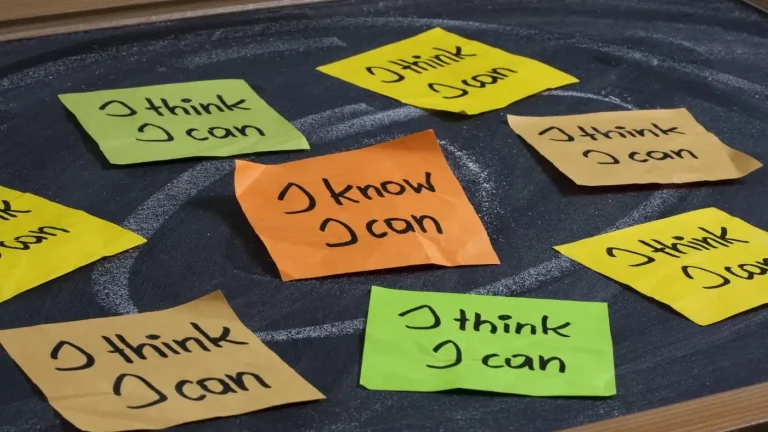
No matter how bad things get, one powerful idea to always keep in mind is, “If I can overcome this, I can overcome anything.” That’s the foundation of resilience.
Resilience, viewed through the lens of neuroscience, is not a fixed personality trait but a trainable capacity rooted in the strength of connections between the prefrontal cortex and the amygdala. Individuals who have navigated significant adversity and emerged stronger have, through that process, reinforced the neural pathways responsible for emotional regulation under stress. Each successfully managed crisis further strengthens these circuits, creating a compounding effect where the capacity to withstand future challenges grows with each challenge overcome. This is the neurological basis for the observation that individuals who have weathered genuine hardship often display a calm under pressure that those with less adversity in their backgrounds struggle to develop.
Negative experiences can motivate you to tap into inner resources and inner strength that you didn’t realize you had before. This is expressed in the famous Nietzsche quote, “That which doesn’t kill me, makes me stronger.”
Going through a traumatic experience can also put things into perspective and force us to recognize what really matters in life, even giving us a new sense of meaning and purpose.
A person who has survived physical abuse or psychological abuse can use those experiences to help those whom are in a similar situation. A person who grew up in poverty can dedicate their free time to helping at soup kitchens or homeless shelters. A person who has gone through cancer can help others who are just learning about their condition.
Any past suffering can become a source of purpose to help others who are going through similar experiences.
The neural basis for this transformation from suffering to service involves the brain’s prosocial circuitry. Empathy-related regions, the anterior insula, anterior cingulate cortex, and mirror neuron networks, become particularly sensitized in individuals who have experienced significant personal hardship. This heightened neural sensitivity to the suffering of others is not merely emotional; it generates a motivational drive that the brain’s reward systems reinforce. Helping others who face similar challenges activates the same dopaminergic reward pathways that respond to personal achievement, creating a self-sustaining cycle where purpose-driven action produces both external impact and internal neurological reward.
While some people choose to direct their past suffering toward helping those who are going through something similar, others may take that suffering and direct it toward creative activities like art, writing, or painting.
Dweck’s research has shown that neural pathways associated with learning and performance strengthen measurably when individuals adopt a growth-oriented framework, with effects visible in both behavior and brain imaging.
Creative expression as a response to adversity engages a distinct but complementary set of neural processes. The act of transforming painful experience into art, writing, or other creative output requires the brain to reorganize raw emotional material into structured, communicable form, a process that inherently creates cognitive distance from the original experience while simultaneously integrating it into a broader narrative framework. This dual function of creative expression, simultaneous processing and meaning-making, explains why creative work is so frequently cited as transformative by individuals moving through the recovery-to-upgrading trajectory.
And others may direct it toward living their life to the fullest by setting ambitious goals, starting their own business or nonprofit, or simply making the most with what life has given them.
With the right mindset, the “recovery journey” gets elevated into something bigger and more meaningful.
The recovery journey doesn’t end, it just transforms into an upgrading process. It becomes less focused on trying to “fix” or “undo” the past, and more focused on maximizing the happiness and potential of both yourself and others.
The best part is: the same tools and lessons you used to achieve your own personal restoration can now be used to continue growing and evolving, as well as helping others do the same.
Of course, this is not a guarantee. Often suffering can become a vicious cycle where those who have been hurt end up continuing to act in destructive and harmful ways.
As the cautious saying goes, “Hurt people hurt people.” The path to overcoming past hurts begins with breaking this cycle and turning that pain into a force for good, or even a force for excellency.
It’s completely possible through neuropsychology and neuroplasticity. You just have to want it bad enough and be willing to do it.
The Neuroscience of the Recovery-to-Upgrading Transition
The transition from recovery to upgrading is visible at the neurological level. During the recovery phase, brain activity is dominated by the anterior cingulate cortex and amygdala, regions associated with conflict monitoring, threat assessment, and emotional regulation under duress. As recovery stabilizes and the individual’s baseline shifts from surviving to functioning, a measurable reallocation of neural resources occurs. The prefrontal cortex, specifically the dorsolateral and ventrolateral regions associated with planning, abstract reasoning, and goal pursuit, begins to assume a larger role in directing daily cognition. This is the neurological signature of the shift from deficit-repair to capacity-building: the brain’s executive systems, no longer consumed by managing acute distress, become available for the strategic, forward-looking work of optimization and peak performance.
Self-improvement follows a measurable neurological trajectory, beginning with conscious prefrontal engagement during deliberate practice and progressing toward automated subcortical processing as skills become embedded in procedural memory networks. This progression from effortful to automatic represents genuine architectural change in the brain.
The same neural tools that rebuild function after a setback can be aimed at the next level of performance. That is deliberate, trainable work, and it moves far faster with a plan matched to how your brain actually changes.
Why do most people only pursue self-improvement after hitting rock bottom?
The brain is neurologically wired toward efficiency, maintaining familiar patterns consumes less energy than building new ones. Without sufficient pain as a signal that the cost of staying the same now exceeds the cost of change, the nervous system defaults to its existing architecture. Pain serves as a neurological motivator, lowering the threshold for the metabolically costly work of genuine transformation. Understanding this mechanism normalizes the common experience of waiting too long, but also suggests that transformation can be initiated before crisis through deliberate choice.
What is the trajectory of self-improvement and why does it matter?
The trajectory of self-improvement moves from addressing specific deficits, fixing what feels broken, toward the optimization of potential: upgrading cognitive performance, expanding capacity, and building the life architecture that supports flourishing rather than merely functioning. Understanding that these two phases use the same neurological tools, neuroplasticity, habit formation, belief restructuring, helps individuals recognize that work done to address past wounds also builds the foundation for future peak performance. The trajectory continues upward rather than leveling off once problems are resolved.
What keeps people stuck in patterns they know are unhealthy?
Neurological inertia is the primary force maintaining unhealthy patterns: the brain’s existing neural architecture generates familiar cognitive and behavioral defaults with low energy cost, while new patterns require effortful, sustained investment to build sufficient strength to compete. Cognitive factors compound this: cognitive dissonance is managed by rationalizing existing behaviors as acceptable, and the feared change is often unconsciously associated with losses, of identity, of relational familiarity, of a known self, that feel threatening even when the pattern is objectively destructive.
What tools used for personal restoration also apply to self-optimization?
The core tools of personal restoration, cognitive restructuring, belief revision, behavioral habit formation, neuroplasticity-based skill building, and improved emotional regulation, are identical to those used for optimization. The difference is application direction: restoration applies them to eliminate deficits, while optimization applies them to build strengths and expand capacity. This is why individuals who invest deeply in personal restoration often find themselves naturally transitioning into high-performance development once their foundational stability is established.
How does working with a neuroscience practitioner accelerate the self-improvement trajectory?
A neuroscience-based practitioner accelerates the trajectory by providing precise identification of the specific neural patterns, belief systems, and behavioral loops driving current limitations, removing the guesswork from self-directed effort. Strategic intervention at the root neurological level produces change that is faster and more durable than self-help alone. Additionally, the relational context of working with a skilled practitioner activates neurological learning processes that are simply not available in solitary effort.
References
- Dehaene, S. and Changeux, J. P. (2011). Experimental and theoretical approaches to conscious processing. Neuron, 70(2), 200-227. https://doi.org/10.1016/j.neuron.2011.03.018
- Dweck, C. and Yeager, D. (2019). Mindsets: a view from two eras. Perspectives on Psychological Science, 14(3), 481-496. https://doi.org/10.1177/1745691618804166
- Dweck, C. S. (2016). Mindset: The New Psychology of Success. Ballantine Books.
From Reading to Rewiring
Recovery restores function; optimization is a separate, trainable goal. Dr. Sydney Ceruto works directly with individuals to turn the recovery-to-upgrade transition into a structured, neuroscience-based plan. Book a Strategy Call to map your next level.
Book a Strategy Call