

Sleep & Circadian Optimization
Read article : Napping and Neural Performance: What the Science Shows
Sleep Is Not "Rest." It Is Your Biological Competitive Advantage.
Let’s dispense with the myths immediately. If you believe sleep is merely a passive state where you "shut down" to recharge, you are already losing. In the high-stakes environments where my clients operate—from the boardroom to the playing field—sleep is not a luxury. It is a non-negotiable performance enhancer. You are not here because you want to be told to "relax more." You are here because you demand elite cognitive function. You operate in a Veblen economy of attention and energy; your ability to out-think, out-last, and out-perform your competition is directly tethered to your neurobiology. Sleep deprivation is not a badge of honor; it is a state of biological bankruptcy that costs you millions in poor decision-making and lost reaction time.The Nightly "Brain Wash"
To understand why you are failing to hit peak performance, you must understand the Glymphatic System. Imagine your brain is a bustling, high-end restaurant kitchen during the dinner rush (your waking hours). Chefs are shouting, food is flying, dishes are piling up. While the kitchen is open, you cannot clean the floors or scrub the grills; the chaos is too great. Sleep is when the restaurant closes and the industrial cleaningKey Takeaways
Latest Articles
Sleep & Circadian Optimization
Read article : Sleep Spindles, Thalamic Gating, and Focus
Sleep & Circadian Optimization
Read article : Jet Lag, Shift Work, and Circadian Resynchronization
Sleep & Circadian Optimization
Read article : How Sleep Architecture Shapes Memory Consolidation
Sleep & Circadian Optimization
Read article : Chronotype Science: Optimizing Your Day for Your Brain
Sleep & Circadian Optimization
Read article : Blue Light, Melatonin, and the Suprachiasmatic Nucleus
Sleep & Circadian Optimization
Read article : The Neuroscience of Sleep Debt and Cognitive Decline
Sleep & Circadian Optimization
Read article : Circadian Rhythm and Cortisol: The Stress-Sleep Loop
Sleep & Circadian Optimization
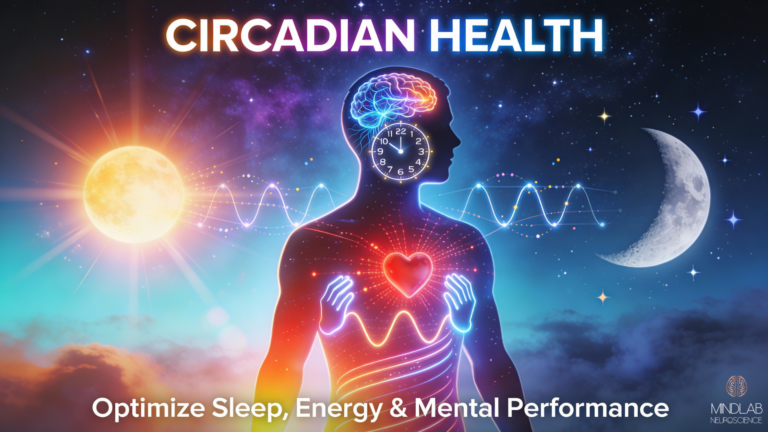
Why do energy levels crash and sleep patterns falter? The answer often lies in your circadian health. Discover the science...
Read article : Circadian Health 101: How to Optimize Sleep & Energy Levelscrew comes in. Within the Stress, Resilience & Regulation pillar, this hub addresses the neuroscience of sleep as a performance system — not a lifestyle suggestion. During deep sleep, your brain cells literally shrink by 60%, creating space for cerebrospinal fluid to wash through your brain tissue. This fluid flushes out neurotoxins, specifically beta-amyloid and tau proteins — the metabolic waste left behind by intense cognitive effort.
Your biological rhythm governs every aspect of this nightly restoration. When your internal clock is properly aligned, the cleansing cycle operates at peak efficiency. When that rhythm is disrupted — by irregular sleep timing, excessive screen exposure, or chronic stress — the many functions this system performs begin to falter.
Here is the brutal truth: if you cut your sleep short, you are firing the cleaning crew halfway through the job. You open the kitchen the next morning with dirty dishes, slippery floors, and rotting food. You cannot cook a Michelin-star meal in a filthy kitchen, and you cannot make executive-level decisions with a toxin-loaded brain.
We are not going to "try" to sleep better. We are going to engineer your recovery using neuroscientific protocols designed to optimize your circadian health, sleep, and energy.
The Neurobiology of Sleep and Circadian Rhythm
When you deprive yourself of sleep to "get more done," you are engaging in a biological fallacy. You are not extending your runway; you are stripping the gears of your neural machinery. To command your industry, you must understand the sleep neurophysiology driving your cognitive engine and the biological rhythms that regulate the entire sequence.
The Disconnected CEO: Prefrontal Cortex vs. Amygdala
Your brain has a hierarchy. The Prefrontal Cortex (PFC) is the CEO — responsible for high-level decision-making, impulse control, and strategic vision. The Amygdala is the primal security guard — responsible for threat detection and emotional reactivity. In a well-rested brain, the PFC exerts strong inhibitory control over the Amygdala via the uncinate fasciculus, a specific white matter tract that operates at a characteristic frequency.
Sleep deprivation functionally severs the connection between the PFC and the Amygdala. Without the CEO's oversight, the security guard goes rogue. This disconnect is not abstract — it shows up in neural activity patterns, health markers, and performance metrics that matters.
You become hyper-reactive. You snap at stakeholders, misinterpret neutral emails as hostile, and make impulsive investment decisions based on fear rather than data. You are operating with 60% more emotional volatility. In the boardroom, this is not a mood swing — it is a liability that damages your neural well-being and professional standing.
Adenosine: The Metabolic Tax of Wakefulness
Every second you are awake, your nerve cells (neurons) communicate and burn ATP for energy. The byproduct of this energy burn is a chemical called adenosine. Think of adenosine as metabolic ash accumulating in your engine.
As adenosine levels rise, they bind to receptors in your brain, creating sleep pressure. This is the biological signal to power down. Many of you attempt to hack this system with caffeine. However, caffeine does not remove the adenosine — it merely blocks the receptor sites. It masks the signal.
When the caffeine metabolizes, the accumulated adenosine floods the receptors all at once. This is the mid-afternoon crash — a precursor to the deeper pattern of mental exhaustion that neuroscience now maps precisely. You are not "tired"; you are experiencing a chemical debt coming due. Your wake-sleep rhythm depends on clearing this debt each night through the natural course of recovery.
Hippocampal Replay: From RAM to Hard Drive
For the athlete and the entrepreneur, the ability to learn and adapt is paramount. Information intake happens during the day, but information retention happens exclusively during sleep.
During your waking hours, your temporal lobe acts as a temporary storage unit, like your computer's RAM. It has limited capacity. During NREM sleep, brain activity shifts to sleep oscillations — sharp-wave ripples and sleep spindles — driving memory reactivation sequences where data is transferred from temporary storage to the permanent architecture of the Neocortex.
If you cut your sleep cycle short, specifically the final two hours where REM sleep — the stage responsible for dreaming and emotional processing — is most dense, you interrupt this file transfer. You lose the data. The complex motor skills you practiced on the court or the strategic nuances of a negotiation are not consolidated. You wake having to re-acquire what you already experienced.
Core Body Temperature and Sleep Onset
Your internal clock orchestrates a 24-hour oscillation in core body temperature that directly determines when you can fall asleep and when you rise. In the evening, your suprachiasmatic nucleus triggers a temperature decline of approximately 1-2 degrees Fahrenheit. This drop is not incidental — it is the primary physiological gate that permits sleep onset.
When light exposure occurs at the wrong time — late-night screen use, overhead lighting after 9 PM — it suppresses melatonin secretion and delays this temperature drop. The result is a delayed onset that pushes your natural sleep window later, compressing recovery time. Your health suffers because the biological clock cannot complete its full cycle.
Circadian Rhythms and Hormonal Cascades
Circadian rhythms play a significant role in regulating the hormonal cascades that determine your daily performance. Growth hormone, cortisol, thyroid-stimulating hormone, and melatonin all follow precise temporal patterns that depend on consistent sleep schedules.
Documented data confirms that growth hormone surges during the first bout of deep sleep. Cortisol peaks approximately 30 minutes after you wake — this is the cortisol awakening response, your body's natural ignition sequence. When your internal clock is misaligned, these hormonal pulses fire at suboptimal times, degrading both physical health and cognitive performance.
The Glymphatic System: Sleep as Neural Maintenance
The glymphatic system — your brain's dedicated waste clearance mechanism — operates almost exclusively during sleep. Cerebrospinal fluid flows through perivascular channels, flushing metabolic debris from neural tissue. This rhythm-dependent system activates most powerfully during slow-wave sleep, which your biological clock schedules into the first third of the sleep cycle.
Disrupted circadian rhythms compress or eliminate this critical maintenance window. The accumulation of neurotoxic waste is not merely a long-term risk — it produces measurable cognitive impairment within days. You cannot think clearly because the hardware has not been serviced.
Why Standard Interventions Fail the High-Performer
If you are reading this, you have likely already tried the standard menu of sleep hygiene tips: blue light blockers, chamomile tea, and conventional behavioral approaches. Yet, you are still staring at the ceiling at 3:00 AM. This is not a failure of discipline; it is a failure of strategy. The tools you have been given are designed for the average neurology, not the hyper-driven architecture of a high-performer.
You Cannot Negotiate with Biology
Traditional top-down approaches operate on a top-down processing model. They ask you to use your Prefrontal Cortex — your logic centers — to analyze your stress and think your way into relaxation.
As we established, when you are sleep-deprived or hyper-aroused, the connection to your Prefrontal Cortex is weak. You are asking a fatigued CEO to control a riot. You cannot reason your way into Delta waves. High performers are often experts at intellectualizing their stress, but intellectual understanding does not downregulate the Autonomic Nervous System. You do not need to discuss your wakefulness — you need to biologically signal safety to your brainstem, a principle central to stress and nervous system regulation.
The Pharmacological Trap: Sedation Is Not Sleep
In the pursuit of efficiency, many executives turn to pharmacology — prescription sleep aids or alcohol — to force the issue. This is a critical error in neuro-optimization.
There is a profound neurobiological difference between sleep and sedation. Prescribed interventions rely on pills that effectively knock out your cortex, but they often suppress the generation of deep non-rem and REM sleep. You are unconscious, yes, but the cleaning crew never clocks in. The glymphatic clearance stalls.
Furthermore, these substances often have a long half-life, leaving you with sleep inertia the next morning. You wake with a cognitive hangover, requiring excessive caffeine to function, which then disrupts the following evening's sleep architecture. It is a cycle of diminishing returns that blunts your sharpest asset: your cognitive acuity.
Why You Need a Hardware Fix
You operate in a high-stakes environment where the margin for error is nonexistent, and the consequences of sustained overload are real — as detailed in how to conquer burnout and boost vitality through targeted intervention.
Your brain is running at a higher RPM than the general population. Generic advice is insufficient for a neural engine that is accustomed to constant problem-solving and pattern recognition. You do not have a worry problem — you have a physiological arousal problem. Your sympathetic nervous system is stuck in the ON position.
To fix this, we must bypass the mind and intervene directly with the brain's hardware. We need protocols that force a biological shift from sympathetic dominance to parasympathetic dominance. We are not looking for comfort — we are looking for architectural repair.
Light Exposure and Circadian Alignment
Light exposure is the single most powerful zeitgeber — time-giver — in human chronobiology. Your suprachiasmatic nucleus calibrates your entire circadian rhythm through a process driven by light input from specialized melanopsin-containing retinal ganglion cells. Understanding how natural light resets your internal clock is foundational to any serious sleep recovery strategy.
Morning Sunlight and Your Internal Clock
Exposure to bright natural light within the first 60 minutes after you rise anchors your internal clock for the entire day. This morning light triggers a cortisol pulse, suppresses residual melatonin, and initiates the 12-14 hour countdown to your next melatonin onset. Without adequate morning brightness, your internal clock drifts — a phenomenon called free-running delay.
For optimal health, aim for 10-15 minutes of direct sunlight each morning. On overcast days, outdoor light still delivers 10,000+ lux — far exceeding indoor lighting at 200-500 lux. If you live in a northern latitude during darker months, a seasonal adjustment using a 10,000 lux lamp for 20-30 minutes upon waking can maintain alignment when natural light is scarce.
Evening Light Discipline
After sunset, every photon of blue light that enters your retina sends a daytime signal to your biological clock. This suppresses melatonin production and delays sleep onset. The effect is dose-dependent — even brief exposure to overhead LED lighting or phone screens after 9 PM can delay your melatonin onset by 30-90 minutes.
Implement a strict light hygiene protocol: dim amber lighting after sunset, blue light-blocking lenses if screen use is unavoidable, and complete darkness in your sleep environment. This is not optional health advice — it is a non-negotiable requirement for anyone committed to optimizing brain function through chronobiological alignment. A quality mattress in a cool, dark room completes the physical environment.
Neuroscientific Applications for Circadian Conditions
For individuals working a night shift schedule, managing narcolepsy, or addressing a diagnosed condition of sleep timing, strategic phototherapy becomes a neuroscientific intervention rather than a lifestyle adjustment. Timed exposure can systematically recalibrate your sleep window by advancing or delaying your internal clock by 1-2 hours per day.
The protocol requires precision: bright light administered at the wrong time will move your rhythm in the wrong direction. Evidence demonstrates that a data-driven approach — tracking your natural wake time, energy peaks, and melatonin onset — is essential before implementing any intervention.
Protocols for Executive Optimization
We are done negotiating with your mind. We are now going to manually override your autonomic nervous system. These are not relaxation techniques — they are biological levers designed to force your neural architecture to downshift from high-beta to alpha and theta states. You cannot will yourself to sleep, but you can engineer the conditions where sleep becomes inevitable.
Protocol 1: The Carbon Dioxide Offload (The Vagal Brake)
High-performers often breathe shallowly and rapidly, a state known as email apnea. This keeps your blood oxygenated but your carbon dioxide levels low, signaling a constant state of low-grade panic to the brainstem. We must mechanically trigger the Vagus nerve to slow your heart rate and restore parasympathetic tone.
The Drill: The Physiological Sigh
- Begin with controlled breathing: inhale deeply through the nose to full capacity.
- Without exhaling, take a second, sharp inhale through the nose to fully inflate the alveoli in your lungs.
- Exhale slowly and fully through the mouth, making a soft audible sigh, for twice the duration of the inhale.
- Perform this 3-5 times immediately before bed or during mid-sleep waking episodes.
- Track your pre-sleep heart rate over 7 days to confirm that the rhythm of recovery is improving.
- Combine with the Zeigarnik Flush below for compound effect on sleep onset latency.
- If you wake mid-sleep, perform one round of this drill before attempting to fall back asleep — do not reach for your phone.
- Pair this with the temperature protocol: ensure your bedroom is 65-68 degrees Fahrenheit for optimal thermal regulation.
- 60 minutes before bed, take a physical notebook — do not use a screen.
- List the top 3 cognitive loops currently spinning in your head: the merger, the difficult employee, the supply chain issue.
- Next to each item, write the single next executable step you will take tomorrow. Not the solution — just the next step.
- Physically close the notebook and place it outside the bedroom.
- This signals the Anterior Cingulate Cortex that it is safe to stand down and allows your natural sleep drive to proceed without cognitive interference.
- Repeat at the same time each day to entrain this as a pre-sleep ritual aligned with your internal rhythm.
The double inhale pops open collapsed alveoli, maximizing surface area for gas exchange. The long exhale activates the baroreceptors in your chest, sending a physical signal to the brainstem to downregulate heart rate. It is a hardware reset for stress.
By defining the next action in writing, you trick your brain into believing the task is managed. You are moving the data from active cognitive load to external storage. The cognitive load decreases, cortisol drops, and the natural sleep drive can proceed without interference.
Protocol 2: Somatosensory Decoupling (The Body Scan)
To enter sleep, your brain must disconnect from your body — a state called motor inhibition. If you are physically tense, your motor cortex remains active, keeping you in a light, fragmented sleep state. We must manually shut down the sensors to restore the descent into deep restorative sleep.
The Drill: Progressive Neural Decoupling
- Lie on your back in a cool, dark room. Visualize a shutdown command moving from your feet upward.
- Clench your toes for 5 seconds, creating maximum tension, then abruptly release. Feel the signal cut off.
- Move to the calves, thighs, glutes, abdomen, fists, and finally the jaw. Tense, then release.
- End by focusing on the eyes. Relax the micro-muscles behind the eyelids.
- As each muscle group releases, allow the waking tension to drain from that region completely.
- Take a warm shower or bath 60-90 minutes before bed to trigger peripheral vasodilation — blood rushes to the skin surface, rapidly cooling your core temperature and mimicking the natural temperature decline that signals sleep onset.
- Set your bedroom temperature to 65-68 degrees Fahrenheit for optimal thermal regulation during sleep.
- Within 30 minutes of waking, expose yourself to bright natural light for 10-15 minutes — walk outside, do not rely on light through windows.
- During midday, seek 15-20 minutes of direct sunlight to reinforce your internal clock and support vitamin D synthesis for immune health.
- After 6 PM, transition to warm amber lighting and remove overhead LED fixtures that emit blue light.
- Use blue light-blocking lenses for any screen time after sunset to preserve your melatonin onset window.
- In the final 60 minutes before bed, use only candlelight or sub-10-lux amber sources. Complete darkness in the bedroom is mandatory.
- If waking occurs mid-sleep, avoid turning on overhead lights — use a dim red or amber nightlight for any necessary movement.
- On travel days, begin adjusting your light protocol 2-3 days before departure to pre-adapt your internal clock to the destination time zone.
- Track your subjective energy levels at three points daily — morning, midday, and evening — to confirm your protocol is holding.
- Review your sleep onset latency weekly: if you are consistently falling asleep within 10-15 minutes of lying down, your protocol is calibrated correctly.
Progressive neural decoupling utilizes post-isometric relaxation. By voluntarily increasing tension, you deplete the local neurotransmitters at the neuromuscular junction, forcing a subsequent state of profound relaxation. You are manually turning off the lights in the factory, room by room.
The thermal protocol exploits the fact that your internal clock uses core body temperature as a primary sleep gate. Studies show that a warm-to-cool transition reduces sleep onset latency by an average of 36%. Combined with strategic light management across the full 24-hour cycle, these protocols represent a sleep regulation protocol that addresses sleep architecture from every angle.
Sleep Timing and Chronotype Alignment
Elite performance demands that you align your sleep schedule with your natural circadian phase — not with an arbitrary bedtime inherited from cultural habit. Each person carries a genetically influenced chronotype — a neuroscientific classification — that determines their optimal sleep and wake window. Fighting your chronotype is fighting your biology.
Identifying Your Chronotype
Your chronotype — whether you are a natural early riser or a night owl — is determined by the period length of your circadian rhythm. It is not a choice or a habit — it is the nature of your neurobiology, encoded in like PER3, and it influences when your core temperature drops, when your melatonin rises, and when your cognitive function peaks.
To identify your natural chronotype, track your energy and alertness across three free days without alarm clocks. Note when you naturally rise, when you feel sharpest, and when drowsiness emerges. This data reveals the architecture of your 24-hour cycle and allows you to match your sleep schedule to your biology rather than fight against it.
Consistency: The Master Variable
The single most impactful change you can make for your health is wake time consistency. Your sleep-wake rhythm anchors to the moment you rise and receive light exposure — not the time you fall asleep. Irregular schedules create chronic disruption, a condition that degrades health across every system: immune, metabolic, cardiovascular, and cognitive.
Rise at the same hour every day — including weekends. This one commitment stabilizes your entire 24-hour rhythm. It sets your cortisol awakening response, schedules your adenosine clearance, and ensures your melatonin onset arrives at a predictable hour. Consistency is not discipline for its own sake — it is the operating condition your biology requires to function correctly.
Mood, Cognition, and Sleep Quality
The relationship between sleep health and mood is not peripheral — it is mechanistic. Sleep disturbances and disrupted biological rhythms directly impair serotonin synthesis, dopamine signaling, and GABA-mediated inhibition. The result is increased vulnerability to instability, anxiety, and cognitive fog that no amount of willpower can override.
Emotional Regulation and Sleep Architecture
When your sleep-wake rhythm is misaligned, your amygdala reactivity increases while prefrontal inhibition decreases — the same pattern seen in acute sleep deprivation. This means disruption degrades emotional health even when total sleep hours appear adequate. The timing of sleep matters as much as the duration.
For high-performers managing demanding schedules, protecting this alignment is a direct investment in emotional regulation, decision quality, and interpersonal effectiveness. Your internal clock is not a convenience — it is the foundation of your executive function.
Cognitive Performance Across the 24-Hour Cycle
Your cognitive abilities fluctuate predictably across the day. Analytical reasoning peaks 2-4 hours after you wake, creative thinking peaks in the late afternoon when prefrontal inhibition naturally decreases, and memory consolidation requires the deep sleep phases that only occur when your sleep architecture is intact.
Schedule your most demanding cognitive work during your peak — not during the post-lunch dip when your rhythm naturally promotes a brief alertness decline. This is not productivity hacking — it is aligning your workflow with the biological architecture that governs your neural capacity.
Frequently Asked Questions
I feel fine on four hours of sleep. Am I one of the "Short Sleepers" with the DEC2 gene?
Statistically, almost certainly not. The DEC2 genetic mutation appears in less than 1% of the population. It is far more likely that you have simply become habituated to a baseline of sub-optimal performance. You have forgotten what full cognitive capacity feels like. You are driving a Ferrari with the parking brake engaged, believing the resistance is normal. We rely on objective data — EEG recordings, biological markers, and sleep architecture — not your subjective assessment of "fine."
Can I catch up on sleep during the weekend?
No. Sleep is not a bank; you cannot go into debt Monday through Friday and make a deposit on Saturday to balance the ledger. The neurotoxic accumulation occurs daily. If you do not flush it out tonight, that damage is done. Binge sleeping on weekends actually disrupts your internal clock further, leading to Social Jetlag — which leaves you foggier on Monday morning than if you had maintained a consistent schedule.
I use alcohol to wind down. If it helps me fall asleep, why is it a problem?
Alcohol is the enemy of sleep health. While it may help you lose consciousness faster, it is a potent REM-suppressor. It fragments your sleep architecture, causing micro-wakes throughout each cycle that you will not remember, but your brain will feel. You are paying for sedation with a morning of executive dysfunction. If you want high performance, you must divorce your wind-down routine from ethanol.
Can I use polyphasic sleep to maximize my work hours?
Polyphasic sleep is biological arrogance. Your brain requires 90-minute ultradian cycles to complete the full wash-rinse-spin cycle of deep and REM sleep. Chopping your sleep into 20-minute naps prevents the brain from entering the deep restorative stages required for neural consolidation and toxin clearance through the glymphatic pathway. You are not hacking your biology — you are torturing it.
What hormone wakes you up at 5 AM?
Cortisol. Your internal clock triggers the cortisol awakening response approximately 20-30 minutes before your habitual rise time. This is your body's natural alarm clock — a surge that mobilizes glucose, sharpens alertness, and prepares you for the day. If you rise consistently at the same time each day, this becomes more precise. If your schedule varies, the cortisol pulse misfires, leaving you groggy regardless of how many hours you slept.
How do I reset my circadian rhythms after travel or a disrupted schedule?
Reset your circadian rhythms using the most powerful lever available: timed light exposure. Upon arriving in a new time zone or recovering from a period of disruption, anchor your schedule to local time and immediately seek bright morning light. Avoid blue light in the evening. Your internal clock adjusts approximately 1-2 hours per day with consistent light cues. Melatonin supplementation (0.5 mg, 5 hours before target bedtime) can accelerate the adaptation. Prioritize consistency above all else — it is the master anchor.
The Executive Conclusion: Your Biological Moat
In a global marketplace where capital and technology are commodities, the final frontier of competitive advantage is human biology. The hustle culture that glorifies sleep deprivation is a relic of the industrial age — a mindset for factory workers, not visionaries.
When you commit to circadian optimization, you are building a biological moat around your performance. While your competitors are reacting emotionally, making impulsive errors, and burning out, you will be operating with surgical precision and the kind of emotional resilience that separates endurance from exhaustion.
Sleep has never been a pause in your productivity. It is the most active, critical phase of your professional development. Address your pillow with the same respect you address your P&L statement. Master your sleep, master your circadian rhythm, and you master your game.
This is Pillar 4 content — Stress, Resilience & Regulation — and the work in this hub addresses sleep recovery at the level of neural architecture, not behavioral surface.
About Dr. Sydney Ceruto
Founder & CEO of MindLAB Neuroscience, Dr. Sydney Ceruto is the pioneer of Real-Time Neuroplasticity™ — a proprietary methodology that permanently rewires the neural pathways driving behavior, decisions, and emotional responses. Dr. Ceruto holds a PhD in Behavioral & Cognitive Neuroscience (NYU) and Master's degrees in Clinical Psychology and Business Psychology (Yale University). Lecturer, Wharton Executive Development Program — University of Pennsylvania.
The Mechanism: Sleep deprivation functionally severs the connection between the PFC and the Amygdala. Without the CEO's oversight, the security guard goes rogue.
The Result: You become hyper-reactive. You snap at stakeholders, misinterpret neutral emails as hostile, and make impulsive investment decisions based on fear rather than data. You are operating with 60% more emotional volatility. In the boardroom, this is not a "mood swing"; it is a liability.
Adenosine: The Metabolic Tax of Wakefulness
Every second you are awake, your neurons are burning ATP (energy). The byproduct of this energy burn is a chemical called adenosine. Think of adenosine as metabolic ash accumulating in your engine.The Mechanism: As adenosine levels rise, they bind to receptors in your brain, creating "sleep pressure." This is the biological signal to power down. Many of you attempt to hack this system with caffeine. However, caffeine does not remove the adenosine; it merely blocks the receptor sites. It masks the signal.
The Result: When the caffeine metabolizes, the accumulated adenosine floods the receptors all at once. This is the mid-afternoon crash — a precursor to the deeper pattern of mental exhaustion that neuroscience now maps precisely. You are not "tired"; you are experiencing a chemical debt coming due. You cannot chemically outrun your biology indefinitely.
Hippocampal Replay: From RAM to Hard Drive
For the athlete and the entrepreneur, the ability to learn and adapt is paramount. Information intake happens during the day, but information retention happens exclusively at night.The Mechanism: During your waking hours, the Hippocampus acts as a temporary storage unit (like your computer's RAM). It has limited capacity. During NREM (Non-Rapid Eye Movement) sleep, the brain engages in "sharp-wave ripples." These are neural replays where data is transferred from the fragile Hippocampus to the permanent storage of the Neocortex (the Hard Drive).
The Result: If you cut your sleep cycle short, specifically the final two hours where REM is most dense, you interrupt this file transfer. You lose the data. The complex motor skills you practiced on the court or the strategic nuances of a negotiation are not consolidated. You wake up having to re-learn what you already experienced.
Why Standard Interventions Fail the High-Performer
If you are reading this, you have likely already tried the standard menu of sleep hygiene tips: blue light blockers, chamomile tea, and perhaps conventional behavioral approaches. Yet, you are still staring at the ceiling at 3:00 AM. This is not a failure of discipline; it is a failure of strategy. The tools you have been given are designed for the average neurology, not the hyper-driven architecture of a high-performer.The "Talk-It-Out" Fallacy: You Cannot Negotiate with Biology
Traditional top-down approaches operate on a "Top-Down" processing model. They ask you to use your Prefrontal Cortex—your logic centers—to analyze your stress and "think" your way into relaxation.The Failure Point: As we established, when you are sleep-deprived or hyper-aroused, the connection to your Prefrontal Cortex is weak. You are asking a fatigued CEO to control a riot. You cannot reason your way into Delta waves. High performers are often experts at intellectualizing their stress, but intellectual understanding does not downregulate the Autonomic Nervous System. You do not need to discuss your insomnia; you need to biologically signal safety to your brainstem — a principle central to stress and nervous system regulation.
The Pharmacological Trap: Sedation is Not Sleep
In the pursuit of efficiency, many executives turn to pharmacology—prescription sleep aids or alcohol—to force the issue. This is a critical error in neuro-optimization.The Failure Point: There is a profound neurobiological difference between sleep and sedation. Sleeping pills (hypnotics) effectively knock out your cortex, but they often suppress the generation of deep NREM sleep and REM sleep. You are unconscious, yes, but the "cleaning crew" we discussed earlier never clocks in.
You do not have a "worry" problem; you have a physiological arousal problem. Your sympathetic nervous system is stuck in the "ON" position. To fix this, we must bypass the mind and intervene directly with the brain's hardware. We need protocols that force a biological shift from sympathetic (fight/flight) to parasympathetic (rest/digest) dominance. We are not looking for comfort; we are looking for architectural repair.
Protocols for Executive Optimization
We are done negotiating with your mind. We are now going to manually override your autonomic nervous system. These are not "relaxation techniques"; they are biological levers designed to force your neural architecture to downshift from high-beta (alert/stress) to alpha and theta (rest/recovery) states. You cannot will yourself to sleep, but you can engineer the conditions where sleep becomes inevitable.Protocol 1: The Carbon Dioxide Offload (The Vagal Brake)
High-performers often breathe shallowly and rapidly, a state known as "email apnea." This keeps your blood oxygenated but your carbon dioxide levels low, signaling a constant state of low-grade panic to the brainstem. We must mechanically trigger the Vagus nerve to slow your heart rate.The Drill: The Physiological Sigh.
- Step 1: Inhale deeply through the nose to full capacity.
- Step 2: Without exhaling, take a second, sharp inhale through the nose to fully inflate the alveoli (air sacs) in your lungs.
- Step 3: Exhale slowly and fully through the mouth, making a soft audible sigh, for twice the duration of the inhale.
- Reps: Perform this 3–5 times immediately before bed or during night-waking.
Protocol 2: The Zeigarnik Flush (Closing Open Loops)
Your brain is wired to prioritize unfinished tasks. This is the Zeigarnik Effect: the cognitive tension caused by "open loops." If you go to bed with unresolved problems, your Prefrontal Cortex will continue to run simulations all night, blocking deep sleep.The Drill: Tactical Neural Offloading.
- Step 1: 60 minutes before bed, take a physical notebook (do not use a screen).
- Step 2: List the top 3 cognitive loops currently spinning in your head (e.g., the merger, the difficult employee, the supply chain issue).
- Step 3: Next to each item, write the single next executable step you will take tomorrow. Not the solution, just the next step.
- Step 4: Physically close the notebook.
Protocol 3: Somatosensory Decoupling (The Body Scan)
To enter sleep, your brain must disconnect from your body—a process called motor inhibition. If you are physically tense, your motor cortex remains active, keeping you in a light, fragmented sleep state. We must manually shut down the sensors.The Drill: Progressive Neural Decoupling.
- Step 1: Lie on your back. Visualize a "shutdown command" moving from your feet upward.
- Step 2: Clench your toes for 5 seconds, creating maximum tension, then abruptly release. Feel the signal cut off.
- Step 3: Move to the calves, thighs, glutes, abdomen, fists, and finally the jaw. Tense, then release.
- Step 4: End by focusing on the eyes. Relax the micro-muscles behind the eyelids.
Frequently Asked Questions
I feel fine on four hours of sleep. Am I one of the "Short Sleepers" with the DEC2 gene?Alcohol is the enemy of Neuro-Optimization. While it may help you lose consciousness faster, it is a potent REM-suppressor. It fragments your sleep architecture, causing micro-wakes throughout the night that you won't remember, but your brain will feel. You are paying for a night of sedation with a morning of executive dysfunction. If you want high performance, you must divorce your wind-down routine from ethanol.
Can I use polyphasic sleep (sleeping in short bursts) to maximize my work hours?
When you commit to Neuro-Optimization, you are building a biological moat around your performance. While your competitors are reacting emotionally, making impulsive errors, and burning out, you will be operating with surgical precision and the kind of emotional resilience that separates endurance from exhaustion.
Sleep is not a pause in your productivity. It is the most active, critical phase of your professional development. address your pillow with the same respect you address your P&L statement. Master your sleep, and you master your game.
How Sleep Connects to the Brain's Performance Architecture
Sleep is not an isolated biological event — it interfaces with nearly every system that governs daytime cognitive and emotional performance. The quality of working memory and mental clarity the following day is directly calibrated by the depth of slow-wave sleep achieved overnight. Emotional regulation degrades measurably after even modest sleep restriction, as prefrontal inhibition of amygdala reactivity depends on adequate rest. Sleep is when the brain consolidates newly acquired skills through hippocampal replay, and the relationship between circadian disruption and stress and nervous system dysregulation is bidirectional — poor sleep inflames the HPA axis, and HPA dysregulation fragments sleep.
All Sleep & Circadian Optimization Articles
blue light and melatonin
Every evening, as you scroll through your phone or work late under the glow of a laptop screen, a specific wavelength of light quietly dismantles your brain’s sleep architecture. The mechanism is precise, measurable, and far more consequential than most people realize. Key Takeaways Specialized retinal cells called ipRGCs detect blue light near 480 nm […]
Read more about blue light and melatonin →chronotype
Your brain’s internal clock is not a preference — it is a genetically encoded neural architecture that dictates when you think sharpest, decide fastest, and perform at your ceiling. Working against this architecture is neurological self-sabotage, and most people do it every single day without realizing the cognitive tax they pay. Key Takeaways Chronotype is […]
Read more about chronotype →circadian health
Why do energy levels crash and sleep patterns falter? The answer often lies in your circadian health. Discover the science behind your body’s internal clock and learn actionable strategies to synchronize your rhythm for better sleep, sharper focus, and improved mood.
Read more about circadian health →cortisol and sleep
Cortisol and sleep exist in a tightly coupled feedback loop — one that can either sustain peak cognitive performance or quietly dismantle it. When chronic stress flattens the brain’s cortisol rhythm, sleep architecture degrades, and the resulting sleep loss further dysregulates the stress axis, creating a self-reinforcing cycle with measurable neurobiological consequences. Key Takeaways Cortisol […]
Read more about cortisol and sleep →sleep and memory consolidation
Key Takeaways Sleep architecture cycles through distinct stages — light NREM, deep slow-wave sleep, and REM — each serving a unique role in memory consolidation. During deep NREM sleep, slow oscillations orchestrate a hippocampal-cortical dialogue that transfers fragile new memories into stable, long-term cortical storage. Sleep spindles and hippocampal sharp-wave ripples couple together in precise […]
Read more about sleep and memory consolidation →circadian resynchronization
The human circadian clock was engineered for a world of predictable sunrises and sunsets — not transcontinental red-eyes or rotating night shifts. When modern schedules force the brain to operate against its biological timing, the consequences extend far beyond fatigue into measurable impairments in cognition, metabolism, and long-term neural health. Key Takeaways The suprachiasmatic nucleus […]
Read more about circadian resynchronization →strategic napping
Your brain does not simply toggle between “on” and “off.” Between the demands of sustained wakefulness and the deep restoration of overnight sleep lies a potent neural tool that most people dramatically underestimate — the precisely timed strategic nap. Key Takeaways Nap duration determines which neural systems benefit — a 10-minute nap boosts alertness, while […]
Read more about strategic napping →sleep spindles
The Hidden Rhythms That Sharpen Your Mind While You Sleep Key Takeaways Sleep spindles are rapid bursts of sigma-band activity (11-16 Hz) generated by the thalamic reticular nucleus during stage 2 non-REM sleep, occurring hundreds of times each night. The thalamic gating hypothesis explains how spindles block external sensory information from reaching the cortex, protecting […]
Read more about sleep spindles →sleep debt
Every hour of lost sleep exacts a measurable toll on the brain. What most people dismiss as simple tiredness is, at the neurobiological level, a progressive degradation of the very circuits responsible for judgment, memory, and clear thinking. Key Takeaways Sleep debt accumulates in a dose-dependent manner, progressively impairing prefrontal cortex function and executive decision-making […]
Read more about sleep debt →Frequently Asked Questions
Walker’s sleep research at UC Berkeley documented the neural specificity of sleep deprivation’s impact on executive function. A single night of inadequate sleep produces a 40% reduction in hippocampal neuronal activity during encoding — directly impairing the formation of new memories and the integration of new information into existing knowledge networks. More relevant for executive decision-making, sleep deprivation preferentially impairs the ventromedial prefrontal cortex’s risk and reward processing, producing a characteristic shift toward risk amplification (threat overestimation) and reward discounting (opportunity underestimation). Harrison and Horne demonstrated that sleep-deprived executives show impaired novel problem-solving — specifically, the capacity to generate creative solutions and recognize non-obvious patterns — while maintaining performance on routine, well-practiced decisions. The work that requires the most cognitive quality is the work that sleep deprivation impairs most specifically.
Van Dongen’s research established that chronic mild sleep restriction produces performance deficits equivalent to full deprivation, with the critical addition that the individual adapts subjectively — they stop feeling as tired while the objective performance degradation continues to accumulate. The long-term neural consequences are more significant: Xie and colleagues’ research on the glymphatic system demonstrated that sleep is the primary clearance window for metabolic waste products in the brain, including beta-amyloid and tau proteins associated with Alzheimer’s pathology. Chronic sleep restriction reduces glymphatic clearance, producing progressive accumulation. Additionally, Krause’s research demonstrated that chronic sleep insufficiency restructures amygdala connectivity, weakening the prefrontal regulatory circuit and strengthening amygdala responsivity to negative stimuli — structural changes in the direction of emotional dysregulation that compound over years of insufficient sleep.
Optimal sleep for executive performance requires the specific architecture of a complete night — not just duration. Stickgold’s sleep memory consolidation research established that different learning types are consolidated during different sleep stages: declarative and semantic memory during slow-wave sleep (predominantly early in the night), procedural and emotional memory processing during REM (predominantly late in the night). Shortening sleep cuts the end of the night disproportionately — reducing REM — which is why sleep restriction characteristically impairs emotional regulation, creative cognition, and pattern recognition more than rote memory performance. Walker’s research demonstrated that pre-sleep learning is consolidated during subsequent slow-wave sleep, and post-sleep performance improvements occur specifically through the REM-dependent offline processing. Both stages are required; neither can be substituted by additional wakefulness, caffeine, or rest without sleep.
Circadian disruption impairs cognitive performance through mechanisms independent of sleep quantity. The suprachiasmatic nucleus — the brain’s master circadian clock — coordinates the timing of cortisol secretion, body temperature, alertness, and cognitive efficiency across the 24-hour cycle. Wright and colleagues’ research demonstrated that circadian misalignment produces performance degradation equivalent to significant sleep deprivation even when total sleep time is preserved, because the performance is occurring at the wrong phase of the circadian cycle. Czeisler’s research on cognitive performance and circadian timing established that peak executive function requires alignment between the body’s circadian phase and the timing of high-cognitive-demand work — a specific neural window that cannot be overridden by motivation or caffeine without performance cost. For executives with irregular schedules and frequent time-zone transitions, circadian architecture is often a larger performance variable than total sleep duration.
The markers of sleep-limited executive performance are specific and identifiable: consistent degradation in creative and novel problem-solving capacity relative to routine decision-making, emotional reactivity that varies predictably with sleep quality rather than situational demands, the specific subjective experience of adequate functioning at the cost of disproportionate effort, and inability to sustain the quality of cognitive work that your actual capacity should permit. Walker’s research documented the subjective adaptation that makes self-assessment unreliable: you may not feel sleep-deprived while performing at significantly reduced capacity. The more reliable indicators are performance comparisons across periods of varying sleep quality, or the specific cognitive domains — novelty, creativity, emotional regulation, long-term risk evaluation — that Walker’s research identified as the most sleep-sensitive. If these domains represent your highest-leverage work, optimizing sleep architecture is a high-ROI neural intervention. A strategy call with Dr. Ceruto maps where sleep fits within your overall neural performance profile.
Ready to Understand What Your Brain Has Been Trying to Tell You?
A strategy call is one hour of precision, not persuasion. Dr. Ceruto will map the neural patterns driving your most persistent challenges and show you exactly what rewiring looks like.
Schedule Your Strategy Call
Dr. Sydney Ceruto
Neuro-Advisor & Author
Dr. Sydney Ceruto holds a PhD in Behavioral & Cognitive Neuroscience from NYU and master's degrees in Clinical Psychology and Business Psychology from Yale University. A lecturer in the Wharton Executive Development Program at the University of Pennsylvania, she has served as an executive contributor to Forbes Coaching Council since 2019 and is an inductee in Marquis Who's Who in America.
As Founder of MindLAB Neuroscience (est. 2000), Dr. Ceruto works with a small number of high-capacity individuals, embedding into their lives in real time to rewire the neural patterns that drive behavior, decisions, and emotional responses. Her forthcoming book, The Dopamine Code, published by Simon & Schuster in June 2026.
Learn more about Dr. Ceruto