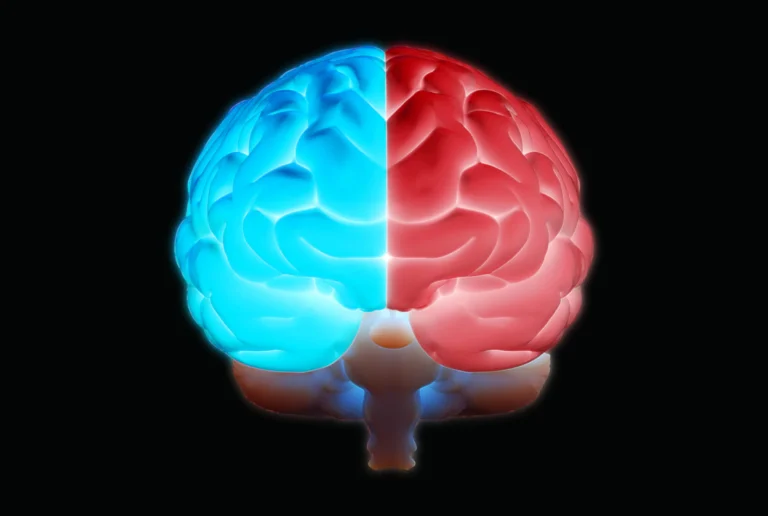
The Architecture of Absolute Clarity: Mastering Logical Reasoning Through Neuroscience
Make smarter decisions using neuroscience. In the rarefied air of the C-suite, the cost of a cognitive misfire is not measured in regret, but in millions of dollars, market share, and professional legacy. For the ultra-high-net-worth individual and the enterprise leader, logical reasoning is not merely a soft skill—it is the ultimate competitive advantage. Yet, even the most sophisticated minds are tethered to biological hardware that evolved for the savanna, not the boardroom.
We are moving beyond the remedial approach of standard psychology. We are not here to discuss your feelings about a decision; we are here to examine the neural architecture that produced it. This is the “Veblen” approach to mental performance: exclusive, rigorous, and designed specifically for those whose decisions shape industries.
The Neuroscience of the “Rational” Executive
You pride yourself on logic. However, behavioral economics and neuroscience tell us a different story. The human brain is a pattern-recognition machine prone to “systematic errors,” which Daniel Kahneman identified as cognitive biases. When you face high-stakes pressure, your brain attempts to conserve energy by defaulting to heuristics—mental shortcuts that often bypass the Prefrontal Cortex (the CEO of the brain) and rely on the Amygdala (the threat detection center).
This results in the Sunk Cost Fallacy, where you pour capital into a failing venture because of previous emotional investment, or Confirmation Bias, where you unconsciously filter out data that contradicts your strategic vision. Neuro-optimization allows us to interrupt these neural pathways, ensuring your decisions are driven by data and logic, not invisible biological impulses.
The Signal-to-Noise Ratio
To understand why even brilliant leaders make illogical choices, visualize your brain as a High-Frequency Trading Algorithm.
When this algorithm is calibrated correctly (Logical Reasoning), it executes trades based on pure data, ignoring market panic and hype. However, the primitive parts of your brain act like “static” or “noise” in the signal feed. Fear, ego, and fatigue introduce corrupted data into the algorithm. Without neuro-optimization, you are essentially trading on bad data while believing you are acting rationally.
My role is to act as the master engineer. We do not just “try harder” to be logical; we install the noise-canceling protocols that isolate the signal. We upgrade the hardware so the algorithm runs flawless logic, regardless of the emotional volatility surrounding you.
Case Study: The $50M Cognitive Bias
Consider a recent client, a CEO of a fintech unicorn. He was on the verge of a hostile acquisition, driven by what he believed was aggressive strategy. Through neuro-optimization, we identified that his reasoning was hijacked by Loss Aversion—he was overvaluing the competitor to prevent a rival from acquiring them, rather than assessing the asset’s intrinsic value. By recalibrating his decision-making framework and cooling the limbic response, he withdrew the offer. Six months later, the competitor folded. Logic saved him $50 million; emotion would have cost him everything.
The Neurobiology of Logical Reasoning
To master logical reasoning, one must first understand that the human brain was not designed for the complexities of modern corporate strategy. It was designed for survival. Logic is an evolutionary luxury—a high-level function that sits precariously atop millions of years of primitive survival coding. Understanding the biological friction between these layers is the first step in optimizing your executive function.
The Neural Tug-of-War: DLPFC vs. Amygdala
At the center of every strategic decision is a neurological conflict. On one side, we have the Dorsolateral Prefrontal Cortex (DLPFC). This is the “CEO” of your brain—responsible for executive control, working memory, and abstract reasoning. It allows you to simulate future scenarios, weigh probabilities, and suppress impulsive responses.
Opposing it is the Limbic System, specifically the Amygdala. This is the brain’s threat detection center. In a boardroom setting, a challenge to your authority or a sudden drop in stock price can trigger the Amygdala just as effectively as a physical predator would have on the savanna. When the Amygdala activates, it initiates a “bottom-up” takeover, diverting blood flow and oxygen away from the PFC. This biological mechanism literally takes your logic offline, forcing you to react rather than reason.
The Metabolic Cost of Clarity
Logical reasoning is metabolically expensive. While the brain represents only about 2% of your body weight, it consumes roughly 20% of your glucose and oxygen. However, not all thinking costs the same. Intuitive, emotional thinking (System 1) is cheap and fast. Deliberate, logical analysis (System 2) is slow and resource-intensive.
The brain acts as a “cognitive miser.” To conserve energy for vital biological functions, it naturally resists activating the DLPFC, preferring to rely on low-energy heuristics (mental shortcuts). This is the biological root of decision fatigue. By late afternoon, after hours of high-stakes decision-making, your brain’s glucose reserves are depleted, and the biological impulse to default to simplistic, often flawed reasoning becomes overwhelming. We are not just fighting bad ideas; we are fighting energy conservation protocols.
Neurochemistry and Signal Fidelity
The transmission of logic requires a precise neurochemical environment. The DLPFC relies heavily on Catecholamines—specifically Dopamine and Norepinephrine—to maintain the “signal-to-noise” ratio of neural firing.
- Optimal State: Moderate levels of these neurotransmitters strengthen the connections in the PFC, allowing for sharp focus and inhibition of distractions.
- Stress State: When high-pressure situations spike Cortisol and excessive Catecholamines, the receptors in the PFC become overwhelmed. This essentially “severs” the connections within the logic centers.
In this state, you may feel alert, but you are neurologically incapable of nuanced, complex reasoning. You revert to habit and instinct—mechanisms that are often disastrous in complex market conditions.
Evolutionary Anomalies: The False Positive
Your brain is wired to prioritize safety over accuracy. In an evolutionary context, a “Type I Error” (believing a rustle in the grass is a lion when it is not) is a survival advantage. A “Type II Error” (believing a lion is just the wind) is fatal. Consequently, the human brain is biologically biased toward Patternicity—finding meaningful patterns in meaningless noise.
In business, this manifests as seeing trends in random market data or attributing causation where there is only correlation. This is not an intellectual failing; it is a biological feature. Neuro-optimization involves training the brain to override this default setting, allowing you to tolerate ambiguity and demand statistical significance before acting.
The Failure of Standard Interventions in High-Performance Environments
For the elite executive, standard psychological interventions are not merely ineffective; they are often counterproductive. The methodologies designed for the general population—traditional talk therapy and pharmacotherapy—operate on premises that fail to account for the unique neural load carried by high-net-worth individuals and decision-makers. You do not need to be “soothed”; you need to be optimized.
The Limitations of “Top-Down” Processing (Talk Therapy)
Traditional modalities like Cognitive Behavioral Therapy (CBT) rely on “Top-Down” processing. The premise is that by using the Prefrontal Cortex (logic/language) to analyze your thoughts, you can control your emotions. Under normal conditions, this is functional. However, in the high-stakes environment of a hostile takeover or a liquidity crisis, this architecture collapses.
As we established, extreme stress triggers a “limbic hijack,” effectively taking the Prefrontal Cortex offline. Attempting to use talk therapy during a high-pressure strategic crisis is akin to trying to upload software to a computer that has been unplugged. You cannot cognitively reframe a physiological event. When the Amygdala is screaming “threat,” the neural pathways required for talk therapy are chemically blocked. You do not need a conversation; you need a neurological reset that targets the sub-cortical regions first.
The Blunt Instrument of Pharmacology
When therapy fails, the standard medical model defaults to pharmacology—SSRIs, benzodiazepines, or beta-blockers. While these may reduce anxiety, they do so through systemic suppression. They are blunt instruments in a world requiring surgical precision.
For the strategist, anxiety and adrenaline are not inherently bad; they are fuel. They signal importance and urgency. Medication often creates a “blunting effect,” dampening not only the negative stress response but also the cognitive edge, risk tolerance, and creative intuition required to lead. A sedated CEO is a complacent CEO. You cannot afford to artificially lower your neural RPMs; you need to upgrade the transmission to handle the torque.
The Mismatch of Scale
The average human brain is not subjected to the “supernormal stimuli” of decisions affecting thousands of employees or billions in capital. Standard interventions are designed for standard stressors. The cognitive fatigue and decision load of the C-suite create a unique metabolic and structural strain on the brain.
Relying on talk therapy or medication to handle executive-level logical reasoning is a category error. It addresses the symptom (stress/confusion) rather than the root cause (neural inefficiency). To maintain logical clarity under fire, we must move beyond coping mechanisms and engage in structural neuro-optimization. We must train the brain’s hardware to maintain homeostasis, ensuring that your logical centers remain vascularized and active, regardless of the chaos surrounding you.
Protocols for Executive Optimization
To cultivate Real-Time Neuroplasticity™, we must bypass the passive consumption of information and engage in active cognitive restructuring. We are not “learning” logic; we are conditioning the brain to reject the path of least resistance (emotion) and force the activation of the Dorsolateral Prefrontal Cortex (DLPFC). These protocols are designed to be deployed in the field—during negotiations, board meetings, and high-stakes analysis.
Protocol 1: The Linguistic Disassociation (The “Illeism” Hack)
The Mechanism: When you think in the first person (“I am worried about this merger”), the brain activates the medial prefrontal cortex, which is heavily linked to emotional processing and the amygdala. This “self-referential” loop reinforces anxiety and bias.
The Drill: When analyzing a critical decision, switch your internal monologue or written analysis to the third person using your own name. Instead of asking, “What should I do?”, ask, “What should [Your Name] do in this scenario?”
The Outcome: This simple linguistic shift forces the brain to process the problem using the neural machinery reserved for thinking about others. It creates immediate psychological distance, reducing emotional interference and allowing you to evaluate your own logic with the same ruthless objectivity you would apply to a competitor.
Protocol 2: The Counter-Factual Simulation (Anti-Confirmation Bias)
The Mechanism: The brain is a confirmation engine. Once a tentative conclusion is reached, the Reticular Activating System (RAS) filters out contradictory data. To break this, we must artificially induce “cognitive dissonance” to force the DLPFC to re-engage.
The Drill: Before finalizing a strategic move, execute a “Pre-Mortem.” Assume the decision has already failed spectacularly. Your task is to work backward to determine the precise logical chain that led to the failure. You must generate three distinct, data-backed reasons why your current logic is flawed.
The Outcome: By simulating failure, you override the brain’s “optimism bias.” This protocol forces the brain to hunt for “invisible” risks it was previously ignoring to protect your ego. You are manually switching the algorithm from “Prove it works” to “Prove it fails.”
Protocol 3: The Interoceptive Veto (Somatic Marker Check)
The Mechanism: Neuroscientist Antonio Damasio’s “Somatic Marker Hypothesis” suggests that emotions manifest physiologically (gut tightens, heart rate shifts) before we become consciously aware of them. These markers often masquerade as “intuition,” but in high-stress finance or strategy, they are often just fear responses.
The Drill: When you feel a strong impulse to act (e.g., “We must sell now”), pause for a 90-second “Interoceptive Audit.” Scan for physiological signs of stress: shallow breathing, jaw tension, or restlessness. If these are present, your decision is likely being driven by Cortisol, not Logic.
The Outcome: If high arousal is detected, you institute a mandatory “Veto.” You delay the decision until homeostasis is restored. This prevents the Amygdala from executing a “hostile takeover” of your executive functions. You act only when the biological noise is silenced.
Frequently Asked Questions
How does Neuro-Optimization differ from traditional executive coaching?
Traditional coaching focuses on mindset and accountability—essentially software updates. It asks you to think differently. Neuro-Optimization focuses on wetware and biology. It asks you to restructure the neural pathways that generate the thinking in the first place. We do not just discuss strategy; we optimize the biological hardware required to conceive it. This is the difference between learning how to drive a car and tuning the engine for Formula 1 performance.
Will relying on pure logic stifle my executive intuition?
Not at all. We must distinguish between “intuition” and “impulse.” True expert intuition is high-speed pattern recognition stored in the basal ganglia—it is valuable data. Impulse is merely emotional noise generated by the amygdala. These protocols act as a filtration system. They strip away the noise (fear, ego, fatigue) so that the signal (true intuition and logic) can be received without distortion.
Does this process require significant downtime or withdrawal from operations?
No. The “Veblen” approach is designed for the active executive. We do not require you to retreat to a mountain top. The protocols are designed to be “interstitial”—deployed in real-time during the friction of your daily operations. Neuroplasticity is best achieved when the brain is under load. We train under the conditions in which you must perform.
How do we measure the ROI of improved Logical Reasoning?
The ROI is measured in “errors of commission” avoided. In the C-suite, a single cognitive bias—such as the Sunk Cost Fallacy—can lead to eight-figure losses. By installing these noise-canceling protocols, we effectively insure your decision-making process. The return is calculated not just in the deals you close, but in the catastrophic risks you identify and avoid while your competitors are still reacting emotionally to the market.
The Executive Conclusion
In a global marketplace defined by volatility and noise, the ability to reason with absolute clarity is the ultimate luxury good. It is a scarce resource that cannot be bought; it must be built.
You have reached the pinnacle of your industry not because you are lucky, but because you are capable. However, relying on the default settings of your biology is a liability you can no longer afford. The “rational executive” is a myth; the “neuro-optimized executive” is the future.
By moving beyond the abstract conversations of therapy and engaging directly with the neurobiology of decision-making, you secure a distinct asymmetric advantage. You stop fighting your own biology and start leveraging it. This is not just about making better decisions. It is about constructing a mind that is impervious to chaos.
About Dr. Sydney Ceruto
Dr. Sydney Ceruto is a Neuroscientist and Brain Performance Strategist specializing in neurological re-engineering for elite individuals navigating high-stakes environments. As the founder of MindLAB Neuroscience and the pioneer of Real-Time Neuroplasticity™, she translates clinical neurobiology into decisive competitive advantages for tech innovators, professional athletes, entertainers, and private families worldwide. Dr. Ceruto holds dual PhDs in Behavioral & Cognitive Neuroscience from New York University and dual Master’s degrees in Clinical Psychology and Business Psychology from Yale University. She is the author of The Dopamine Code, published by Simon & Schuster.