The Transition That Stalls
“The brain that built your career through its current phase physically reorganized itself around those demands. Now you need it to do something different — and the neural architecture that made you successful is the same architecture resisting the change.”
You have made the decision. Or at least you believe you have. The logic is clear rehearsing the credentials, revisiting the relationships, mentally returning to the version of yourself that existed before the transition began. The plan is on paper. The execution is frozen.
This is the experience that drives professionals in Beverly Hills to seek career transition planning that professional cannot simply write a new plan and become someone different. The brain does not work that way.
What I see repeatedly in this work is the same gap between intention and execution. Highly capable professionals who can articulate their transition strategy but cannot embody it. The plan exists in the prefrontal cortex. The identity remains encoded in the default mode network — the brain’s self-referential thought system —. And until those two systems align, the transition does not happen not merely updated with new information.
A comprehensive review. The DMN’s core nodes construct and maintain the “internal narrative” that constitutes your sense of self. The mPFC differentiates self from others and evaluates identity-relevant information. The PCC coordinates connected nodes. The left angular gyrus retrieves semantic and personal information from long-term memory. Together, they create what researchers describe as subjective continuity of identity across time.
When a professional transitions careers, this system faces a specific demand: it must reclassify the former identity as past and encode the new identity as present. Exactly how this works using functional neuroimaging. Cortical midline structures are differentially activated when individuals reflect on their present self versus their past self. The present self recruited significantly greater activation across all three regions. Most remarkably, the brain processed the past self in a manner more similar to “another person” than to the current self it does not happen simply because time passes. When this updating fails or stalls, the individual remains neurologically anchored to a past self that no longer matches their external reality. The subjective experience is exactly what transitioning professionals describe: the persistent sense that the old identity is still “who I really am” despite all evidence and intention pointing elsewhere.
A third critical mechanism involves the hippocampus — the brain’s memory-formation center —. The right hippocampus shows significantly greater activation during construction of richly detailed future-event simulations than during past-event retrieval. The hippocampus is not just a memory archive neural templates of possible selves that can be retrieved and elaborated upon.
For the professional who cannot “see themselves” in a new role this is a hippocampal capacity issue. The simulation engine has not generated sufficient detail to make the future self feel real.
How Dr. Ceruto Approaches Career Transition Planning
Dr. Ceruto’s methodology addresses all three mechanisms simultaneously. Real-Time Neuroplasticity — the brain’s ability to rewire itself — does not treat career transition as a planning problem with an identity component. It treats identity reconsolidation as the primary intervention can the client generate vivid, detailed representations of themselves in the new direction, or do those simulations remain abstract and emotionally flat?
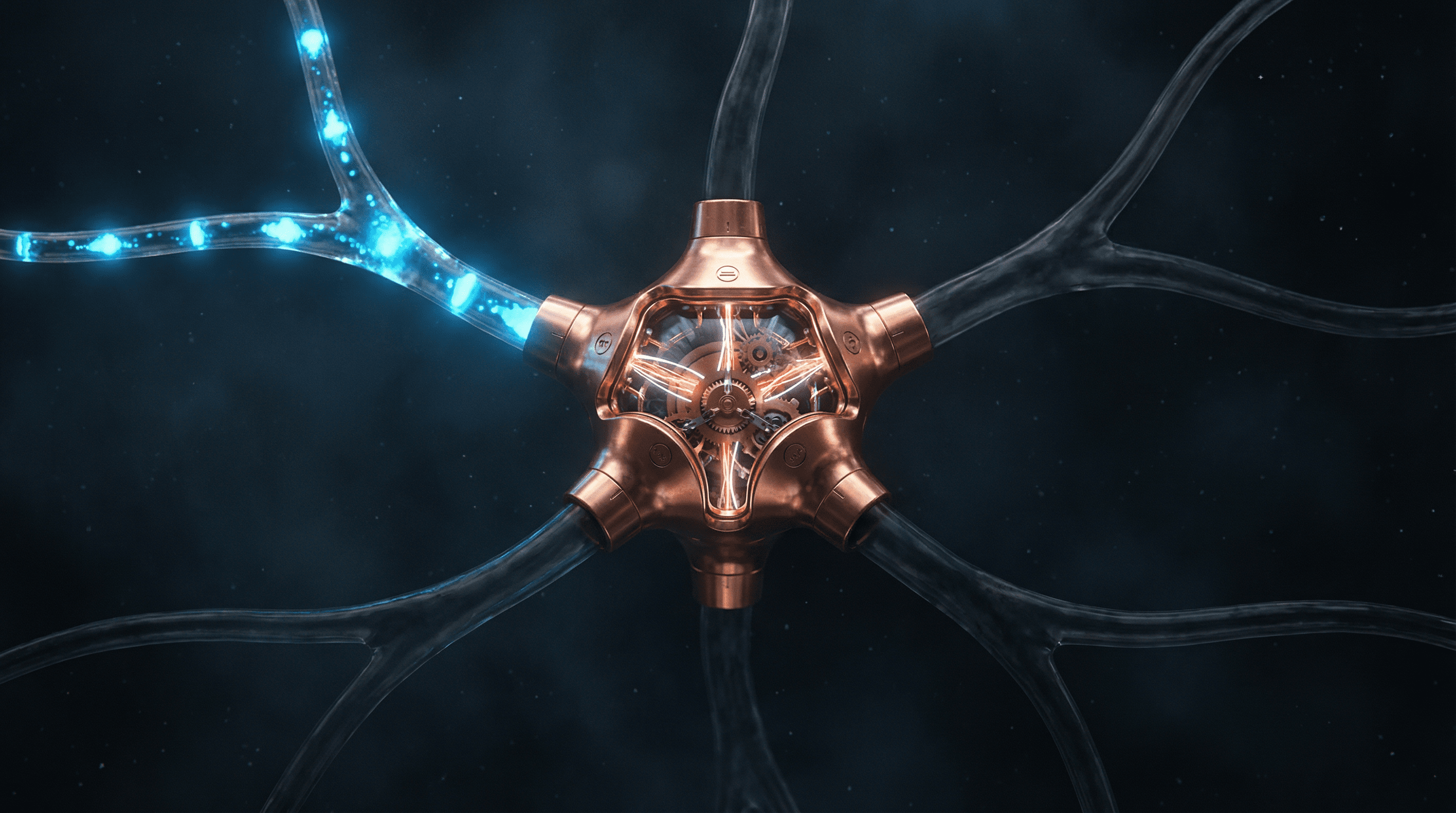
From this neural assessment, Dr. Ceruto designs a targeted intervention protocol. For professionals whose mPFC remains locked on the former identity, the work facilitates the active updating process that D’Argembeau’s research describes. This happens after industry collapse, company exits, or transitions that require rebuilding the neural self-concept from its foundation. Both approaches recognize that career transition is fundamentally neural work, not strategic planning with a motivational overlay.
What to Expect
The process opens with a Strategy Call. Once the mPFC encodes the new direction as self, the hippocampus generates vivid futures in that direction, and the coupling between identity and motivational systems produces genuine engagement rather than intellectual obligation.
References
Mario Humberto Buenrostro-Jáuregui, Sinuhé Muñóz-Sánchez, Jorge Rojas-Hernández, Adriana Ixel Alonso-Orozco, German Vega-Flores, Alejandro Tapia-de-Jesús, Perla Leal-Galicia (2025). Neuroplasticity Mechanisms of Stress Resilience: Neurogenesis, Synaptic Remodeling, and BDNF Pathways. International Journal of Molecular Sciences. https://doi.org/10.3390/ijms26073028
Grace Steward, Vivian Looi, Vikram S. Chib (2025). The Neurobiology of Cognitive Fatigue and Its Influence on Decision-Making. The Journal of Neuroscience. https://doi.org/10.1523/JNEUROSCI.1612-24.2025
Weidong Cai, Jalil Taghia, Vinod Menon (2024). A Multi-Demand Operating System Underlying Diverse Cognitive Tasks. Nature Communications. https://doi.org/10.1038/s41467-024-46511-5
Magdalena Degering, Roman Linz, Lara M.C. Puhlmann, Tania Singer, Veronika Engert (2023). Cortisol Recovery After Acute Stress Predicts Resilient Allostatic State: The Stress Recovery Hypothesis Revisited. Brain, Behavior, and Immunity. https://doi.org/10.1016/j.bbih.2023.100598
The Neural Architecture of Transition Readiness
A career transition is one of the most neurologically demanding events a professional brain processes. It requires simultaneous engagement of systems that typically operate independently: the identity network must reconstruct the self-concept, the reward system must recalibrate its value assignments, the threat-detection system must tolerate extraordinary uncertainty, and the executive control network must maintain strategic function throughout a period of destabilization that can last months or years.
The brain’s response to transition is governed by a principle that neuroscience calls uncertainty intolerance, and this principle explains much of what makes career transitions feel disproportionately difficult. The anterior cingulate cortex monitors the gap between the brain’s predictions about the world and what is actually occurring. When a professional is established in their career, the predictions are well-calibrated: the brain knows what tomorrow looks like, what the professional’s role entails, how success is measured, where the rewards come from. During transition, these predictions collapse. The anterior cingulate registers the prediction failure as a continuous error signal, and this signal activates the same neural alarm that accompanies genuine environmental danger.
The uncertainty is not just cognitive. The dorsal striatum, which encodes habitual behavior patterns, has automated the routines of the current career over years of repetition. Commute patterns, email habits, meeting rhythms, social hierarchies, professional language — all have been encoded as procedural knowledge that requires minimal conscious resources. Transition disrupts these automated routines simultaneously, forcing the executive control system to manage consciously what was previously automatic. The cognitive load of navigating a new professional environment is not just the load of learning new content. It is the load of manually executing hundreds of micro-behaviors that the previous career had automated, and this load consumes the very executive resources needed for strategic thinking about the transition itself.
The default mode network compounds the challenge through a process that resembles rumination. During periods of uncertainty, the default mode network’s self-referential processing intensifies. The brain runs continuous simulations of possible futures, evaluating each against the current self-concept. When the self-concept is itself in flux — which is the defining feature of career transition — these simulations become recursive: the brain is trying to evaluate future scenarios using a self-model that is being reconstructed as the evaluation occurs. The result is the cognitive exhaustion and decision paralysis that characterize the transition experience.
Why Traditional Transition Planning Falls Short
Conventional career transition planning focuses on the strategic and logistical dimensions: market research, skill gap analysis, networking strategy, financial planning, resume optimization. These components are necessary but structurally insufficient for the professionals who find themselves stuck despite thorough preparation.
The insufficiency is biological. Strategic planning is a prefrontal function that requires sustained working memory, cognitive flexibility, and the capacity to evaluate multiple options against complex criteria. These capacities are precisely what the transition state degrades: the uncertainty signal from the anterior cingulate consumes attentional resources, the loss of automated routines overloads executive function, and the default mode network’s recursive self-simulation produces cognitive fatigue that further reduces planning capacity. The professional who has done comprehensive transition planning and cannot execute it is not lacking discipline. They are attempting to use neural systems that the transition state has partially incapacitated.
Networking and relationship-building face a parallel challenge. Social engagement during career transition requires the social cognition network to operate under conditions of identity instability. The professional must present themselves to new contacts while their own sense of who they are is in flux. The temporoparietal junction, which generates mental models of others’ perceptions, is simultaneously processing the professional’s uncertainty about their own identity, creating a noisy signal that the professional experiences as social anxiety, inauthenticity, or the inability to clearly articulate their value. The networking that transition planning prescribes requires the very social-cognitive stability that the transition has disrupted.
How Neural Transition Support Works
My approach treats career transition as a neural event that requires biological support, not just strategic guidance. The work targets the specific systems that the transition state destabilizes, building the brain’s capacity to maintain strategic function, identity coherence, and social effectiveness during a period of maximum uncertainty.

The anterior cingulate’s uncertainty signal is the first priority. The continuous error signal generated by collapsed predictions produces a chronic alarm state that degrades every other system. The work involves recalibrating the anterior cingulate’s tolerance for prediction failure — not by reducing the uncertainty, which is real and should not be minimized, but by restructuring the neural response to uncertainty so that the alarm signal is informative rather than debilitating. When the anterior cingulate can register uncertainty without activating the full threat cascade, the executive control system recovers the resources it needs for strategic planning.
The default mode network’s recursive processing is addressed through targeted engagement that builds the network’s capacity to simulate alternative futures without collapsing into rumination. The distinction is precise: productive future simulation generates new possibilities and evaluates them against flexible criteria. Rumination generates the same scenarios repeatedly and evaluates them against rigid criteria, consuming resources without producing useful output. The work involves strengthening the executive control network’s capacity to guide default mode processing, converting recursive self-reference into productive identity exploration.
The identity reconstruction itself is supported through the methodology I have developed over two decades for working with the self-referential network during periods of transformation. As I describe in The Dopamine Code (Simon & Schuster, June 2026), the reward system’s recalibration during identity transitions follows specific patterns that, when properly supported, produce not just a new career direction but a more resilient self-structure. The brain that successfully navigates a supported identity transition builds architectural features — greater default mode flexibility, higher uncertainty tolerance, more efficient self-referential processing — that persist well beyond the transition itself.
What This Looks Like in Practice
The Strategy Call assesses the specific neural dimensions of your transition state. The pattern of destabilization varies: some professionals are primarily impaired by the uncertainty signal, others by identity fragmentation, others by the cognitive overload of lost routines, others by social-cognitive disruption. Most present with a compound pattern, and the relative contribution of each factor determines the intervention priority.
The work proceeds in parallel with whatever strategic planning you are already doing. It is not a substitute for market research, financial planning, or networking. It is the neural foundation that allows those activities to proceed with the cognitive and emotional resources they require. Clients consistently describe the experience as regaining access to their full capability during a period when they had accepted diminished function as the inevitable cost of transition. The cost is real — transition is neurologically expensive. But the expense can be managed at the architectural level, preserving the strategic, social, and emotional resources that determine whether the transition leads to a genuinely new chapter or an unsatisfying compromise.
For deeper context, explore neuroscience coaching for career transitions.