Career Guidance Service in Beverly Hills

For Beverly Hills professionals navigating career disruption or the gap between external success and internal stagnation — neuroscience provides the clarity that conventional career advice cannot.

Beverly Hills' career landscape is undergoing a structural transformation that no previous generation of professionals has faced. The entertainment industry has contracted by tens of thousands of jobs since 2022, AI is accelerating displacement across creative and legal sectors, and Silicon Beach founders face compressed fundraising timelines that turn career decisions into existential ones. In this market, conventional career guidance — personality inventories, resume optimization, networking strategies — fails because it addresses the surface while ignoring the neural architecture where career decisions, identity, and motivation are actually encoded. Dr. Sydney Ceruto brings a fundamentally different methodology to career guidance: one grounded in how the brain forms career identity, processes transition stress, and computes the value of professional choices.
Schedule a Strategy Call
ForbesUSA TodayHuffPostNewsweekAssociated PressCosmopolitanBusiness InsiderForbesUSA TodayHuffPostNewsweekAssociated PressCosmopolitanBusiness Insider

Career Counseling

Career dissatisfaction in Beverly Hills rarely presents as a straightforward vocational mismatch. It presents as a senior entertainment executive who cannot articulate why a role that once energized her now produces dread, or a Century City attorney who intellectually understands he should pivot but cannot bring himself to act. Ishikawa and colleagues (2024) demonstrated using near-infrared spectroscopy that meaningful occupations activate the orbitofrontal cortex — the brain’s reward-valuation hub — with statistically significant increases in oxygenated hemoglobin (p<0.05). The OFC is part of the dopaminergic reward network that governs motivation and career decision-making. When career alignment is off, the neural reward signal is absent — and no amount of advice compensates for a brain that is not receiving the signal to engage. I identify where the reward circuitry has disconnected from the professional path and intervene at the neural level where career motivation actually originates.

Learn more about Career Counseling in Beverly Hills →

Career Assessment

Standard career assessments measure self-reported preferences and aptitudes. They do not measure what matters most: the neural systems that govern how an individual computes career value, processes professional identity, and translates cognitive capacity into vocational direction. Levorsen and colleagues (2023) in the Journal of Neuroscience found that the medial prefrontal cortex encodes the personal importance of identity attributes — not merely their descriptiveness — establishing mPFC as the neural locus of career-relevant self-concept. Wards and Ehrhardt (2024) in Cerebral Cortex demonstrated that prefrontal engagement during assessment tasks produces better transfer of learned skills to novel challenges. I conduct career assessment at the neural level — mapping how the brain actually represents professional identity and where the disconnects lie — rather than relying on self-report instruments that capture what clients think they want but not what their brains are organized to pursue.

Learn more about Career Assessment in Beverly Hills →

Career Transition Planning

Career transitions activate the brain’s stress response system in predictable and damaging ways. A 2024 review published via PubMed Central confirmed that chronic stress exposure causes HPA axis dysregulation, reducing glucocorticoid receptor expression and elevating CRH, which impairs prefrontal cortex and hippocampal function — precisely the cognitive systems required to plan an effective career transition. Yale researchers (2025) demonstrated that cortisol not only strengthens emotional memories but changes dynamic brain networks associated with both memory and emotion, meaning career setbacks leave neurologically encoded emotional traces that bias future decisions. In Beverly Hills’ entertainment industry — where motion picture and sound recording jobs dropped from approximately 142,000 in 2022 to roughly 100,000 by late 2024 — career transition is not optional. It is structural. I address the neurobiological effects of transition stress directly, working with cortisol-driven emotional memory reconsolidation and prefrontal restoration to enable forward planning that is not hijacked by the neural residue of past disruption.

Learn more about Career Transition Planning in Beverly Hills →

Executive Career Coaching

Executive career development is not a softer version of career counseling. It engages distinct prefrontal systems governing cognitive control, goal-directed behavior, and strategic flexibility. Robbins and Friedman (2021) in Neuropsychopharmacology established that the dorsolateral prefrontal cortex mediates working memory updating, interference resistance, and mental set shifting — the neurological substrate of executive-level career navigation. Valesi and colleagues (2023) in Behavioral Sciences demonstrated using EEG and skin conductance that positive-emotional-attractor style engagement activates the nucleus accumbens, left lateral prefrontal cortex, and parasympathetic stress-reduction networks during sessions. Smith (2025) in Nursing Administration Quarterly confirmed that executive-level work supports neuroplasticity, strengthens emotional regulation, and contributes to durable career adaptability. I engage these specific neural systems through Real-Time Neuroplasticity™, producing executive career outcomes that are neurologically encoded — not dependent on continued external accountability.

Learn more about Executive Career Coaching in Beverly Hills →

Personal Branding

Personal branding is the externalization of self-concept, and self-concept has a specific neural address. Levorsen and colleagues (2023) demonstrated that the medial prefrontal cortex encodes not just what you believe about yourself but how important each piece of self-knowledge is to your identity. A 2022 study in Brain Sciences found that the vmPFC associates emotional value with autobiographical memories, forming the foundation of personal narrative — and that disrupting this region reduces self-enhancement tendency and lowers mood. In Beverly Hills, where personal brand carries measurable financial weight — from talent negotiation leverage to investor perception to luxury real estate deal flow — branding that does not engage the neural self-system produces messaging that cannot be sustained under pressure. I build personal brands from the mPFC outward: first establishing neural alignment between self-concept and professional narrative, then translating that alignment into public-facing communication that holds because it is neurologically authentic.

Learn more about Personal Branding in Beverly Hills →

Salary Negotiation Coaching

Salary negotiation is a neural event governed by three distinct brain systems: anchoring bias (dorsolateral prefrontal cortex), fairness processing (ventromedial PFC and anterior insula), and stress-impaired cognitive control. Mulay and colleagues (2025) in Cognitive, Affective & Behavioral Neuroscience used fMRI to demonstrate that decisions made immediately after stress exposure are associated with significantly lower activation in the right fronto-opercular cortex and left anterior dlPFC — reducing cognitive control and producing less deliberate decision-making. For Beverly Hills professionals negotiating first-look streaming deals, partnership equity structures, or Series B term sheets, stress-induced dlPFC suppression causes systematic under-negotiation. Executives accept lower outcomes than their market value justifies because the neural infrastructure for strategic evaluation has been temporarily compromised by the stress of the negotiation itself. I address this mechanism directly, building dlPFC activation capacity and anchoring-resistance before high-stakes negotiations — so the brain performing the negotiation is operating at full prefrontal capacity.

Learn more about Salary Negotiation Coaching in Beverly Hills →

Beverly Hills is experiencing a convergence of career disruption forces unlike anything in its history, and each of the city’s dominant professional sectors is generating distinct neurological pressure on the individuals navigating them.

The entertainment industry contraction is the most visible driver. Motion picture and sound recording jobs in Los Angeles dropped from approximately 142,000 in 2022 to roughly 100,000 by late 2024 — a loss of over 40,000 positions driven by streaming disruption, the WGA and SAG-AFTRA strikes, and structural studio restructuring. On-location shoot days in Los Angeles declined 53% between Q4 2019 and Q4 2024, per the Milken Institute’s 2025 report. AI is accelerating this displacement: a study of 300 entertainment industry leaders found that three-quarters reported AI tools led to elimination, reduction, or consolidation of jobs, with projections suggesting approximately 204,000 positions adversely affected over the next three years. These are not entry-level job losses. Entertainment executives — showrunners, agency partners, studio division heads, IP attorneys — face career identity crises compounded by the public visibility that Beverly Hills’ professional culture imposes.

Century City’s legal and financial district amplifies the pressure through different mechanisms. Entertainment law firms like Wilson Sonsini, Paul Hastings, and Sidley Austin serve clients navigating the same industry upheaval, and the attorneys themselves face career trajectory uncertainty as AI disrupts legal discovery and billable-hour economics. Associates at the partner-transition threshold and lateraling attorneys represent a high-value segment for neuroscience-based career guidance because the decision complexity exceeds what conventional career advisors can address.

Silicon Beach’s startup ecosystem generates its own career pressure: compressed fundraising timelines, founder-to-executive transitions, exit anxiety, and the identity complexity of creative professionals pivoting into technology business. Los Angeles ranked fourth globally in the 2024 Global Startup Ecosystem Report, and the entertainment-to-tech crossover is unique to this market — creators building tech-enabled IP businesses face cognitive tensions between creative identity and business scaling that no standard career framework addresses.

Beverly Hills proper, with a median age of 47.9 and over 52% of households earning above $100,000, is an established professional market where career guidance clients are not early-career job seekers but mid-career and senior professionals whose identities are deeply intertwined with their professional roles. The therapy-saturated market means most have already tried conventional approaches. They arrive at MindLAB ready for something that works at the level of the brain.


Dr. Sydney Ceruto, PhD — Founder, MindLAB Neuroscience

Dr. Sydney Ceruto holds a PhD in Behavioral & Cognitive Neuroscience from NYU and Master’s degrees in Clinical Psychology and Business Psychology from Yale University. She is a Lecturer in the Wharton Executive Development Program at the University of Pennsylvania, an Executive Contributor to Forbes Coaching Council, and an inductee in Marquis Who’s Who in America. Dr. Ceruto founded MindLAB Neuroscience in 2000 and has spent more than 26 years developing and refining her proprietary methodology, Real-Time Neuroplasticity™. She is the author of The Dopamine Code (Simon & Schuster, June 2026).

References

Schultz, W. (2016). Dopamine reward prediction-error signalling: a two-component response. Nature Reviews Neuroscience, 17(3), 183–195. https://doi.org/10.1038/nrn.2015.26

Diamond, A. (2013). Executive functions. Annual Review of Psychology, 64, 135–168. https://doi.org/10.1146/annurev-psych-113011-143750

Northoff, G., Heinzel, A., de Greck, M., Bermpohl, F., Dobrowolny, H., & Panksepp, J. (2006). Self-referential processing in our brain: a meta-analysis of imaging studies on the self. NeuroImage, 31(1), 440–457. https://doi.org/10.1016/j.neuroimage.2005.12.002

Success Stories

“I struggled with anxiety since I was 13. I simply could not control my thoughts, and no medication or therapy was helping. Since working with Sydney, I've gained a whole new perspective on what anxiety actually is and — most importantly — how to control it. Her approach is unlike anything I've ever experienced, a must for anyone who wants to understand what drives their actions and emotions. At 28, I'm finally in a happy place with solid emotional management and real coping skills.”

Lydia G. — Gallerist Paris, FR

“I'd optimized everything — diet, fitness, sleep — but my cognitive sharpness was quietly declining and no one could explain why. Dr. Ceruto identified the synaptic density patterns that were thinning and built a protocol to reverse the trajectory. This wasn't prevention in theory. My neuroplasticity reserve is measurably stronger now than it was three years ago. Nothing I'd tried before even addressed the right problem.”

Henrique L. — University Dean Lisbon, PT

“Four hours a night for over two years — that was my ceiling. Supplements, sleep protocols, medication — nothing touched it because nothing addressed why my brain wouldn't shut down. Dr. Ceruto identified the cortisol loop that was keeping my nervous system locked in a hypervigilant state and dismantled it. I sleep now. Not because I learned tricks — because the pattern driving the insomnia no longer exists.”

Adrian M. — Hedge Fund Manager New York, NY

“My body had simply stopped knowing when to sleep. Crossing time zones weekly for over two years had broken something fundamental, and every protocol, supplement, and device I tried couldn't hold longer than a few days. Dr. Ceruto identified the disruption at the level of my suprachiasmatic nucleus and recalibrated the signaling pattern driving the dysfunction. Within weeks, my circadian rhythm locked back in. I sleep now. Consistently. Regardless of where I land.”

Jonathan K. — Diplomat Geneva, CH

“Dr. Ceruto delivers results. I’ve worked with her at two different points in my career. By the end of the introductory consultation, I knew I’d found the right person. She pointed out the behaviors and thought distortions holding me back, then guided me through the transformation with direct, practical recommendations I could apply immediately. She supplemented our sessions with valuable reading materials and was available whenever I needed her. I am a better leader and a better person because of our work together.”

Leeza F. — Serial Entrepreneur Austin, TX

“When the inheritance came, it didn't feel like a gift — it felt like a grenade in every family relationship I had. I couldn't make a single financial decision without a flood of guilt and second-guessing. Years of talking through it hadn't changed anything. Dr. Ceruto identified the neural loop connecting money to fear of family rejection and dismantled it. The paralysis didn't fade — it stopped.”

Vivienne R. — Philanthropist Palm Beach, FL

Frequently Asked Questions About Neuroscience-Based Career Direction

How can neuroscience help with career direction when standard career assessments have not provided clarity?

Standard assessments measure conscious preferences and behavioral traits — surface data that may not reflect the neural architecture actually driving career satisfaction. The brain's valuation system computes career direction through circuits that integrate emotion, identity, fear, and reward prediction below conscious awareness. When these circuits produce conflicting or biased signals, no amount of surface-level assessment produces genuine clarity. Dr. Ceruto works at the circuit level where career direction is actually computed.

Why do I feel stuck in my career despite having the skills and experience to make a change?

Career stuckness with adequate capability is one of the clearest indicators of neural architecture constraint. The default mode network maintains your professional identity as a fixed neural model, and the threat-detection system classifies career change as identity-level danger. These circuits generate resistance that manifests as procrastination, analysis paralysis, and the persistent inability to act on career decisions you have already made intellectually.

Can this approach help me understand why I keep ending up in the same type of unsatisfying role?

Repetitive career patterns reflect neural template matching — the brain's decision circuits contain encoded templates for professional identity, risk tolerance, and reward processing that guide career decisions below conscious awareness. These templates direct you toward neurologically familiar territory regardless of your conscious intentions. Restructuring the templates produces genuinely different career choices because the neural computation driving selection has changed.

How does this approach address career transition anxiety?

Career transition anxiety is generated by the amygdala classifying professional identity change as a survival-level threat — the same circuits that process physical danger. This is why career transitions feel disproportionately frightening relative to their objective risk. Dr. Ceruto recalibrates the threat classification so career decisions are processed with proportionate rather than survival-level risk assessment, allowing clarity to emerge naturally.

Is this approach appropriate for early-career professionals, or only for experienced executives?

The approach applies at any career stage because the neural architecture governing career decisions, professional identity, and risk tolerance is active throughout professional life. Early-career professionals benefit from career-brain alignment before decades of miscalibrated decisions compound. Experienced professionals benefit from restructuring neural patterns that have accumulated over decades of career investment.

How does this work address the financial fears associated with career change?

Financial fears during career change are processed through the brain's loss-aversion circuits, which assign approximately twice the emotional weight to potential loss as to equivalent gain. This biological bias systematically overstates career change risk and understates the cost of remaining in an unsatisfying role. Dr. Ceruto recalibrates the loss-aversion architecture so financial evaluation of career options is proportionate rather than fear-distorted.

What can I expect from the Strategy Call regarding career direction?

The Strategy Call maps the neural systems governing your career decision-making — identifying which circuits are producing the confusion, paralysis, or repetitive patterns you are experiencing. It assesses the relationship between your professional identity architecture, your reward system calibration, and your threat-response patterns. You will leave with a clear understanding of what is driving your career challenges at the neurological level.

How long does it take to achieve career clarity through this approach?

Career clarity emerges as the neural circuits generating confusion are recalibrated — typically within weeks of targeted work. However, the depth of the clarity deepens as identity architecture updates and threat-response patterns recalibrate over subsequent months. The initial clarity comes relatively quickly; the full integration of a new career direction into the brain's identity model is a deeper process.

Ready to Perform at Your Highest Level?

In Beverly Hills, career identity and professional reputation are inseparable from personal worth — and the stakes of every transition are amplified by LA's high-visibility professional culture. The most important career decision you can make is investing in the neural architecture that drives every decision after it.

Schedule a Strategy Call
MindLAB Neuroscience consultation room

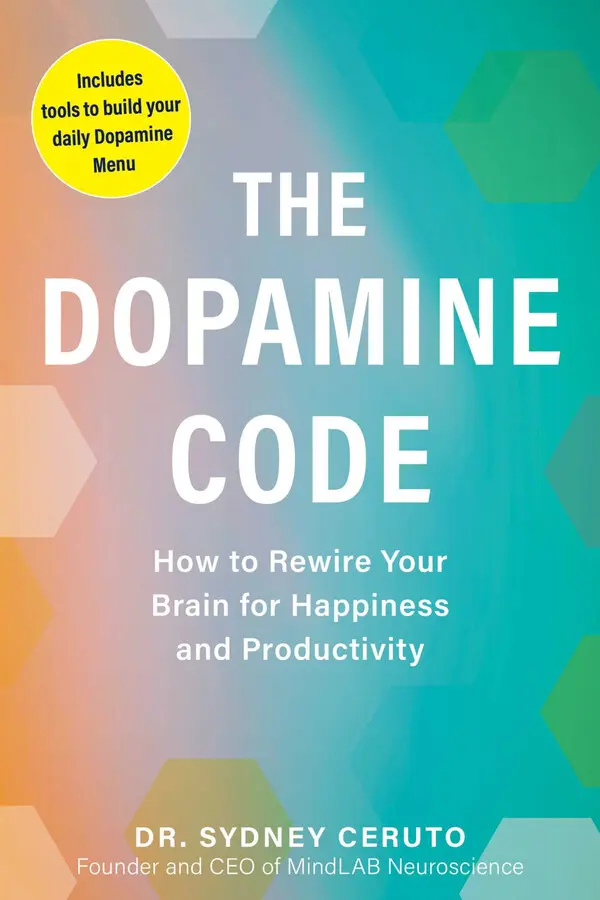
The Dopamine Code

Decode Your Drive

Why Your Brain Rewards the Wrong Things

Your brain's reward system runs every decision, every craving, every crash — and it was never designed for the life you're living. The Dopamine Code is Dr. Ceruto's framework for understanding the architecture behind what drives you, drains you, and keeps you locked in patterns that willpower alone will never fix.

Published by Simon & Schuster, The Dopamine Code is Dr. Ceruto's framework for building your own Dopamine Menu — a personalized system for motivation, focus, and enduring life satisfaction.

Order Now

Ships June 9, 2026

The Dopamine Code by Dr. Sydney Ceruto — Decode Your Drive
Locations

The Intelligence Brief

Neuroscience-backed analysis on how your brain drives what you feel, what you choose, and what you can’t seem to change — direct from Dr. Ceruto.