Cortisol & HPA Axis Optimization in Beverly Hills

Dr. Sydney Ceruto provides neuroscience-grounded education on the stress regulation system governing cortisol, helping Beverly Hills professionals understand and recalibrate the HPA axis driving their exhaustion.

Book a Strategy Call

There is a specific paradox that defines the modern high-capacity professional: exhausted but unable to rest, depleted but wired, cognitively drained but incapable of downshifting. This is not a personality trait or a failure of willpower. It is the neurobiological signature of a dysregulated HPA axis – the hypothalamic-pituitary-adrenal, the body’s central stress-response system. This system governs cortisol production, stress reactivity, and the brain’s capacity to distinguish between genuine threat and accumulated pressure.

How the HPA Axis Works

The HPA axis is a neuroendocrine cascade that begins in the hypothalamus — the brain’s hormonal control center —. When the brain detects a threat – real or perceived – the paraventricular nucleus releases corticotropin-releasing hormone, which signals the anterior pituitary to release adrenocorticotropic hormone, which triggers the adrenal cortex to produce cortisol. In a healthy system, cortisol follows a precise circadian rhythm: a sharp rise upon waking known as the cortisol awakening response, a gradual decline through the day. During deep sleep, cortisol reaches its nadir when cellular repair and memory consolidation, converting short-term memories to long-term, occur.

This rhythm is not decorative. It is architecturally load-bearing. The cortisol awakening response mobilizes glucose, sharpens attention, and prepares the prefrontal cortex — the brain’s executive control center — for the cognitive demands of the day. The evening decline permits the parasympathetic nervous system — the body’s brake for recovery — to take over. This enables recovery, immune function, and the glymphatic waste clearance that keeps the brain healthy over decades.

What Goes Wrong Under Chronic Stress

When stress becomes chronic and unresolved, the HPA axis loses its rhythmic precision. The system does not simply produce too much cortisol – it loses the ability to calibrate. Some individuals develop a flattened diurnal curve, where cortisol remains moderately elevated throughout the day without the sharp morning peak or the deep evening trough. Others develop a blunted cortisol awakening response, waking without the neurochemical ignition the brain needs for full cognitive engagement. Still others oscillate between hyperactivation and collapse, abnormally high activity in a brain region, with cortisol spikes triggered by minor stressors followed by periods of profound depletion.

Macro cross-section of neural pathway with copper sheathing forming around blue signal core depicting active brain optimization

Each of these patterns carries distinct neurological consequences. Sustained cortisol elevation suppresses brain-derived neurotrophic factor — a growth protein for neurons — expression in the hippocampus by up to sixty percent, directly impairing neurogenesis and memory consolidation. Longitudinal studies have demonstrated that elevated circulating cortisol is associated with reduced total cerebral brain volume, lower hippocampal volume, and impaired performance on memory tasks. Even neurologically healthy adults in their forties and fifties show impaired visual perception tasks. Prolonged glucocorticoid exposure has been shown in primate models to produce hippocampal neuronal damage that correlates with the duration of exposure.

The Prefrontal Cortex Under Siege

The prefrontal cortex is the seat of executive function, decision-making, and cognitive flexibility, the ability to shift thinking between concepts. It is densely populated with glucocorticoid receptors, making it exquisitely sensitive to cortisol levels. Under acute stress, cortisol briefly enhances prefrontal engagement, sharpening focus and narrowing attention to the most relevant information. But under chronic stress, the relationship inverts. Sustained glucocorticoid exposure causes dendritic retraction in prefrontal neurons, reducing the synaptic connections that support complex reasoning. The result is a brain that becomes progressively less capable of the nuanced, multi-variable thinking that defines high-level professional work – even as the stress demanding that thinking continues to escalate.

The Sleep-Cortisol Feedback Loop

Elevated evening cortisol suppresses slow-wave sleep – the deepest phase of sleep architecture, during which the brain’s glymphatic system operates at peak efficiency, flushing metabolic waste including amyloid-beta. When slow-wave sleep is compromised, the brain’s waste clearance system underperforms, neuroinflammatory markers rise. The HPA axis becomes further dysregulated because the nocturnal cortisol nadir – the signal that permits full biological recovery – never fully arrives. This creates a self-reinforcing loop: stress disrupts sleep, disrupted sleep amplifies stress reactivity, and the HPA axis drifts further from its optimal rhythm.

Circadian Anchoring and HPA Recalibration

The HPA axis is fundamentally a circadian system. Its rhythm is entrained by the suprachiasmatic nucleus — the brain’s master clock —, which receives timing information from light exposure, meal timing, physical activity, and social cues. This means that cortisol dysregulation, the breakdown of normal control systems, is not simply a stress problem. It is a timing problem. Recalibration requires addressing the inputs that anchor the biological clock: consistent light exposure upon waking, meal timing aligned with the active metabolic phase. It also requires physical activity that reinforces the cortisol awakening response, and evening routines that protect the cortisol nadir.

What Dr. Ceruto’s Approach Provides

Dr. Ceruto’s neuroscience-based approach to HPA axis optimization begins with understanding the individual’s specific pattern of dysregulation. A flattened cortisol curve, a blunted awakening response, and a hyperreactive stress response each require different strategies. The work is grounded in the neuroscience of how the HPA axis communicates with the prefrontal cortex and hippocampus. It is also grounded in how the HPA axis communicates with the autonomic nervous system, the body’s automatic regulation system. Evidence-based interventions can restore rhythmic precision that makes sustained cognitive performance possible.

Walnut desk with marble inlay crystal brain sculpture and MindLAB journal in warm California afternoon light in Beverly Hills private study

This is not stress management in the conventional sense. It is the applied neuroscience of how a biological system loses its calibration under sustained load, and what it takes to restore it.

Why Cortisol & HPA Axis Optimization Matters in Beverly Hills

The HPA axis, the body’s central stress-response system, is under sustained assault across Beverly Hills and the Westside professional community. The epidemiology is unambiguous: research consistently finds that the majority of senior leaders report experiencing exhaustion indicative of burnout, with the associated productivity losses measurable at the organizational level. In a geography defined by entertainment and technology – industries structurally built around extremes of pressure and idleness – the unpredictable stress pattern most damaging to HPA axis stability is not the exception. It is the norm.

Los Angeles adds a uniquely potent cortisol amplifier: the commute. The average LA driver spent eighty-eight hours sitting in traffic in 2024, the third highest in the United States. Traffic does not just consume time – it continuously triggers the sympathetic nervous system — the body’s accelerator for stress —. A cortisol saliva test on a commuter in heavy traffic found levels that spiked dramatically at midday, correlated directly with the drive. For an executive commuting between Pacific Palisades and a Burbank lot or Century City office, the daily drive is a repeated neuroendocrine insult layered on top of an already elevated baseline.

Hollywood’s overwork culture accelerates the problem. The entertainment industry operates on intense production sprints followed by periods of unemployment – creating the kind of unpredictable stress cycles most destructive to HPA rhythm. Writers face staffing season deadlines that compress months of creative labor into weeks. Talent agency desks run twelve-plus-hour days as standard. Below-the-line production work involves turnaround times as short as nine hours between shifts, generating chronic partial sleep deprivation that compounds cortisol dysregulation.

The post-strike contraction deepened the burden. Entertainment workers adopted what has been described as a “survive till ’25” mentality – a psychologically corrosive stance in which sustained uncertainty triggers the low-grade, unresolvable chronic stress pattern most damaging to HPA axis function. Silicon Beach tech workers at Snap, Google, TikTok, and the region’s hundreds of startups carry their own cortisol burden: always-on culture, investor deadlines, and the intense performance pressure of public-company visibility. The local health market offers therapy, meditation apps, and IV drip lounges – none of which address the HPA axis directly or systematically. Dr. Ceruto’s neuroscience-grounded approach fills a specific, unoccupied tier between those options.

Dr. Sydney Ceruto, PhD — Founder, MindLAB Neuroscience

Dr. Sydney Ceruto, PhD — Founder & CEO, MindLAB Neuroscience

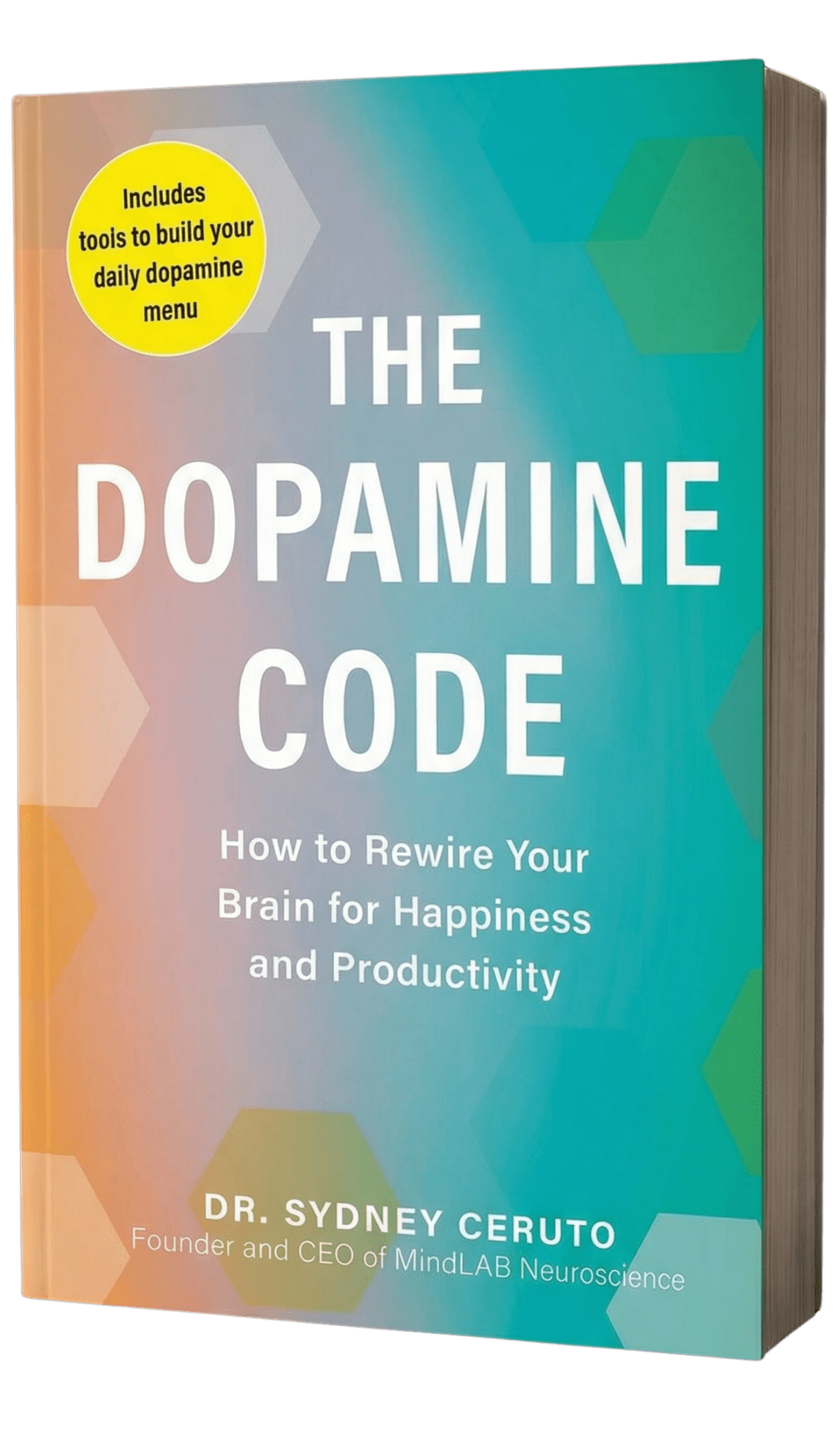
Dr. Ceruto holds a PhD in Behavioral & Cognitive Neuroscience from NYU and two Master’s degrees from Yale University. She lectures at the Wharton Executive Development Program at the University of Pennsylvania and has been an Executive Contributor to the Forbes Coaching Council since 2019. Dr. Ceruto is the author of The Dopamine Code (Simon & Schuster, June 2026). She founded MindLAB Neuroscience in 2000 and has spent over 26 years pioneering Real-Time Neuroplasticity™ — a methodology that permanently rewires the neural pathways driving behavior, decisions, and emotional responses.

References

Herman, J. P., Nawreen, N., Smail, M., & Cotella, E. (2020). Brain mechanisms of HPA axis regulation: Neurocircuitry and feedback in context. Stress, 24(4), 383-401. https://doi.org/10.1080/10253890.2020.1859475

Echouffo-Tcheugui, J. B., Conner, S. C., Himali, J. J., Maillard, P., DeCarli, C. S., Beiser, A. S., Vasan, R. S., & Seshadri, S. (2018). Circulating cortisol and cognitive and structural brain measures. Neurology, 91(21), e1961-e1970. https://doi.org/10.1212/WNL.0000000000006549

Sapolsky, R. M., Uno, H., Rebert, C. S., & Finch, C. E. (1990). Hippocampal damage associated with prolonged glucocorticoid exposure in primates. Journal of Neuroscience, 10(9), 2897-2902. https://doi.org/10.1523/JNEUROSCI.10-09-02897.1990

Liston, C., & Gan, W. B. (2011). Glucocorticoids are critical regulators of dendritic spine development and plasticity in vivo. Proceedings of the National Academy of Sciences, 108(38), 16074-16079. https://doi.org/10.1073/pnas.1110444108

Success Stories

“Slower processing, foggier recall, decisions that used to be instant taking longer than they should — I'd been accepting it all as inevitable decline for two years. Dr. Ceruto identified the prefrontal efficiency pattern that was degrading and restructured it at the neurological level. The sharpness didn't just come back. It came back faster and more precise than it was a decade ago. Nothing I'd tried before even addressed the right problem.”

Elliott W., General Partner Andreessen Horowitz

“Nothing was wrong — and that's exactly why no one could help me. I wasn't struggling. I wanted to know what my brain was actually capable of if its resting-state architecture was optimized. Dr. Ceruto mapped my default mode network and restructured how it allocates resources between focused and diffuse processing. The cognitive clarity I operate with now isn't something I'd ever experienced before — and I had no idea it was available.”

Nathan S., Senior Investment Strategist Bridgewater Associates

“I'd optimized everything — diet, fitness, sleep — but my cognitive sharpness was quietly declining and no one could explain why. Dr. Ceruto identified the synaptic density patterns that were thinning and built a protocol to reverse the trajectory. This wasn't prevention in theory. My neuroplasticity reserve is measurably stronger now than it was three years ago. Nothing I'd tried before even addressed the right problem.”

Henrique L., Head of Strategic Planning Galp Lisbon, PT

“After the concussion, my processing speed collapsed — I couldn't hold complex information the way I used to, and no one could explain why the fog wasn't lifting. Dr. Ceruto mapped the damaged pathways and built compensatory networks around them. My brain doesn't work the way it did before the injury. It works differently — and in some ways, more efficiently than it ever did.”

Owen P., Founder & CEO Sports Performance Scottsdale, AZ

“Ninety-hour weeks felt like discipline — the inability to stop felt like a competitive advantage. Nothing I tried touched it because nothing identified what was actually driving it. Dr. Ceruto mapped the dopamine loop that had fused my sense of identity to output. Once that circuit was visible, she dismantled it. I still work at a high level. I just don't need it to know who I am anymore.”

Jason M., Managing Director Lazard New York, NY

“Every close relationship I had eventually hit the same wall — I'd flood emotionally and shut down or explode, and nothing I'd tried gave me real control over it. Dr. Ceruto identified that my autonomic nervous system was defaulting to fight-or-flight the moment real intimacy was on the line. She didn't give me coping tools. She restructured the default. The flooding stopped because the trigger architecture changed.”

Simone V., Executive Director Arts Nonprofit New York, NY

Frequently Asked Questions About Cortisol & HPA Axis Optimization in Beverly Hills

What does HPA axis optimization mean at MindLAB Neuroscience?

The HPA axis — the body's central stress-response system — is the neuroendocrine system that regulates cortisol production and stress reactivity. When it loses its rhythmic precision under chronic stress, the consequences include impaired memory and reduced cognitive flexibility, the ability to shift thinking between concepts. This dysregulation also causes disrupted sleep and the paradoxical state of being exhausted yet unable to rest. Dr. Ceruto educates clients on their specific pattern of HPA dysregulation, the breakdown of normal control systems, and provides neuroscience-based strategies for restoring the cortisol rhythm that supports sustained cognitive performance.

How does cortisol actually damage the brain?

Sustained cortisol elevation suppresses brain-derived neurotrophic factor, a growth protein for neurons, expression in the hippocampus, impairing neurogenesis and memory consolidation. It causes dendritic retraction in prefrontal cortex — the brain's executive control center — neurons, reducing the synaptic connections that support complex reasoning. Elevated evening cortisol suppresses slow-wave sleep, compromising the brain's glymphatic waste clearance system. Over time, these effects are associated with reduced brain volume and accelerated cognitive decline – even in otherwise healthy adults.

Who is this work most relevant for?

Individuals carrying sustained professional pressure who notice their cognitive endurance declining, their sleep quality deteriorating, or their capacity to recover between periods of high demand diminishing. People who feel simultaneously wired and exhausted, who find their thinking less sharp despite working harder than ever. Those who recognize that their stress response system seems stuck in a mode that no longer serves them.

What does the process of beginning this work look like?

It starts with a Strategy Call – a phone-only conversation with Dr. Ceruto that costs $250. The call is designed to assess the individual’s situation, discuss the neuroscience relevant to their experience, and determine whether this approach is the right fit. Program structure and investment details are discussed during the Strategy Call.

How long does it take to see changes in cortisol rhythm and stress response?

Early shifts in sleep quality and subjective stress experience can occur within the first few weeks as circadian anchoring (relating to the body's 24-hour biological clock) and autonomic regulation strategies take effect. Structural recalibration of the HPA axis — the body's central stress-response system — – the kind that produces durable changes in cortisol rhythm and stress resilience. This typically requires consistent work over two to four months. Dr. Ceruto sets realistic timelines based on the individual's specific dysregulation — the breakdown of normal control systems — pattern.

Take the First Step Toward Stress Hormone Balance

The Strategy Call is a focused conversation with Dr. Ceruto that maps the specific neural mechanisms driving your concerns and determines the right path forward.

Book a Strategy Call
MindLAB Neuroscience consultation room
Locations

The Intelligence Brief

Neuroscience-backed analysis on how your brain drives what you feel, what you choose, and what you can’t seem to change — direct from Dr. Ceruto.