Insomnia Support in Beverly Hills

Insomnia is not a sleep problem. It is a wakefulness problem — and the brain circuitry maintaining it can be identified and restructured.

Insomnia is not a sleep problem — it's a brain problem. The brain has learned to treat the act of trying to sleep as a threat, and that neural pattern reinforces itself every sleepless night. At MindLAB Neuroscience, we identify the mechanisms sustaining your insomnia cycle and build a targeted protocol to retrain your brain's relationship with sleep.
Book a Strategy Call

Key Points

  1. Chronic insomnia is cortical hyperarousal — the brain's electrical activity remains abnormally elevated not just at bedtime but across the entire 24-hour day.
  2. The severity of hyperarousal tracks directly with sleep impairment in a measurable dose-response relationship.
  3. Chronic restriction to six hours per night for two weeks produces cumulative cognitive deficits equivalent to two full nights of total sleep deprivation.
  4. One night of total sleep deprivation produces over sixty percent amplification in the amygdala's reactivity to negative emotional content.
  5. The sleep-monitoring cognitive architecture is self-reinforcing: monitoring produces arousal, arousal prevents sleep, and failure confirms the prediction that started the cycle.
  6. The brain retains the capacity for healthy sleep architecture at any age — the goal is removing the barriers the arousal system has erected against sleep, not forcing sleep to happen.
  7. Resolution requires identifying whether the primary driver is hyperarousal, stress-system dysregulation, or conditioned cognitive patterns — each requires different intervention.

The Brain That Won’t Shut Down

“Chronic insomnia is not the absence of sleep drive. It is a state of pathological wakefulness — the brain staying locked in alert mode — that overrides the brain's ability to transition from awake to asleep. The central signature is cortical hyperarousal that persists not just at bedtime but across the entire day.”

Chronic insomnia is fundamentally misunderstood. It is not a deficit of sleep drive. It is a state of pathological wakefulness — the brain’s electrical activity locked in a high-speed processing mode that resists sleep onset. This overactivation is not limited to bedtime. It runs across the entire 24-hour cycle.

This is not a nighttime-only condition. Sleep research consistently shows that people with chronic insomnia have overactive brain signaling not only at bedtime but during daytime rest as well. The more overactive the brain, the longer it takes to fall asleep and the less restorative the sleep becomes. The brain is running too fast, all the time. Sleep is simply when this becomes most obvious.

When the Sleep Switch Gets Stuck

The brain maintains wakefulness and sleep through a mechanism scientists call the flip-flop switch. Sleep-promoting and wake-promoting centers compete for dominance. In chronic insomnia, the wake-promoting centers resist the signals that should quiet them at sleep onset. The switch gets stuck in the “on” position.

Translucent copper and blue wave forms visualizing sleep cycle phases against deep navy background

The result is a brain caught between states. Not fully awake, not fully asleep. It cycles through fragmented transitions that never reach the depth or continuity required for restoration.

The homeostatic — the body’s self-balancing — dimension of insomnia compounds the problem. Under normal conditions, sleep pressure builds steadily across waking hours. Eventually it overrides the arousal system and initiates sleep. In chronic insomnia, even strong sleep pressure fails to overcome the brain’s overactivation. The arousal system has become so persistently fired up that it resists the chemical signals meant to bring it down. The sleep drive is present. The arousal override is stronger.

The Hidden Cost of Chronic Exhaustion

The cognitive consequences are measurable and progressive. Chronic insomnia produces a 40% increased risk of cognitive impairment over time. People with insomnia also show a faster rate of cognitive decline compared to healthy sleepers of the same age. The structural evidence confirms this: increased white matter hyperintensities — areas of damaged neural insulation — and elevated amyloid deposits — protein buildup linked to neurodegeneration. These are not abstract risks. They are cumulative changes that worsen the longer insomnia persists.

At the emotional level, the damage is equally specific. Sleep deprivation amplifies the amygdala’s reactivity to negative stimuli by roughly 60%. At the same time, the prefrontal cortex loses its ability to regulate those alarm signals. The brain becomes hyperreactive to perceived threats while losing its primary brake on those reactions. Emotional responses become ungoverned and disproportionate to their triggers.

The Staggering Scale of This Problem

The economic toll is staggering. Approximately 23% of working adults meet the criteria for insomnia. The condition produces an annualized performance loss of 11.3 days per person. Most of this loss shows up as presenteeism — reduced effectiveness while physically present — rather than missed days. Across the U.S. workforce, this represents $63.2 billion in annual productivity costs. Globally, roughly 852 million adults meet insomnia criteria.

Why Willpower Makes Sleep Worse

The longer this pattern persists, the stronger the brain’s conditioned response to the sleep environment becomes. Conditioned arousal develops through repeated pairing of the bedroom with anxiety and failed sleep attempts. This conditioning works like any other learned fear response. The brain’s memory systems encode the bedroom as a threat environment. Each failed night deepens the association. This cycle does not resolve through willpower, relaxation techniques, or pharmaceutical suppression of symptoms.

Rebuilding Sleep From the Inside Out

Dr. Ceruto’s approach addresses the specific neural circuits maintaining insomnia rather than suppressing its symptoms. The methodology identifies the primary driver: brain overactivation, stress-system breakdown, conditioned arousal to the sleep environment, disrupted sleep-wake switching, or a combination. Interventions then restore the flexibility, deactivation capacity, and 24-hour clock integrity that chronic insomnia has eroded. The goal is not to force sleep through external means. It is to rebuild the brain’s capacity to generate and sustain sleep on its own.

Walnut desk with marble inlay crystal brain sculpture and MindLAB journal in warm California afternoon light in Beverly Hills private study

For deeper context, explore why people avoid getting help for insomnia.

Marker What You Experience What's Happening Neurologically What We Restructure
Exhausted but unable to sleep Lying in bed physically drained yet mentally wired, unable to cross the threshold into sleep The brain's sleep-wake switch — a bistable circuit that should tip decisively — is being held in the wake position by sustained arousal center activation The arousal system's baseline activation so the sleep-promoting circuit can reach the threshold needed to initiate the transition
24-hour alertness Feeling wired or on edge during the day, not just at bedtime, with an inability to fully relax Elevated brain activity persists at frequencies associated with vigilance and active processing around the clock — this is a 24-hour state, not a nighttime problem The round-the-clock hyperarousal pattern at its source, not just the bedtime symptoms
Sleep monitoring making things worse Tracking sleep data, clock-watching, and mentally cataloging how many hours remain until the alarm Attention has been recruited toward sleep-related threat cues — the anterior insula detects wakefulness signals while the error-monitoring circuit tracks each failure The self-reinforcing cognitive architecture: monitoring produces arousal, arousal prevents sleep, failure confirms the prediction that generated the monitoring
Compounding cognitive deficits Cognitive performance degrading steadily over weeks in ways that feel like more than just tiredness Chronic restriction to six hours per night over two weeks produces cumulative deficits equivalent to two full nights of total sleep deprivation The underlying mechanisms maintaining insomnia so sleep architecture can restore naturally rather than accumulating further deficit
Emotional overreaction Disproportionate emotional responses to minor events, reduced ability to maintain perspective One night of total sleep deprivation produces over sixty percent amplification in amygdala reactivity to negative content — the emotional brain operates without its regulatory brake The cortisol rhythm so evening physiology aligns with sleep architecture, restoring the regulatory conditions that keep emotional responses proportionate

Why Insomnia Support Matters in Beverly Hills

The Beverly Hills professional environment produces a specific variant of insomnia. It is neurologically predictable and deeply resistant to surface-level interventions. The entertainment industry’s operational rhythms impose a pattern of constant cognitive engagement that directly trains the brain overactivation underlying chronic insomnia.

Entertainment professionals along the Wilshire Boulevard and Century City corridor operate under continuous availability expectations. These demands keep the locus coeruleus — the brainstem’s arousal center — chronically activated. When communication spans from early-morning East Coast openings to late-night international windows, the brain never receives a clear signal that the day has ended. Over months and years, this pattern becomes a permanent arousal trait rather than a situational response.

Awards season imposes a predictable six-to-eight-week interval of compounded sleep disruption. Late-night events ending past 2 AM followed by early-morning obligations create forced wakefulness that destabilizes the sleep-wake switch. Workers in arts, entertainment, and media report the highest rates of emotional distress of any U.S. occupational sector — more than 30% above the national average.

The residential geography of Beverly Hills compounds these pressures. North of Wilshire, in the hillside estates of Trousdale, Benedict Canyon, and Beverly Glen, the sleep environment is physically quiet but psychologically charged. The social demands of maintaining standing in a competitive peer network create background arousal that follows residents from industry events into the bedroom.

Century City’s legal and financial professionals face a parallel pattern. The concentration of entertainment law, private equity, and media finance within a half-mile radius creates a competitive environment where extended days are standard. Professional identity is tightly coupled to visible performance. The cognitive load — the total demand on mental processing capacity — of managing high-stakes transactions does not dissipate at the office door. It travels home as residual brain activation that sustains the overarousal characteristic of insomnia.

Los Angeles’s commute burden adds a stress-priming layer before the workday even begins. It also prevents the physiological wind-down necessary for sleep at its end.

Dr. Sydney Ceruto, PhD — Founder, MindLAB Neuroscience

Dr. Sydney Ceruto, PhD — Founder & CEO, MindLAB Neuroscience

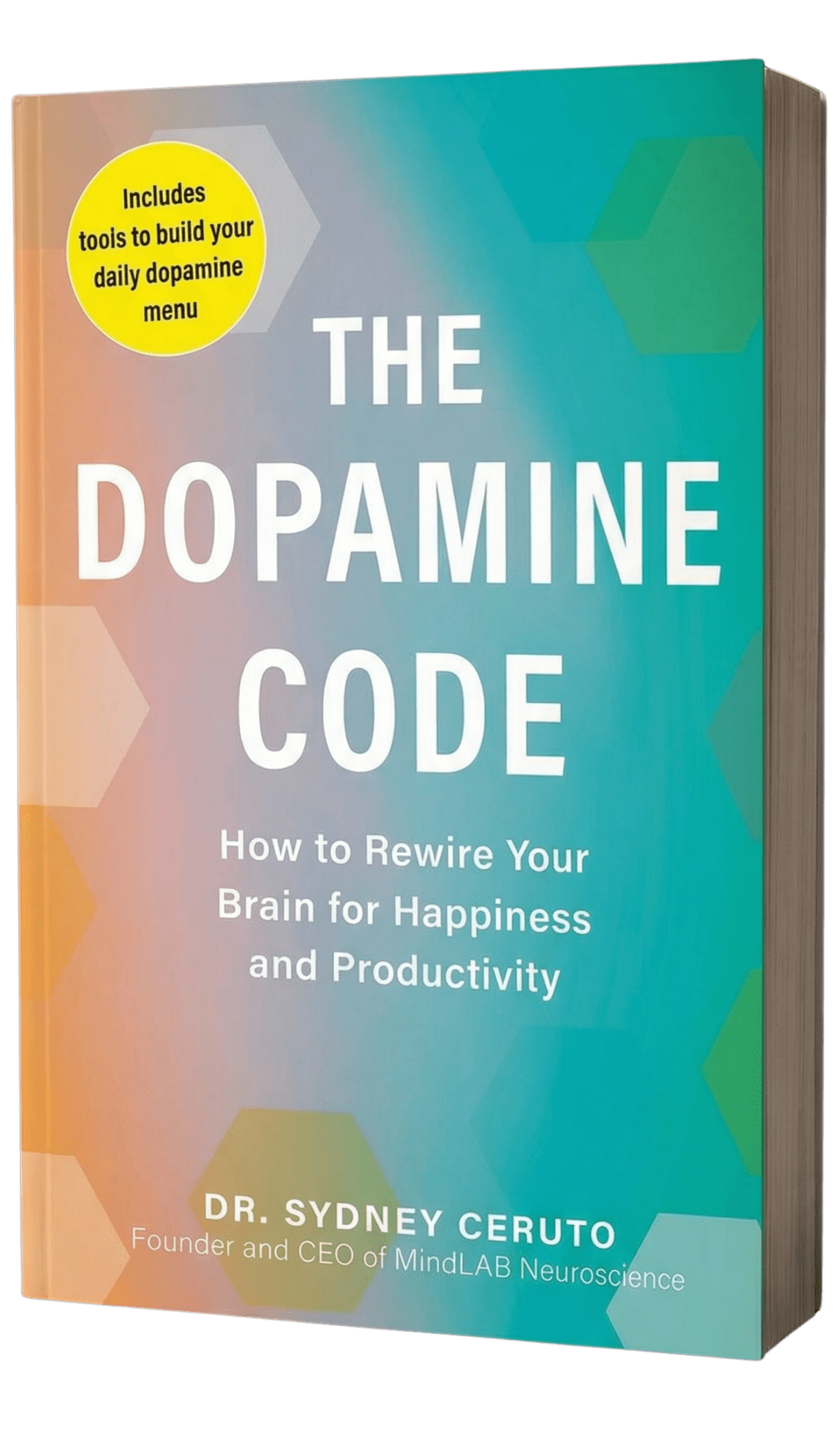
Dr. Ceruto holds a PhD in Behavioral & Cognitive Neuroscience from NYU and two Master’s degrees from Yale University. She lectures at the Wharton Executive Development Program at the University of Pennsylvania and has been an Executive Contributor to the Forbes Coaching Council since 2019. Dr. Ceruto is the author of The Dopamine Code (Simon & Schuster, June 2026). She founded MindLAB Neuroscience in 2000 and has spent over 26 years pioneering Real-Time Neuroplasticity™ — a methodology that permanently rewires the neural pathways driving behavior, decisions, and emotional responses.

References

Van Someren, E. J. W. (2021). Brain mechanisms of insomnia: New perspectives on causes and consequences. Physiological Reviews, 101(3), 995–1046. https://doi.org/10.1152/physrev.00046.2019

Levenson, J. C., Kay, D. B., & Buysse, D. J. (2015). The pathophysiology of insomnia. Chest, 147(4), 1179–1192. https://doi.org/10.1378/chest.14-1617

Bonnet, M. H., & Arand, D. L. (2010). Hyperarousal and insomnia: State of the science. Sleep Medicine Reviews, 14(1), 9–15. https://doi.org/10.1016/j.smrv.2009.05.002

Kessler, R. C., Berglund, P. A., Coulouvrat, C., Hajak, G., Roth, T., Shahly, V., Shillington, A. C., Stephenson, J. J., & Walsh, J. K. (2011). Insomnia and the performance of US workers: Results from the America Insomnia Survey. Sleep, 34(9), 1161–1171. https://doi.org/10.5665/SLEEP.1230

Success Stories

“Four hours a night for over two years — that was my ceiling. Supplements, sleep protocols, medication — nothing touched it because nothing addressed why my brain wouldn't shut down. Dr. Ceruto identified the cortisol loop that was keeping my nervous system locked in a hypervigilant state and dismantled it. I sleep now. Not because I learned tricks — because the pattern driving the insomnia no longer exists.”

Adrian M. — Hedge Fund Manager New York, NY

“My body had simply stopped knowing when to sleep. Crossing time zones weekly for over two years had broken something fundamental, and every protocol, supplement, and device I tried couldn't hold longer than a few days. Dr. Ceruto identified the disruption at the level of my suprachiasmatic nucleus and recalibrated the signaling pattern driving the dysfunction. Within weeks, my circadian rhythm locked back in. I sleep now. Consistently. Regardless of where I land.”

Jonathan K. — Diplomat Geneva, CH

“My kids had been sleeping through the night for three years, but my brain hadn't caught up. I was still waking every ninety minutes like clockwork — no amount of sleep hygiene or supplements touched it. Dr. Ceruto identified the hypervigilance loop that had hardwired itself during those early years and dismantled it at the source. My brain finally learned the threat was over. I sleep through the night now without effort.”

Catherine L. — Board Director Greenwich, CT

“Endocrinologists, sleep clinics, functional medicine — every specialist cleared me, and no one could tell me why I was exhausted every single day. Dr. Ceruto identified that my HPA axis was locked in a low-grade stress activation I couldn't feel consciously. Once that pattern was disrupted at the neurological level, my energy came back in a way that felt completely foreign. I'd forgotten what it was like to not be tired.”

Danielle K. — Luxury Hospitality Beverly Hills, CA

“When I started working with Dr. Ceruto, I was feeling stuck, not happy whatsoever, detached from family and friends, and definitely not confident. I’d never tried a neuroscience-based approach before, so I wasn’t sure what to expect — but I figured I had nothing to lose. My life has completely changed for the better. I don’t feel comfortable discussing publicly why I sought help, but I was made to feel safe, secure, and consistently supported. Just knowing I could reach her day or night was a relief.”

Algo R. — Fund Manager Dubai, UAE

“The divorce wasn't destroying me emotionally — it was destroying me neurologically. My amygdala was treating every interaction with my ex, every legal update, every quiet evening as a survival-level threat. Years of talk-based approaches hadn't touched it. Dr. Ceruto identified the attachment disruption driving the response and restructured it at the root. The threat response stopped. Not because I learned to tolerate it — because the pattern was no longer running.”

Daniela M. — Attorney North Miami Beach, FL

Frequently Asked Questions About Insomnia Support in Beverly Hills

What is neuroscience-based insomnia support?

Neuroscience-based insomnia support identifies the specific brain mechanisms maintaining chronic sleeplessness and addresses them directly. Dr. Ceruto's approach targets cortical hyperarousal — excessive brain activation during rest periods — disrupted sleep-wake switching, and stress response dysregulation. This moves beyond symptom management to restructure the neural patterns that keep the brain locked in pathological wakefulness.

Why does insomnia persist even when the original cause is gone?

Insomnia becomes self-perpetuating through conditioned cortical arousal — a learned brain activation pattern that becomes independent of the original trigger. The brain associates the sleep environment with wakefulness, the arousal systems resist the inhibitory signals needed for sleep onset, and each failed night strengthens the circuit that maintains the problem. This is why insomnia often persists long after the stressful period that initiated it has resolved.

Who is most affected by chronic insomnia?

Chronic insomnia affects anyone whose neural patterns have become locked in a hyperarousal state. This includes people managing sustained cognitive demands, irregular schedules, high-stakes responsibilities, frequent travel across time zones, or ongoing emotional pressure. The condition does not discriminate by profession or background — it discriminates by how the brain has adapted to sustained demand.

What should I expect from the initial engagement?

The process begins with a Strategy Call — a phone-based conversation with Dr. Ceruto to map the specific patterns, history, and likely neural mechanisms driving the insomnia. This call determines whether the primary driver is hyperarousal, conditioned arousal, circadian disruption (relating to the body's 24-hour biological clock), or a combination, and shapes the design of a personalized program. The $250 Strategy Call fee applies. Program structure and investment details are discussed during that conversation.

How long does it take to see improvement?

The timeline depends on the duration and complexity of the insomnia pattern. Individuals with primarily conditioned arousal often notice shifts in sleep onset and continuity within the first several weeks. Those with deeply entrenched hyperarousal or compounded circadian disruption (relating to the body's 24-hour biological clock) may require a longer restructuring period. Dr. Ceruto designs programs based on the specific mechanisms identified, with measurable progress markers throughout.

Also available in: Miami · Wall Street · Midtown Manhattan · Lisbon

Take the First Step Toward Restful Sleep

The Strategy Call is a focused conversation with Dr. Ceruto that maps the specific neural mechanisms driving your concerns and determines the right path forward.

Book a Strategy Call
MindLAB Neuroscience consultation room

The Dopamine Code

Decode Your Drive

Why Your Brain Rewards the Wrong Things

Your brain's reward system runs every decision, every craving, every crash — and it was never designed for the life you're living. The Dopamine Code is Dr. Ceruto's framework for understanding the architecture behind what drives you, drains you, and keeps you locked in patterns that willpower alone will never fix.

Published by Simon & Schuster, The Dopamine Code is Dr. Ceruto's framework for building your own Dopamine Menu — a personalized system for motivation, focus, and enduring life satisfaction.

Order Now

Ships June 9, 2026

The Dopamine Code by Dr. Sydney Ceruto — Decode Your Drive
Locations

The Intelligence Brief

Neuroscience-backed analysis on how your brain drives what you feel, what you choose, and what you can’t seem to change — direct from Dr. Ceruto.