The Influence Gap
“Leadership presence is not something you project through posture tips and vocal exercises. It is something your brain transmits through biological systems operating below conscious awareness — your direct reports register the mismatch neurologically before they process it consciously.”
n
You have done the leadership work. You have studied communication frameworks, refined your executive presence, and invested in developing the skills that high-level leadership demands. And still, there is a gap between the leader you know you are and the way your presence actually lands in a room.
n
Sometimes the gap is subtle. A negotiation where you had the stronger position but somehow conceded more than you intended. A team meeting where your confidence was high but the room did not move with you. A critical conversation where your words were precise but the other person heard something entirely different from what you said.
n
Other times the gap is glaring. A presentation that felt strong from behind the podium but produced an underwhelming response. A relationship with a key colleague that never deepens past surface professionalism despite genuine effort. A persistent sense that your authority is acknowledged but your influence is limited. People follow your direction without truly following your lead.
n
The frustrating part is that none of the conventional leadership development approaches have closed this gap. You have worked on your communication skills. You have received feedback and implemented it. You have read the research on emotional intelligence and tried to apply it. The gap persists because these approaches address leadership at the behavioral surface. The actual signal you transmit is generated much deeper, in neural circuits that behavioral frameworks cannot access.
n
The Neuroscience of Leadership Influence
n
Every interaction between a leader and another person is, at the most fundamental level, a neural event. Before you speak, before you gesture, before you make a conscious communication choice, your brain is already transmitting a signal. The people around you receive and process this signal automatically, outside their conscious awareness.
n
The human brain contains a mirror neuron system, neurons that fire during both action and observation. This system extends far beyond physical movement. It reads emotions, intentions, and social signals. When you walk into a room, mirror neuron systems are reading your neural state. Every person present receives this signal before a single word is exchanged.
n
The anterior insular cortex — the brain’s internal-state awareness center — plays a critical role in this transmission. This region governs interoceptive awareness, your brain’s ability to read its own physiological state. The accuracy of this internal reading determines the quality of your emotional self-awareness. That self-awareness directly shapes the signal your mirror system broadcasts.
n
A leader with poor internal-state calibration transmits incongruent signals. Their words say confidence while their neural output broadcasts uncertainty. The people receiving this signal cannot articulate what is wrong, but they feel the mismatch.
n
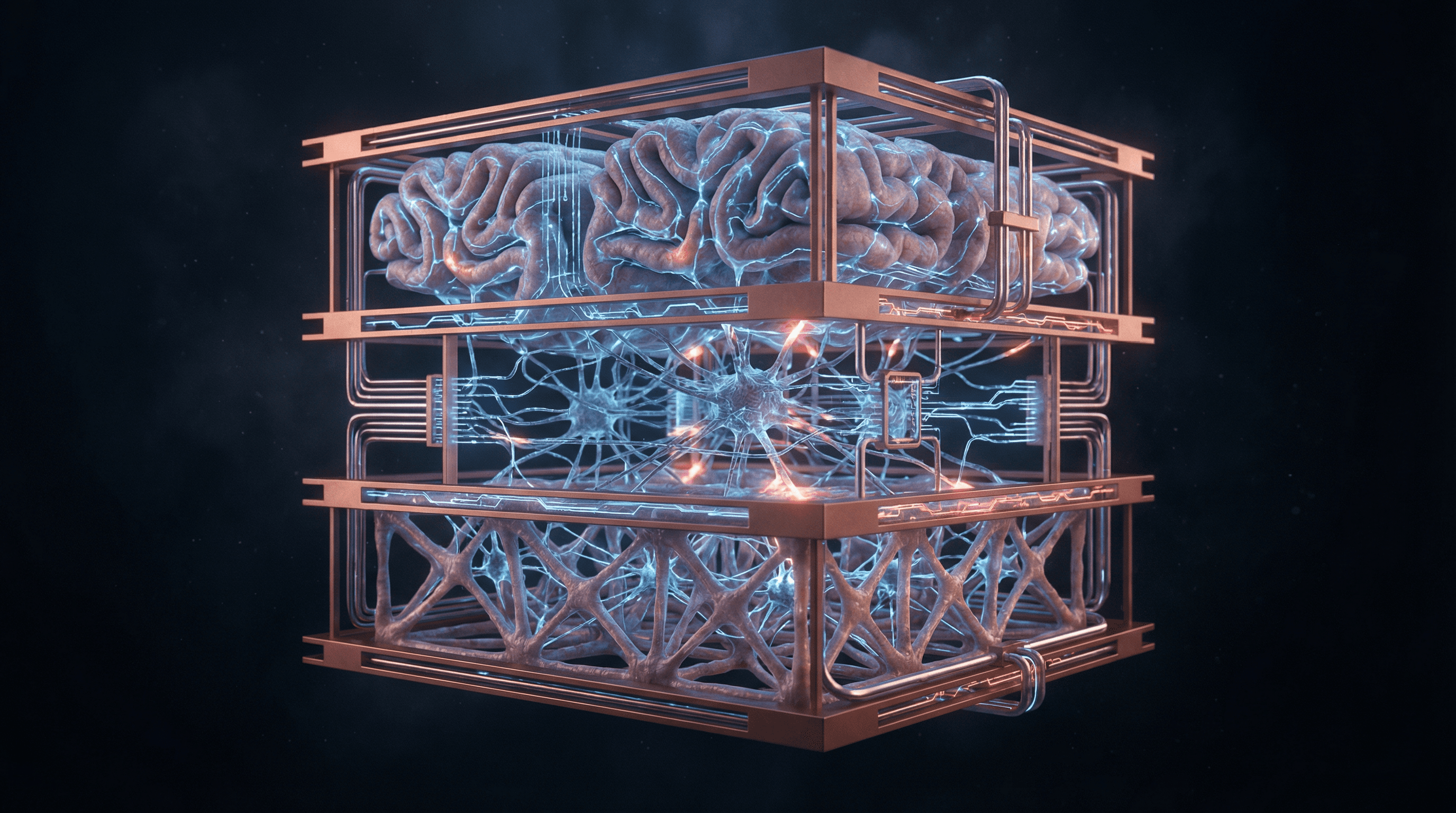
Research provides direct evidence that emotional states propagate through groups via contagion mechanisms below conscious awareness. Leaders’ emotional states spread to their teams through automatic neural mirroring. The tone of the leader’s broadcast — positive or negative — directly shapes group performance, creativity, and cooperation. What I see repeatedly in this work is that leaders who struggle with influence are rarely lacking in competence or intention. They are transmitting a neural signal that contradicts their conscious communication.
n
The temporoparietal junction — a region governing social perception — anchors the brain’s theory-of-mind system. This is the capacity to accurately model what another person is thinking and intending. This network is separable from general intelligence. It specifically governs the social cognition required for leadership influence. When chronic stress or cognitive overload degrades this system, leaders lose the ability to predict how their communication will be received.
n
How Dr. Ceruto Approaches Leadership Development
n
The result is miscalibration in critical conversations. Dr. Ceruto’s approach to leadership training begins with a premise that distinguishes it from every behavioral framework in the market. Influence is a biological output, and optimizing it requires working at the biological level. Telling a leader to be more charismatic is like telling someone to have better blood pressure. The instruction identifies the desired outcome without addressing the system producing it.
n
Real-Time Neuroplasticity — the brain’s ability to rewire itself — applied to leadership addresses the specific neural circuits identified in the assessment process. If the mirror system is broadcasting incongruent signals, the intervention targets the internal-state calibration that governs signal coherence. If the social-perception network is underperforming under pressure, the protocol addresses the specific conditions depleting its capacity. If emotional contagion dynamics are working against the leader rather than for them, the work targets the circuits governing the emotional tone. It reshapes the neural broadcast at its source.
n
This specificity matters because two leaders with identical influence challenges may have entirely different neural root causes. One may have a well-calibrated mirror system but a suppressed social-perception network that prevents them from accurately reading the room. Another may have strong social cognition but poor internal-state accuracy that generates incongruent signals others cannot trust. A behavioral framework treats both as the same communication problem. Neuroscience-based advisory diagnoses and addresses the distinct architecture in each case.
n
In over two decades of clinical neuroscience practice, the most reliable predictor of leadership transformation is not willingness to change behavior. It is the precision of the neural diagnosis that precedes intervention. The engagement is structured through the NeuroSync program for leaders with a specific influence objective. The NeuroConcierge program serves those whose leadership demands span multiple domains simultaneously.
n
What to Expect
n
The process begins with a Strategy Call, a strategy conversation in which Dr. Ceruto assesses the specific leadership influence patterns that are limiting your effectiveness. This initial assessment identifies the conditions under which your leadership presence is strongest and the conditions under which it breaks down.
n
The structured protocol that follows maps the neural architecture of your influence system with specificity. This is not a personality assessment or a leadership style inventory. It is a biological assessment of the circuits generating your social signal and your ability to read others accurately. It also evaluates your emotional regulation under leadership-relevant conditions.
n
Targeted calibration sessions address the specific neural constraints identified in the assessment. Sessions are designed around real leadership scenarios you face, not abstract exercises. The metric of progress is not how you feel about your leadership. It is measurable shifts in how your presence is received in the environments where your influence matters most.
n
References
n
Mickaël Causse, Evelyne Lepron, Kevin Mandrick, Vsevolod Peysakhovich, Isabelle Berry, Daniel Callan, Florence Rémy (2021). Facing Successfully High Mental Workload and Stressors. *Human Brain Mapping*. [https://doi.org/10.1002/hbm.25703](https://doi.org/10.1002/hbm.25703)
n
Andrew C. Murphy, Maxwell A. Bertolero, Lia Papadopoulos, David M. Lydon-Staley, Danielle S. Bassett (2020). Multimodal Network Dynamics Underpinning Working Memory. *Nature Communications*. [https://doi.org/10.1038/s41467-020-15541-0](https://doi.org/10.1038/s41467-020-15541-0)

n
Jessica L. Wood, Derek Evan Nee (2023). Cingulo-Opercular Subnetworks Motivate Frontoparietal Subnetworks during Distinct Cognitive Control Demands. *Journal of Neuroscience*. [https://doi.org/10.1523/JNEUROSCI.1314-22.2022](https://doi.org/10.1523/JNEUROSCI.1314-22.2022)
n
Michela Balconi, Carlotta Acconito, Roberta A. Allegretta, Davide Crivelli (2023). Metacognition, Mental Effort, and Executive Function: The Neural Markers of Cognitive Self-Monitoring in High-Demand Roles. *Behavioral Sciences*. [https://doi.org/10.3390/bs13110918](https://doi.org/10.3390/bs13110918)
The Neural Architecture of Leadership Capacity
Leadership is a neural function. The capacities that define effective leadership — the ability to sustain strategic clarity under pressure, to regulate one’s own threat responses without suppressing their information value, to inspire sustained motivation in others, to make high-quality decisions under uncertainty, and to sustain authentic relational connection across authority differentials — are all expressions of specific neural architectures. They are not personality traits. They are circuit configurations. And they are trainable, restructurable, and measurably developable through targeted neural intervention.
The prefrontal cortex is the biological substrate of the leadership capacities that organizations most consistently struggle to develop. The lateral prefrontal cortex drives planning, working memory, and cognitive flexibility. The medial prefrontal cortex governs self-awareness, mentalizing, and the reading of social contexts. The ventromedial prefrontal cortex integrates somatic signals into value-based judgment. The anterior cingulate cortex monitors for conflict and error, and regulates the transition between stable and flexible behavior. These structures do not develop uniformly through career progression. They develop through specific types of experience, sustained regulatory challenge, and targeted practice — none of which are reliably produced by organizational promotion pathways.
The dopaminergic motivation architecture determines whether leadership capacity persists under the conditions that most degrade it. The leader whose reward system is poorly calibrated to the delayed, diffuse, and often socially invisible rewards of effective organizational leadership — the long-horizon impact, the team capability built over years, the cultural shift that takes place gradually and is difficult to attribute — will find their motivation for leadership investment progressively depleted by the misalignment between what their neural architecture finds reinforcing and what leadership actually delivers. This is the neural basis of leadership burnout, and it requires explicit reward recalibration rather than better time management or additional vacation.
Why Traditional Approaches Fall Short
Leadership training has evolved through multiple generations of methodological sophistication. Situational leadership, transformational leadership, servant leadership, adaptive leadership — each framework captures genuine insight about leadership effectiveness. Each has been packaged into training programs that produce measurable attitude change and minimal durable behavioral change. The frameworks are not the problem. The training format and the level of intervention are.
Workshop-based leadership training addresses the cognitive architecture of leadership: the frameworks, models, and self-awareness that inform conscious leadership choices. This is a necessary foundation and an insufficient intervention. The leadership behaviors that most reliably differentiate effective from ineffective leaders under real organizational pressure — the regulatory responses to conflict and threat, the quality of judgment under ambiguity, the authentic connection to team members across authority differentials — are not primarily cognitive. They are neural. They are generated by the regulatory architecture, the social neural system, and the reward calibration of the leader’s brain, not by the leadership framework they have memorized.
Mentoring and experiential leadership development address this more effectively, because the learning environment is closer to the real pressure conditions in which leadership behavior is generated. But mentoring depends on the quality and neural sophistication of the mentor, and experiential development in unstructured environments produces learning that is highly variable in what it actually develops. Neither approach provides the precision of targeted neural intervention — the ability to identify the specific circuit configurations limiting a particular leader’s effectiveness and design the specific experiences required to reconfigure them.
How Neural Leadership Training Works
My approach to leadership training begins with a neural architecture assessment of the leadership population. What are the specific circuit configurations producing the leadership patterns that the organization most needs to develop? Which regulatory capacities are most depleted across the leadership layer? What is the reward architecture mismatch generating the motivation patterns — or motivation deficits — most limiting leadership effectiveness? These questions produce a development target that is far more specific than any generic leadership competency model.
From this assessment, I design leadership development protocols that directly target the identified neural configurations. The protocols are structured around the neuroscience of motor and cognitive skill acquisition: deliberate practice sequences that target the specific circuits requiring development, spaced learning intervals that allow consolidation between practice episodes, increasing load conditions that progressively build the regulatory capacity required for performance under real leadership pressure, and feedback architectures that are calibrated to the neural systems they are targeting rather than to the behavioral metrics most easily measured.
The social neural dimension of leadership development receives particular attention. Leaders who model the regulatory and relational behaviors their teams need to develop are leveraging the most powerful learning mechanism available in organizations: social neural contagion, the brain’s tendency to encode and replicate the behavioral patterns of high-status, trusted others. Leadership training that builds the regulatory capacity of senior leaders and then puts that capacity on display in real organizational contexts produces development effects that cascade through the organizational hierarchy in ways that no training program delivered to a general leadership population can replicate.
What This Looks Like in Practice
Leadership training engagements begin with a Strategy Call in which I assess the specific leadership development challenge against the neural architecture most likely responsible for it. From that conversation, I design a protocol that addresses the identified neural configurations in the format that the organizational context requires.
For senior leadership teams working on a specific high-priority leadership capability — executive communication, decision quality, conflict navigation, strategic team dynamics — the NeuroSync model provides focused, intensive development designed around the neural requirements of that specific capability. For organizations investing in broad leadership development across multiple levels and capability domains, the NeuroConcierge model provides the sustained partnership required to build leadership capability as a durable organizational neural asset rather than a training event outcome. The Dopamine Code provides the scientific framework for leaders who want to understand the reward architecture principles underlying sustained leadership motivation and team engagement.
For deeper context, explore emotional intelligence in leadership training.