Mental Fog in Beverly Hills

Mental fog is not vague. It is a measurable disruption in neural connectivity and neurotransmitter dynamics — and the specific mechanisms driving it can be identified and corrected.

Book a Strategy Call

The Hidden Science Behind Mental Fog

Mental fog is routinely dismissed as a consequence of stress, age, or insufficient sleep. The neuroscience reveals something far more precise: fog corresponds to measurable disruptions in functional brain connectivity, information processing efficiency, and the neurochemical systems that govern clarity.

Three Core Mechanisms That Create Fog

Three converging mechanisms account for the majority of what people experience as mental fog. The first is neuroinflammation — cellular immune signaling — particularly in the hippocampus and prefrontal cortex. The result is degraded signal fidelity across the networks that support executive function, working memory, and associative reasoning.

How Attention Systems Break Down

The second mechanism involves the brain’s primary neuromodulators of attention and arousal. Acetylcholine is released from basal forebrain nuclei and innervates the neocortex. Under conditions of chronic stress or sleep disruption, cholinergic tone declines. Attentional filtering degrades, allowing irrelevant stimuli to compete with relevant information. Working memory capacity contracts, producing the characteristic “blanking out” and word-finding difficulties. The thalamic relay circuits that gate sensory information to the cortex become less selective, contributing to the sluggish quality of foggy thinking.

The Brain’s Master Control System

The locus coeruleus — brainstem norepinephrine source — adds a third dimension. This small nucleus projects to virtually every cortical region, functioning as a master regulator of cognitive state and signal-to-noise discrimination. Under optimal conditions, the locus coeruleus fires in brief, targeted bursts that sharpen attentional precision. Under chronic stress, its firing shifts to a diffuse, sustained pattern that paradoxically impairs focus by reducing signal-to-noise discrimination in prefrontal circuits. Norepinephrine modulates prefrontal function through an inverted-U dose-response curve: moderate levels strengthen working memory and attentional control, while excess levels — different receptor populations — disrupt these same circuits. Chronically stressed individuals often have norepinephrine levels that have crossed the curve’s peak, meaning the very system designed to sharpen cognition is instead degrading it.

Dense luminous neural threads condensing into single focused copper beam of clarity in deep navy void

When Brain Networks Stop Communicating

At the network level, mental fog manifests as reduced functional connectivity efficiency between the brain’s major attentional systems. The dorsal attention network — goal-directed focus — the ventral attention network and the default mode network must operate in a tightly coordinated, partially antagonistic arrangement. When neuroinflammation, neurotransmitter depletion, or chronic stress disrupts the timing and strength of their interactions, the brain adapts by lowering connectivity costs. The person experiences this adaptation as fog: slower processing, difficulty locking onto relevant information, and a pervasive sense that cognitive machinery that once operated smoothly is now running with friction.

The blood-brain barrier adds another vulnerability. When systemic inflammation compromises barrier integrity, peripheral immune cells and inflammatory mediators gain access to brain tissue. This triggers a secondary wave of neuroinflammation concentrated in the temporal lobes — episodic memory and executive foundation. Dynamic neuroimaging has directly demonstrated that blood-brain barrier disruption is associated with cognitive impairment and subjective fog.

Why Mental Fog Gets Worse Over Time

The interaction between these systems creates a compounding effect that explains why mental fog often worsens over time even when external circumstances remain stable. Chronic stress depletes norepinephrine reserves in the locus coeruleus, and norepinephrine normally suppresses microglial activation through beta-adrenergic receptors. When norepinephrine levels fall, microglia lose their primary inhibitory signal, accelerating the neuroinflammatory process that further degrades the cholinergic and noradrenergic systems (related to the brain’s alertness signaling). The brain enters a self-amplifying cycle: neurochemical depletion weakens the anti-inflammatory mechanisms that would normally protect against further depletion. Each week of sustained demand without adequate recovery deepens the fog by eroding the very systems responsible for cognitive clarity.

The locus coeruleus is also among the first brain structures to accumulate tau pathology — the protein deposits associated with neurodegenerative processes — with most adults showing some accumulation by their mid-twenties. This means that cognitive resilience throughout life depends substantially on locus coeruleus health. The chronic stress patterns that accelerate its dysfunction carry consequences that extend far beyond the subjective experience of foggy thinking in any given week. Protecting and restoring locus coeruleus function is not merely a performance optimization — long-term neural health imperative.

Targeted Solutions for Clear Thinking

Dr. Ceruto’s approach to mental fog identifies the specific mechanisms driving the cognitive disruption rather than addressing it as a generalized condition. The methodology determines whether the primary driver is neuroinflammatory priming, cholinergic depletion, or noradrenergic dysregulation. It also assesses network connectivity disruption, or a combination of these factors, and designs interventions to restore the neurochemical balance, connectivity efficiency, and signal quality that sustained cognitive clarity requires.

Walnut desk with marble inlay crystal brain sculpture and MindLAB journal in warm California afternoon light in Beverly Hills private study

Why Mental Fog Matters in Beverly Hills

Beverly Hills concentrates the lifestyle and professional conditions that systematically degrade the neurochemical systems governing cognitive clarity. The entertainment and business ecosystem that defines this community operates under conditions specifically engineered to deplete cholinergic and noradrenergic (related to the brain’s alertness signaling) reserves while promoting the chronic stress that drives neuroinflammatory priming.

The professional corridor spanning Wilshire Boulevard through Century City demands sustained high-density cognitive processing across multiple channels simultaneously. Entertainment professionals monitoring press coverage, social media sentiment, project pipelines, deal status, and competitive intelligence while maintaining a network of relationships with fast-moving internal politics are operating at or above working memory saturation for hours at a time. Working memory serves as the brain’s short-term mental workspace. Research demonstrates that employees experiencing high information burden are over seven times more likely to regret their decisions and more than twice as likely to respond negatively to change. This cognitive degradation compounds daily in Beverly Hills’s information-dense professional environments.

The always-performing culture amplifies the metabolic cost. For residents whose professional identities are public-facing, the demand for continuous self-monitoring engages the default mode network’s self-evaluative circuitry without interruption. Every public appearance is simultaneously a networking opportunity, a reputation management exercise, and a cognitive expenditure. The absence of genuine recovery periods prevents the thalamocortical recalibration that occurs during unstructured rest, leaving the locus coeruleus in the sustained tonic firing pattern that degrades prefrontal signal quality.

Los Angeles’s commute burden primes the hypothalamic-pituitary-adrenal axis before the workday begins and prevents the physiological wind-down necessary for cognitive recovery at its end. For Beverly Hills residents commuting to Century City offices, studio lots, or production facilities across the basin, the cortisol exposure begins in traffic. It continues through a full day of high-stakes cognitive work without the autonomic reset that would allow neurochemical systems to recover.

The community’s demographic profile further concentrates fog-vulnerable individuals. Beverly Hills’s median age of 47.7 places the core residential population in the age range where locus coeruleus neurons — metabolically demanding brain cells — become increasingly vulnerable to cumulative stress exposure. The wealth management complexity facing high-net-worth residents generates a persistent background cognitive load that depletes the same prefrontal resources needed for professional performance.

Dr. Sydney Ceruto, PhD — Founder, MindLAB Neuroscience

Dr. Sydney Ceruto, PhD — Founder & CEO, MindLAB Neuroscience

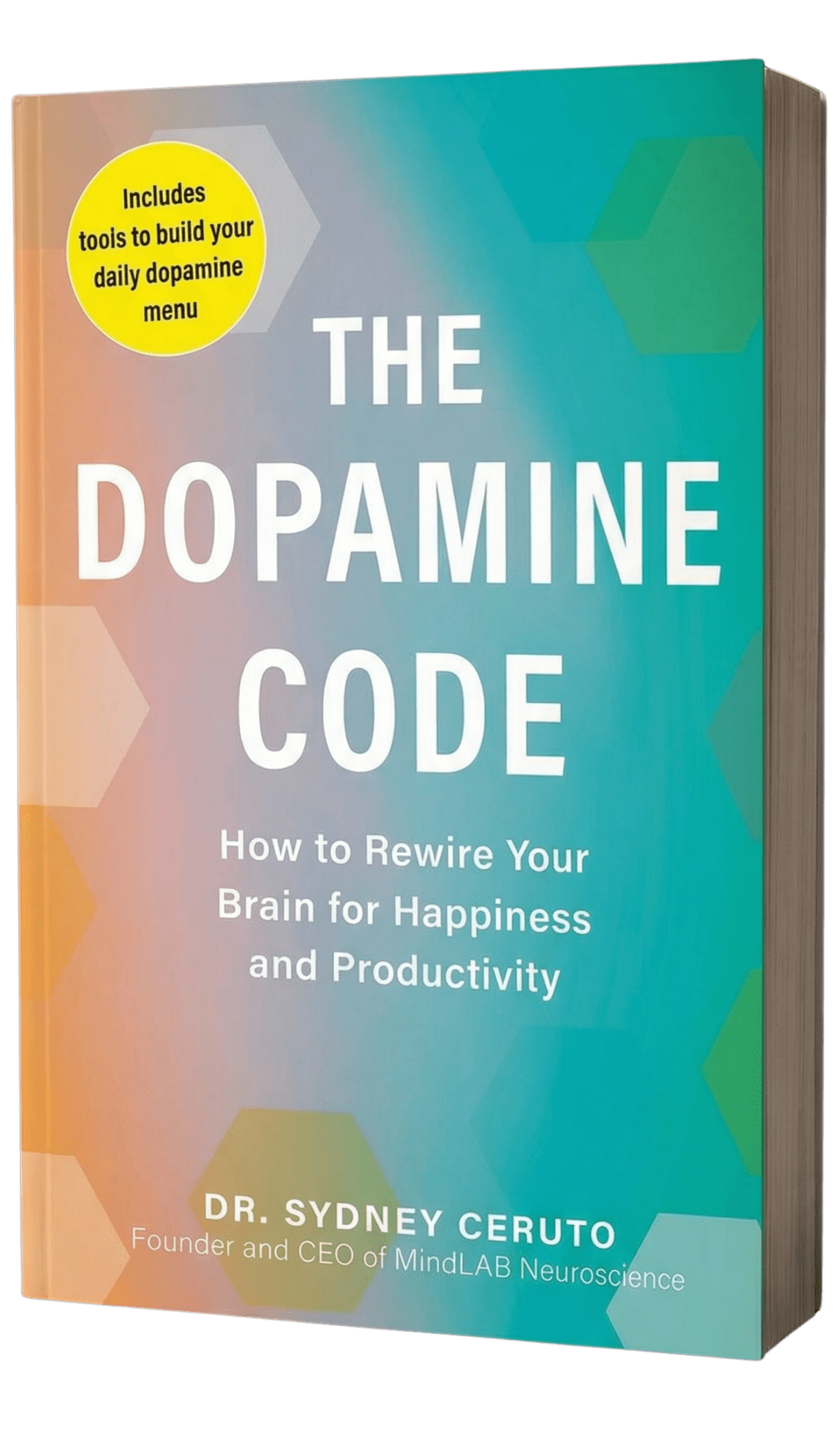
Dr. Ceruto holds a PhD in Behavioral & Cognitive Neuroscience from NYU and two Master’s degrees from Yale University. She lectures at the Wharton Executive Development Program at the University of Pennsylvania and has been an Executive Contributor to the Forbes Coaching Council since 2019. Dr. Ceruto is the author of The Dopamine Code (Simon & Schuster, June 2026). She founded MindLAB Neuroscience in 2000 and has spent over 26 years pioneering Real-Time Neuroplasticity™ — a methodology that permanently rewires the neural pathways driving behavior, decisions, and emotional responses.

References

Greene, C., Connolly, R., Brennan, S., et al. (2024). Blood–brain barrier disruption and sustained systemic inflammation in individuals with long COVID-associated cognitive impairment. Nature Neuroscience, 27(3), 421–432. https://doi.org/10.1038/s41593-024-01576-9

Fox, M. D., Snyder, A. Z., Vincent, J. L., Corbetta, M., Van Essen, D. C., & Raichle, M. E. (2005). The human brain is intrinsically organized into dynamic, anticorrelated functional networks. Proceedings of the National Academy of Sciences, 102(27), 9673–9678. https://doi.org/10.1073/pnas.0504136102

Evans, A. K., Defensor, E., & Shamloo, M. (2022). Selective vulnerability of the locus coeruleus noradrenergic system and its role in modulation of neuroinflammation, cognition, and neurodegeneration. Frontiers in Pharmacology, 13, 1030609. https://doi.org/10.3389/fphar.2022.1030609

Success Stories

“I'd optimized everything — diet, fitness, sleep — but my cognitive sharpness was quietly declining and no one could explain why. Dr. Ceruto identified the synaptic density patterns that were thinning and built a protocol to reverse the trajectory. This wasn't prevention in theory. My neuroplasticity reserve is measurably stronger now than it was three years ago. Nothing I'd tried before even addressed the right problem.”

Henrique L., Head of Strategic Planning Galp Lisbon, PT

“The way I was processing decisions under pressure had a cost I couldn't see — until Dr. Ceruto mapped it. She identified the neural pattern driving my reactivity in high-stakes situations and restructured it at the root. I don't just perform better under pressure now. I think differently under pressure. That's not something any executive coach or performance program ever came close to delivering.”

Rob Winston, Chief Operating Officer Goldman Sachs Manhattan, NY

“Color-coded calendars, alarms, accountability partners — I'd built an entire scaffolding system just to stay functional, and none of it addressed why my brain couldn't sequence and prioritize on its own. Dr. Ceruto identified the specific prefrontal pattern that was misfiring and restructured it. I don't need the scaffolding anymore. My brain actually does what I need it to do.”

Jordan K., VP of Product Enterprise SaaS San Francisco, CA

“When the inheritance came, it didn't feel like a gift — it felt like a grenade in every family relationship I had. I couldn't make a single financial decision without a flood of guilt and second-guessing. Years of talking through it hadn't changed anything. Dr. Ceruto identified the neural loop connecting money to fear of family rejection and dismantled it. The paralysis didn't fade — it stopped.”

Vivienne R., CFO Family Office Palm Beach, FL

“My phone was the first thing I touched in the morning and the last thing I put down at night — and every app blocker, digital detox protocol, and willpower-based system I tried lasted less than a week. Dr. Ceruto identified the variable-ratio reinforcement loop that had hijacked my attention circuits and dismantled it at the neurological level. My phone is still in my pocket. The compulsion to reach for it isn't. That's a fundamentally different kind of fix.”

Tomás R., COO Logistics & Supply Chain Lisbon, PT

“After the concussion, my processing speed collapsed — I couldn't hold complex information the way I used to, and no one could explain why the fog wasn't lifting. Dr. Ceruto mapped the damaged pathways and built compensatory networks around them. My brain doesn't work the way it did before the injury. It works differently — and in some ways, more efficiently than it ever did.”

Owen P., Founder & CEO Sports Performance Scottsdale, AZ

Frequently Asked Questions About Mental Fog in Beverly Hills

What is mental fog from a neuroscience perspective?

Mental fog is a measurable state of reduced cognitive efficiency driven by disruptions in neuroinflammatory regulation, neurotransmitter — a chemical messenger between brain cells — dynamics, and functional connectivity between the brain's attentional networks. It reflects degraded signal quality in the systems that govern focus, working memory — the brain's short-term mental workspace —, and processing speed. This is not a vague or subjective complaint, but a condition with identifiable neural mechanisms.

What causes mental fog in people who are otherwise healthy?

The most common drivers in otherwise healthy individuals are chronic stress-induced neuroinflammation, depletion of the cholinergic and noradrenergic systems (related to the brain's alertness signaling) that sharpen attention and signal quality. Additional factors include sustained cognitive overload that exhausts prefrontal metabolic reserves, and cumulative sleep disruption that prevents the overnight reset these systems require. These factors frequently co-occur and compound each other, creating fog that persists even when any single stressor is addressed in isolation.

Who is most susceptible to persistent mental fog?

Individuals sustaining high cognitive demands over extended periods without adequate recovery are most susceptible. This includes anyone managing complex, multi-channel information environments, navigating sustained professional uncertainty, or carrying the cognitive load — the total demand on mental processing capacity — of high-net-worth asset management. It also affects those operating in contexts where continuous self-monitoring prevents genuine cognitive rest. The condition is driven by how the brain has adapted to sustained demand, not by personal capacity.

What does the initial assessment process look like?

The process begins with a Strategy Call — a phone-based conversation with Dr. Ceruto to map the specific cognitive symptoms, their timing and triggers, lifestyle factors, and likely neural mechanisms contributing to the fog. This call determines whether the primary driver is neuroinflammatory, neurochemical, connectivity-related, or a combined pattern, and shapes the design of a targeted program. The $250 Strategy Call fee applies. Program structure and investment details are discussed during that conversation.

How long does it typically take to restore cognitive clarity?

Recovery timelines depend on the mechanisms involved and their duration. Individuals whose fog is primarily driven by acute neurochemical depletion from a specific stress period often experience noticeable improvements in processing speed and attentional sharpness within the first several weeks. Those with longer-standing patterns involving neuroinflammatory priming or deep network connectivity disruption may require a more extended restoration period. Dr. Ceruto designs programs with specific cognitive benchmarks to track measurable progress throughout the engagement.

Take the First Step Beyond Mental Fog

The Strategy Call is a focused conversation with Dr. Ceruto that maps the specific neural mechanisms driving your concerns and determines the right path forward.

Book a Strategy Call
MindLAB Neuroscience consultation room
Locations

The Intelligence Brief

Neuroscience-backed analysis on how your brain drives what you feel, what you choose, and what you can’t seem to change — direct from Dr. Ceruto.