Organizational Development Consulting in Beverly Hills

Your organization is not resisting change because of bad strategy. It is resisting because the nervous systems inside it are operating in chronic threat-state, and no process framework can override biology.

Organizational change fails when the neural architecture of the people executing it is locked in survival mode. MindLAB Neuroscience diagnoses the biological conditions that prevent organizations from adapting and applies Real-Time Neuroplasticity — the brain's ability to rewire itself — to restore the neural capacity that makes change possible.

Book a Strategy Call

Key Points

  1. Organizational dysfunction is collective neural dysfunction — the same threat responses, cognitive biases, and social processing errors that affect individuals scale predictably across groups.
  2. Group decision-making quality depends on the social cognition capacity of key individuals — the neural architecture of a few leaders determines organizational intelligence.
  3. The SCARF model identifies five domains of social threat — status, certainty, autonomy, relatedness, fairness — each processed through dedicated neural circuits.
  4. Organizational trust is mediated by oxytocin and social bonding circuits that are remarkably sensitive to leadership behavior — and remarkably slow to rebuild once damaged.
  5. Sustainable organizational development requires restructuring the neural patterns of the individuals whose behavior sets the norms others unconsciously mirror.

The Restructuring That Will Not Take

“Seventy percent of organizational change initiatives fail to achieve their stated objectives. This is not a management failure — it is a neuroscience failure. The brain's threat-detection architecture, evolved for physical survival, cannot distinguish between a territorial predator and an ambiguous organizational announcement.”

The strategy is sound. The consultants delivered a clear plan. The board approved the reorganization. The timeline is aggressive but achievable. Everyone in leadership has agreed this is the right direction.

And nothing moves.

The initiative stalls. The decisions that should follow the strategic plan do not get made, or they get made slowly, cautiously, with layers of hedging that dilute their impact. The teams that should be executing the transition are doing just enough to comply without actually changing how they operate. Talented people who should be energized by the new direction are instead updating their resumes.

This pattern is not unique to any one organization. It is the default outcome of change initiatives in organizations that have endured sustained disruption, and it persists regardless of the quality of the strategy, the competence of the leadership, or the resources allocated to the effort. The pattern is so consistent across industries, geographies, and organizational types that it demands a structural explanation rather than a situational one.

That structural explanation exists. It is neurological, and it has been precisely documented in peer-reviewed research. The problem is not that your organization lacks will or direction. The problem is that the nervous systems of the people inside it have been pushed past their adaptive capacity.

The Neuroscience of Organizational Resistance

What they called the threat-rigidity effect: when organizations face threatening conditions, individual and collective behavior becomes more rigid, less creative, and more dependent on established routines. Information processing narrows. Decision-making centralizes. Innovation decreases. The finding has been replicated across decades of organizational research.

What researchers described behaviorally has a precise neurological mechanism. The amygdala, the brain’s threat detection center, drives this rigidity. Under perceived threat, the amygdala activates the sympathetic nervous system — the body’s accelerator for stress and alertness — and suppresses prefrontal cortex function, shifting neural resources from flexible strategic processing to rigid survival responses. Sustained threat activation produces measurable structural changes in the prefrontal-amygdala circuit, creating a self-reinforcing pattern where threat-state becomes the default operating condition rather than a temporary response.

Research on psychological safety in 1999, provided the organizational framework: teams perform better when individuals feel safe to take interpersonal risks. But psychological safety is not a cultural construct that can be installed through team-building exercises. It is a neurological condition. When amygdala activation is chronically elevated in an organizational environment, psychological safety is biologically impossible regardless of what leadership says or what policies are implemented. The amygdala does not read mission statements.

The compounding factor is allostatic load — the cumulative wear of chronic stress on the body —, the cumulative biological toll of sustained stress. Research reviewed by researchers documents that chronic stress produces systemic dysregulation: elevated cortisol, depleted adaptive reserves, and impaired cognitive flexibility — the ability to shift thinking between concepts —. When an organization has weathered multiple successive disruptions, the individuals within it are not simply fatigued. They are biologically depleted. Their nervous systems have spent their adaptive budget, and demanding more change from a system in allostatic overload produces the opposite of the intended effect: deeper rigidity, less creativity, more resistance.

My clients describe this as the organization that “knows what to do but cannot do it.” The knowing is cognitive. The inability is biological.
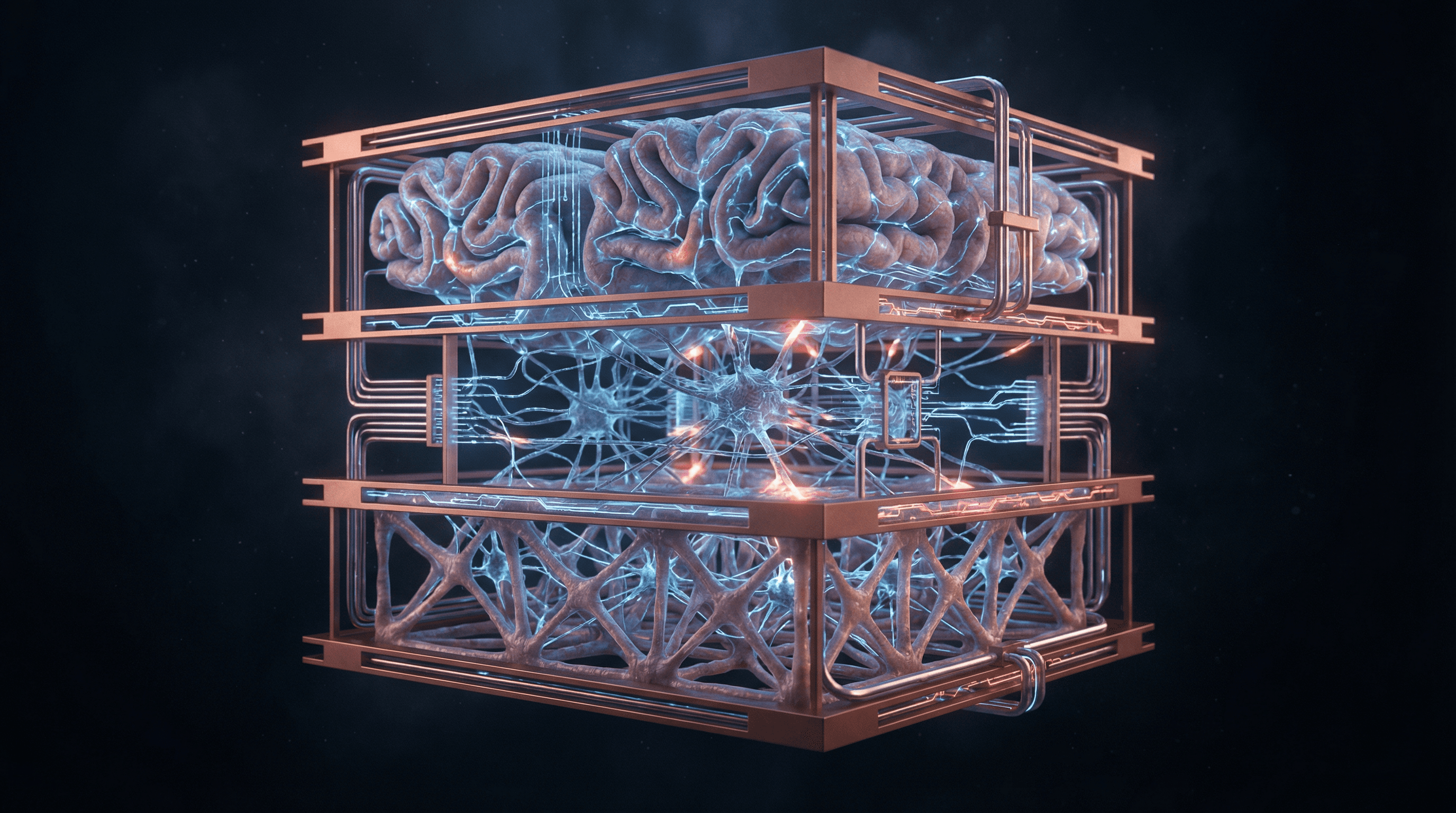
Strategy consulting and organizational development — layered copper neural blueprint connecting operational tiers

How Dr. Ceruto Approaches Organizational Transformation

Dr. Ceruto’s methodology recognizes that organizational change is ultimately a neurological event. Every decision, every collaboration, every moment of creative problem-solving happens inside a brain, and the condition of that brain determines the quality of those outputs. When organizations fail to change, the root cause is not strategic, it is architectural, located in the neural systems of the people attempting to execute the change.

Real-Time Neuroplasticity — the brain’s ability to rewire itself — applied to organizational development begins with a assessment of the neural conditions inside the organization. This is not an employee survey or a culture audit. It is an assessment of the specific biological constraints that are preventing adaptation. Is the leadership team operating in chronic threat-state, producing the rigidity that cascades through every decision? Is allostatic load so elevated that the neural capacity for flexible strategic thinking has been depleted? Are the conditions for psychological safety neurologically impossible given the current activation patterns of the amygdala-prefrontal circuit (emotion-regulation)?

The intervention follows the diagnosis. For leadership teams whose amygdala activation is driving organizational rigidity, Dr. Ceruto applies targeted prefrontal-limbic recalibration that restores the neural balance required for flexible strategic processing. For organizations in allostatic overload, the protocol addresses the cortisol-dominance patterns that have depleted adaptive capacity. For teams where psychological safety has been neurologically compromised, the work focuses on re-establishing the amygdala-prefrontal conditions under which interpersonal risk-taking becomes biologically possible again.

The NeuroSync program addresses specific organizational challenges requiring focused intervention. The NeuroConcierge program serves organizations navigating sustained, multi-front transformation where ongoing neural advisory becomes an embedded element of the change process. In both structures, the work addresses organizational conditions through the individuals who generate them, because organizations do not have nervous systems. The people inside them do.

What to Expect

The engagement begins with a Strategy Call where Dr. Ceruto conducts an initial assessment of the organizational challenge and the neural conditions likely driving it. This conversation establishes whether neuroscience-based organizational advisory is the appropriate intervention and identifies the scope of the assessment work required.

The diagnostic phase maps the specific neural constraints operating within the leadership team and the broader organization. This assessment identifies the biological factors, threat-state activation, allostatic load, prefrontal-limbic imbalance, that are maintaining the patterns of resistance, rigidity, or underperformance.

The structured protocol then addresses the identified constraints through targeted neural calibration, beginning with leadership and cascading through the organizational architecture as conditions shift. Progress is measured not through culture surveys but through observable changes in decision velocity, creative output, collaborative quality, and the organization’s capacity to execute strategic initiatives that previously stalled.

References

Juyoen Hur*, Jason F. Smith*, Kathryn A. DeYoung*, Allegra S. Anderson, Jinyi Kuang, Hyung Cho Kim, Rachael M. Tillman, Manuel Kuhn, Andrew S. Fox, Alexander J. Shackman (2020). Uncertain Threat Anticipation and the Extended Amygdala-Frontocortical Circuit. Journal of Neuroscience. https://doi.org/10.1523/JNEUROSCI.0704-20.2020

Cristina Orsini, David Conversi, Paolo Campus, Simona Cabib, Stefano Puglisi-Allegra (2020). Functional and Dysfunctional Neuroplasticity in Learning to Cope with Stress. Brain Sciences. https://doi.org/10.3390/brainsci10020127

Oriel FeldmanHall, Paul Glimcher, Augustus L. Baker, Elizabeth A. Phelps (2019). The Amygdala and Prefrontal Cortex as Separate Systems Under Uncertainty. Journal of Cognitive Neuroscience. https://doi.org/10.1162/jocn_a_01443

Rajita Sinha, Cheryl M. Lacadie, R. Todd Constable, Dongju Seo (2016). VmPFC Neuroflexibility Signals Resilient Coping Under Sustained Stress. Proceedings of the National Academy of Sciences. https://doi.org/10.1073/pnas.1600965113

The Neural Architecture of Organizational Performance

Organizational development is, at its most precise, the study of how collective human neural architecture produces organizational behavior — and how to modify that architecture to produce different behavior at scale. The structures, systems, and culture that OD consulting addresses are not independent of the people who inhabit them. They are the aggregate output of the neural prediction systems, reward architectures, threat responses, and social neural circuits of every individual in the organization, operating in interaction with each other and with the organizational environment. Changing organizational performance requires changing these neural systems, not just the structures that express them.

The prefrontal capacity of the organizational leadership layer is the primary constraint on organizational development. The structures and systems that OD consultants design cannot be more sophisticated than the prefrontal capacity of the leadership population implementing them. A governance structure that requires sustained cognitive flexibility, nuanced contextual judgment, and complex multi-stakeholder integration to function effectively will be simplified by the brains operating it to a level they can manage — regardless of how well it was designed. This simplification is not a conscious decision. It is the brain’s predictive coding system finding the most efficient operating pattern given its current regulatory capacity.

The social neural architecture of the organization is the second critical variable. Every organizational structure exists within a social neural environment — a distributed network of threat responses, status hierarchies, belonging signals, and social reward patterns that determines which of the structure’s intended functions are actually reinforced by the social environment and which are quietly overridden by social neural imperatives. An accountability structure that creates social threat for the behaviors it is trying to reinforce will be systematically subverted by the social neural imperative to minimize threat, regardless of its logical coherence.

Why Traditional Approaches Fall Short

Organizational development consulting has built sophisticated frameworks for diagnosing organizational dysfunction and designing structural, systemic, and cultural interventions. The best OD practice combines rigorous diagnostic methodology, evidence-based intervention design, and skilled change management to produce genuine organizational improvement. The fundamental limitation is that these frameworks operate at the level of organizational systems and professional behavior without directly addressing the neural architecture generating the behavior the systems are designed to modify.

This produces a characteristic pattern: structural interventions that improve organizational performance in the short term, followed by a progressive reversion to previous performance patterns as the neural architectures of the people inhabiting the new structures reassert their established patterns. The new accountability structure is adopted and then gradually re-interpreted to be consistent with existing threat avoidance patterns. The new collaborative model is implemented and then progressively undermined by the status and belonging dynamics that the social neural architecture generates. The performance management redesign produces initial behavioral compliance and then the normative drift that always follows when the system conflicts with the neural environment it is embedded in.

Walnut desk with marble inlay crystal brain sculpture and MindLAB journal in warm California afternoon light in Beverly Hills private study

The missing element is neural-level diagnosis and intervention. OD consulting that can identify the specific neural architectures most powerfully maintaining the organizational patterns that need to change, and design interventions that address those architectures directly, can produce organizational development that holds — because the neural substrate generating the organizational behavior has been modified, not just the systems expressing it.

How Neural OD Consulting Works

My approach to organizational development consulting begins with a neural diagnostic layer that operates beneath the conventional OD assessment. The standard diagnostic — organizational surveys, leadership interviews, process analysis, structural mapping — reveals the behavioral and systemic expression of organizational patterns. The neural diagnostic examines the circuits generating those patterns: the threat architectures most powerfully shaping decision behavior, the reward systems most powerfully sustaining the existing performance patterns, the social neural dynamics most powerfully overriding the intended functions of existing structures, and the prefrontal capacity available in the leadership layer to sustain and model the organizational development the change requires.

From this layered diagnostic, I design OD interventions that address both the structural and neural dimensions simultaneously. The structural interventions — the governance redesign, the process architecture, the accountability systems, the role clarity — are designed not just for their logical coherence but for their compatibility with the neural architectures that will implement them. This means designing structures that work with the brain’s reward and threat systems rather than against them — creating environments in which the neural imperatives of the professional population and the intended functions of the organizational systems are aligned rather than in conflict.

The neural development component focuses on the leadership layer, because leadership neural architecture is the primary determinant of whether organizational development holds or reverts. Leaders whose regulatory capacity is rebuilt, whose reward systems are recalibrated to the actual reward landscape of organizational leadership, and whose threat responses are recalibrated to the specific threat signals most undermining their organizational development effectiveness are the most powerful OD intervention available. They are the social neural models that the rest of the organization’s prediction systems are most powerfully calibrated to.

What This Looks Like in Practice

Organizational development consulting engagements begin with a Strategy Call in which I map the presenting organizational performance challenge against its most likely neural substrates. This conversation identifies whether the presenting challenge is primarily a structural problem, a neural architecture problem, or the more common combination of the two — and designs an engagement accordingly.

For organizations addressing a specific, well-defined organizational development challenge — a particular team’s dysfunction, a specific process failure, a leadership transition requiring organizational realignment — the NeuroSync model provides focused consulting designed around both the structural and neural dimensions of that specific challenge. For organizations undertaking broad organizational development initiatives spanning multiple years and affecting the full professional population, the NeuroConcierge model provides the embedded consulting partnership required to address organizational development at the neural depth that lasting change requires. The engagement is calibrated to organizational and neural development timelines simultaneously — because the rate of lasting organizational change is ultimately constrained by the rate of neural change in the people generating organizational behavior.

For deeper context, explore personal development in organizational growth.

Marker Traditional Approach Neuroscience-Based Approach Why It Matters
Focus Organizational design, process optimization, and structural alignment Restructuring the neural patterns of key leaders whose social cognition signals determine organizational behavior
Method OD consulting with assessments, design sprints, and implementation roadmaps Targeted intervention in the social brain circuits of leaders whose neural outputs set the norms others mirror
Duration of Change Structure-dependent; organizational behavior reverts when consulting engagement ends Permanent neural changes in key individuals that continuously generate the leadership signals driving organizational function

Why Organizational Development Consulting Matters in Beverly Hills

Beverly Hills organizations, particularly those in entertainment, are navigating a period of compounding disruption that has no modern precedent. The 2023 WGA and SAG-AFTRA strikes, streaming consolidation, accelerating AI integration, and the 2025 Los Angeles wildfires have created a multi-layered stress architecture that the Milken Institute’s 2025 report documented as a structural crisis: California entertainment employment is down fifteen percent from 2019 levels, with no recovery trajectory in sight.

The organizational implications are specific and neurologically predictable. Studios and agencies undergoing restructuring are doing so with leadership teams whose allostatic load — the cumulative wear of chronic stress on the body — from four consecutive years of crisis has depleted the neural reserves required for flexible strategic thinking. The change fatigue is not attitudinal. Research documents that employees’ capacity to absorb organizational change has collapsed to fifty percent of pre-pandemic levels, with the average employee now experiencing ten planned organizational changes per year, up from two in 2016. This is a biological condition, not a motivational one.

Century City’s concentration of entertainment conglomerates and talent agencies creates a unique organizational development challenge. These are organizations where the talent often holds more cultural authority than the institution itself, where conventional organizational frameworks that treat people as interchangeable role occupants fail at the cultural level. The Silicon Beach tech corridor from Culver City to Playa Vista adds rapid-scaling organizations whose growing pains are neurological: founders transitioning from charismatic startup leadership to institutional organizational architecture need advisory that addresses the neural basis of that transition.

The Beverly Hills advisory market is accustomed to the highest caliber of professional intelligence. For organizations whose leadership recognizes that the failure of their change initiatives is not strategic but biological, MindLAB’s neuroscience-based approach addresses the actual constraint.

Array

Organizational development in Beverly Hills’ entertainment ecosystem must accommodate creative workforce dynamics that most OD frameworks were not designed for. Talent-based organizations — agencies, management companies, production studios — operate through relationship networks rather than hierarchical structures, meaning OD interventions targeting structure, process, or reporting lines miss the actual organizational operating system: the quality of interpersonal neural connections between key individuals.

The family office organizational development context in Beverly Hills involves building institutional structures around relationships that are simultaneously professional and deeply personal. The organizational architecture must support fiduciary discipline while preserving the relational trust that family principals require — a design challenge that activates competing neural frameworks in the leaders tasked with building these organizations. Dr. Ceruto addresses the neural architecture that enables leaders to hold both institutional rigor and relational warmth without compromising either.

Dr. Sydney Ceruto, PhD — Founder, MindLAB Neuroscience

Dr. Sydney Ceruto, PhD — Founder & CEO, MindLAB Neuroscience

Dr. Ceruto holds a PhD in Behavioral & Cognitive Neuroscience from NYU and two Master’s degrees from Yale University. She lectures at the Wharton Executive Development Program at the University of Pennsylvania and has been an Executive Contributor to the Forbes Coaching Council since 2019. Dr. Ceruto is the author of The Dopamine Code (Simon & Schuster, June 2026). She founded MindLAB Neuroscience in 2000 and has spent over 26 years pioneering Real-Time Neuroplasticity™ — a methodology that permanently rewires the neural pathways driving behavior, decisions, and emotional responses.

References

Rock, D. (2008). SCARF: A brain-based model for collaborating with and influencing others. NeuroLeadership Journal, 1(1), 44–52.

Lieberman, M. D. (2007). Social cognitive neuroscience: A review of core processes. Annual Review of Psychology, 58, 259–289. https://doi.org/10.1146/annurev.psych.58.110405.085654

Adolphs, R. (2009). The social brain: Neural basis of social knowledge. Annual Review of Psychology, 60, 693–716. https://doi.org/10.1146/annurev.psych.60.110707.163514

Hazy, J. K., & Uhl-Bien, M. (2015). Towards operationalizing complexity leadership: How generative, administrative and community-building leadership practices enact organizational outcomes. Leadership, 11(1), 79–104. https://doi.org/10.1177/1742715013511483

Success Stories

“The numbness crept in so gradually I didn't notice until I couldn't feel anything — not stress, not connection, not even relief when things went well. Dr. Ceruto identified it as a dorsal vagal shutdown — my nervous system had flatlined as a survival strategy. Nothing I'd tried before had even named the problem. Within ninety days, the signal came back. I feel things again, clearly and without overwhelm.”

Marcus H. — Fund Manager Dallas, TX

“Color-coded calendars, alarms, accountability partners — I'd built an entire scaffolding system just to stay functional, and none of it addressed why my brain couldn't sequence and prioritize on its own. Dr. Ceruto identified the specific prefrontal pattern that was misfiring and restructured it. I don't need the scaffolding anymore. My brain actually does what I need it to do.”

Jordan K. — Venture Capitalist San Francisco, CA

“My phone was the first thing I touched in the morning and the last thing I put down at night — and every app blocker, digital detox protocol, and willpower-based system I tried lasted less than a week. Dr. Ceruto identified the variable-ratio reinforcement loop that had hijacked my attention circuits and dismantled it at the neurological level. My phone is still in my pocket. The compulsion to reach for it isn't. That's a fundamentally different kind of fix.”

Tomas R. — Architect Lisbon, PT

“Anxiety and depression had been running my life for years. Dr. Ceruto helped me see them not as permanent conditions but as neural patterns with identifiable roots. Once I understood the architecture, everything changed.”

Emily M. — Physician Portland, OR

“When the inheritance came, it didn't feel like a gift — it felt like a grenade in every family relationship I had. I couldn't make a single financial decision without a flood of guilt and second-guessing. Years of talking through it hadn't changed anything. Dr. Ceruto identified the neural loop connecting money to fear of family rejection and dismantled it. The paralysis didn't fade — it stopped.”

Vivienne R. — Philanthropist Palm Beach, FL

“Every close relationship I had eventually hit the same wall — I'd flood emotionally and shut down or explode, and nothing I'd tried gave me real control over it. Dr. Ceruto identified that my autonomic nervous system was defaulting to fight-or-flight the moment real intimacy was on the line. She didn't give me coping tools. She restructured the default. The flooding stopped because the trigger architecture changed.”

Simone V. — Publicist New York, NY

Frequently Asked Questions About Organizational Development Consulting in Beverly Hills

How is MindLAB's approach different from organizational consulting firms like McKinsey or Korn Ferry?

Traditional organizational consulting firms optimize strategy, process, and organizational design. These are valuable interventions, but they assume the human systems executing the change are operating at full cognitive capacity. MindLAB addresses the biological layer that traditional consulting cannot access: the specific neural conditions inside your leadership team and organization that are preventing adaptation. When threat-state activation, allostatic overload, or prefrontal-limbic imbalance are the actual constraints, no amount of better process design will overcome them.

What does Real-Time Neuroplasticity mean for organizational change?

Real-Time Neuroplasticity — the brain's ability to rewire itself — applied to organizations means identifying the specific neural constraints that are maintaining patterns of resistance or rigidity and modifying them at the biological level. Rather than layering another change management framework on top of depleted nervous systems, Dr. Ceruto restores the neural capacity that makes organizational change biologically possible. This includes recalibrating amygdala-prefrontal circuits (emotion-regulation) in leadership teams, addressing allostatic load — the cumulative wear of chronic stress on the body — that has depleted adaptive reserves, and re-establishing the neurological conditions for psychological safety.

Why is my organization's restructuring failing even though the strategy is sound?

Organizational restructuring typically fails not because of flawed strategy but because the nervous systems of the people executing it are operating in threat-state. Research by Staw and colleagues demonstrated that under threatening conditions, individuals and organizations become more rigid, centralize decision-making, and reduce information processing breadth. This threat-rigidity response is a neurological mechanism driven by amygdala — the brain's threat-detection center — activation, and it directly prevents the flexible, creative, risk-tolerant behavior that restructuring demands.

Can MindLAB work with both the leadership team and the broader organization?

Yes. Dr. Ceruto typically begins with leadership because the neural conditions at the top cascade through organizational systems via emotional contagion and social cognition dynamics. Once leadership's neural architecture is recalibrated, the intervention extends to the broader organizational structure. The approach is always individualized to each organization's specific neural conditions and strategic requirements.

Is this relevant to entertainment industry organizations specifically?

Particularly so. Beverly Hills entertainment organizations are navigating compounding disruptions, post-strike adversarial dynamics, AI integration anxiety, streaming economics, and workforce contraction, that have created an allostatic load — the cumulative wear of chronic stress on the body — profile unlike any other industry. The organizational change demanded by these conditions is being attempted by nervous systems that have exhausted their adaptive reserves. MindLAB's assessment framework explains why smart, experienced leadership teams cannot execute changes they know are necessary, and provides the biological intervention to restore that capacity.

Can sessions be conducted virtually for distributed teams?

Dr. Ceruto works with organizations both in person in Beverly Hills and through secure virtual formats. For distributed leadership teams or organizations with multiple office locations, virtual sessions ensure that the intervention reaches every relevant neural system regardless of geography. Many engagements combine in-person intensive assessment work with ongoing virtual advisory.

How does organizational dysfunction trace to the neural patterns of specific individuals?

Organizations are neural networks — the collective behavior emerges from the individual neural states of key members, propagated through mirror neuron systems and social cognition circuits. When leaders carry elevated threat responses, rigid decision patterns, or impaired social cognition, these neural states transmit through the organization via the same mechanisms that transmit culture, trust, and psychological safety.

Organizational dysfunction that appears systemic — poor communication, low trust, resistance to change, siloed behavior — frequently traces to the neural patterns of a small number of individuals at influential nodes. The dysfunction is not organizational design. It is the predictable output of specific neural architectures operating under specific conditions.

Can this approach complement existing organizational development consulting engagements?

Yes — and it addresses the layer that organizational development consulting typically cannot reach. OD consulting excels at structural design, process optimization, and systemic analysis. It assumes the individuals operating within the system have the neural capacity to implement recommendations effectively. When they do not, even excellent organizational design fails to produce the intended outcomes.

Dr. Ceruto's work ensures the biological infrastructure of key individuals supports the organizational changes being implemented. This complementary approach produces outcomes that neither organizational design nor individual intervention alone can achieve — sound structure operated by individuals with optimized neural capacity.

How does Dr. Ceruto identify which individuals in an organization should be prioritized for neural optimization?

Organizational influence does not follow the org chart. The individuals whose neural states most powerfully shape organizational behavior are those at the intersection of high social influence and high decision impact — often, but not always, senior leaders. Some mid-level managers at critical information or cultural nodes exert disproportionate neural influence over their surrounding teams.

Dr. Ceruto identifies these individuals through analysis of organizational decision flows, cultural transmission patterns, and the social cognition networks that determine where neural signals propagate most powerfully. Optimizing the architecture of 3-7 individuals at these nodes typically produces organizational impact that far exceeds what individual development of the same number of randomly selected leaders would achieve.

Also available in: Miami · Wall Street · Midtown Manhattan · Lisbon

Your Beverly Hills Organization Knows What to Do. Its Nervous Systems Cannot Execute.

From Century City studios to Silicon Beach startups, the organizations that adapt are the ones whose neural architecture permits adaptation. Dr. Ceruto diagnoses that architecture in one conversation.

Book a Strategy Call
MindLAB Neuroscience consultation room

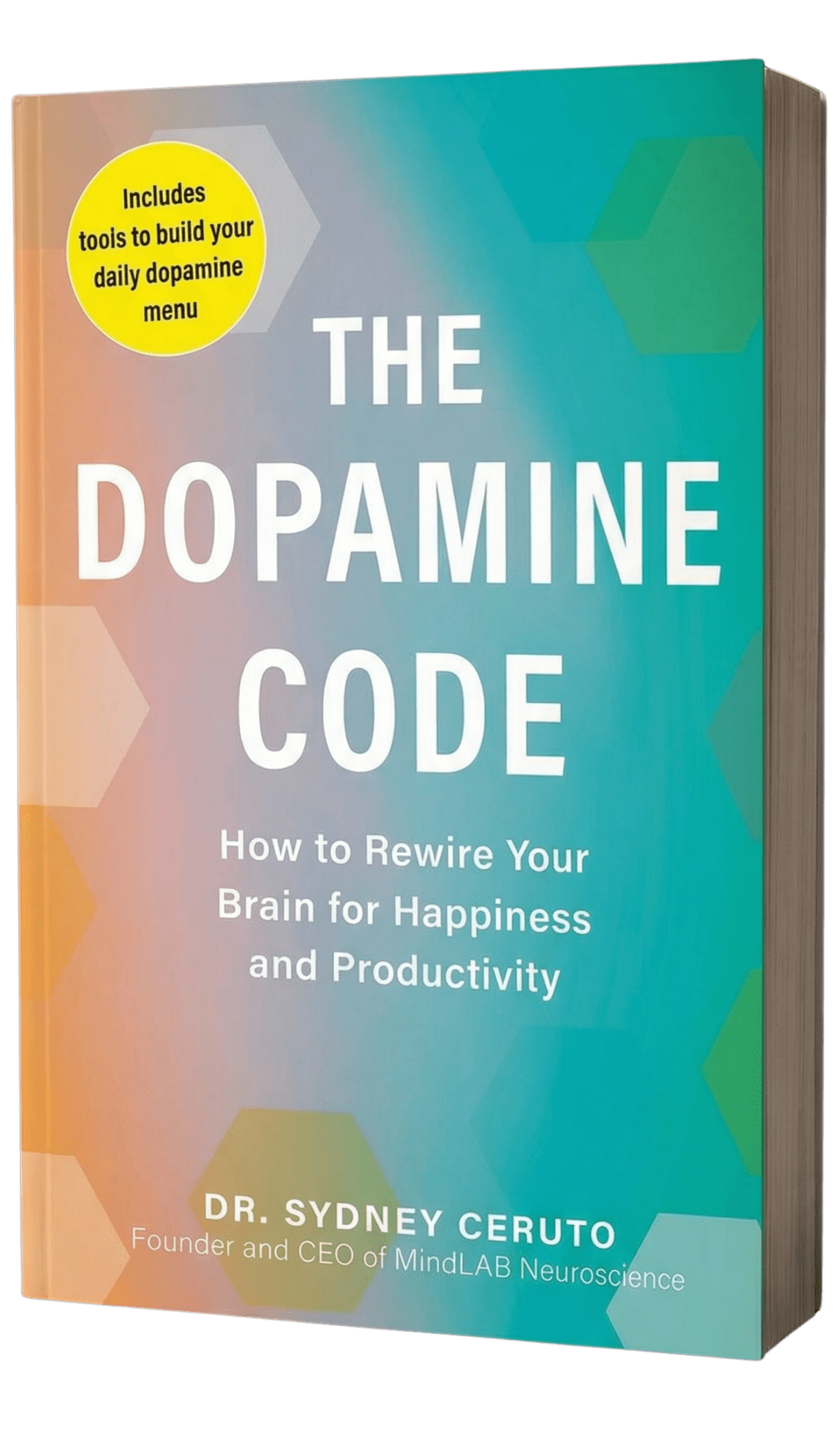
The Dopamine Code

Decode Your Drive

Why Your Brain Rewards the Wrong Things

Your brain's reward system runs every decision, every craving, every crash — and it was never designed for the life you're living. The Dopamine Code is Dr. Ceruto's framework for understanding the architecture behind what drives you, drains you, and keeps you locked in patterns that willpower alone will never fix.

Published by Simon & Schuster, The Dopamine Code is Dr. Ceruto's framework for building your own Dopamine Menu — a personalized system for motivation, focus, and enduring life satisfaction.

Order Now

Ships June 9, 2026

The Dopamine Code by Dr. Sydney Ceruto — Decode Your Drive
Locations

The Intelligence Brief

Neuroscience-backed analysis on how your brain drives what you feel, what you choose, and what you can’t seem to change — direct from Dr. Ceruto.