The Performance Plateau
“You still perform at a level that looks competent from the outside, but internally the machinery feels different — slower, less certain, more effortful where it used to be fluid. That shift is not motivational. It is biological.”
You know what peak performance feels like. You have experienced it. There are stretches where everything clicks: decisions are sharp, confidence is effortless, creative output flows without resistance, and the stakes of the moment amplify your focus rather than fragmenting it. In those periods, you operate at a level that justifies every investment you have made in your career.
The problem is that you cannot reliably access that state. The peak comes and goes. Some weeks you operate at full capacity. Other weeks, the same situation that would normally energize you produces hesitation, second-guessing, or a flatness that drains the precision from your work. You know the difference between your best and your average, and the inconsistency is more frustrating than a permanent deficit would be.
You have tried to solve this. You have experimented with routines, recovery strategies, performance frameworks, and accountability structures. Some of them help at the margins. None of them address the fundamental inconsistency. The performance ceiling is not a function of effort or knowledge. You already have both. The ceiling is structural, located in a system you cannot access through willpower, habit, or better planning.
The people around you may not see the struggle. Your track record is strong by any external measure. But you are aware that the gap between your peak output and your average output represents enormous unrealized potential. The fact that you cannot close it despite sustained intelligent effort suggests that the solution lives in a domain you have not yet addressed.
That domain is neurological. The inconsistency in your performance has a biological signature, and that signature can be read, interpreted, and restructured.
The Neuroscience of Peak Performance
The neural architecture of performance operates through several interacting systems, each contributing distinct aspects of what we experience as peak output. Understanding these systems explains both why performance fluctuates and why behavioral interventions alone cannot produce consistent improvement.
The reward-prediction pathway, originating in the ventral tegmental area — where dopamine production begins — and projecting to the nucleus accumbens, is the brain’s prediction and reward circuit. Dopamine neurons do not simply respond to reward. They respond to the difference between expected and actual outcomes, a computation called prediction error signaling. When outcomes exceed expectations, dopamine surges, reinforcing the behaviors and strategies that produced the result. When outcomes fall short, dopamine dips, signaling the system to recalibrate. The quality of this prediction error computation directly determines how accurately a person learns from experience, how confidently they approach high-stakes situations, and how effectively they sustain motivation across long performance arcs.
When this circuit is miscalibrated, the consequences are specific and measurable. An executive whose dopaminergic prediction system — related to dopamine processing — has been chronically exposed to unpredictable outcomes, common in volatile industries, develops a blunted reward response. Success no longer generates the dopaminergic reinforcement that sustains confidence. The subjective experience is a puzzling flatness: you achieve the result but do not feel the expected satisfaction, which gradually erodes the intrinsic motivation that drives sustained performance.
Direct neural evidence for the relationship between mindset and error processing. Using electroencephalography, they measured a brain signal called the error positivity, or Pe, which reflects conscious attention to mistakes. Individuals with a growth-oriented neural signature showed enhanced Pe amplitude, meaning their brains allocated more attentional resources to processing errors and extracting learning value from them. Individuals with a fixed neural signature showed blunted Pe responses, meaning their brains moved past errors without deep processing. This is not a personality difference. It is a measurable neural event that predicts learning rate, adaptation speed, and performance improvement trajectory.
The self-efficacy — belief in one’s ability to succeed at specific tasks — framework established that the belief in one’s capacity to execute behaviors necessary for specific outcomes is a primary driver of performance. Subsequent neuroscience research has identified the neural substrate: self-efficacy is encoded in structural pathway density. The pattern that presents most often is individuals whose self-efficacy architecture was built under one set of conditions but is now operating under dramatically different demands. The neural circuits that produced confidence in the previous context are not automatically transferable to the new one.
How Dr. Ceruto Approaches Performance Optimization
Dr. Ceruto’s methodology distinguishes between the behavioral surface of performance and the neural architecture generating it. The behavioral surface is what you do. The architecture is why you do it consistently or inconsistently, confidently or hesitantly, with full capacity or with a diminished version of your capability.
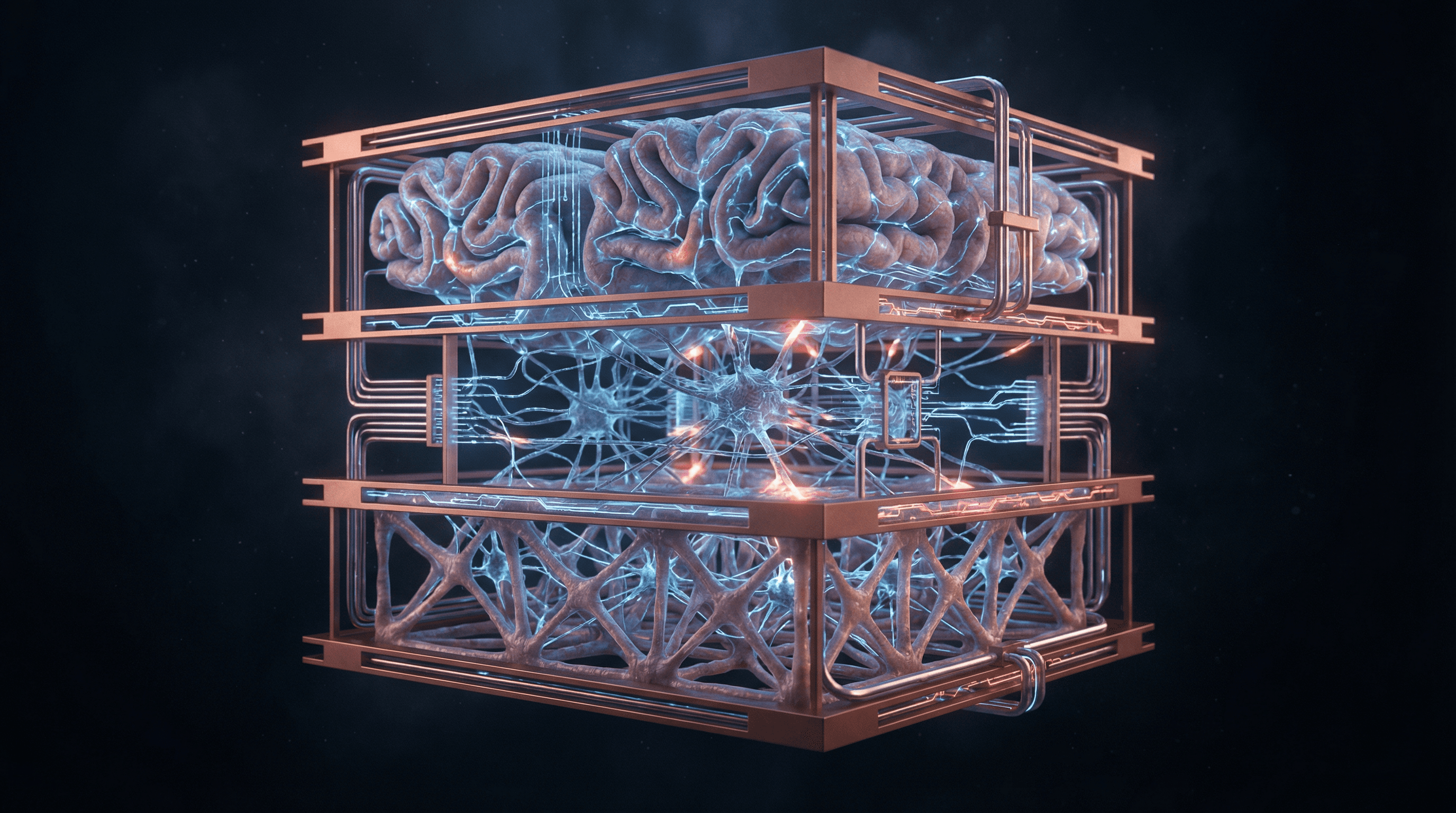
Real-Time Neuroplasticity — the brain’s ability to rewire itself — applied to performance improvement begins with a assessment process that maps the specific neural systems relevant to each client’s performance profile. For one individual, the primary constraint may be dopaminergic reward circuit miscalibration producing blunted confidence signals. For another, it may be error-processing dynamics that prevent effective learning from setbacks. For a third, it may be self-efficacy architecture built for a previous professional context that has not been recalibrated for current demands. Each of these conditions requires a distinct intervention pathway.
The precision of the diagnosis determines the efficacy of the intervention. A generalized performance framework applied to a dopaminergic miscalibration will fail. A mindset intervention applied to a self-efficacy structural deficit will fail. The neural architecture must be identified correctly before it can be modified effectively.
The engagement operates through the NeuroSync program for individuals with a focused performance objective, or the NeuroConcierge program for those navigating sustained, multi-domain performance demands where ongoing neural advisory is required. In this work, the objective is not temporary peak states but permanent expansion of the neural capacity to perform at peak consistently across varying conditions of pressure, uncertainty, and stakes.
What to Expect
The engagement begins with a Strategy Call, a focused strategy conversation in which Dr. Ceruto assesses the specific performance patterns that are limiting your output. This is not a motivational conversation. It is a clinical assessment that identifies the neural conditions most likely contributing to the inconsistency between your best performance and your average performance.
The structured protocol moves from assessment to targeted intervention. The assessment maps the specific neural systems involved: dopaminergic reward processing, error-processing dynamics, self-efficacy architecture, and prefrontal executive function — the brain’s planning and focus capacity —. Each system is evaluated under the conditions that matter most to your professional performance.
Calibration sessions address the identified constraints through precision neural intervention. Sessions are designed around the actual performance environments and demands you face. The measure of progress is not self-reported confidence but observable, sustained improvement in performance consistency across the conditions where it matters most.
References
Chihiro Hosoda, Satoshi Tsujimoto, Masaru Tatekawa, Manabu Honda, Rieko Osu, Takashi Hanakawa (2020). Frontal Pole Cortex Neuroplasticity and Goal-Directed Persistence. Communications Biology. https://doi.org/10.1038/s42003-020-0930-4
Lindsay Willmore, Courtney Cameron, John Yang, Ilana B. Witten, Annegret L. Falkner (2022). Dopaminergic Signatures of Resilience: NAc DA Differentiates Sustained Performers from Non-Performers. Nature. https://doi.org/10.1038/s41586-022-05328-2
Andrew Westbrook, Michael J. Frank, Roshan Cools (2021). Dopamine and the Cognitive Effort Cost-Benefit System: Striatal Control of Performance Willingness. Trends in Cognitive Sciences. https://doi.org/10.1016/j.tics.2021.04.007
Andrew Westbrook, Todd S. Braver (2016). Dopamine Does Double Duty: The Cognitive Motivation Mechanism. Neuron. https://doi.org/10.1016/j.neuron.2015.12.029
The Neural Architecture of Performance
Performance is not a behavior. It is a state — a specific configuration of neural systems that determines what you are capable of producing at any given moment. Most performance improvement efforts treat the output without touching the state that generates it, which is why the improvements they produce are temporary and context-dependent.
At the neurological level, sustained high performance depends on the coordinated function of three systems: the prefrontal executive network, which governs goal maintenance and impulse regulation; the dopaminergic motivation circuit, which drives the effort required to close the gap between current state and desired outcome; and the default mode network, which is responsible for the mental simulation and self-referential processing that allow you to learn from experience and project into future scenarios. When these three systems are aligned and adequately resourced, performance appears almost automatic. When any one of them is depleted, dysregulated, or operating at cross-purposes with the others, the output degrades in ways that are immediately visible but whose causes are rarely obvious from the outside.
The prefrontal network is particularly sensitive to chronic cognitive load. High-performing individuals carry enormous amounts of unresolved decision weight — open loops, deferred choices, unprocessed outcomes — that occupy working memory bandwidth without producing any useful output. This load does not feel like a problem in the moment. It feels like being busy. But the cumulative effect is a measurable narrowing of attentional flexibility, reduced capacity for creative problem-solving, and a gradual shift toward reactive rather than proactive behavior. The person is still performing. They are simply performing below their actual ceiling, and they have been doing it long enough that they have forgotten the ceiling exists.
The dopaminergic circuit introduces a different set of constraints. Motivation at the neural level is prediction-based: the system fires in response to expected reward signals, not actual ones. When the gap between effort and visible progress becomes too large — when results feel uncoupled from action — the motivation circuit begins to disengage. This is not weakness. It is the brain operating exactly as designed, conserving resources in response to a perceived low-return environment. Correcting it requires changing the prediction model, not exhorting yourself to try harder.
Why Traditional Performance Improvement Falls Short
Conventional performance improvement consulting tends to operate in one of two registers: behavioral and systemic. Behavioral approaches focus on habits, routines, and disciplines — the visible actions that high performers take. Systemic approaches focus on structures, incentive alignment, and process design. Both have genuine value. Neither addresses the neural substrate that determines whether the behaviors will actually be executed, whether the structures will be used as designed, or whether the person at the center of the system will have the cognitive and motivational resources required to perform at the level the system assumes.
The result is a familiar pattern: the consulting engagement produces a well-designed plan, the client implements it with genuine commitment, and within three to six months the improvements have eroded. Not because the plan was wrong. Not because the client lacked discipline. But because the brain that was supposed to execute the plan was operating under the same constraints that produced the performance gap in the first place, and no one addressed those constraints directly.

Performance improvement that does not reach the neural level is renovation without structural repair. You can resurface the floor, repaint the walls, and replace the fixtures — but if the foundation has shifted, the renovation does not hold.
How Neural-Level Performance Restructuring Works
My approach begins with a precise diagnostic of the specific neural systems that are limiting performance for this individual, in this context, at this moment. Performance gaps are not generic. A CEO whose output is constrained by prefrontal overload presents differently from one whose dopaminergic motivation circuit has been blunted by a sequence of misaligned incentives, and both present differently from the individual whose performance is limited by a default mode network that generates catastrophic simulations in the absence of sufficient positive feedback. The intervention must be calibrated to the actual constraint.
For prefrontal load, the work involves systematic reduction of open cognitive loops — not through time management techniques, but through protocols that allow the brain’s executive system to release working memory resources by achieving genuine closure on pending decisions, rather than merely deferring them. For motivational circuit recalibration, the work involves restructuring the relationship between effort and feedback so that the prediction model the brain uses to allocate energy is receiving accurate, high-resolution information about the progress that is actually occurring. For default mode dysregulation, the work involves directed neuroplasticity practices that reshape the content and valence of the self-referential simulations the brain runs automatically in the background of every waking hour.
Each protocol is applied within the specific professional context of the individual — the actual decisions they face, the actual pressures they navigate, the actual performance domains where the gap is visible. This is not generic coaching. It is precision restructuring calibrated to a specific human nervous system in a specific operational environment.
What This Looks Like in Practice
Clients typically notice two categories of change. The first is a reduction in friction — the sense that things that used to require significant effort now come more readily. Decisions that previously consumed extended deliberation resolve more cleanly. Creative output that required sustained forcing now arrives with less resistance. The experience is not of working harder, but of the work matching the effort invested in a way it had not been doing before.
The second category is a shift in ceiling. When the neural systems that govern performance are operating at higher baseline function, the absolute upper limit of what the person can produce in their best moments increases. This is what separates performance improvement at the neural level from performance improvement at the behavioral level: behavioral improvements raise the floor; neural restructuring raises the ceiling.
We begin with a strategy call — one hour of precise strategy conversation that maps the specific constraints on your current performance and identifies the restructuring pathway that will produce the most significant and durable change. No generic frameworks. No borrowed best practices. A precise protocol built around the actual architecture of your performance system.
For deeper context, explore dopamine and workplace performance improvement.