Brain Fog & Cognitive Clarity in Lisbon

Dr. Sydney Ceruto provides neuroscience-based education on the biological mechanisms behind brain fog, helping clients in Lisbon understand and address the root causes of cognitive decline.

Brain fog isn't vagueness or laziness — it's a measurable disruption in the prefrontal cortex's ability to filter, prioritize, and execute. At MindLAB Neuroscience, we identify the specific neural and metabolic drivers behind your cognitive cloudiness and build targeted protocols to restore the clarity your brain is capable of producing.
Book a Strategy Call

Key Points

  1. Brain fog arises from identifiable disruptions across interconnected neural systems including neuroinflammation, HPA axis dysregulation, blood-brain barrier compromise, and circadian misalignment.
  2. Microglial priming explains why cognitive impairment persists long after the original trigger resolves — the brain's immune cells remain hypersensitive to inflammatory stimuli.
  3. Circadian misalignment produces performance deficits of twelve to fifteen percent in sustained attention and processing speed through mechanisms distinct from simple sleep deprivation.
  4. Post-viral neurological impact can trigger sustained brain immune activation and alter structural wiring for months or years after acute infection resolves.
  5. Brain fog is a symptom cluster requiring precise differentiation of which biological systems are compromised — generic interventions produce generic results.
  6. The same factors driving brain fog actively suppress neuroplasticity, requiring a dual strategy: removing suppressors while activating restoration pathways.
  7. Effective resolution requires identifying root mechanisms across stress physiology, sleep architecture, inflammatory markers, and metabolic factors — not symptom management.

The experience is unmistakable. Words that once came effortlessly now hover just out of reach. Decisions that should take seconds stretch into minutes of uncertain deliberation. The mental sharpness that once defined professional identity has been replaced by a persistent haze that no amount of caffeine, sleep, or willpower seems to lift.

Brain fog is not a diagnosis. It is a symptom cluster arising from measurable neurobiological dysfunction, and it is one of the most prevalent yet underappreciated cognitive concerns of the modern era. Characterized by reduced working memory — the brain’s short-term mental workspace —, diminished processing speed, word-finding difficulties, and impaired concentration, brain fog reflects disruption in the precise neural networks responsible for higher-order cognition.

The Neuroinflammatory Engine

“The mental sharpness that defined your professional performance begins to feel unreliable — persistently diminished, like cognition operating through resistance. This is brain fog, and it is far more than a subjective feeling.”

At the center of most brain fog presentations is neuroinflammation – the pathological activation of the brain’s resident immune cells. Microglia, which serve as the central nervous system’s immune surveillance team, normally perform essential maintenance functions including synaptic pruning — the brain’s process of eliminating unused connections — and debris clearance. When these cells shift into a chronically activated state, they release pro-inflammatory cytokines – principally interleukin-1 beta, interleukin-6, and tumor necrosis factor-alpha – that directly impair the cellular machinery of learning and memory.
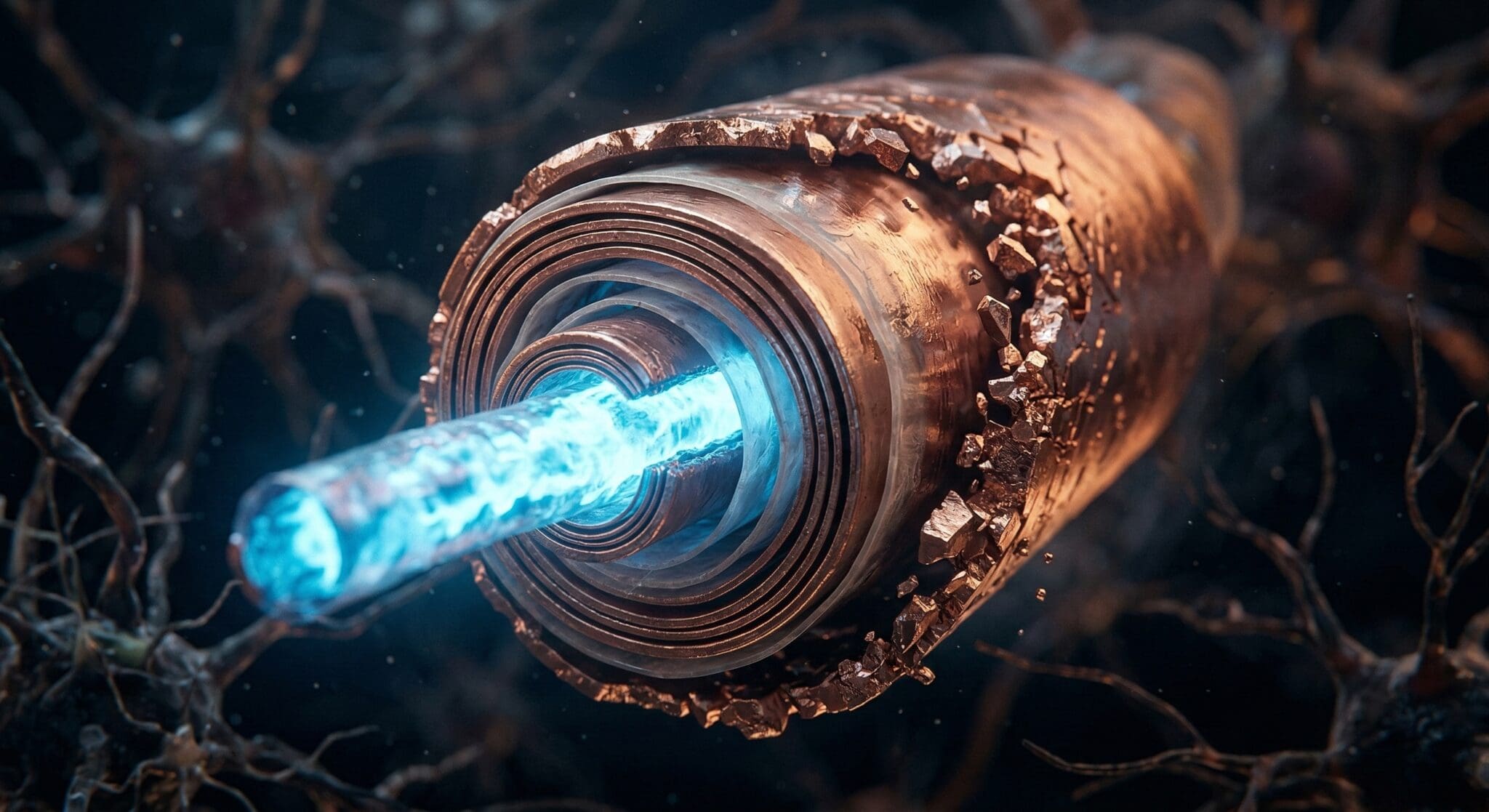
Macro cross-section of neural pathway with copper sheathing forming around blue signal core depicting active brain optimization

The prefrontal cortex — the brain’s executive control center — – the brain region responsible for working memory, executive function, and cognitive flexibility – is disproportionately vulnerable to this inflammatory cascade. Chronic neuroinflammation drives dendritic retraction in prefrontal neurons, reducing the synaptic density that underpins strategic thinking and decision-making. The hippocampus — the brain’s memory-formation center —, essential for memory encoding and spatial navigation, suffers suppressed neurogenesis under inflammatory conditions, limiting the brain’s capacity to form new memories.

The Cortisol-Cognition Connection

Chronic psychological stress activates the hypothalamic-pituitary-adrenal axis — the body’s central stress-response system — – the brain’s primary stress-response system – producing sustained cortisol elevation that compounds the neuroinflammatory picture. Elevated cortisol crosses the blood-brain barrier and binds to receptors densely concentrated in the prefrontal cortex and hippocampus. Within these regions, cortisol disrupts neurochemical balance and overstimulates norepinephrine — a stress and alertness chemical — receptors, triggering structural changes in neural architecture.

Remarkably, chronic stress can produce measurable dendritic retraction in prefrontal neurons within as little as one week. The prefrontal cortex loses synaptic connections while the amygdala — the brain’s threat-detection center — – the brain’s threat-detection center – paradoxically grows more elaborate and reactive. This structural divergence creates a cognitive profile characterized by heightened threat perception paired with diminished working memory and cognitive flexibility: the neurological signature of someone who feels simultaneously overwhelmed and underperforming.

Blood-Brain Barrier Compromise

The blood-brain barrier – a tightly regulated membrane that protects the brain’s chemical environment – represents another critical vulnerability. When this barrier is compromised by chronic stress, infection, or systemic inflammation, peripheral immune cells and inflammatory molecules gain access to brain tissue, amplifying the neuroinflammatory cycle. Longitudinal research has demonstrated that increased blood-brain barrier permeability is prospectively associated with cognitive decline progression, making barrier integrity a meaningful marker of brain health.

Circadian (relating to the body’s 24-hour biological clock) Disruption as a Cognitive Disruptor

The brain’s circadian timing system exerts profound control over cognitive performance. When behavioral and environmental cycles fall out of synchrony with the internal circadian pacemaker, measurable cognitive deterioration follows through mechanisms distinct from simple sleep deprivation. Controlled research demonstrates that circadian misalignment impairs sustained attention, information processing speed, and cognitive throughput by approximately twelve to fifteen percent. These deficits persist across consecutive misaligned days and fail to improve even when sleep opportunity is provided.

Post-Viral Cognitive Impact

Post-infectious cognitive impairment has emerged as the largest single driver of acquired cognitive dysfunction in working-age adults. The neurobiological cascade involves persistent microglial activation, approximately thirty percent reduction in oligodendrocyte precursor cells (impairing the myelin that enables rapid neural communication), and suppression of hippocampal neurogenesis (related to the brain’s memory center). These changes can persist months or years beyond the original infection, producing a characteristic pattern where even adequate sleep fails to restore baseline cognitive function.

A Neuroscience Framework for Clarity

Dr. Ceruto’s approach to brain fog begins with understanding which biological mechanisms are driving the cognitive disruption. Brain fog is not a single condition – it encompasses distinct neuroinflammatory, stress-driven, and metabolic subtypes, each with different root causes and different optimization pathways. A neuroinflammatory presentation following viral illness operates through different mechanisms than stress-driven fog from chronic occupational overload, which in turn differs from metabolic fog associated with circadian disruption or hormonal transition.

Antique rosewood desk with crystal brain sculpture and MindLAB journal in warm amber Lisbon afternoon light with historic European wood paneling

This precision matters because the brain is remarkably responsive to targeted intervention when the correct mechanisms are identified. Neuroplasticity — the brain’s ability to rewire itself — – the brain’s capacity for structural and functional reorganization – provides the biological basis for cognitive recovery. The prefrontal dendritic retraction caused by chronic stress is reversible when stress patterns are interrupted. Hippocampal neurogenesis can be supported through specific behavioral and environmental inputs. Neuroinflammatory cascades can be modulated through vagal tone enhancement, circadian realignment, and metabolic optimization.

Dr. Ceruto educates clients on the specific neurobiological pathways driving their cognitive experience, translating complex neuroscience into an actionable understanding of what the brain needs to restore clarity.

For deeper context, explore ADHD brain fog and cognitive clarity.

Marker What You Experience What's Happening Neurologically What We Restructure
Mental sluggishness Decisions that once took seconds now require minutes of deliberation Neuroinflammation — the brain's immune cells have shifted from maintenance to chronic activation, impairing working memory and attention circuits The inflammatory cascade driving sustained microglial activation and its suppression of cognitive function
Word retrieval failure Words that were readily available disappear mid-sentence Excess cortisol is suppressing growth factors the brain's memory center depends on for consolidation and flexible thinking HPA axis regulation to restore cortisol rhythm and protect hippocampal function
Persistent cognitive haze Fog that seems disproportionate to current circumstances, lingering long after the original stressor resolved Microglial priming — prior stress or illness has left immune cells hypersensitive, mounting exaggerated inflammatory responses to normal stimuli The priming threshold so the brain's immune system returns to proportionate, adaptive responses
Post-viral impairment Cognitive difficulties persisting months after illness, with reduced productivity and increased error rates Viral infections triggered sustained activation of brain immune cells and compromised the blood-brain barrier, allowing systemic inflammation into the brain Blood-brain barrier integrity and the neuroinflammatory markers maintaining the post-viral cognitive state
Circadian fog Performance deficits that do not improve with extra sleep or consecutive days of adjustment Behavioral patterns have fallen out of sync with the brain's internal clock, producing cognitive deterioration through mechanisms distinct from sleep deprivation Circadian alignment — synchronizing the molecular clock with behavioral patterns to restore optimal neural timing

Why Brain Fog & Cognitive Clarity Matters in Lisbon

Lisbon concentrates two overlapping populations experiencing significant cognitive burden. The first is the rapidly expanding international tech workforce navigating relentless product cycles across Parque das Nacoes, where companies including Google, Amazon Web Services, Microsoft, and Volkswagen Digital Solutions employ engineers, product managers, and data scientists. Their professional value resides entirely in processing speed, pattern recognition, and sustained mental output. Investment in Lisbon’s startup ecosystem has grown thirty percent annually since 2016, and startups based in the city are collectively valued at over two billion euros – a threefold increase from half a decade prior.

The second population is the estimated sixteen thousand digital nomads currently living in Lisbon, representing approximately eight percent of Europe’s remote-worker population. This cohort experiences chronic context-switching, time zone misalignment, and the ambient cognitive load — the total demand on mental processing capacity. They manage bureaucratic complexity – visa renewals, tax regime transitions, banking friction – on top of demanding client work. Fully remote workers report higher rates of daily stress and cognitive overload than hybrid or on-site counterparts.

Portugal recorded 5.7 million COVID-19 cases by late 2024, and among healthcare workers studied through that period, cognitive dysfunction affected 42.6 percent of those with long COVID histories. Cognitive dysfunction — brain fog, memory loss, concentration failure — represents a substantial burden. For a city of roughly 550,000 residents with a professional catchment area extending into greater Lisbon, the absolute number of cognitively impaired working adults is substantial.

Neighborhoods like Principe Real, Chiado, and Avenida da Liberdade concentrate the most financially capable professional expat population. These individuals arrived expecting a productive European experience and instead find the neurological consequences of chronic stress, social isolation, and unresolved post-viral inflammation compounding over time. Lisbon’s Champalimaud Centre for the Unknown and the Instituto de Medicina Molecular represent world-class neuroscience research capacity, yet they operate as research institutions rather than clinical service providers for working professionals with cognitive concerns. The gap between neuroscience research infrastructure and accessible, individualized cognitive optimization services remains wide – precisely the space Dr. Ceruto’s practice occupies.

Dr. Sydney Ceruto, PhD — Founder, MindLAB Neuroscience

Dr. Sydney Ceruto, PhD — Founder & CEO, MindLAB Neuroscience

Dr. Ceruto holds a PhD in Behavioral & Cognitive Neuroscience from NYU and two Master’s degrees from Yale University. She lectures at the Wharton Executive Development Program at the University of Pennsylvania and has been an Executive Contributor to the Forbes Coaching Council since 2019. Dr. Ceruto is the author of The Dopamine Code (Simon & Schuster, June 2026). She founded MindLAB Neuroscience in 2000 and has spent over 26 years pioneering Real-Time Neuroplasticity™ — a methodology that permanently rewires the neural pathways driving behavior, decisions, and emotional responses.

References

Monje, M., & Iwasaki, A. (2022). The neurobiology of long COVID. Neuron, 110(21), 3484-3496. https://doi.org/10.1016/j.neuron.2022.10.006

Girotti, M., Bulin, S. E., & Carreno, F. R. (2024). Effects of chronic stress on cognitive function – From neurobiology to intervention. Neurobiology of Stress, 22, 100670. https://doi.org/10.1016/j.ynstr.2024.100670

Chellappa, S. L., Morris, C. J., & Scheer, F. A. J. L. (2018). Daily circadian misalignment impairs human cognitive performance task-dependently. Scientific Reports, 8, 3082. https://doi.org/10.1038/s41598-018-20707-4

Haywood, D., Hart, N. H., & Rossell, S. L. (2025). Cutting through the fog: recognising brain fog as a significant public health concern. BMC Public Health, 25, 22525. https://doi.org/10.1186/s12889-025-22525-6

Success Stories

“Slower processing, foggier recall, decisions that used to be instant taking longer than they should — I'd been accepting it all as inevitable decline for two years. Dr. Ceruto identified the prefrontal efficiency pattern that was degrading and restructured it at the neurological level. The sharpness didn't just come back. It came back faster and more precise than it was a decade ago. Nothing I'd tried before even addressed the right problem.”

Elliott W. — Wealth Advisor Atherton, CA

“Nothing was wrong — and that's exactly why no one could help me. I wasn't struggling. I wanted to know what my brain was actually capable of if its resting-state architecture was optimized. Dr. Ceruto mapped my default mode network and restructured how it allocates resources between focused and diffuse processing. The cognitive clarity I operate with now isn't something I'd ever experienced before — and I had no idea it was available.”

Nathan S. — Biotech Founder Singapore

“After the concussion, my processing speed collapsed — I couldn't hold complex information the way I used to, and no one could explain why the fog wasn't lifting. Dr. Ceruto mapped the damaged pathways and built compensatory networks around them. My brain doesn't work the way it did before the injury. It works differently — and in some ways, more efficiently than it ever did.”

Owen P. — Orthopedic Surgeon Scottsdale, AZ

“I'd optimized everything — diet, fitness, sleep — but my cognitive sharpness was quietly declining and no one could explain why. Dr. Ceruto identified the synaptic density patterns that were thinning and built a protocol to reverse the trajectory. This wasn't prevention in theory. My neuroplasticity reserve is measurably stronger now than it was three years ago. Nothing I'd tried before even addressed the right problem.”

Henrique L. — University Dean Lisbon, PT

“What I appreciate about Dr. Ceruto is her candid, direct approach — truly from a place of warmth and support. Every week delivered concrete value, and I never felt like I was wasting time the way I had with traditional methods. She draws from her clinical and academic expertise to dig deeper into the roots of issues. She helped me make enormous progress after a year of personal loss, including getting my faltering career back on track. She follows up after every session with additional materials.”

Eric F. — Surgeon Coral Gables, FL

“Working with Dr. Ceruto was one of the most transformative experiences of my life. I was stuck in a cycle of dissatisfaction, unsure of where I was headed or why I felt so unfulfilled. From the very first session, she helped me peel back the layers and uncover what truly mattered. Her ability to connect neuroscience with practical life strategies was incredible. She guided me to clarify my goals, break free from limiting beliefs, and align my actions with my values. I finally feel real purpose.”

Nichole P. — Wealth Advisor Sarasota, FL

Frequently Asked Questions About Brain Fog & Cognitive Clarity in Lisbon

What does Dr. Ceruto's brain fog and cognitive clarity service involve?

Dr. Ceruto provides neuroscience-based education on the biological mechanisms driving cognitive dysfunction. This includes identifying which specific pathways – neuroinflammatory, stress-driven, metabolic, or circadian — relating to the body's 24-hour biological clock — are contributing to the cognitive experience. It also involves developing a personalized understanding of what the brain needs to restore optimal function. The approach is rooted in current peer-reviewed neuroscience and focuses on education and brain health optimization rather than medical intervention.

What causes brain fog at the neurological level?

Brain fog arises from measurable disruption in specific neural systems. The most common drivers include chronic neuroinflammation (activated microglia releasing cytokines that impair synaptic function), sustained cortisol elevation from chronic stress (causing structural changes in prefrontal and hippocampal neurons). Additional factors include blood-brain barrier compromise (allowing peripheral inflammatory molecules to access brain tissue), and circadian misalignment (disrupting the brain's internal timing system). Post-viral inflammation adds another layer, with persistent microglial activation and suppressed neurogenesis — the creation of new brain cells — contributing to prolonged cognitive impairment.

Who benefits most from this service?

Individuals experiencing persistent cognitive difficulty that interferes with professional or personal functioning – particularly those navigating demanding careers, managing chronic stress, recovering from viral illness, or going through hormonal transitions. The service is especially relevant for people whose cognitive symptoms have not resolved despite adequate sleep and conventional approaches, and who want to understand the neuroscience behind what they are experiencing.

How does the process begin?

The process begins with a Strategy Call – a focused, phone-based conversation with Dr. Ceruto to discuss the cognitive concerns, relevant history, and goals. The Strategy Call carries a $250 fee and provides an opportunity to determine whether the neuroscience-based approach is the right fit before any further commitment. Program structure and investment details are discussed during the Strategy Call.

How long before clients notice changes in cognitive clarity?

The timeline varies depending on the underlying mechanisms involved. Circadian realignment (relating to the body's 24-hour biological clock) and stress-response modulation can produce noticeable shifts in cognitive quality within weeks. Neuroinflammatory presentations, particularly those following viral illness, typically require a longer engagement as the brain’s recovery processes are supported over months. Dr. Ceruto provides education on realistic neurobiological timelines so clients understand what their brain needs and why.

Also available in: Miami · Wall Street · Midtown Manhattan · Beverly Hills

Take the First Step Toward Cognitive Clarity

The Strategy Call is a focused conversation with Dr. Ceruto that maps the specific neural mechanisms driving your concerns and determines the right path forward.

Book a Strategy Call
MindLAB Neuroscience consultation room

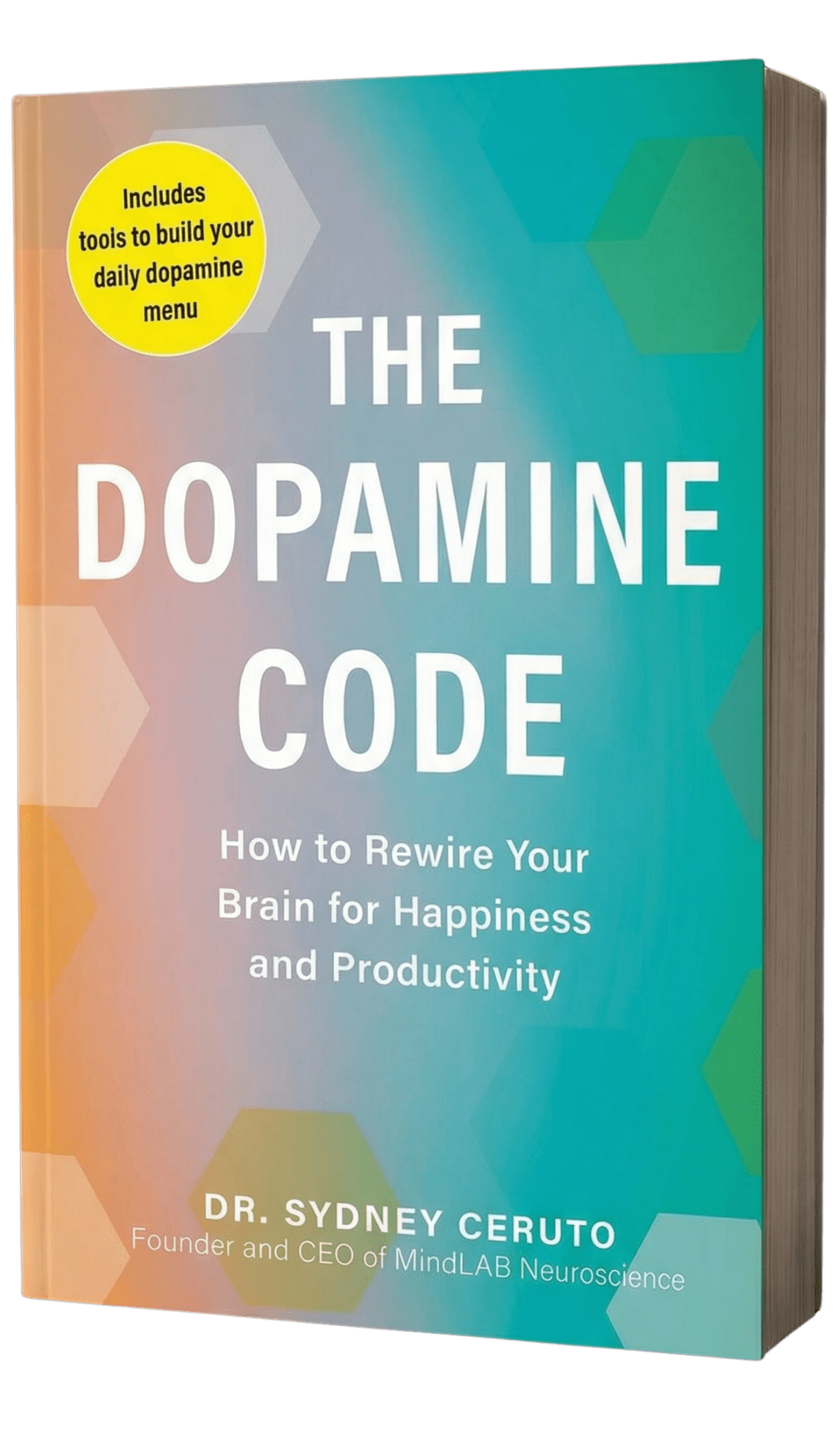
The Dopamine Code

Decode Your Drive

Why Your Brain Rewards the Wrong Things

Your brain's reward system runs every decision, every craving, every crash — and it was never designed for the life you're living. The Dopamine Code is Dr. Ceruto's framework for understanding the architecture behind what drives you, drains you, and keeps you locked in patterns that willpower alone will never fix.

Published by Simon & Schuster, The Dopamine Code is Dr. Ceruto's framework for building your own Dopamine Menu — a personalized system for motivation, focus, and enduring life satisfaction.

Order Now

Ships June 9, 2026

The Dopamine Code by Dr. Sydney Ceruto — Decode Your Drive
Locations

The Intelligence Brief

Neuroscience-backed analysis on how your brain drives what you feel, what you choose, and what you can’t seem to change — direct from Dr. Ceruto.