Brain Longevity & Neuroprotection in Lisbon

Dr. Sydney Ceruto provides neuroscience education on proactive brain longevity strategies, helping professionals in Lisbon understand and invest in the biological systems that protect cognitive function across decades.

Cognitive decline is not inevitable — but it is accelerated by cortisol dysregulation, chronic inflammation, and neural patterns that have never been addressed at their root. At MindLAB Neuroscience, we take a precision approach to protecting and extending your brain's performance capacity, targeting the biological and behavioral drivers of premature cognitive aging.
Book a Strategy Call

Key Points

  1. BDNF — the brain's primary growth and repair protein — begins declining approximately ten years before cognitive symptoms appear, making proactive assessment an evidence-based early intervention.
  2. Delaying Alzheimer's onset by just five years results in forty-one percent lower disease prevalence, making the mathematics of proactive brain health investment compelling.
  3. Approximately forty percent of worldwide dementia cases are potentially preventable or delayable through targeted intervention in modifiable risk factors.
  4. The glymphatic system performs critical waste clearance during deep sleep, and disruption directly accelerates accumulation of proteins linked to cognitive decline.
  5. Cognitive reserve explains why individuals with comparable brain pathology show radically different clinical outcomes — reserve is buildable through deliberate engagement.
  6. Bilingualism delays dementia onset by 4.7 years on average — a larger effect than most pharmacological interventions ever tested.
  7. Brain longevity requires integrated intervention because exercise, sleep, and cognitive enrichment each simultaneously affect multiple protective systems.

The brain ages differently from every other organ. Unlike the heart or liver, whose functional reserve can be measured with straightforward biomarkers, cognitive function depends on the cumulative architecture of synaptic networks built across decades. These networks begin degrading silently, long before any symptom appears. This creates both the challenge and the opportunity at the core of proactive brain longevity. The window for meaningful intervention is wide open during the thirties, forties, and fifties, precisely when most high-capacity individuals are not yet thinking about their cognitive future.

The economic urgency is no longer abstract. Brain health conditions now account for twenty-four percent of the total global disease burden. Scaling proven interventions could avert 267 million disability-adjusted life years globally by 2050, generating up to $6.2 trillion in cumulative GDP gains. This is not a geriatric care problem. It is a human capital crisis whose roots are planted in midlife.

Neuroplasticity — the brain’s ability to rewire itself —: Use It or Lose It

“The window for meaningful intervention is wide open in the thirty-to-fifty-five age range, precisely when most high-performing individuals are not yet thinking about their cognitive health.”

Neuroplasticity – the brain’s capacity to reorganize its synaptic architecture in response to experience, learning, and environmental demands – follows a developmental trajectory with distinct phases. During adulthood, the brain retains functional and structural plasticity through long-term potentiation — the strengthening of neural connections through use — and long-term depression – the molecular substrates of learning and memory. Structural plasticity continues through dendritic spine turnover, axonal sprouting, and activity-dependent myelination — the insulation of nerve fibers for faster signaling —, but becomes increasingly sensitive to lifestyle modulation from the forties onward.
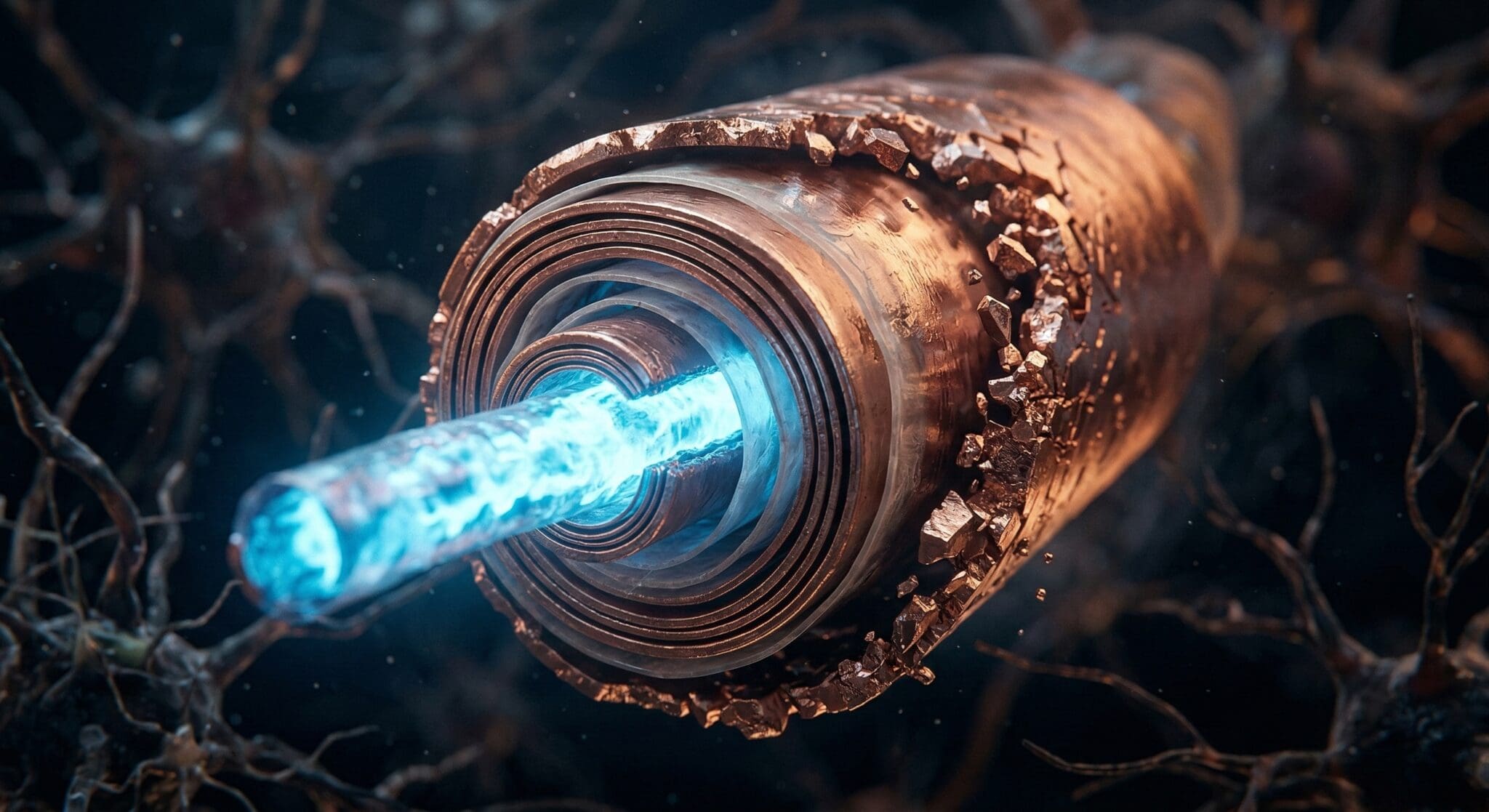
Macro cross-section of neural pathway with copper sheathing forming around blue signal core depicting active brain optimization

Several factors demonstrably accelerate neuroplastic (related to the brain’s ability to rewire itself) decline during the midlife window. Chronic psychological stress suppresses brain-derived neurotrophic factor — a growth protein for neurons — expression by up to sixty percent in hippocampal regions and promotes dendritic retraction in the neurons responsible for memory consolidation. Sleep deprivation impairs glymphatic clearance – the brain’s primary waste-removal system – which during slow-wave sleep increases interstitial fluid volume by approximately sixty percent to flush amyloid-beta and tau proteins. Metabolic dysfunction impairs BDNF — brain-derived neurotrophic factor, a growth protein for neurons — signaling and promotes neuroinflammatory cascades. Sedentary behavior eliminates the single most potent physiological driver of BDNF synthesis.

BDNF: The Master Regulator

Brain-derived neurotrophic factor is the most potent and well-characterized endogenous driver of neuroplasticity. At the synapse, BDNF stabilizes dendritic spines, facilitates long-term potentiation, and increases neurotransmitter — a chemical messenger between brain cells — release. In neurogenesis, BDNF is essential for the survival and functional integration of newly generated hippocampal neurons. In cognitive reserve, higher BDNF gene expression is robustly associated with slower cognitive decline. Individuals in the ninetieth percentile of brain BDNF expression experience cognitive decline approximately fifty percent slower than those in the tenth percentile, with this association persisti

BDNF plasma levels decline approximately ten years before dementia symptom onset, with a strong correlation to hippocampal atrophy. This positions BDNF not merely as a protective factor but as a leading indicator of the brain’s trajectory – a signal that is still modifiable when the window for intervention is open.

Cognitive Reserve: The Brain’s Insurance Policy

Cognitive reserve describes the observation that individuals with comparable amounts of brain pathology can show radically different clinical outcomes. The gap between structural disease and functional expression reflects real differences in neural efficiency, adaptive capacity, and the richness of network architecture built through decades of intellectual engagement.

The modifiable contributors to cognitive reserve are well established. Novel learning – not repetitive execution of familiar skills but genuine cognitive challenge at the edge of current competency – activates neuroplastic cascades that routine activities do not. Bilingualism delays dementia onset by an average of 4.7 years across meta-analytic data, representing a larger effect than most pharmacological interventions ever tested. High-complexity social networks drive reserve-building through multi-domain cognitive engagement. Physical activity occupies a unique position because it operates through both active cognitive reserve mechanisms and passive brain reserve mechanisms. A one-year aerobic walking intervention produced a two percent increase in hippocampal volume while sedentary controls showed the expected age-rela

The 2020 Lancet Commission on Dementia Prevention concluded that twelve modifiable risk factors collectively account for approximately forty percent of worldwide dementia cases. Delaying Alzheimer’s onset by just five years results in forty-one percent lower disease prevalence and forty percent lower associated costs. The mathematics of delay are profoundly nonlinear, and the thirty-to-fifty-five window represents the period of maximum leverage.

Neuroprotective Systems

The brain maintains several interlocking systems of cellular defense. The Nrf2 antioxidant defense pathway – the brain’s master antioxidant regulatory system – counteracts oxidative stress, inhibits neuroinflammatory signaling, improves mitochondrial function, and governs protein clearance. Critically, Nrf2 activity declines with aging, progressively eroding this protective system. Research demonstrates that Nrf2-deficient brains recapitulate the most dysregulated pathways observed in both human aging and Alzheimer’s disease.

Antique rosewood desk with crystal brain sculpture and MindLAB journal in warm amber Lisbon afternoon light with historic European wood paneling

Autophagy – the cellular process of degrading and recycling damaged organelles and misfolded proteins – represents another critical defense against the protein aggregation that characterizes neurodegenerative disease. Healthy autophagy maintains proteostasis by preventing the accumulation of toxic species before they exceed clearance capacity. This process is enhanced by aerobic exercise, caloric restriction patterns, and behavioral inputs that activate AMPK-mediated pathways.

The Proactive Advisory Framework

Dr. Ceruto educates clients on the integrated biological systems that determine brain longevity – BDNF signaling, cognitive reserve architecture, circadian function, Nrf2 activity, and HPA regulation. These systems function not as parallel tracks but as nodes in a single adaptive network. Aerobic exercise simultaneously increases BDNF, activates Nrf2, improves sleep architecture, reduces HPA reactivity, and builds both passive and active cognitive reserve. Sleep quality simultaneously restores BDNF consolidation, enables glymphatic clearance, normalizes circadian amplitude, and reduces neuroinflammation. The neuroscience education Dr. Ceruto provides maps this system for each individual, identifies the points of highest leverage, and provides the understanding needed to make informed, sustained investments in long-term brain health.

For deeper context, explore the cognitive longevity protocol.

Marker What You Experience What's Happening Neurologically What We Restructure
Subtle recall decline Recall is slower, word-finding is harder, multitasking feels more effortful than it used to BDNF — the brain's growth and repair protein — has been declining for years while hippocampal volume shrinks silently Growth factor signaling and the lifestyle factors that restore BDNF expression to protective levels
Reduced mental stamina Cognitive endurance shortens — complex work that once sustained for hours now requires breaks Neuroplasticity is contracting as chronic low-grade inflammation, declining energy production, and reduced growth-factor signaling converge The intersecting biological processes that accelerate neuroplastic contraction in midlife
Sleep fragmentation Waking during the night with difficulty returning to sleep, feeling unrested despite adequate hours The glymphatic system — the brain's waste-removal infrastructure — operates during deep sleep, and fragmentation impairs its clearance of harmful proteins Sleep architecture to restore the deep-sleep window when the brain performs critical maintenance and waste clearance
Cognitive reserve gap Two people with similar stress histories show radically different cognitive trajectories over time Differences in neural efficiency, adaptive capacity, and network architecture built through decades of intellectual engagement Targeted reserve-building through the modifiable factors that account for approximately forty percent of preventable cognitive decline

Why Brain Longevity & Neuroprotection Matters in Lisbon

Portugal’s demographic profile makes brain longevity one of the most pressing neurological service categories in the country. Portugal has the second-highest share of elderly population in Europe, with 24.3 percent of its total population aged sixty-five and over. The national aging index stands at 192 elderly people per 100 young people, with projections suggesting it will reach 316 by 2100. An estimated 217,549 community-dwelling adults aged sixty-five and over currently live with dementia in Portugal, with forecasts projecting more than a doubling of prevalence between 2020 and 2080.

For the high-capacity professionals aged thirty-five to fifty-five who constitute Dr. Ceruto’s core audience, these population-level statistics are not abstract. A forty-five-year-old in Principe Real who has watched a parent decline, or a fifty-year-old managing a Lisbon tech center who is noticing word-retrieval problems and fatigue, is acutely sensitized to the idea of proactive neuroprotection. This population is arriving in Lisbon in meaningful numbers via the Golden Visa program and favorable tax regimes that attract individuals specifically seeking a European base.

The Champalimaud Foundation’s Neuroscience of Disease Programme and its International Congress on Neurodegenerative Diseases position Lisbon as a genuine center of neurodegeneration research seriousness. The AD/PD 2024 conference – the International Conference on Alzheimer’s and Parkinson’s Diseases – was held in Lisbon in March 2024, cementing the city’s role as a hub for neurodegeneration research dialogue. Yet the translation from conference science to accessible, individualized neuroprotection advisory for working professionals remains underdeveloped.

The longevity wellness market is actively forming in and around Lisbon, with biohacking communities, medical wellness programs, and genetic testing services signaling demonstrated demand. Portugal’s retirement age of sixty-eight – eighth highest in the OECD – means professionals are extending their careers further than previous generations, raising the premium placed on sustained cognitive function through the sixties and beyond. Dr. Ceruto’s neuroscience-based neuroprotection advisory bridges the gap between world-class research institutions and the personalized guidance that serious longevity-seeking professionals in Lisbon cannot currently find.

Dr. Sydney Ceruto, PhD — Founder, MindLAB Neuroscience

Dr. Sydney Ceruto, PhD — Founder & CEO, MindLAB Neuroscience

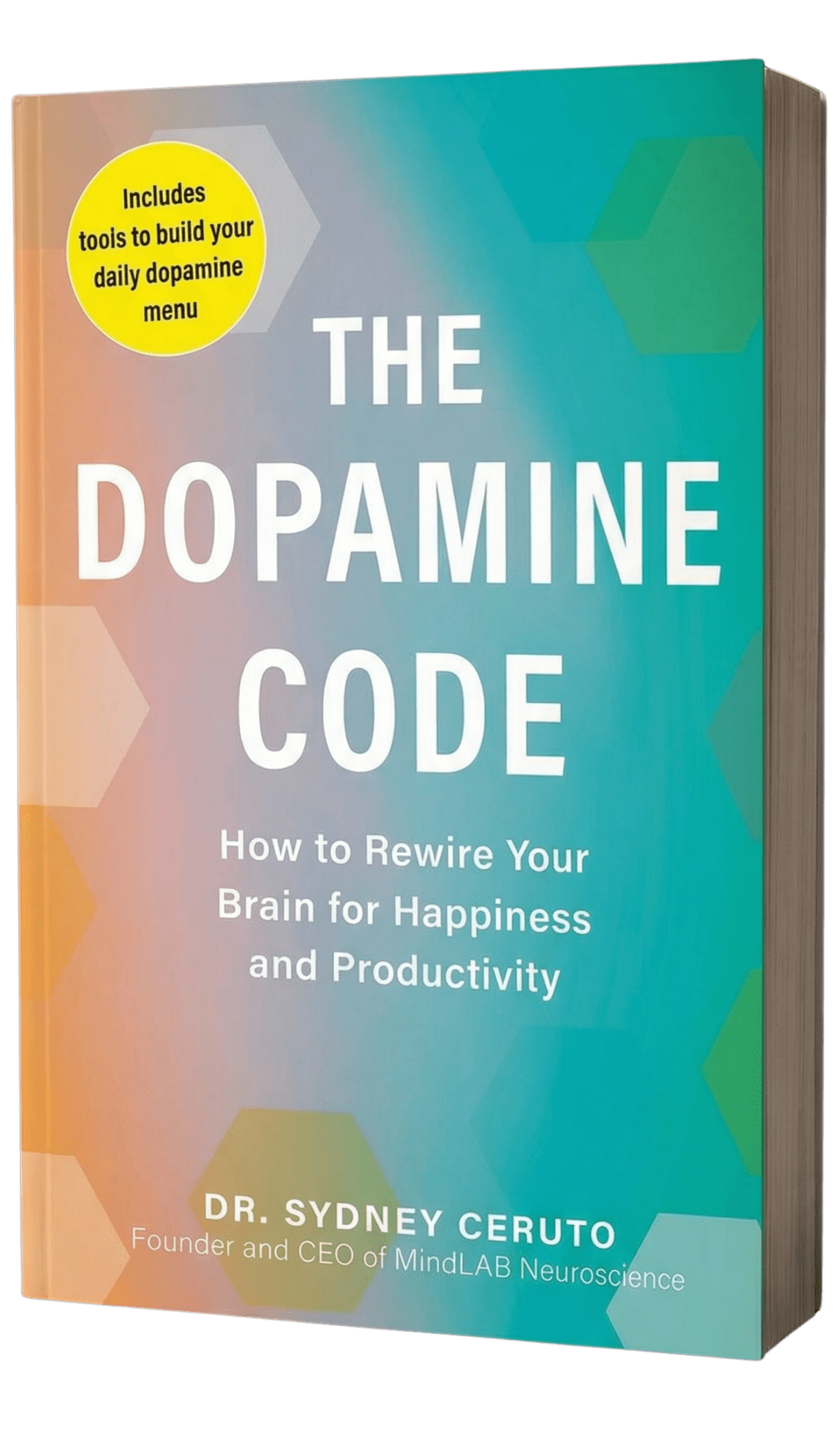
Dr. Ceruto holds a PhD in Behavioral & Cognitive Neuroscience from NYU and two Master’s degrees from Yale University. She lectures at the Wharton Executive Development Program at the University of Pennsylvania and has been an Executive Contributor to the Forbes Coaching Council since 2019. Dr. Ceruto is the author of The Dopamine Code (Simon & Schuster, June 2026). She founded MindLAB Neuroscience in 2000 and has spent over 26 years pioneering Real-Time Neuroplasticity™ — a methodology that permanently rewires the neural pathways driving behavior, decisions, and emotional responses.

References

Livingston, G., Huntley, J., Sommerlad, A., Ames, D., Ballard, C., Banerjee, S., … & Mukadam, N. (2020). Dementia prevention, intervention, and care: 2020 report of the Lancet Commission. The Lancet, 396(10248), 413-446. https://doi.org/10.1016/S0140-6736(20)30367-6

Erickson, K. I., Voss, M. W., Prakash, R. S., Basak, C., Szabo, A., Chaddock, L., … & Kramer, A. F. (2011). Exercise training increases size of hippocampus and improves memory. Proceedings of the National Academy of Sciences, 108(7), 3017-3022. https://doi.org/10.1073/pnas.1015950108

Buchman, A. S., Yu, L., Boyle, P. A., Schneider, J. A., De Jager, P. L., & Bennett, D. A. (2016). Higher brain BDNF gene expression is associated with slower cognitive decline in older adults. Neurology, 86(8), 735-741. https://doi.org/10.1212/WNL.0000000000002387

Bialystok, E. (2021). Bilingualism: Pathway to cognitive reserve. Trends in Cognitive Sciences, 25(5), 355-364. https://doi.org/10.1016/j.tics.2021.02.003

Success Stories

“Nothing was wrong — and that's exactly why no one could help me. I wasn't struggling. I wanted to know what my brain was actually capable of if its resting-state architecture was optimized. Dr. Ceruto mapped my default mode network and restructured how it allocates resources between focused and diffuse processing. The cognitive clarity I operate with now isn't something I'd ever experienced before — and I had no idea it was available.”

Nathan S. — Biotech Founder Singapore

“Slower processing, foggier recall, decisions that used to be instant taking longer than they should — I'd been accepting it all as inevitable decline for two years. Dr. Ceruto identified the prefrontal efficiency pattern that was degrading and restructured it at the neurological level. The sharpness didn't just come back. It came back faster and more precise than it was a decade ago. Nothing I'd tried before even addressed the right problem.”

Elliott W. — Wealth Advisor Atherton, CA

“After the concussion, my processing speed collapsed — I couldn't hold complex information the way I used to, and no one could explain why the fog wasn't lifting. Dr. Ceruto mapped the damaged pathways and built compensatory networks around them. My brain doesn't work the way it did before the injury. It works differently — and in some ways, more efficiently than it ever did.”

Owen P. — Orthopedic Surgeon Scottsdale, AZ

“I'd optimized everything — diet, fitness, sleep — but my cognitive sharpness was quietly declining and no one could explain why. Dr. Ceruto identified the synaptic density patterns that were thinning and built a protocol to reverse the trajectory. This wasn't prevention in theory. My neuroplasticity reserve is measurably stronger now than it was three years ago. Nothing I'd tried before even addressed the right problem.”

Henrique L. — University Dean Lisbon, PT

“I found Dr. Ceruto at a time when I needed to change my thinking patterns to live a happier, healthier life, after trying multiple forms of therapy that weren’t resonating. She goes above and beyond to personalize your experience and wastes no time addressing core issues. Sessions aren’t limited to conventional one-hour weekly time slots — they’re completely centered around your specific needs. She’s always available for anything that comes up between sessions, and for me, that was huge. The progress came faster than I expected.”

Palak M. — Clinical Researcher Toronto, ON

“The same relational patterns my mother and grandmother lived through kept repeating in my own life — the hypervigilance, the emotional shutdown, the inability to feel safe even when nothing was wrong. Talking through it changed nothing. Dr. Ceruto identified the epigenetic stress signatures driving the pattern and restructured them at the neurological level. The cycle that ran through three generations stopped with me.”

Gabriela W. — Real Estate Developer Miami, FL

Frequently Asked Questions About Brain Longevity & Neuroprotection in Lisbon

What does brain longevity and neuroprotection education involve at MindLAB?

Dr. Ceruto provides neuroscience-based education on the biological systems that determine long-term cognitive health – including neuroplasticity — the brain's ability to rewire itself — preservation, BDNF signaling, and cognitive reserve architecture. She also covers neuroprotective pathways and circadian function (relating to the body's 24-hour biological clock). The focus is on understanding the science of proactive brain optimization during the window when these systems are most responsive to behavioral input, typically the thirties through fifties.

What makes the midlife window so critical for brain health?

By the time cognitive symptoms appear, years of silent neuronal loss have already occurred. BDNF — brain-derived neurotrophic factor, a growth protein for neurons — plasma levels decline approximately ten years before dementia symptom onset. Hippocampal volume (related to the brain's memory center) is already declining in neurologically healthy adults in their forties who do not exercise. The twelve modifiable risk factors identified by the Lancet Commission collectively account for approximately forty percent of worldwide dementia cases. The vast majority of these factors are addressable during midlife, when the brain's plasticity is still sufficient to build meaningful reserve.

Who benefits from brain longevity education?

Individuals in their thirties through fifties who want to understand what the neuroscience actually says about preserving cognitive function long-term. This includes people with family histories of cognitive decline, professionals whose careers depend on sustained mental performance, and those who recognize that current decisions about stress, sleep, exercise, and cognitive engagement matter. These choices will shape their brain's trajectory for decades.

How does the engagement begin?

The process begins with a Strategy Call – a phone-based conversation with Dr. Ceruto to discuss cognitive health goals, relevant history, and concerns. The Strategy Call fee is $250 and provides an opportunity to determine whether the neuroscience-based approach is appropriate. Program structure and investment details are discussed during the call.

What kind of results can clients expect over time?

Brain longevity is inherently a long-term investment. The neuroscience-based principles Dr. Ceruto teaches – supporting BDNF — brain-derived neurotrophic factor, a growth protein for neurons — signaling, building cognitive reserve, optimizing circadian function (relating to the body's 24-hour biological clock), managing stress physiology. These principles produce both near-term cognitive benefits (improved clarity, sleep quality, stress resilience) and long-term neuroprotective effects. The longitudinal research is clear: sustained engagement with these systems measurably alters the trajectory of cognitive aging over years and decades.

Also available in: Miami · Wall Street · Midtown Manhattan · Beverly Hills

Take the First Step Toward Brain Longevity & Neuroprotection

The Strategy Call is a focused conversation with Dr. Ceruto that maps the specific neural mechanisms driving your concerns and determines the right path forward.

Book a Strategy Call
MindLAB Neuroscience consultation room

The Dopamine Code

Decode Your Drive

Why Your Brain Rewards the Wrong Things

Your brain's reward system runs every decision, every craving, every crash — and it was never designed for the life you're living. The Dopamine Code is Dr. Ceruto's framework for understanding the architecture behind what drives you, drains you, and keeps you locked in patterns that willpower alone will never fix.

Published by Simon & Schuster, The Dopamine Code is Dr. Ceruto's framework for building your own Dopamine Menu — a personalized system for motivation, focus, and enduring life satisfaction.

Order Now

Ships June 9, 2026

The Dopamine Code by Dr. Sydney Ceruto — Decode Your Drive
Locations

The Intelligence Brief

Neuroscience-backed analysis on how your brain drives what you feel, what you choose, and what you can’t seem to change — direct from Dr. Ceruto.