Hormones, the Brain & Cognitive Performance in Lisbon

Dr. Sydney Ceruto provides neuroscience education on how hormonal shifts affect brain structure, cognitive function, and professional performance -- helping clients in Lisbon understand the biology behind the changes they experience.

Dr. Sydney Ceruto provides neuroscience education on how hormonal shifts affect brain structure, cognitive function, and professional performance – helping clients in Lisbon understand the biology behind the changes they experience.

Book a Strategy Call

Key Points

  1. Estrogen triggers rapid growth of new synaptic connections in the hippocampus within minutes to hours — its withdrawal removes the mechanism that encodes and retrieves information.
  2. Sixty percent of perimenopausal women report cognitive difficulties, and these reports align with observable changes in the brain regions governing the affected functions.
  3. Testosterone decline in men begins around age thirty and is accelerated by chronic stress, sleep disruption, and metabolic dysfunction — cognitive effects are often misattributed to aging.
  4. The brain produces estrogen locally inside neurons even after ovarian estrogen declines, but local production cannot fully compensate for the loss of systemic supply.
  5. The ratio of cortisol to DHEA serves as a functional marker of the balance between stress-driven neural wear and the brain's built-in protective mechanisms.
  6. Even subtle thyroid dysfunction produces measurable cognitive differences in processing speed, memory, and executive function.
  7. A neuroscientist provides the cognitive context connecting hormonal status to brain outcomes, complementing the clinical hormone management provided by endocrinologists.

Hormones are not peripheral to brain function. They are fundamental architects of it. Steroid and peptide hormones exert profound effects on neural architecture, synaptic efficiency, and the speed of information processing. When hormonal balance shifts – whether through aging, chronic stress, or the biological transitions that mark adult life – the cognitive consequences are not subtle. They are measurable, specific, and, with the right neuroscience understanding, addressable.

Estrogen and the Brain

“Memory lapses, word-finding difficulty, attention instability, and mood dysregulation all appearing at once — this is not aging. It is the simultaneous disruption of neurotransmitter systems when hormonal support withdraws.”

Estrogens – principally 17-beta-estradiol – reach the brain through two routes: circulating ovarian estrogens cross the blood-brain barrier through passive diffusion. Locally synthesized estradiol is produced on-demand within neurons by the enzyme aromatase. This dual supply system means that even after peripheral estrogen declines, the brain retains some capacity for local neuromodulation – though this is insufficient to fully compensate for the loss of ovarian output.

Estradiol’s effects on neural function are rapid and structurally significant. Within minutes, estradiol activates membrane-associated estrogen receptors that trigger MAPK/ERK and PI3K/Akt signaling cascades – the same pathways engaged by brain-derived neurotrophic factor during learning. These cascades phosphorylate cofilin (stabilizing the actin cytoskeleton in dendritic spines) and activate the transcription factor CREB (driving expression of plasticity-related genes). They also increase glutamate — the brain’s primary excitatory chemical — receptor trafficking to synaptic sites. Within two hours, hippocampal spine density increases measurably. This is not a theoretical effect – it represents rapid, estrogen-driven structural remodeling of the brain’s computational hardware.

The prefrontal cortex — the brain’s executive control center —, which contains both estrogen receptor subtypes in its pyramidal neurons, depends on estradiol for dopamine receptor regulation and working memory circuit function. This enables the inhibitory control that supports flexible, context-appropriate responding. When estrogen levels decline, prefrontal activation patterns shift: functional neuroimaging demonstrates altered spontaneous brain activity in women during menopause transition, with changes concentrated in regions governing working memory, verbal fluency, and attention.

Macro cross-section of neural pathway with copper sheathing forming around blue signal core depicting active brain optimization

Perimenopause as a Neurological Transition

Perimenopause is now recognized as a genuine neurological transition – not merely a reproductive event. Systematic review confirms that perimenopausal women exhibit significantly poorer cognitive outcomes than premenopausal women across domains including working memory, attention, processing speed, and verbal memory, with moderate effect sizes across thousands of participants.

The neurological basis is measurable. Brain glucose metabolism – the primary energy currency of neural computation – declines by fifteen to twenty-five percent in the hippocampus — the brain’s memory-formation center — during the perimenopausal transition. This occurs in the parahippocampal gyrus and posterior cingulate. These are the precise networks supporting memory encoding, spatial processing, and the default mode function that underpins self-referential thinking and future planning. Fluctuating estradiol levels disrupt prefrontal function, reduce hippocampal neurogenesis — the creation of new brain cells —, and – through sleep disruption and nocturnal arousal – compound the neuroinflammatory burden that further degrades cognitive function.

For a professional managing complex responsibilities, unaddressed perimenopausal cognitive decline is both a personal health concern and a direct professional challenge. The neuroscience education Dr. Ceruto provides enables women to understand exactly what is happening in their brain, why conventional approaches often fall short, and which neurobiological principles support cognitive optimization during this transition.

Testosterone and Cognitive Architecture

Testosterone’s role in brain function extends far beyond its popular association with aggression and libido. Endogenous testosterone modulates prefrontal-amygdala connectivity – the neural circuit governing emotional regulation — the ability to manage emotional responses — and social decision-making. Higher testosterone levels predict increased prefrontal recruitment and decreased amygdala reactivity during social-emotional processing, creating the neurobiological conditions for calm, strategic responding under pressure.

Testosterone modulates dopaminergic signaling in circuits that govern motivation, reward evaluation, competitive drive, and sustained effort. These pathways regulate complex goal-directed behavior. Androgen receptors are expressed throughout the hippocampus, where testosterone supports spatial memory, long-term potentiation — the strengthening of neural connections through use —, and dendritic spine density. Meta-analytic evidence confirms that androgen supplementation in clinically deficient populations improves cognitive function across domains including attention, visual-spatial ability, and verbal memory.

Chronic cortisol elevation – endemic in high-stress professional populations – directly suppresses testosterone via the hypothalamic (related to the brain’s hormonal control center)-pituitary-gonadal axis. The cortisol-testosterone interaction is bidirectional: high cortisol significantly predicts lower hierarchical standing and diminished leadership capacity in male executives, specifically because cortisol suppresses the testosterone-driven decision-making and competitive qualities that define effective performance. The cognitive profile of cortisol-driven testosterone suppression includes decreased motivation, cognitive slowing, reduced drive, increased irritability, and declining physical resilience.

Thyroid Hormones and Processing Speed

Thyroid hormones – triiodothyronine and thyroxine – regulate the metabolic rate of every cell in the body, including neurons. In the brain, thyroid hormones are essential for myelination (the insulation that determines neural conduction velocity), mitochondrial function (the energy supply for synaptic activity), and neurotransmitter — a chemical messenger between brain cells — synthesis. Even subclinical thyroid dysfunction – levels within the conventional normal range but suboptimal for neural function – can produce measurable cognitive effects, particularly in processing speed, attention, and executive function.

Antique rosewood desk with crystal brain sculpture and MindLAB journal in warm amber Lisbon afternoon light with historic European wood paneling

DHEA: The Neuroprotective Counterweight

Dehydroepiandrosterone and its sulfated form represent the most abundant steroid hormones in human circulation and serve critical neuroprotective functions. DHEA-S concentrations in the brain are six to eight times higher than peripheral levels, maintained by local synthesis in neurons and glial cells. DHEA directly protects hippocampal neurons against excitotoxic damage, enhances long-term potentiation, and modulates emotion regulation neurocircuitry. DHEA levels decline approximately two percent per year from peak levels in the mid-twenties, and lower DHEA-S levels are associated with faster cognitive decline and higher Alzheimer’s pathology burden.

The Scope of Neuroscience Education

Dr. Ceruto’s approach to hormonal brain health is explicitly neuroscientific. The focus is on understanding how hormonal shifts affect brain structure, synaptic function, and cognitive performance – the brain side of the equation. Endocrinologists manage hormone levels; Dr. Ceruto educates on what those hormonal changes mean for the brain. This distinction is important: clients gain the neuroscience framework to understand why their cognitive experience has changed, which brain systems are affected, and which neurobiological principles support optimization. Hormonal management itself remains the domain of qualified medical professionals.

For deeper context, explore hormones, brain health, and cognitive performance.

Marker What You Experience What's Happening Neurologically What We Restructure
Memory lapses during perimenopause Forgetting names, losing trains of thought, struggling with recall that was once effortless Declining estrogen is halting the rapid growth of new synaptic connections in the hippocampus — connections that encode and retrieve information The neural optimization framework that compensates for hormonal shifts by activating the brain's local estrogen production and complementary plasticity pathways
Executive function decline Difficulty maintaining focus under pressure, reduced capacity to regulate emotional reactions in professional settings Testosterone decline has weakened prefrontal control over the amygdala, allowing emotional responses to become disproportionate to actual situations The prefrontal-amygdala regulatory balance that testosterone supports, restoring measured decision-making under pressure
Motivational flattening Drive and cognitive stamina declining gradually, often misattributed to aging or burnout Testosterone affects dopamine signaling in the brain's reward and motivation system — declining levels directly suppress executive drive The dopamine signaling pathways that testosterone modulates, distinguishing hormonal effects from other causes of motivational decline
Processing speed reduction Thinking feels slower, mental calculations that were once automatic now require deliberate effort Subtle thyroid dysfunction is reducing the brain's metabolic rate and the speed of neural processing The metabolic and hormonal factors affecting neural processing speed, providing the cognitive neuroscience context that connects hormonal status to brain performance
Clustered cognitive symptoms Multiple cognitive difficulties appearing simultaneously rather than one isolated change Estrogen withdrawal disrupts acetylcholine, serotonin, and the brain's local hormone production all at once — creating system-wide rather than single-symptom impact The full hormonal-cognitive landscape, identifying which systems are most affected and building targeted neural optimization alongside medical management

Why Hormones, the Brain & Cognitive Performance Matters in Lisbon

Lisbon sits at the intersection of two hormonal-cognitive populations that are rarely addressed explicitly in the Portuguese healthcare system. The first is the rising concentration of professional women aged thirty-five to fifty-five working in tech, consulting, and entrepreneurship who are navigating perimenopause with minimal clinical support. A 2025 review of menopause care across southern European nations confirmed that both the prescription rate and use of menopausal hormone therapy remain low in Portugal. Proper menopause training is lacking for healthcare professionals. The Portuguese public health system is not equipped to offer individualized hormonal optimization for professional women – most symptom management is limited to basic suppression rather than neuroprotective cognitive optimization.

The second is the cohort of high-stress male professionals experiencing testosterone suppression driven by chronic cortisol elevation. The expat professional in Lisbon – typically aged thirty-five to fifty, managing cross-continental pressure, family relocation stress, and the financial anxiety of rapidly rising living costs – presents a classic suppressed-testosterone profile. Research from Harvard confirms that testosterone positively predicts leadership capacity only in low-cortisol men, confirming that stress-driven testosterone suppression directly degrades the executive qualities these professionals depend on.

Private gynecology and endocrinology practices along Avenida da Liberdade and in Principe Real serve the premium English-speaking market with conventional hormonal support. Functional medicine providers in Lisbon can address hormone panels through an integrative lens. Yet a neuroscience framework that integrates estrogen’s effects on neuroplasticity — the brain’s ability to rewire itself — and synaptic density is not available elsewhere. This framework also incorporates testosterone’s role in prefrontal connectivity and the DHEA-cortisol balance as a neuroprotective index into a cognitive performance plan.

For families navigating complex regulatory environments and financial transitions, the sustained cortisol patterns that accompany these pressures directly impair the hormonal systems supporting cognitive function. Dr. Ceruto’s neuroscience education fills a position that neither conventional Portuguese healthcare nor emerging functional medicine providers currently occupy – connecting hormonal biology to brain performance with the specificity that high-capacity professionals require.

Dr. Sydney Ceruto, PhD — Founder, MindLAB Neuroscience

Dr. Sydney Ceruto, PhD — Founder & CEO, MindLAB Neuroscience

Dr. Ceruto holds a PhD in Behavioral & Cognitive Neuroscience from NYU and two Master’s degrees from Yale University. She lectures at the Wharton Executive Development Program at the University of Pennsylvania and has been an Executive Contributor to the Forbes Coaching Council since 2019. Dr. Ceruto is the author of The Dopamine Code (Simon & Schuster, June 2026). She founded MindLAB Neuroscience in 2000 and has spent over 26 years pioneering Real-Time Neuroplasticity™ — a methodology that permanently rewires the neural pathways driving behavior, decisions, and emotional responses.

References

Hara, Y., Waters, E. M., McEwen, B. S., & Morrison, J. H. (2015). Estrogen effects on cognitive and synaptic health over the lifecourse. Physiological Reviews, 95(3), 785-807. https://doi.org/10.1152/physrev.00036.2014

Tobiansky, D. J., Wallin-Miller, K. G., Floresco, S. B., Wood, R. I., & Soma, K. K. (2018). Androgen regulation of the mesocorticolimbic system and executive function. Frontiers in Endocrinology, 9, 279. https://doi.org/10.3389/fendo.2018.00279

Shanmugan, S., & Epperson, C. N. (2014). Estrogen and the prefrontal cortex: Towards a new understanding of estrogen’s effects on executive functions in the menopause transition. Human Brain Mapping, 35(3), 847-865. https://doi.org/10.1002/hbm.22218

Maninger, N., Wolkowitz, O. M., Reus, V. I., Epel, E. S., & Mellon, S. H. (2009). Neurobiological and neuropsychiatric effects of dehydroepiandrosterone (DHEA) and DHEA sulfate (DHEAS). Frontiers in Neuroendocrinology, 30(1), 65-91. https://doi.org/10.1016/j.yfrne.2008.11.002

Success Stories

“After the concussion, my processing speed collapsed — I couldn't hold complex information the way I used to, and no one could explain why the fog wasn't lifting. Dr. Ceruto mapped the damaged pathways and built compensatory networks around them. My brain doesn't work the way it did before the injury. It works differently — and in some ways, more efficiently than it ever did.”

Owen P. — Orthopedic Surgeon Scottsdale, AZ

“Nothing was wrong — and that's exactly why no one could help me. I wasn't struggling. I wanted to know what my brain was actually capable of if its resting-state architecture was optimized. Dr. Ceruto mapped my default mode network and restructured how it allocates resources between focused and diffuse processing. The cognitive clarity I operate with now isn't something I'd ever experienced before — and I had no idea it was available.”

Nathan S. — Biotech Founder Singapore

“Slower processing, foggier recall, decisions that used to be instant taking longer than they should — I'd been accepting it all as inevitable decline for two years. Dr. Ceruto identified the prefrontal efficiency pattern that was degrading and restructured it at the neurological level. The sharpness didn't just come back. It came back faster and more precise than it was a decade ago. Nothing I'd tried before even addressed the right problem.”

Elliott W. — Wealth Advisor Atherton, CA

“I'd optimized everything — diet, fitness, sleep — but my cognitive sharpness was quietly declining and no one could explain why. Dr. Ceruto identified the synaptic density patterns that were thinning and built a protocol to reverse the trajectory. This wasn't prevention in theory. My neuroplasticity reserve is measurably stronger now than it was three years ago. Nothing I'd tried before even addressed the right problem.”

Henrique L. — University Dean Lisbon, PT

“I could perform at the highest level professionally and still feel hijacked emotionally in my closest relationships — and no conventional approach had ever explained why those two realities coexisted. Dr. Ceruto identified the limbic imprint — an amygdala encoding from childhood that was running every intimate interaction I had. She didn't help me understand it better. She dismantled it. The reactivity isn't something I regulate anymore. The pattern that generated it is gone.”

Natasha K. — Art Advisor Beverly Hills, CA

“The moment two priorities competed for bandwidth, my attention collapsed — and I'd convinced myself my brain was fundamentally broken. Dr. Ceruto identified the specific attentional pattern that was causing the collapse and restructured it. My prefrontal cortex wasn't broken. It was misfiring under competing demands. Once that pattern changed, everything I was trying to hold together stopped requiring so much effort.”

Rachel M. — Clinical Researcher Boston, MA

Frequently Asked Questions About Hormones, the Brain & Cognitive Performance in Lisbon

What does Dr. Ceruto's hormones and brain health education involve?

Dr. Ceruto provides neuroscience-based education on how hormonal shifts affect brain structure, synaptic function, and cognitive performance. This includes understanding estrogen's role in prefrontal function and hippocampal plasticity, testosterone's effects on motivation and emotional regulation — the ability to manage emotional responses — circuitry. Additional focus areas include thyroid hormone contributions to processing speed, and the DHEA-cortisol balance as a neuroprotective index. The focus is on the brain side of hormonal health – not hormonal management itself, which remains the domain of medical professionals.

How do hormones actually change brain function?

Hormones are direct modulators of neural architecture. Estradiol triggers rapid structural remodeling of dendritic spines within hours, regulates dopamine signaling in the prefrontal cortex — the brain's executive control center —, and supports hippocampal neurogenesis. Testosterone modulates prefrontal functioning and amygdala reactivity, while also supporting dopaminergic drive in motivation circuits. Thyroid hormones govern myelination — the insulation of nerve fibers for faster signaling — speed and mitochondrial energy production in neurons. When these hormones shift, the cognitive effects are not psychosomatic – they reflect measurable changes in the brain's physical and chemical infrastructure.

Who benefits from this service?

Women navigating perimenopause who notice changes in memory, word retrieval, concentration, or cognitive stamina. Men experiencing motivational decline, cognitive slowing, or irritability under sustained professional pressure. And anyone experiencing the cognitive consequences of chronic stress, who wants to understand how cortisol-driven hormonal suppression affects brain function and what the neuroscience says about supporting cognitive performance during hormonal transitions.

How does the process begin?

The process begins with a Strategy Call – a phone-based conversation with Dr. Ceruto to discuss the specific cognitive concerns, relevant history, and goals. The Strategy Call carries a $250 fee. Program structure and investment details are discussed during the call. Dr. Ceruto provides neuroscience education on how hormonal changes affect the brain; clients requiring hormonal evaluation or management work with endocrinologists or qualified medical professionals.

What improvements can clients expect, and over what timeline?

Understanding the neuroscience behind hormonal-cognitive changes often produces immediate clarity – the “this is why” insight that reframes a confusing cognitive experience into something comprehensible and actionable. Neurobiological improvements depend on which systems are involved: stress-driven hormonal suppression responds as cortisol patterns normalize; perimenopausal cognitive effects follow their own biological trajectory that neuroscience education can support but not accelerate. Dr. Ceruto provides realistic neurobiological timelines for each individual’s situation.

Also available in: Miami · Wall Street · Midtown Manhattan · Beverly Hills

Take the First Step Toward Sharper Cognitive Performance

The Strategy Call is a focused conversation with Dr. Ceruto that maps the specific neural mechanisms driving your concerns and determines the right path forward.

Book a Strategy Call
MindLAB Neuroscience consultation room

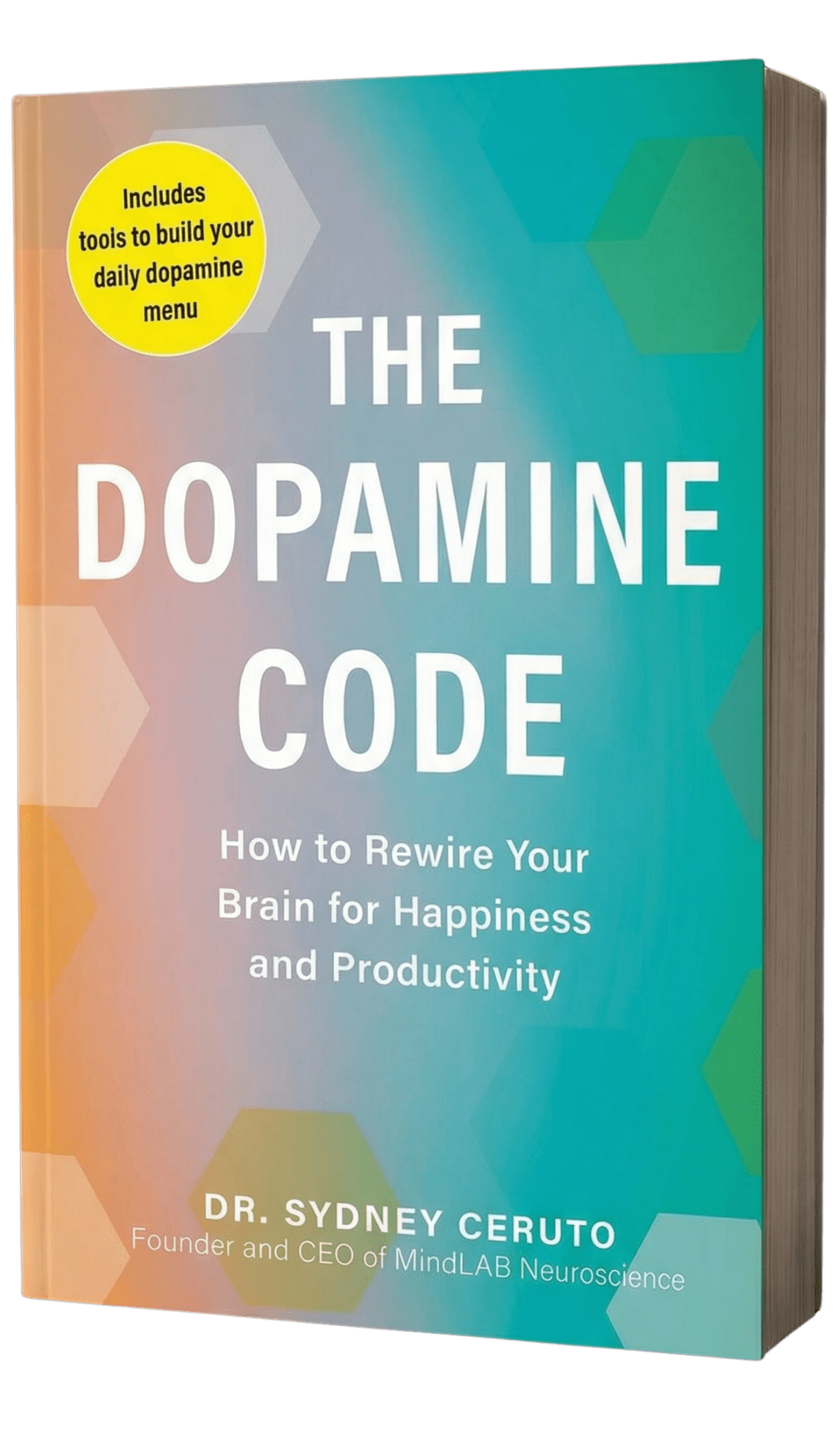
The Dopamine Code

Decode Your Drive

Why Your Brain Rewards the Wrong Things

Your brain's reward system runs every decision, every craving, every crash — and it was never designed for the life you're living. The Dopamine Code is Dr. Ceruto's framework for understanding the architecture behind what drives you, drains you, and keeps you locked in patterns that willpower alone will never fix.

Published by Simon & Schuster, The Dopamine Code is Dr. Ceruto's framework for building your own Dopamine Menu — a personalized system for motivation, focus, and enduring life satisfaction.

Order Now

Ships June 9, 2026

The Dopamine Code by Dr. Sydney Ceruto — Decode Your Drive
Locations

The Intelligence Brief

Neuroscience-backed analysis on how your brain drives what you feel, what you choose, and what you can’t seem to change — direct from Dr. Ceruto.