The Influence Problem No Framework Can Solve
“Leadership presence is not something you project through posture tips and vocal exercises. It is something your brain transmits through biological systems operating below conscious awareness — your direct reports register the mismatch neurologically before they process it consciously.”
You have done the programs. You have studied the models. You may hold credentials from respected institutions. And still, something essential about your leadership presence breaks down precisely when it matters most.
The breakdown follows a recognizable pattern. In structured environments with clear authority and familiar cultural context, your leadership lands. People follow your direction, engage with your vision, and execute with coherence. But when the conditions shift, when the stakes escalate, when you are leading across cultures or languages, the influence evaporates. When the team is distributed and trust must travel through screens rather than shared physical space, the same breakdown occurs. Not because your ideas are wrong. Not because your strategy is weak. Because the neural circuits generating your leadership signal are calibrated for conditions that no longer match your environment.
This is a problem that accumulates quietly. A presentation that should have commanded the room but fell flat. A team meeting where alignment seemed solid but unraveled within days. A negotiation where you could sense the other party had stopped believing you before you finished your opening position. Each instance feels like a one-off. Together, they form a pattern that no amount of leadership reading, workshop attendance, or executive education can resolve, because the pattern is not behavioral. It is neurological.
What compounds the frustration is that the solutions on offer all operate at the same level. They teach communication techniques, emotional intelligence frameworks, and leadership styles. They provide language for describing good leadership. None of them address the biological substrate that determines whether leadership influence actually transmits from one nervous system to another. In over two decades of clinical neuroscience practice, the most reliable predictor of leadership effectiveness is not what a leader knows or even what they do. It is how their brain’s social cognition circuits function under load.
The Neuroscience of Leadership Influence
Leadership is, at its biological foundation, a social cognition event. When you lead effectively, your nervous system is generating signals that other nervous systems detect, interpret, and respond to. When you lose influence, those signals are degraded, mistuned, or absent. The mechanisms are specific and documented.
The mirror neuron system, first identified in premotor cortex research in 1996, is the brain’s mechanism for generating real-time neural resonance between individuals. When a leader speaks, moves, or makes decisions, the observer’s mirror neuron system activates corresponding neural patterns, creating the biological basis of empathic connection and behavioral modeling. A 2024 review used interpersonal neurophysiology to document asymmetric emotional contagion in leader-follower dyads. The study showed that neural synchronization is significantly higher between leaders and followers than between follower pairs, and that causal directionality runs from leader to follower. This is direct empirical evidence that the neurological state of the leader determines the neurological state of the team.
The anterior insula — the brain’s internal awareness center — is the second critical structure. A landmark 2012 lesion study established definitively that anterior insular cortex — the brain’s internal awareness center — lesions disrupt both explicit and implicit empathic pain perception. Researchers described this as the first study to firmly establish that the anterior insular cortex is where the feeling of empathy originates. A 2019 study confirmed the anterior insula as the only region of the brain with consistent associations across all empathy-related tasks. It represents the convergence hub where sensory input, limbic activation, and prefrontal cognition integrate into the subjective experience of understanding another person. When this circuit is suppressed by chronic stress, cortisol dysregulation, or sustained cognitive load — the total demand on mental processing capacity —, leaders lose critical capacities. They cannot read rooms accurately, mistime their responses, and trigger the trust-erosion cycles that destabilize teams.
Theory of mind, the capacity to attribute mental states to others, completes the leadership influence architecture. A foundational 2005 study indexed on PubMed investigated the neural basis of theory-of-mind reasoning and identified that the right temporo-parietal junction was recruited selectively for the attribution of mental states. A 2016 transcranial direct current stimulation study confirmed this experimentally. The study demonstrated that inhibiting cortical excitability in the right TPJ impaired both theory-of-mind accuracy and cognitive empathy, confirming the region’s causal role in these social cognitive functions. The full mentalizing network encompasses the right TPJ and medial prefrontal cortex. It also includes the posterior cingulate cortex — a core self-reflection region — and temporal poles, which together allow a leader to accurately model what others believe, want, and will do next. When this network is functionally degraded, leaders default to projection rather than perception, systematically misreading the people they are trying to lead.
How Dr. Ceruto Approaches Leadership Development
Dr. Ceruto’s methodology intervenes at the circuit level where leadership influence is biologically generated. This is not an enhancement of existing leadership frameworks. It is a fundamentally different category of intervention.
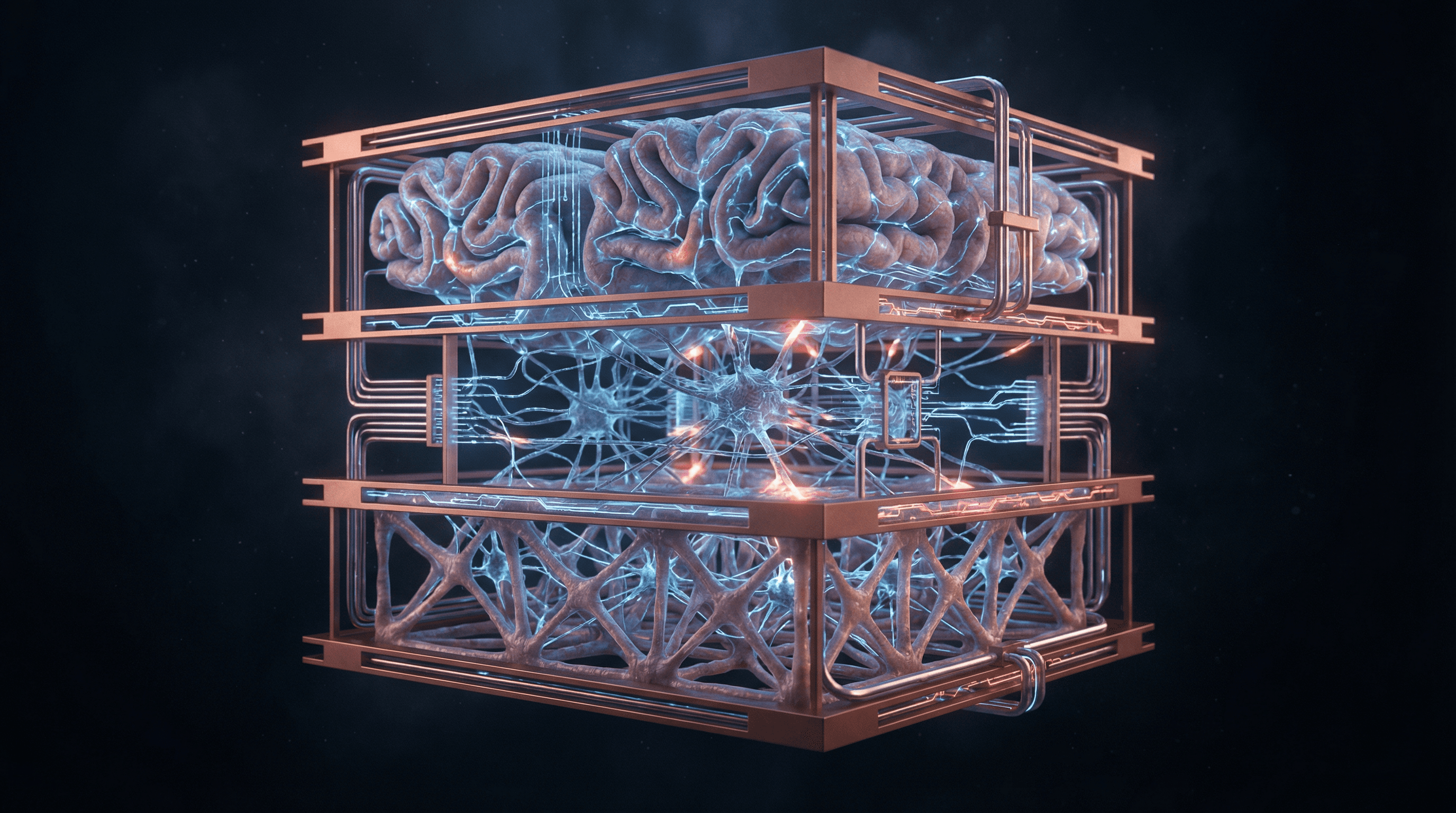
The process begins with a precise assessment of the three neural systems that govern leadership influence: mirror neuron coherence, anterior insula activation patterns, and mentalizing network function. My clients describe this as the first time someone has explained not just what effective leadership looks like, but why their specific influence pattern breaks down under specific conditions. The assessment reveals circuit-level patterns invisible to behavioral observation, competency models, or 360-degree feedback instruments.
Through Real-Time Neuroplasticity — the brain’s ability to rewire itself —(TM), Dr. Ceruto targets the specific neural architecture generating the leadership deficit. For leaders whose mirror neuron coherence is disrupted by chronic stress or cross-cultural communication anxiety, protocols recalibrate the system’s capacity to generate real-time neural resonance with diverse teams. For leaders whose anterior insula activation has been suppressed by sustained cognitive overload, targeted interventions restore empathic accuracy to the level required for trust generation. For leaders whose mentalizing network defaults to their native cultural model rather than flexibly adapting to the person in front of them, the right TPJ circuitry is specifically recalibrated for cross-cultural perspective-taking.
The NeuroSync(TM) program addresses a focused leadership dimension, such as influence under pressure or cross-cultural communication, with targeted neural recalibration. For leaders navigating comprehensive demands across multiple contexts, competing pressures, and distributed teams, the NeuroConcierge(TM) partnership provides embedded access to Dr. Ceruto’s methodology. This covers every dimension of leadership challenge, adapting in real time as situations evolve and demands shift.
The distinction from conventional approaches is structural. Leadership frameworks teach behaviors to practice. Dr. Ceruto recalibrates the circuits that generate those behaviors. The result is durable change that holds under pressure because the neural architecture itself has been modified.
What to Expect
The engagement begins with a Strategy Call, where Dr. Ceruto conducts a focused assessment of your leadership history. This includes the specific contexts where influence breaks down and the operational pressures shaping your current demands.
From this assessment, a structured protocol is designed around your specific neural leadership architecture. The protocol targets the circuits identified in the assessment, with each session building on measurable changes in the prior one. There are no generic modules. Every intervention is calibrated to the specific mirror neuron, anterior insula, or mentalizing network patterns that your assessment revealed.
Progress is measured through cognitive and behavioral markers rather than self-reported satisfaction. The engagement is structured around neuroplasticity consolidation windows, ensuring that circuit-level changes are reinforced at biologically relevant intervals. The protocol concludes when the targeted neural architecture demonstrates stable recalibration under the conditions that previously triggered influence degradation.
References
Gu, X., Hof, P. R., Friston, K. J., & Fan, J. (2012). Anterior insular cortex and emotional awareness. Brain. https://academic.oup.com/brain/article/135/9/2726/327775
Fan, Y., Duncan, N. W., de Greck, M., & Northoff, G. (2019). Anterior insula and empathy: A coordinate-based meta-analysis. Human Brain Mapping. https://pmc.ncbi.nlm.nih.gov/articles/PMC7267919/
Czeszumski, A. & colleagues (2024). Neurophysiological markers of emotional contagion in leader-follower dyads. Frontiers in Integrative Neuroscience. https://pmc.ncbi.nlm.nih.gov/articles/PMC10861795/
The Neural Architecture of Leadership Capacity
Leadership is a neural function. The capacities that define effective leadership — the ability to sustain strategic clarity under pressure, to regulate one’s own threat responses without suppressing their information value, to inspire sustained motivation in others, to make high-quality decisions under uncertainty, and to sustain authentic relational connection across authority differentials — are all expressions of specific neural architectures. They are not personality traits. They are circuit configurations. And they are trainable, restructurable, and measurably developable through targeted neural intervention.
The prefrontal cortex is the biological substrate of the leadership capacities that organizations most consistently struggle to develop. The lateral prefrontal cortex drives planning, working memory, and cognitive flexibility. The medial prefrontal cortex governs self-awareness, mentalizing, and the reading of social contexts. The ventromedial prefrontal cortex integrates somatic signals into value-based judgment. The anterior cingulate cortex monitors for conflict and error, and regulates the transition between stable and flexible behavior. These structures do not develop uniformly through career progression. They develop through specific types of experience, sustained regulatory challenge, and targeted practice — none of which are reliably produced by organizational promotion pathways.
The dopaminergic motivation architecture determines whether leadership capacity persists under the conditions that most degrade it. The leader whose reward system is poorly calibrated to the delayed, diffuse, and often socially invisible rewards of effective organizational leadership — the long-horizon impact, the team capability built over years, the cultural shift that takes place gradually and is difficult to attribute — will find their motivation for leadership investment progressively depleted by the misalignment between what their neural architecture finds reinforcing and what leadership actually delivers. This is the neural basis of leadership burnout, and it requires explicit reward recalibration rather than better time management or additional vacation.
Why Traditional Approaches Fall Short
Leadership training has evolved through multiple generations of methodological sophistication. Situational leadership, transformational leadership, servant leadership, adaptive leadership — each framework captures genuine insight about leadership effectiveness. Each has been packaged into training programs that produce measurable attitude change and minimal durable behavioral change. The frameworks are not the problem. The training format and the level of intervention are.
Workshop-based leadership training addresses the cognitive architecture of leadership: the frameworks, models, and self-awareness that inform conscious leadership choices. This is a necessary foundation and an insufficient intervention. The leadership behaviors that most reliably differentiate effective from ineffective leaders under real organizational pressure — the regulatory responses to conflict and threat, the quality of judgment under ambiguity, the authentic connection to team members across authority differentials — are not primarily cognitive. They are neural. They are generated by the regulatory architecture, the social neural system, and the reward calibration of the leader’s brain, not by the leadership framework they have memorized.
Mentoring and experiential leadership development address this more effectively, because the learning environment is closer to the real pressure conditions in which leadership behavior is generated. But mentoring depends on the quality and neural sophistication of the mentor, and experiential development in unstructured environments produces learning that is highly variable in what it actually develops. Neither approach provides the precision of targeted neural intervention — the ability to identify the specific circuit configurations limiting a particular leader’s effectiveness and design the specific experiences required to reconfigure them.

How Neural Leadership Training Works
My approach to leadership training begins with a neural architecture assessment of the leadership population. What are the specific circuit configurations producing the leadership patterns that the organization most needs to develop? Which regulatory capacities are most depleted across the leadership layer? What is the reward architecture mismatch generating the motivation patterns — or motivation deficits — most limiting leadership effectiveness? These questions produce a development target that is far more specific than any generic leadership competency model.
From this assessment, I design leadership development protocols that directly target the identified neural configurations. The protocols are structured around the neuroscience of motor and cognitive skill acquisition: deliberate practice sequences that target the specific circuits requiring development, spaced learning intervals that allow consolidation between practice episodes, increasing load conditions that progressively build the regulatory capacity required for performance under real leadership pressure, and feedback architectures that are calibrated to the neural systems they are targeting rather than to the behavioral metrics most easily measured.
The social neural dimension of leadership development receives particular attention. Leaders who model the regulatory and relational behaviors their teams need to develop are leveraging the most powerful learning mechanism available in organizations: social neural contagion, the brain’s tendency to encode and replicate the behavioral patterns of high-status, trusted others. Leadership training that builds the regulatory capacity of senior leaders and then puts that capacity on display in real organizational contexts produces development effects that cascade through the organizational hierarchy in ways that no training program delivered to a general leadership population can replicate.
What This Looks Like in Practice
Leadership training engagements begin with a Strategy Call in which I assess the specific leadership development challenge against the neural architecture most likely responsible for it. From that conversation, I design a protocol that addresses the identified neural configurations in the format that the organizational context requires.
For senior leadership teams working on a specific high-priority leadership capability — executive communication, decision quality, conflict navigation, strategic team dynamics — the NeuroSync model provides focused, intensive development designed around the neural requirements of that specific capability. For organizations investing in broad leadership development across multiple levels and capability domains, the NeuroConcierge model provides the sustained partnership required to build leadership capability as a durable organizational neural asset rather than a training event outcome. The Dopamine Code provides the scientific framework for leaders who want to understand the reward architecture principles underlying sustained leadership motivation and team engagement.
For deeper context, explore emotional intelligence in leadership training.