Consultant in Lisbon

Neuroscience-informed strategy, leadership, and organizational development for Lisbon's international executives and the companies competing in Europe's fastest-evolving business ecosystem.

Lisbon's consulting landscape has expanded rapidly since 2022, with McKinsey, BCG, and Bain all opening local offices alongside a growing cohort of international training providers drawn by the Web Summit ecosystem. None operate with a neuroscience-based methodology at the premium tier. I work at the intersection that traditional consulting firms cannot reach: the individual neural architecture of the leaders who must execute the strategy, because every strategic plan, organizational transformation, and performance system ultimately runs through the brain of the person accountable for making it work.
Schedule a Strategy Call
ForbesUSA TodayHuffPostNewsweekAssociated PressCosmopolitanBusiness InsiderForbesUSA TodayHuffPostNewsweekAssociated PressCosmopolitanBusiness Insider

Strategy Consulting

Strategy fails at the human level, not the analytical level. Research established that purely rational strategic planning models are neurologically incomplete: affect-cognition integration is essential to high-quality strategic judgment, and managers who suppress emotion during strategic thinking make demonstrably worse decisions. Research demonstrated that in complex interactive decision environments, individual cognitive capacity differences predict strategic performance more reliably than market knowledge alone. Research identified how the frontopolar cortex and subcortical regions govern explore-exploit decisions central to strategy work, with social rewards and cultural context directly altering the value computations underlying strategic choices: a finding with particular relevance in Lisbon’s relational business culture, where hierarchy, trust, and interpersonal dynamics shape strategic decision quality at the neural level. Research identified the dorsolateral prefrontal cortex as the neural seat of strategic executive function, with stress-induced catecholamine release shifting behavior toward reactive, habitual processing. In my practice, I work with leaders whose strategic capability is neurologically constrained, not by intelligence, but by stress-impaired prefrontal function, underdeveloped affect-cognition integration, or habitual decision patterns that override novel strategic thinking. My methodology addresses strategy at its neural source.

Learn more about Strategy Consulting in Lisbon →

Leadership Training

Leadership development that targets behaviors without addressing the brain systems generating them produces change that dissolves under pressure. Research demonstrated that leader-follower interactions are characterized by inter-brain neural synchronization measurable, meaning leadership effectiveness has a neurophysiological substrate that behavioral training alone does not reach. Effortful cognitive training produces measurable neuroplastic changes in the superior frontal gyrus and anterior cingulate cortex, with 79% overlap with the brain’s multiple-demand network: the neural infrastructure of effective leadership under complexity. I do not deliver leadership modules. I work within the live context of a leader’s professional environment to restructure the neural systems governing influence, decision quality under pressure, and the capacity to create the inter-brain synchrony that distinguishes exceptional leaders from competent managers.

Learn more about Leadership Training in Lisbon →

Performance Improvement Consulting

Performance plateaus in high-capability individuals are rarely skill deficits: they are neural state constraints. Research demonstrated in a controlled intervention that a structured brain health program produced measurable gains in 75% of completers: cognitive clarity, connectedness, and emotional balance all improved significantly, with gains in connectedness and emotional balance directly linked to reduced burnout on the Maslach Burnout Inventory. Research established the mechanism: under chronic stress, elevated norepinephrine and dopamine disrupt dorsolateral prefrontal function, shifting experienced professionals from systematic strategic thinking to rapid, reactive behavior. A 2025 study confirmed through quasi-experimental intervention that a dual growth mindset, combining beliefs about personal and environmental malleability, significantly improved resilience and well-being, with effects strongest when work stress was high. I work with professionals and teams in Lisbon’s pressurized tech and consulting ecosystem whose performance has plateaued despite adequate skill and motivation, targeting the specific neural bottlenecks constraining their output.

Learn more about Performance Improvement Consulting in Lisbon →

Organizational Development Consulting

Organizational change consistently fails at a rate that baffles the firms implementing it, and the reason is neurological. Research proposed a five-phase neuroscience-informed approach to organizational transformation, integrating neural synchrony, neurochemical regulation, and specific circuit activations to improve team dynamics and decision-making. The key insight: co-creative processes reduce the brain’s threat response, producing more sustainable organizational change than top-down initiatives. Research confirmed that change perceived as threatening activates amygdala-driven fear and job insecurity responses, reducing motivation, commitment, and loyalty at the neural level. I work with organizations whose development initiatives have stalled or produced surface-level compliance without genuine behavioral change, targeting the micro-level neural reactions, individual threat-reward appraisal, that determine whether organizational development efforts take root or are silently rejected by the brains of the people expected to change.

Learn more about Organizational Development Consulting in Lisbon →

Corporate Training

Traditional corporate training violates the neuroscience of learning. Full-day workshops overwhelm the brain’s consolidation capacity; passive lecture formats produce minimal neuroplastic impact. Research demonstrated that spaced microlearning combined with individualized engagement produced a 75% improvement rate on the BrainHealth Index, directly attributable to the training format aligning with how the brain consolidates new information. Active, challenge-based learning produces measurable neuroplastic changes in the superior frontal gyrus and anterior cingulate cortex, while passive instruction does not. Research established that environmental enrichment (including challenging, socially interactive, immersive learning experiences) drives synaptic growth and neural network strengthening in the hippocampus and prefrontal cortex. I design corporate training engagements for Lisbon-based organizations that are structured around these neurobiological principles: spaced, contextually embedded, and sufficiently challenging to produce the neural change required for lasting capability development.

Learn more about Corporate Training in Lisbon →

Executive Coaching

The executive who arrives at my practice has typically succeeded by the metrics that matter externally while experiencing escalating internal costs: decision fatigue, stress-driven reactivity, and the erosion of the cognitive flexibility that built their career. The first empirical study measuring neurophysiological dynamics during practitioner-client engagement demonstrated statistically significant differences in neural synchrony across session phases. Research established that durable behavioral change requires activating both the motivational and cognitive neural systems, and that anchoring new behaviors to the client’s identity activates the vmPFC, amplifying retention. A 2024 scoping review identified schema replacement and self-led development as the two core mechanisms through which engagement produces resilience gains: a process requiring sustained neuroplastic restructuring of habitual cognitive pathways. I work within the live context of an executive’s professional life, intervening at the neural level during the real decisions, relationships, and pressures that define their leadership, not in retrospective conversation about them.

Learn more about Executive Coaching in Lisbon →

Why This Matters in Lisbon

Lisbon has undergone a transformation that no other European capital has experienced at this velocity. Since 2022, the city has attracted McKinsey, BCG, Bain, and Alvarez & Marsal to open formal offices alongside a startup ecosystem that has reached 5,091 active companies, 45% of Portugal’s total, with ICT accounting for 63% of startup turnover. The European Commission named Lisbon European Capital of Innovation in 2023. Web Summit, permanently hosted in the city since 2016, drew 71,386 attendees from 157 countries in 2025, including a record 1,857 investors: a 74% surge from the previous year.

This convergence has created a consulting market with a specific structural gap. The global firms serve institutional clients with corporate mandates. The local coaching market serves individuals through behavioral and experiential frameworks. No provider in Lisbon occupies the space between these tiers: neuroscience-informed advisory for the individual leaders who must execute strategy, lead transformation, and sustain performance in a cross-cultural, high-velocity environment.

The professionals operating in this environment face neurologically specific demands. Portuguese business culture is consensus-oriented and relationship-first, with significantly longer decision cycles than Northern European or North American norms: a friction that creates chronic low-grade cognitive stress for expat executives conditioned to faster operating rhythms. The hierarchy favors indirect communication and senior-management decision authority, disorienting leaders from flatter organizational cultures. Remote work isolation compounds these challenges: virtual-first and hybrid executives often lack the peer accountability structures and social neural feedback that sustained their performance in previous markets.

Portugal’s management consulting market is forecast to grow at 5.52% CAGR through 2030 in the technology consulting segment alone, driven by a EUR 13.9 billion Recovery and Resilience Plan targeting digital modernization. The IFICI tax regime, replacing the terminated NHR program, continues to attract international executives and consultants to establish Lisbon bases with a 20% flat rate for qualifying roles. The demand is structural, expanding, and inadequately served by any existing provider combining neuroscience methodology, doctoral credentials, and the premium program design that Lisbon’s most capable professionals require.

I consistently observe a specific pattern among international professionals who arrive in Lisbon with established consulting or executive careers: the skills and strategic frameworks they relied on in previous markets do not transfer seamlessly into an environment where relational dynamics, cultural communication norms, and the pace of business operate on fundamentally different parameters. The neural stress this produces is cumulative: each misread social cue, each delayed decision cycle, each frustrating consensus process adds cortisol load that degrades the very cognitive capacity these professionals were hired for. The institutions that support Lisbon’s professional ecosystem (Nova SBE, Católica Lisbon School of Business and Economics, the growing network of international tech companies including Unbabel, Feedzai, and Sword Health establishing EMEA operations) produce demand for executive capability development that behavioral approaches address at the surface while leaving the neural constraints untouched.


Dr. Sydney Ceruto, PhD, Neuroscientist & Author, MindLAB Neuroscience

Dr. Sydney Ceruto holds a PhD in Behavioral & Cognitive Neuroscience from NYU and Master’s degrees in Clinical Psychology and Business Psychology from Yale University. She is a Lecturer in the Wharton Executive Development Program at the University of Pennsylvania, an Executive Contributor to Forbes Coaching Council. Dr. Ceruto founded MindLAB Neuroscience in 2000 and has spent more than 26 years leading it, developing and refining her proprietary methodology, Real-Time Neuroplasticity™. She is the author of The Dopamine Code (Simon & Schuster, June 2026).

References

Diamond, A. (2013). Executive functions. Annual Review of Psychology, 64, 135–168. https://doi.org/10.1146/annurev-psych-113011-143750

Arnsten, A. F. T. (2009). Stress signalling pathways that impair prefrontal cortex structure and function. Nature Reviews Neuroscience, 10(6), 410–422. https://doi.org/10.1038/nrn2648

Lövdén, M., Bäckman, L., Lindenberger, U., Schaefer, S., & Schmiedek, F. (2010). A theoretical framework for the study of adult cognitive plasticity. Psychological Bulletin, 136(4), 659–676. https://doi.org/10.1037/a0020080

Success Stories

“Ninety-hour weeks felt like discipline, the inability to stop felt like a competitive advantage. Nothing I tried touched it because nothing identified what was actually driving it. It took working with Dr. Ceruto to see that I had fused my sense of identity to output. Once that was visible, it came apart. I still work at a high level. I just don't need it to know who I am anymore.”

Jason M., Managing Director, Lazard New York, NY

“Falling asleep was never the problem, staying asleep was. I'd wake at 3am every night with my mind fully alert for no reason I could find. What Dr. Ceruto and I landed on was that my body had locked into waking at that hour, on a schedule of its own. Once we addressed that pattern directly, I started sleeping through the night for the first time in over a decade.”

Toby H., Senior Portfolio Manager, Hedge Fund

“Dr. Sydney Ceruto's innovative neuroscience-based program changed how I lead under pressure. Her blend of cutting-edge science, deep compassion, and unwavering accountability got to the root of the panic I had been leading through. She didn't teach me to manage it. She worked with me on what was underneath it instead. I didn't know that was possible.”

Ella E., Head of Operations, Private Equity Firm Manhattan, NY

“Dr. Ceruto’s Executive Development Program transformed me from a driven professional with untapped potential to a confident, visionary leader through her expert guidance and neuroscience-backed techniques. The program’s universal applicability and unparalleled insights not only addressed my specific challenges but also elevated my entire professional journey, proving to be an investment with exponential returns.”

Jon S., VP of Engineering, Braintree San Francisco, CA

“Shopping had become a private ritual I couldn't explain to anyone, not the items themselves, just the moment right before buying. Therapy treated it as a willpower problem for years. Working with Dr. Ceruto, it became clear that the anticipation was driving the behavior, separate from the purchase itself. Once we worked on that directly, the urge eased.”

Sofia R., Creative Director Milan, IT

“I was suffering from burnout at work and was on the verge of quitting a career I’ve worked toward my entire life. After completing her 90 Day Total Transformation Package, I am now living a healthier more balanced life and have developed strong resiliency skills.”

Jeffery L. Denver, CO

Frequently Asked Questions About Neuroscience-Based Organizational Excellence

How does neuroscience-based organizational advisory differ from traditional consulting?

Traditional consulting optimizes systems, processes, and structures: the organizational hardware. This approach works on the judgment and habits of the individuals operating those systems: the human software. When organizational performance is bounded by how well key people think and decide rather than by process design, working at that level produces improvements that process optimization alone cannot achieve.

What types of organizational challenges respond best to this approach?

Challenges where human cognitive quality is the binding constraint: leadership development that must produce behavioral change rather than knowledge acquisition, organizational transformations that require leaders to sustain clarity under ambiguity, performance improvement initiatives that have plateaued at the human capacity ceiling, and culture change that depends on the signals leaders actually send rather than the values they articulate.

Can this approach improve organizational training effectiveness?

Yes. Conventional training delivers information to the conscious mind, but lasting behavioral change requires reaching the habits that operate below deliberate attention. Dr. Ceruto advises on training architecture that works with how people actually learn: attention cycles, spacing and consolidation, and the conditions under which new behavior sticks. The result is retention and real-world transfer that standard programs struggle to produce.

How does this work complement existing leadership development programs?

Leadership programs develop knowledge and frameworks. Dr. Ceruto works on what determines whether that knowledge translates into behavior under real organizational conditions. Leaders frequently report that insights from development programs become actionable after this work, because the habits that were getting in the way are no longer doing so.

What is the typical engagement structure for organizational work?

Organizational engagements typically begin with the Strategy Call for each key leader, followed by individualized work tailored to each person's specific constraints and the organizational demands they face. The engagement duration depends on the scope and the number of key individuals involved. Dr. Ceruto works directly with each leader: this is individualized work, not group programming.

How do you know this work is affecting organizational performance?

Through what changes in the leaders who did the work: decision speed and quality, performance consistency, how they hold up under pressure, communication effectiveness, and the downstream effects on their teams and organizational units. These are changes the people around them notice.

Is this approach appropriate for organizations of any size?

The approach is most impactful in organizations where a small number of individuals at key decision nodes disproportionately affect organizational outcomes. This describes most organizations regardless of size, from startups where the founder's cognitive quality determines everything, to large enterprises where 5-10 senior leaders set the cognitive tone for thousands of employees.

What does the initial Strategy Call cover for organizational leaders?

The Strategy Call looks at how each leader is actually operating under their specific organizational demands: where attention holds, how decisions get made under pressure, and how they read the people around them. It identifies where intervention will produce the greatest return for both the individual leader and the organization.

Ready to Perform at Your Highest Level?

Lisbon's business ecosystem is evolving faster than any other in Southern Europe. The leaders who will define its next chapter need more than strategic frameworks: they need the neural infrastructure to execute under complexity, across cultures, and at the pace this market demands.

Schedule a Strategy Call
MindLAB Neuroscience strategy call setting

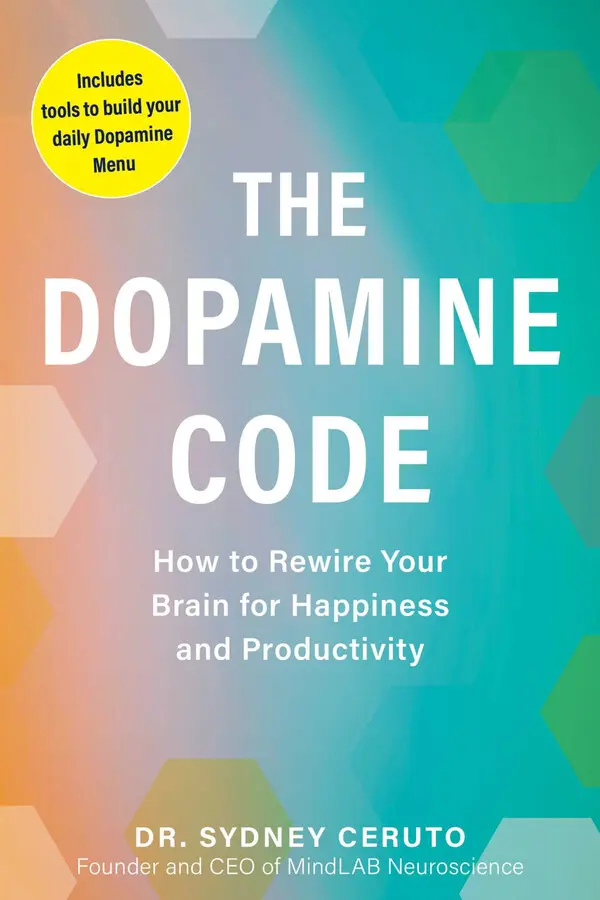
The Dopamine Code

Decode Your Drive

Why Your Brain Rewards the Wrong Things

Your brain's reward system runs every decision, every craving, every crash, and it was never designed for the life you're living. The Dopamine Code is Dr. Ceruto's framework for understanding the architecture behind what drives you, drains you, and keeps you locked in patterns that willpower alone will never fix.

Published by Simon & Schuster, The Dopamine Code is Dr. Ceruto's framework for building your own Dopamine Menu, a personalized system for motivation, focus, and enduring life satisfaction.

Order Now!

Available now

The Dopamine Code by Dr. Sydney Ceruto, Decode Your Drive
Locations
Secret Link